

Is Affiliate Marketing Worth It in 2026?
17 May 2021
Anna
6 minutes
Affiliate marketing, now a marketing buzzword, is a long-lasting concept that has been around for years. It has good and ugly sides, and you're likely to see both out there.
The good side? True affiliate marketing built on a solid product and a solid offer can generate you real money. The ugly side? In every industry there are people chasing a quick buck with a scammy product and shady methods. We're not going to teach you how to do that here, so if you're looking for a get-rich-quick scheme, get out of here.
In this article, we'll take a focused look at this online marketing model, see how affiliate marketing works, and answer the question on everyone's mind: is affiliate marketing worth it in 2026? Spoiler — it absolutely is, and the numbers prove it.
Affiliate marketing – what is it?
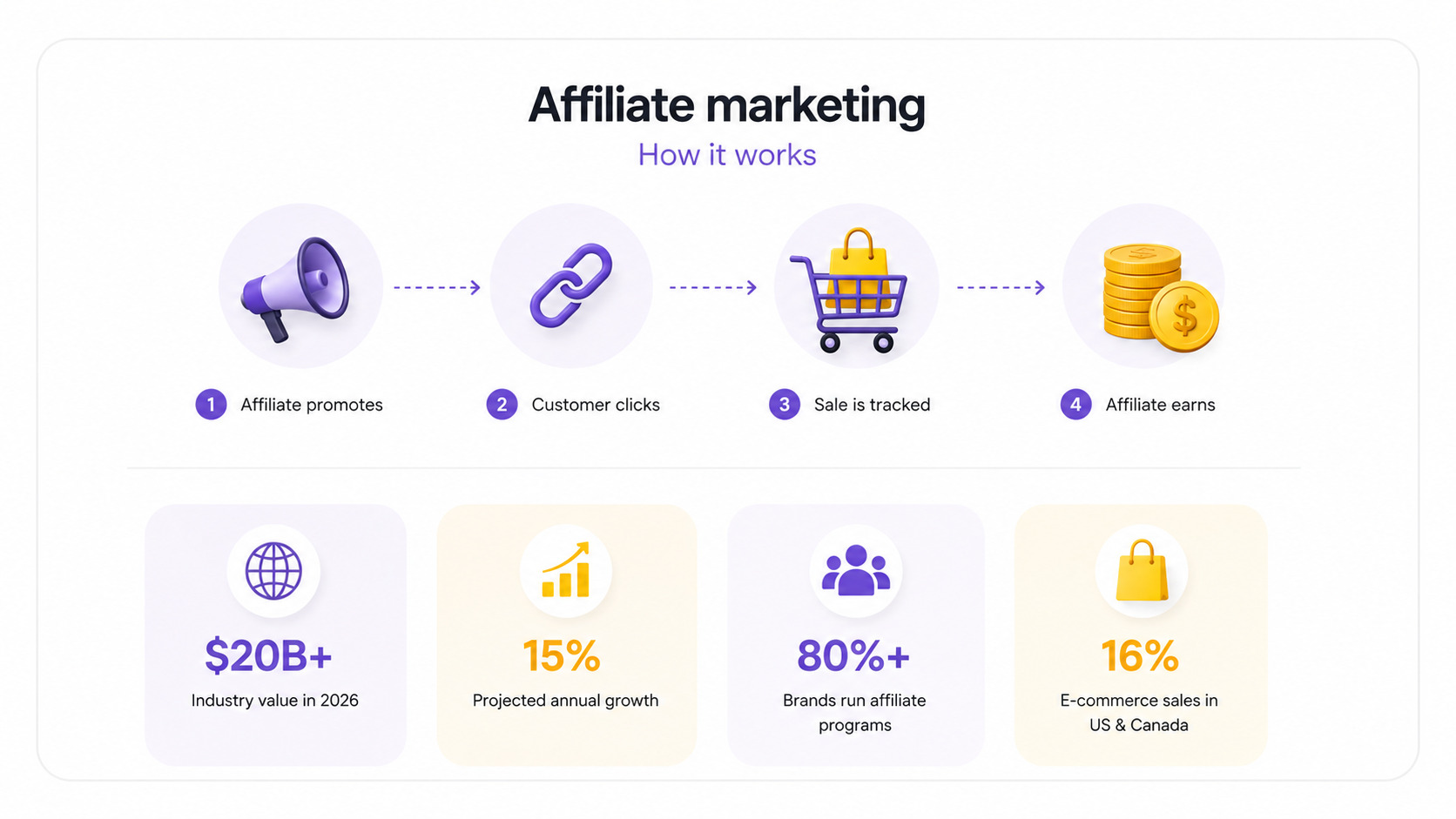
Affiliate marketing is a performance-based marketing model built on a simple idea: a company offers an incentive (typically a commission) to anyone who can bring them a new customer. The affiliate promotes products they believe in, and when a sale goes through their unique affiliate links, they earn a cut. No sale, no cost — which is exactly why brands love it.
This is no longer a fringe tactic. The global affiliate marketing industry is valued at over $20 billion in 2026 and projected to grow at roughly 15% a year for the next decade. More than 80% of brands now run an affiliate program, and affiliate marketing drives around 16% of all e-commerce sales in the US and Canada. In other words, the affiliate marketing business has gone fully mainstream.
So… is affiliate marketing still worth it in 2026?
Definitely yes. If you have sales skills and big ambitions, you can absolutely make money with affiliate marketing in 2026 by taking the right steps. The principle is simple: find something you genuinely like, share it with your audience, and earn from it. Performance-based work rewards both the company and the affiliate, and as more consumer behavior shifts online, the opportunity keeps expanding.
Here's what makes affiliate marketing worth it from a pure ROI standpoint: businesses earn somewhere between $6.50 and $15 back for every dollar spent on affiliate campaigns, far outperforming display and most paid advertising. For affiliates, earnings are real but uneven — the average affiliate marketer pulls in around $8,000 a month, while many beginners make little in their first 6–12 months and top performers clear six and seven figures. The difference almost always comes down to structure, traffic quality, and the offer behind the link.
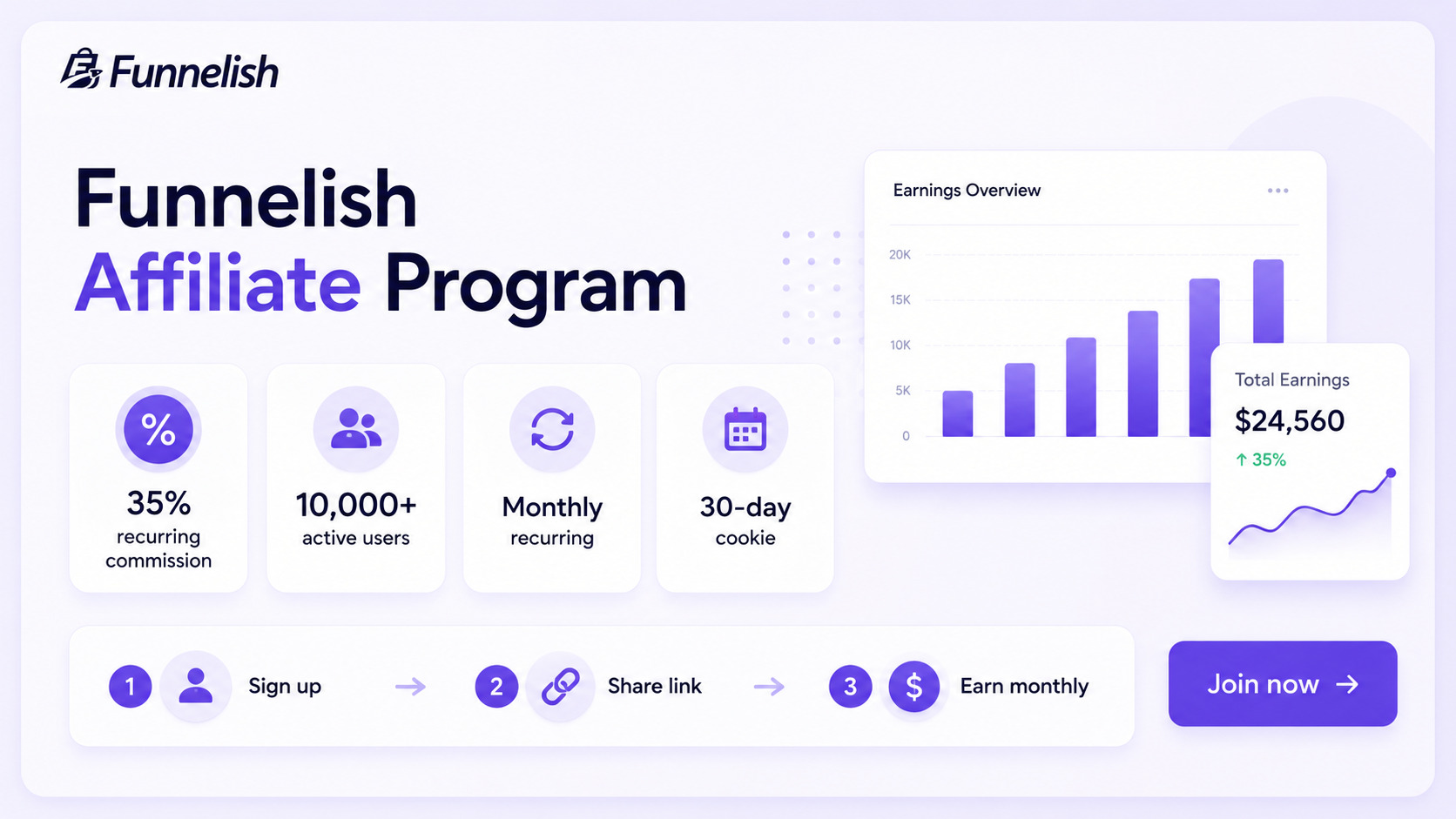
The other thing that separates a side income from a serious affiliate business is what you choose to promote. One-time payouts cap your income; recurring commissions compound it. This is why so many successful affiliate marketers gravitate toward subscription products — refer a customer once, earn every month they stay. The Funnelish affiliate program, for example, pays 35% recurring commission for the life of every customer you refer, which is exactly the kind of offer that turns affiliate sales into a predictable, stable income stream instead of a one-off win.
How does affiliate marketing work?
Affiliate marketing works pretty simply. Any company with an affiliate program will have a system in place for you. You create an account, get unique referral links, and share them. Because the links are specific to you, anyone who uses them to checkout is tracked as a sale from you, and your affiliate income is credited automatically.
Commissions vary by company, but on average they land between 5% and 30% — and SaaS and digital products, like Semrush or Shopify, often pay far more, sometimes recurring every month for the life of the customer. That recurring model is where passive income gets interesting: a single piece of content can keep paying you long after you publish it.
The mechanics on the merchant side have gotten smarter too. Modern affiliate marketing programs lean on accurate tracking and analytics so both sides can see exactly which affiliate links, content, and paid channels drive conversions.
If you ever decide to run your own program rather than just join one, Funnelish makes it straightforward to attach affiliate tracking to your funnels and pay partners on the sales they actually generate — the same model from the other side of the table.
Read more: Best Affiliate Marketing Platforms 2026
Choosing the right affiliate program and niche
If you want to start affiliate marketing, there's no shortage of options, from massive marketplaces, like Amazon, to the software and tools you use every day. The key is choosing the right affiliate program for the right niche. Pick something you know about, love, have personal experience with, or have an engaged audience for. Chasing an affiliate niche just because it seems easy is actually harder to find success with — high competition and zero genuine interest is a brutal combination.
Niche selection also drives your ceiling. In 2026, the highest-earning niches are concentrated in categories with strong intent and high lifetime value — e-learning, travel, beauty and skincare, and finance affiliates consistently top the charts. But every chosen niche rewards the same thing: trust. Brands wouldn't pay these commissions if affiliates weren't delivering genuine value to their target audience.
Read more: Best Affiliate Programs for YouTubers: Ranked by What Pays
Affiliate marketing for beginners
If you're at the start of your affiliate journey, follow this guide to begin the right way:
First, do your research and find a product or service you're passionate about, then check whether they have an affiliate program. Once you've settled on your niche and product, reach out to that company and express interest in an affiliate collaboration — usually it's as simple as filling out a short form.
You'll likely be asked to sign an Affiliate Agreement, which you should read carefully; pay attention to terms, the relationship between the parties, responsibilities, and payout details. Once everything's agreed, you'll receive your unique affiliate link and can start to promote products.
From there, selling depends entirely on you, so you need your own marketing strategy. If you already have a channel that can generate traffic — a social media account, a YouTube channel, or a blog — you can share your links with your followers, and every purchase that comes through you earns a commission.
A few proven ways to drive traffic in 2026:
Create content that ranks. Creating high-quality content on your own website remains the backbone of online affiliate marketing. Search engines still send the most durable organic traffic, and content and blog-based affiliates drive roughly 40% of all affiliate revenue. A well-optimized blog post can earn for years.
Lean into video. YouTube videos and short-form clips are now expected to drive over half of all affiliate traffic. Video content builds trust faster than text alone.
Build an email list. Affiliates who use email marketing can earn meaningfully more than those who don't — it's the one channel you actually own.
Layer in paid ads. Once you know your numbers, social media advertising and other paid channels can scale a winning offer fast.
The honest truth about making affiliate marketing worth your time: it's larger, more competitive, and more professional than ever. AI-assisted tools, better tracking, and a flood of new affiliates mean luck won't carry you. Quality content, the right niche, an engaged audience, and a conversion-ready destination for your traffic will. Treat it like a real affiliate business — whether it's a side income stream or a full-time job — and the income follows.
Already a Funnelish member? Then sign up to be an affiliate and start earning monthly recurring commissions promoting a product you already use.
Table of contents
Boost your eCommerce
sales today

24/7 support
No credit card required
Cancel anytime
24/7 support
No credit card required
Cancel anytime
