

Is Dropshipping Legal in 2026? Everything You Need to Know (UK & US)
21 November 2020
Anna
11 minutes
Whenever you think about starting a new business, especially an online business, one question has to come first: is it legal? And when it comes to dropshipping, plenty of truths and myths float around the internet on this topic.
The last thing you want as an online seller is to get sued — and that has happened in certain dropshipping cases. So let's walk through the main things you should look at before you start dropshipping, from a legal point of view, updated for 2026.
Disclaimer: This article is purely informative and educational. Do your own research and consult a lawyer or accountant for accurate guidance on the applicable laws in your country before making any decisions for your business.
Is dropshipping legal?
The short answer is yes. Dropshipping is a perfectly legal business model as long as it follows the applicable laws in the country of operation. As of 2026, no US federal or state law — and no UK or EU law — makes dropshipping illegal. At its core, it's simply a form of retail: you sell products online, a customer places an order, and a third-party supplier handles order fulfillment. The fulfillment process isn't what makes a business legal or illegal — how you operate it is. This article focuses on the USA and UK markets.
What determines whether dropshipping is legal for you isn't whether you hold inventory, but whether you handle business registration properly, pay taxes correctly, follow consumer protection laws, and avoid restricted or counterfeit products.
One foundational rule to internalize: in any dropshipping transaction, you must be the seller of record — the products are sold under your brand, and your details appear on invoices and packing slips, not your supplier's. Get those basics right and dropshipping is as legitimate a business as any other online store. Its low startup costs come with real responsibilities.
Do I need business registration for my dropshipping business?
In the UK, yes — you should register your dropshipping business to avoid legal trouble. The basic structures are Sole Trader, Partnership, and Limited Company. A Limited Company separates your personal assets from business liabilities, while operating as a sole proprietor does not. Always check with a professional to identify the right structure; you can confirm requirements on the UK government's setting up a business guidance.
In the USA, dropshipping is legal in every state, though each has its own legal requirements for business registration, sales tax, and consumer protection. Most new sellers begin as a sole proprietor, but forming an LLC is the popular choice because it shields your personal assets from business debts and legal action. LLC formation typically costs $40–$500 depending on the state.
At minimum, get a free EIN from the IRS, open a separate business bank account, and look into a business license and sales tax permit where required. Depending on your physical location and target market, your city or county may require a local business license regardless of the fact that you have no warehouse. Non-US sellers who need a US entity for payment processors like Shopify Payments or Stripe often register in Wyoming or New Mexico.
Dropshipping taxes in 2026
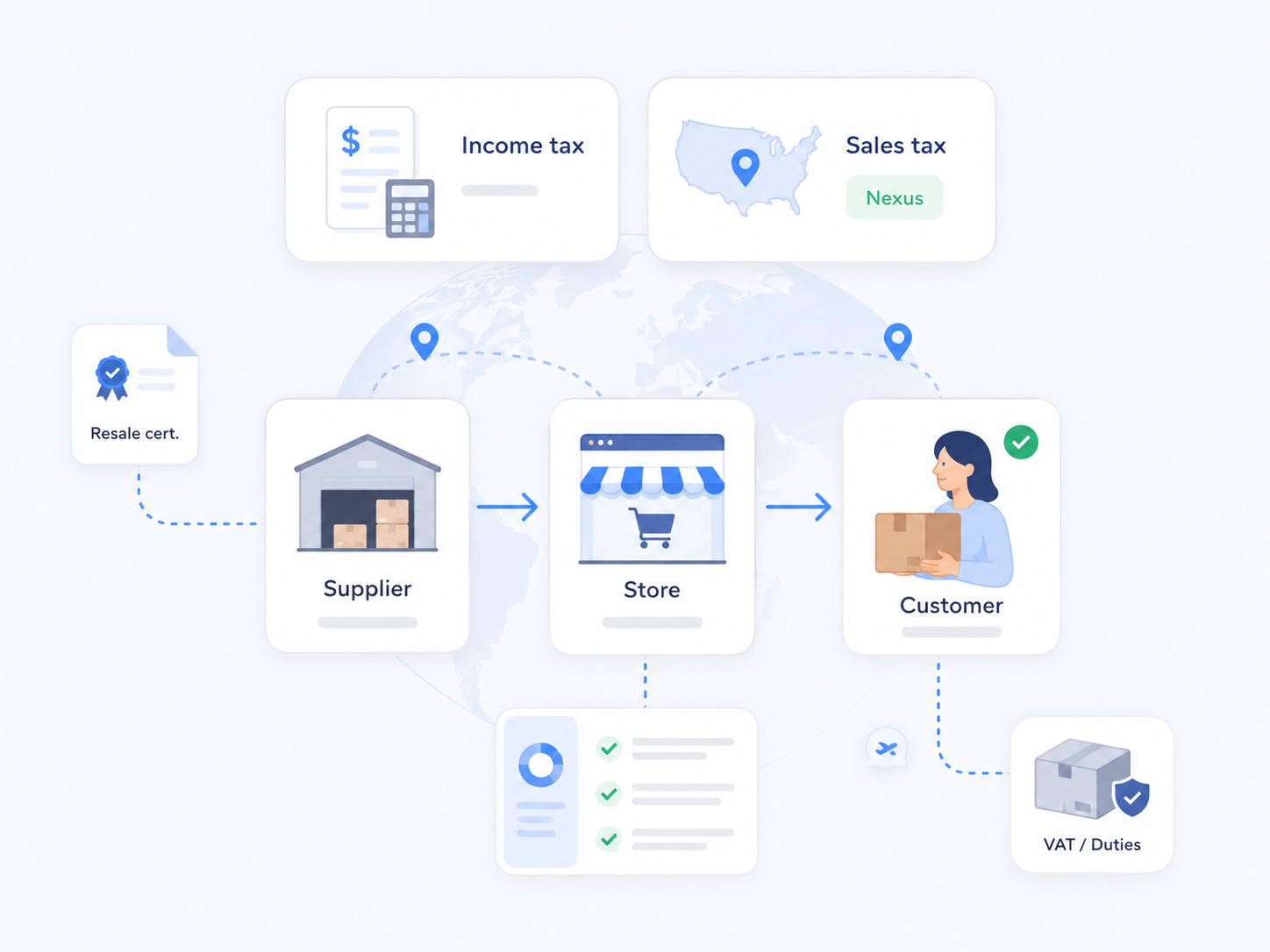
Taxes are where dropshipping gets genuinely complicated, because the supply chain involves three parties — supplier, business, and customer — who may sit on completely different sides of the world. In 2026 there are three things to think about: income tax, sales tax, and — new this year — import duties on the goods themselves.
Income tax
All your dropshipping profits are taxable. US-based sellers owe federal income tax, state income tax (in states that have it), and — as a sole proprietor — self-employment tax of 15.3% on net earnings. You pay tax on your net profit, not total sales, and you can deduct ordinary expenses like product costs, marketing efforts, and software, which matters when you're working with lower profit margins. If you expect to owe $1,000 or more, you'll make quarterly estimated payments.
Sales tax
This is the big 2026 issue, and it traces back to the 2018 Supreme Court decision in South Dakota v. Wayfair. Before Wayfair, you only had to collect sales tax where you had a physical presence. Now, states can require collection based on sales tax nexus — and 43 of the 45 states with sales tax laws enforce economic nexus. Thresholds vary by state: many use $100,000 in sales or 200 transactions a year, while a larger state like California sets sales tax nexus at $500,000 in sales. Cross the line in a state and you must register, collect sales tax, and remit it there.
Dropshipping adds a wrinkle called three-party nexus: you're in one state, your supplier warehouses goods in another, and your customer is in a third. To buy from your supplier tax-free for resale, you'll generally need a resale certificate, and the documentation each state accepts varies.
One critical point for store owners: Shopify is not a marketplace facilitator, so unlike selling on a large marketplace where the platform may collect tax for you, on your own dropshipping store you are responsible for collecting and remitting sales tax. Tools like TaxJar or Avalara automate most of it, but for tax purposes the obligation is yours from day one.
Import duties: the big change for 2026
This is the development that reshaped cross-border dropshipping, and on a legal page it needs to be stated plainly rather than softened. The US "de minimis" exemption — which for decades let parcels valued at $800 or less enter duty-free — has been eliminated.
What happened: Duty-free de minimis treatment was suspended for China and Hong Kong on 2 May 2025, then for all countries on 29 August 2025 under Executive Order 14324. Congress went further and repealed the exemption permanently in the One Big Beautiful Bill Act, effective 1 July 2027. So this is not a temporary policy that is likely to reverse — it has a statutory end date.
A court confirmed it: On 13 August 2026, the US Court of International Trade upheld the suspension in Axle of Dearborn (Detroit Axle) v. Department of Commerce. The court drew a careful distinction: ending an exemption is not the same as imposing a new tariff, because it simply makes sub-$800 goods subject to the same duties Congress already set for identical goods over $800. An appeal to the Federal Circuit is still possible, so treat current duty costs as the working reality rather than a settled forever-rule — but the last realistic path back to duty-free $800 shipments is now closed.
What it means in practice: Nearly every inbound parcel now owes duty. For Chinese-origin goods the rates stack (Section 301, IEEPA, and Section 232 can apply together). Detroit Axle — which had built a distribution center in Juárez, Mexico specifically to ship small direct-to-consumer orders under the $800 line — faced duties above 52% on Chinese-origin parts once the exemption closed. That is the concrete reason the ship-every-parcel-from-China model no longer works for the US market.
Do not try to engineer around it: Splitting one order into several sub-$800 parcels, or understating declared value, now carries civil penalties (up to $5,000 for a first violation and $10,000 for each one after). What used to be a common workaround is now an enforcement target — squarely relevant on a "is this legal" page.
Note: Duty rates and effective dates change and depend on the product and its country of origin. Look up your product's rate on the official USITC Harmonized Tariff Schedule, and confirm the full landed cost (including the stacked tariff layers a base-rate lookup does not show) with a licensed customs broker before you price anything.
In the UK and EU, the same direction of travel applies. Import taxes and VAT are paid by the importer of record — if your customer is the importer of record, they cover it, but a surprise duty bill on delivery is a fast way to lose that customer. The EU is phasing out its own €150 duty-free threshold, with an interim €3-per-parcel customs duty from 1 July 2026 until a permanent system is in place, and the UK is phasing out its de minimis by 2029. As a general rule, always double-check the tax side with your accountant first.
Read more: Is Dropshipping Worth It in 2026?
Faulty or unsafe products and supplier vetting
When you dropship, your supplier's production standards may differ from the country where you sell. Here's the key principle: retailers are responsible for the quality of the products sold, even if they never physically handle them.
Since dropshipping products from major platforms like AliExpress or Alibaba often ship from China, protect your business with Product Liability Insurance — roughly $42–$100 a month for $1M of coverage. As the retailer, you're part of the supply chain and can be held liable under strict liability if an unsafe product injures someone, so insurance is your backup if things go wrong.
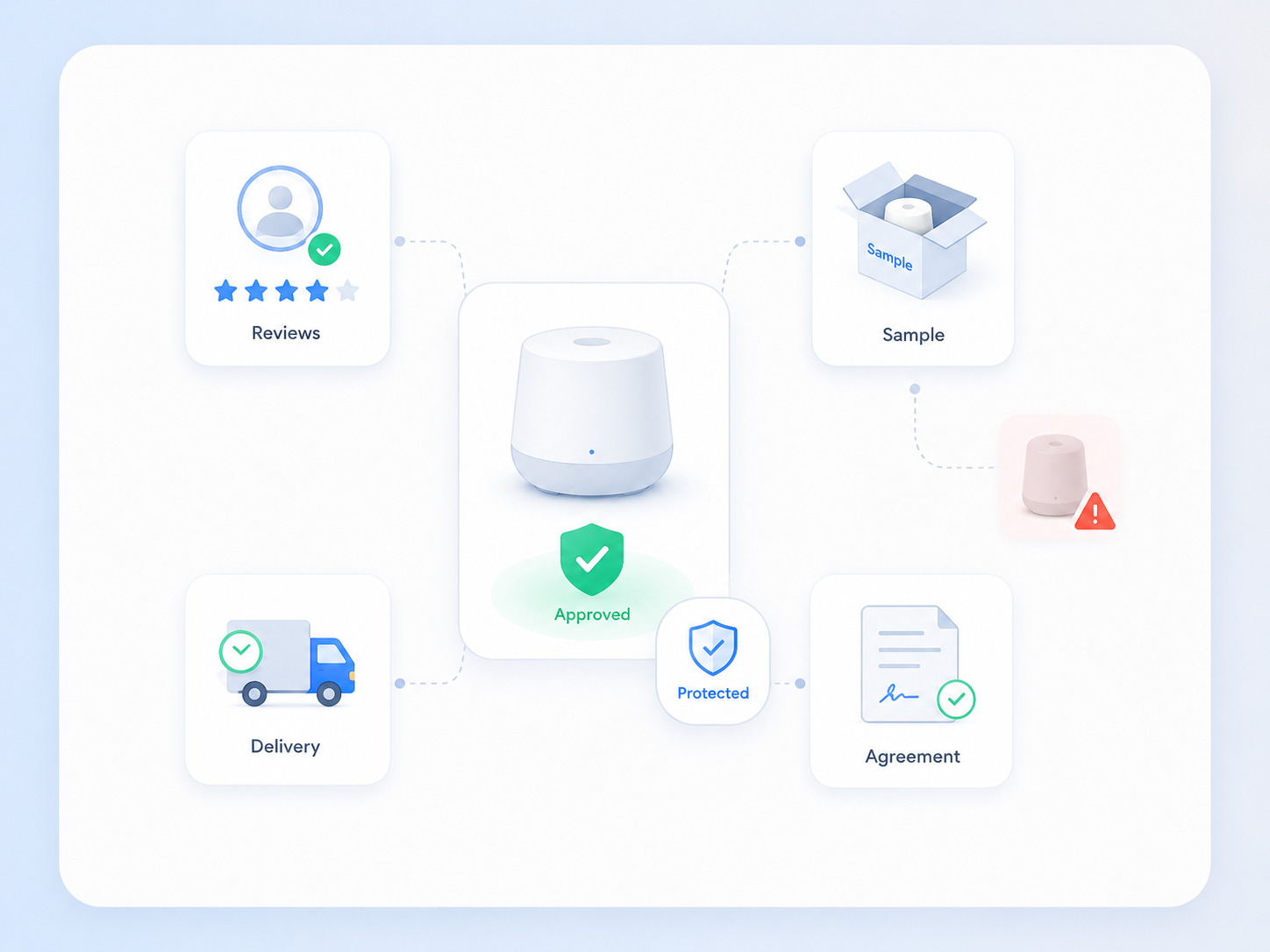
Because so much rides on product quality, vetting your dropshipping suppliers is half the legal battle. A few best practices:
Check reviews and reputation. Vet each wholesale supplier by researching their reviews and track record before adding their product catalog to your store.
Order samples. Order product samples yourself to test quality and shipping speed before customers ever see them.
Prioritize reliable delivery. Choose dropshipping partners with accurate, on-time delivery records — slow or wrong orders drive customer complaints and chargebacks.
Use a dropshipping agreement. A written agreement with your supplier clarifies responsibilities, from order fulfillment to handling defective items, and protects you if a dispute arises.
Whether you're selling phone accessories, party supplies, or anything else, accurately described, safe products keep you clear of consumer protection trouble and build the trust that earns repeat customers.
Read more: Most Profitable Dropshipping Niches to Dominate in 2026
How do I deal with dropshipping returns and customer support?
In the UK, consumer law is strict: under the Consumer Contracts Regulations, customers buying online generally have the right to cancel and get a refund within 14 days of receiving the goods. You can review the rules on the UK government's returns and refunds pages.
In the USA, states don't legally require a refund policy — but having one is a smart move that builds customer loyalty and trust. Whatever you choose, your return and refund policy must be clear, visible, and fair, since the Federal Trade Commission and state consumer protection laws expect honest dealing. Providing customer support promptly is part of staying compliant and keeping complaints low.
From the customer's perspective, the experience quietly affects your legal exposure: vague policies, hidden fees, and surprise shipping costs generate disputes. With duties now landing on more cross-border parcels, an unexpected customs charge on delivery is a new source of exactly these disputes — so state who is responsible for any import charges upfront. Building a transparent checkout — with policies, total costs, and delivery timelines stated upfront — reduces that risk.
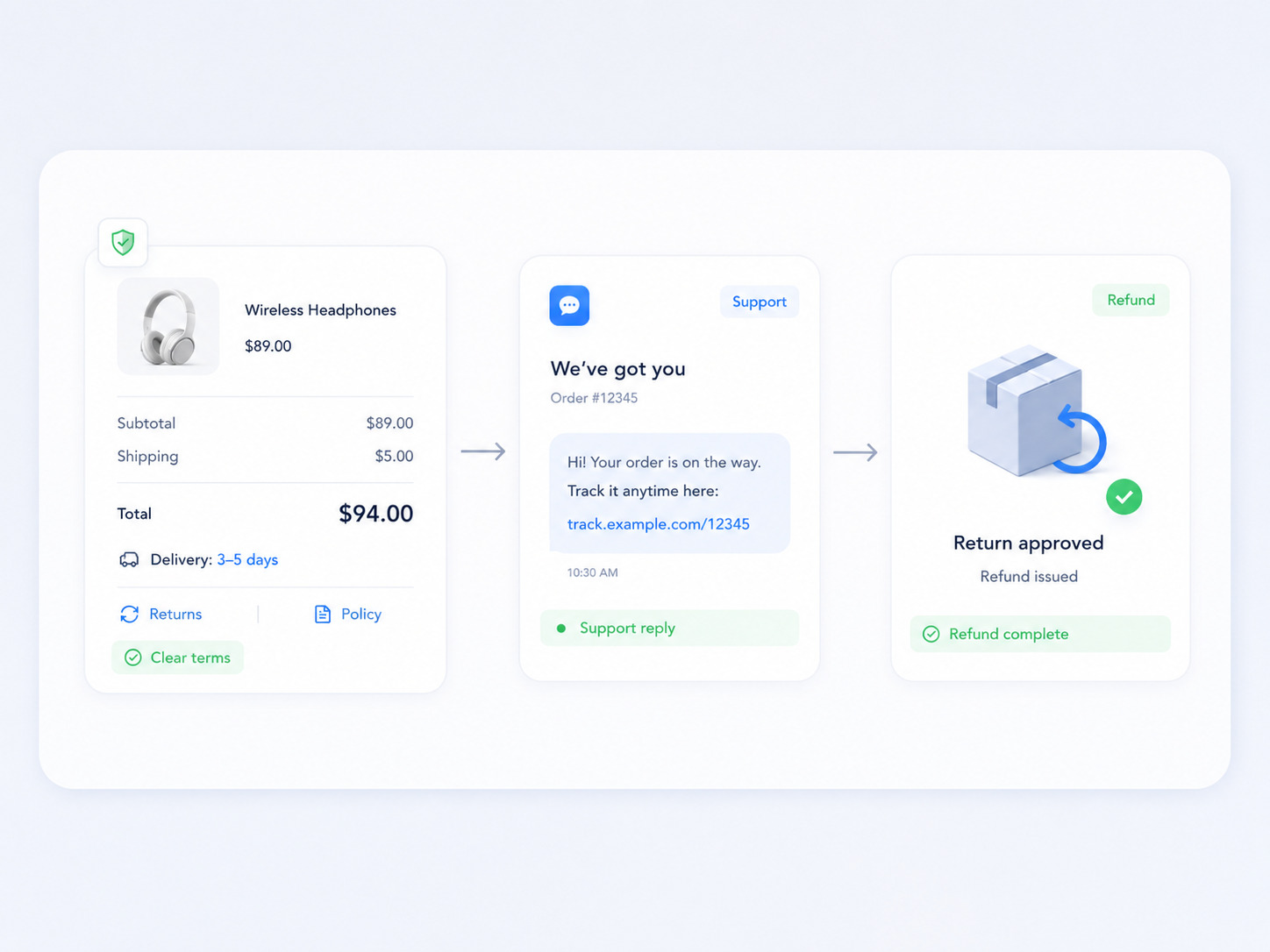
A focused funnel tool like Funnelish makes it easy to present clear pricing and legal pages at checkout and to run automated post-purchase emails that set accurate delivery-time expectations, one of the simplest ways to keep customers happy and customer complaints down.
Read more: Digital Dropshipping: How to Sell High-Margin Products with Zero Inventory
Handling customer data and required legal pages
If you collect personal data — which nearly every online store does — you must adhere to privacy laws and maintain a robust privacy policy. That means following the CCPA for California residents and the GDPR for any EU customers, regardless of where your business is based. Your website must clearly display legal pages like Terms of Service and a Privacy Policy, and it's best practice to inform customers that products are supplied by a third party. Mishandling customer data is a fast route to legal problems and lost trust.
Can you get in trouble for dropshipping?
Yes — dropshipping becomes illegal through your actions, not the business model. The most common pitfalls are intellectual property violations and restricted product niches.
Intellectual property
Selling counterfeit products or unauthorized branded products without permission is a violation of intellectual property rights, and US trademark penalties run from $750 to $150,000 per infringement. Selling replicas or fake goods can trigger customs seizures and legal action, and counterfeit products damage your reputation and pile up negative reviews.
Using a supplier's exact images or descriptions can also create copyright issues, and the FTC enforces truthful advertising, so misrepresenting products or shipping times invites legal action. Only sell branded goods with explicit permission from the brand owner — that's the line between a legitimate business and intellectual property violations.
Restricted niches
Some categories are off-limits or heavily regulated. Avoid these:
Drugs. Virtually every e-commerce platform in the UK and USA bans selling drugs. Doing so can get you banned and carry legal implications.
Guns. In the USA you need an FFL license to deal in firearms and ammunition; in the UK you must be a registered firearms dealer.
Human medicines. In the EU, only a certified, recognized pharmacy can legally sell these. In the USA, an online pharmacy must have a state-licensed pharmacist available. Verify legitimate sellers through the FDA's BeSafeRx program.
Other categories — food, supplements, alcohol, and cosmetics — require product-specific licenses in certain countries regardless of how you fulfill them. The safest move is to check with your local licensing office before you sell products in these niches.
Bottom line
So, is dropshipping legal in 2026? Yes — it's a legitimate, legal business model in the US, UK, and worldwide, provided you operate it properly. That means handling business registration and choosing the right structure, understanding your income and sales tax obligations (especially sales tax nexus after Wayfair), accounting for import duties now that the $800 de minimis exemption is gone, carrying product liability insurance, vetting reliable dropshipping suppliers, offering clear returns, protecting customer data, respecting intellectual property, and steering clear of counterfeit or restricted products.
Dropshippers who take compliance seriously and work with reputable dropshipping partners rarely run into legal trouble. Do your own research, lean on a lawyer and accountant for your specific situation, and you can build your dropshipping business with confidence — and far lower legal risk than the myths suggest.
Table of contents
Boost your eCommerce
sales today

24/7 support
No credit card required
Cancel anytime
24/7 support
No credit card required
Cancel anytime
