

10 D2C Marketing Trends in 2026: Funnel Strategies from Top Brands to Scale Profitably
06 January 2026
Anna P.
17 minutes
As we head toward 2026, the priority for D2C marketing is shifting. We have moved past the days of simple acquisition into a phase focused on unit economics, owning your data, and refining the funnel. While legacy brands are still content trading margins for retail distribution, modern winners are building direct connections.
Take Huel, Blissy, and Javvy Coffee. They are surviving the rising cost of ads, and they are likely outpacing it by completely rethinking how they sell online. These brands don’t rely on standard websites. Instead, they use dedicated D2C funnels to make the most of every visitor.
We’re going to walk through their approach and other trends — from advertorials to post-purchase upsells — to show you how you can apply these same strategies to your business.
We also need to look at the context in which these methods were born to really understand why they work in 2026. At the end of the day, the D2C marketing strategies used by top brands these days were a direct response to a few major shifts that forced the industry to grow up.
Historical Context (2020–2025)
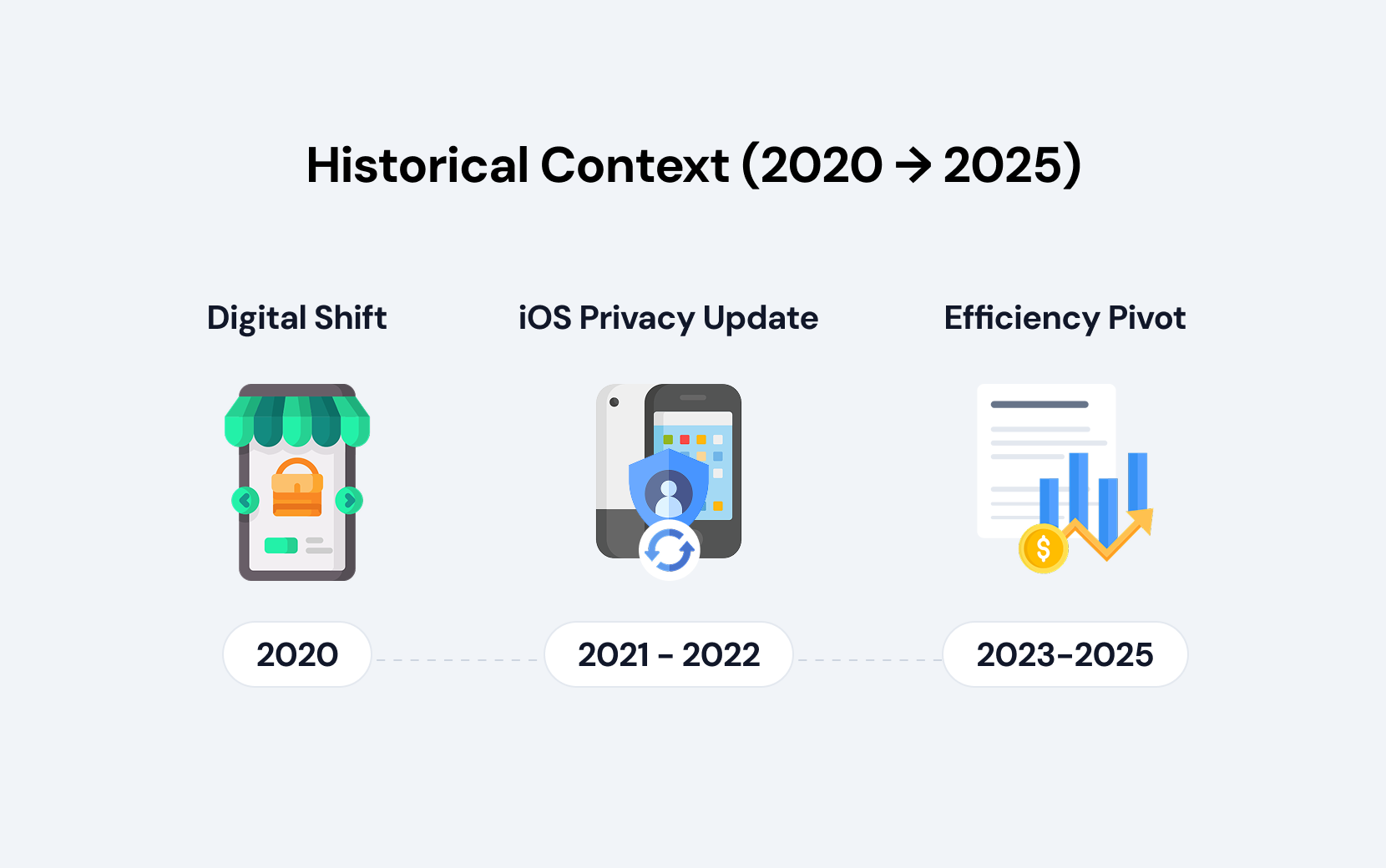
The last five years have been a period of intense refinement for the D2C model. We’ve seen three distinct phases that challenged brands to adapt, filtering out the noise and shaping the stronger companies we see today.
2020: Digital Shift
The pandemic changed consumer habits almost overnight. With physical stores on pause, e-commerce adoption jumped forward years in the span of a few months. Worldwide online revenue grew by roughly 19% in 2020 alone. It was a unique window where simply having inventory and running social media ads was enough to turn a profit.
2021–2022: Privacy Update (iOS 14.5)
Things became more complicated in April 2021 with Apple’s iOS 14.5 update. App Tracking Transparency limited the visibility Meta, Snap, and Google had into user behavior. The era of low-cost customer attribution faded as advertisers had to navigate anonymized data via the SKAdNetwork. For many brands, acquiring new customers became more expensive.
2023–2025: Efficiency Pivot
In response, brands began looking past top-line revenue to focus on sustainable growth. Profitability became the priority, with teams closely watching the relationship between customer lifetime value and acquisition costs. The most successful companies realized that selling a physical product is only half the equation — understanding the customer data behind it is just as important.
Predictive analytics started playing a central role, helping brands identify their best customers before a second purchase is made. And it was this shift toward data and efficiency that fundamentally changed what it means to be a direct-to-consumer brand today.
D2C Business Model and Unit Economics in 2026
By 2026, the definition of direct-to-consumer has evolved. It is no longer limited to having a Shopify store and running ads. It has become a business model where the manufacturer owns the vertical stack: the data, the margin, and the customer relationship.
This new definition requires a new scorecard. While traditional retail focuses on gross margin, the 2026 D2C leader tracks contribution margin, or the revenue left over after you deduct all the variable costs associated with a specific order. These include COGS, shipping, transaction fees, and the ad spend required to get that single sale.
The math here is unforgiving. If your gross margin is 80% on a $60 item, but shipping is $15, and your customer acquisition cost is $40, you are losing money on the first transaction. This reality is exactly why the standard online store approach is fading away.
To make the math work, you need a higher average order value, and that requires a more engineered approach to selling.
Moving Beyond Generic Storefront
For years, the standard move was to send traffic to a home page or a catalog-style collection. In today’s market, that is a leaky-bucket strategy. In 2026, top brands treat every ad click as a guided tour, not a drop-off at the mall entrance.
Why Choice Overload Hurts Conversions
There is plenty of psychological research, showing that when the human brain is presented with too many options, it might enter analysis paralysis. That is why a standard theme with a massive header menu, a search bar, and 20 different products fighting for attention might be a recipe for high bounce rates.
Why Micro-Funnel Approach Is Better for Customer Journey
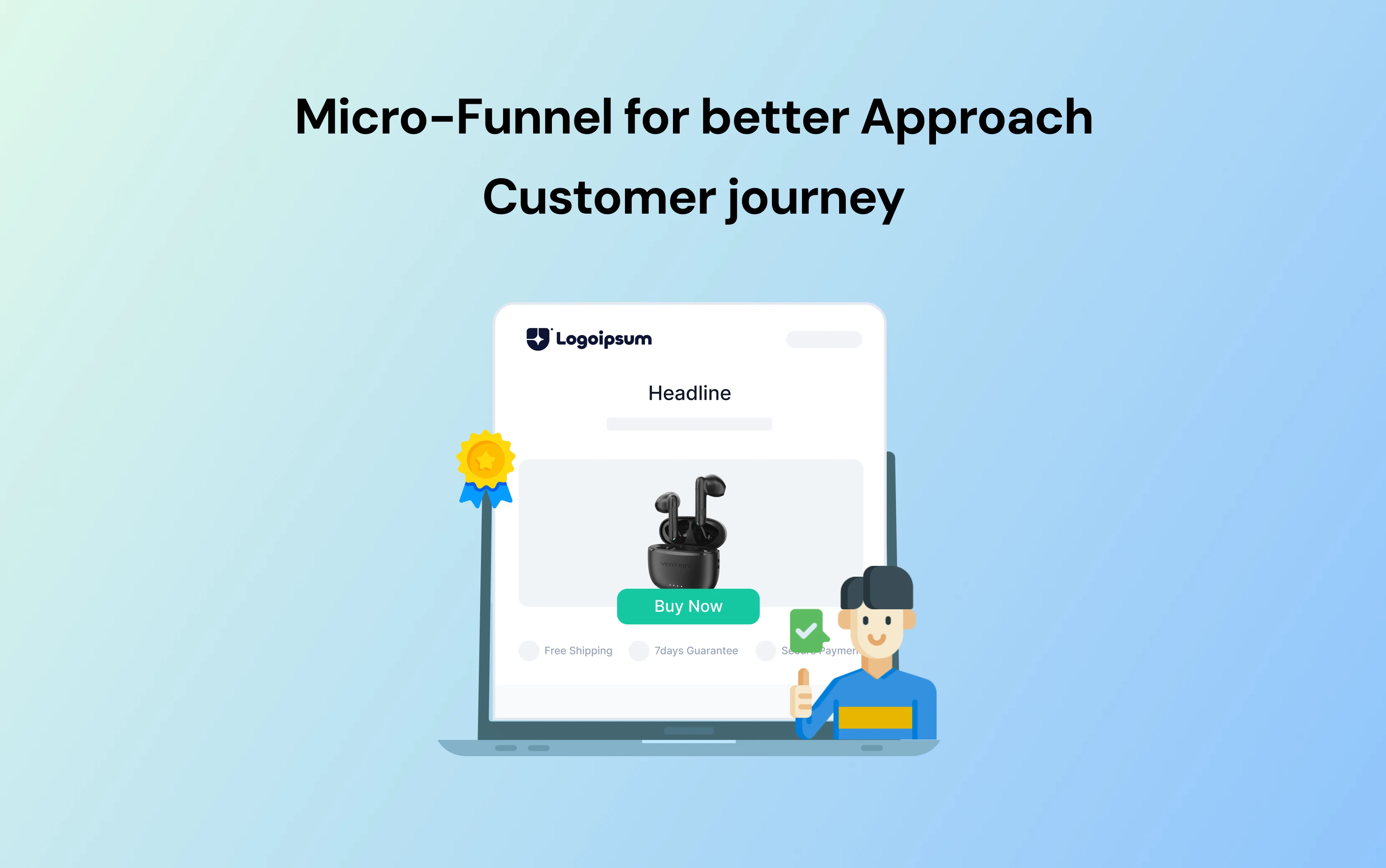
To solve this, leading brands have adopted micro-funnels. Instead of a general store, each product or bundle gets a high-speed landing page that does three things:
Removes navigation: There are no exit points or distractions.
Matches messages: The headline aligns with the ad the user just clicked.
Focuses on one offer: It highlights a specific hero offer or bundle.
Huel’s way of doing things is a great example of the micro-funnel implementation. "Hope you find what you need." vs. "Lead you to the solution for your problem."? The second always wins for them. If you click their ad for nutritious drinks, you won't land on a filter-and-find-yourself catalog. You will likely land on a page comparing lower-calorie diet drinks, high-protein diet drinks, and some balanced options.
Once you move away from the generic storefront, the next logical step is personalization. What do you do in a post-cookie world, where you can’t rely on Meta or Google to tell you who your customer is? You have to ask them directly. That new reality sets the stage for the first trend on our list.
Trend 1: Quiz Funnels for Zero-Party Data Harvesting
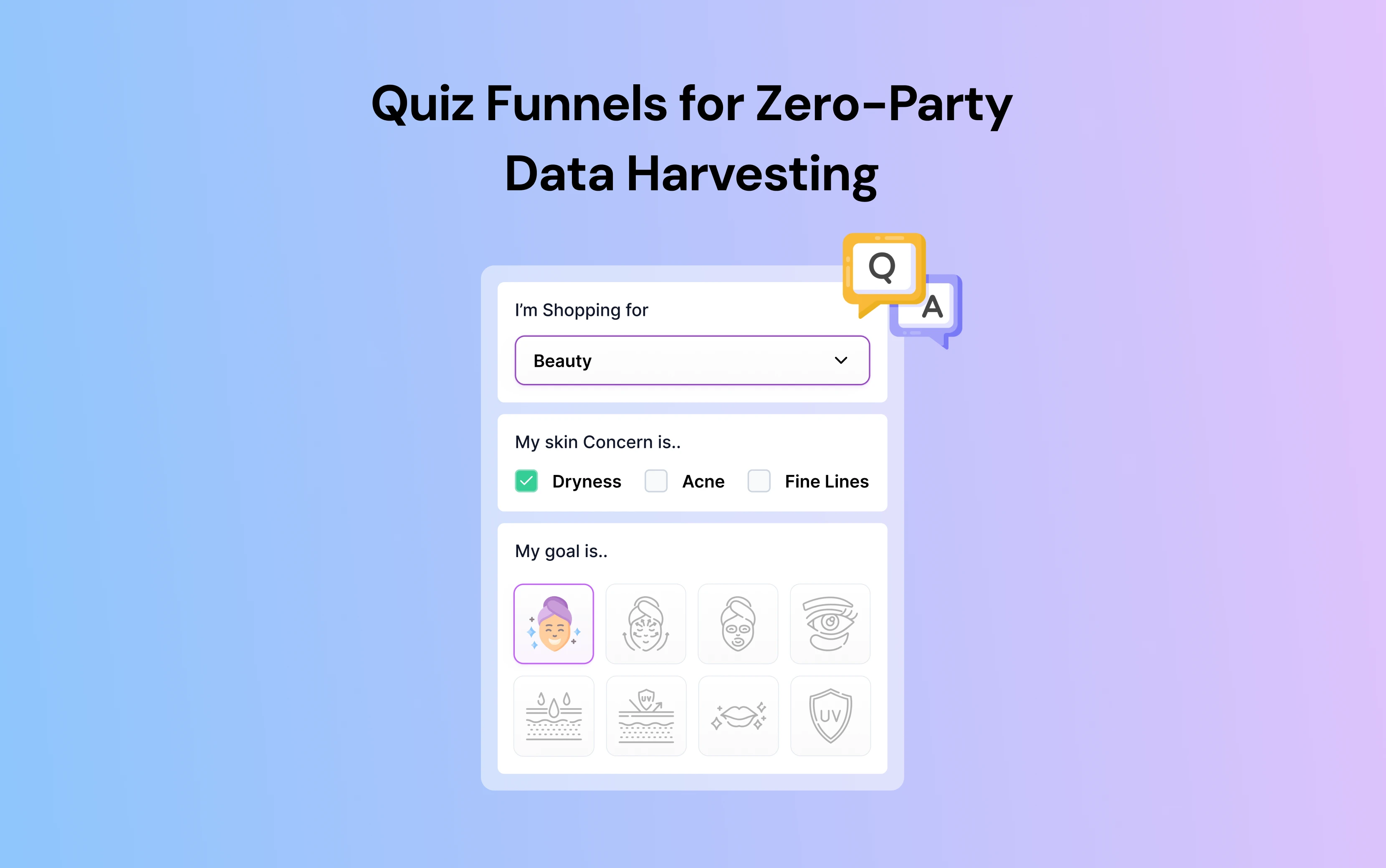
Huel has integrated this technique in a "Help me choose" way. When a user enters their funnel, they are prompted to take a quiz about their lifestyle, weight goals, and flavor preferences.
This works well for a few tactical reasons.
Psychological Commitment
By answering 5–7 questions, the user has invested effort into the process. The principle of consistency makes them roughly 3x more likely to buy because they want to see the reward for that effort.
Hyper-Segmentation
The brand now knows if you are a busy professional or a fitness enthusiast. Every email they send you afterward can be personalized to that identity.
Prescription Effect
The result isn't a product list; it’s a recommendation tailored to them. Buying a Daily A-Z Vitamins pack of 12 cans feels like a more logical step in a health journey rather than a raw transaction.
Building Your Quiz for 2026
The first thing you need to focus on is why you’re doing this at all. The answer is: to harvest data and create a unique experience. A strong quiz usually follows a simple structure:
Identity question: "I am a..."
Pain point: "My biggest struggle is..."
Desired outcome: "I want to achieve..."
Your result is a specific bundle that addresses the pain point and promises the outcome, making the purchase decision feel safe and logical.
Trend 2: Advertorial & Educational Pre-Landers
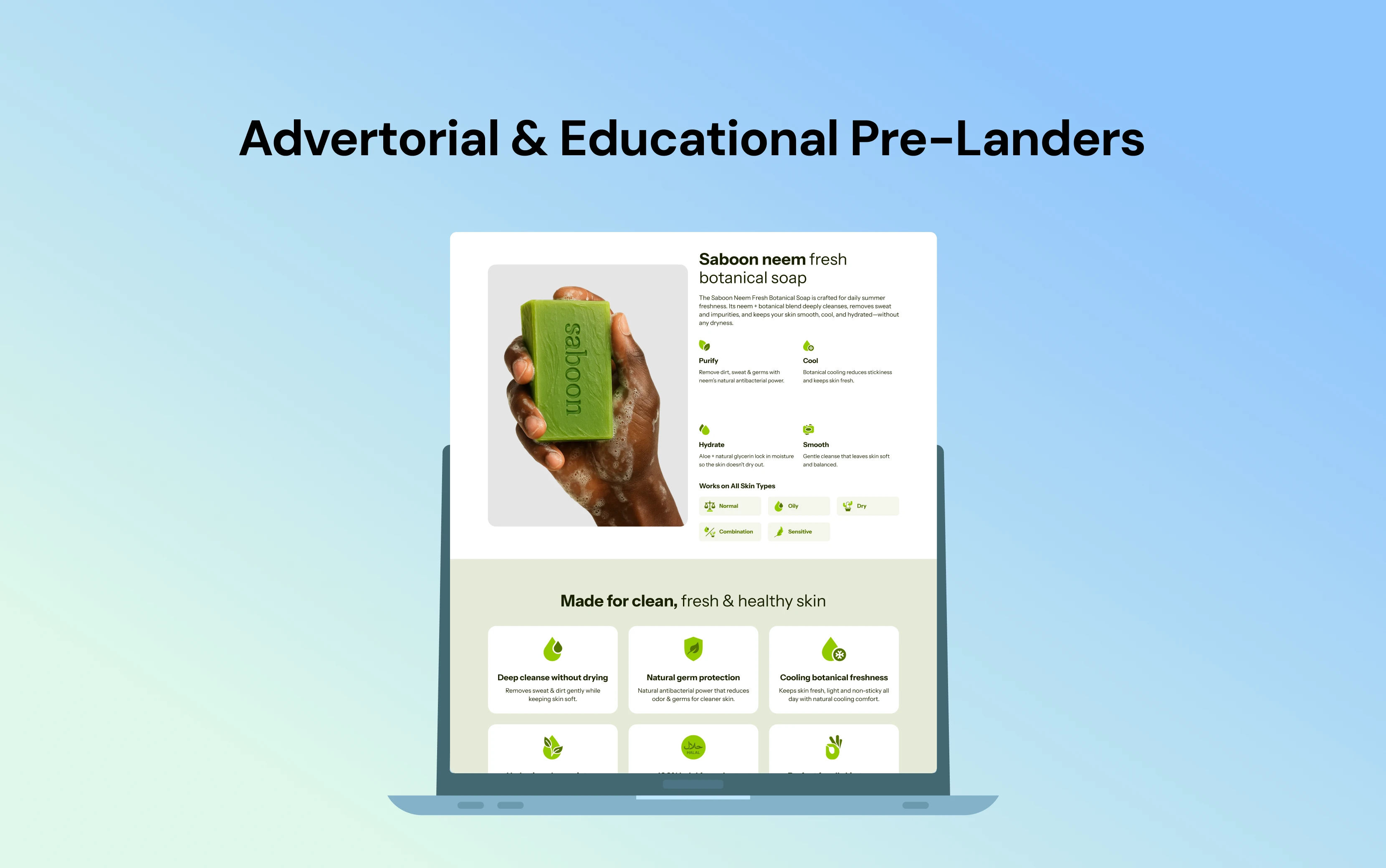
While quizzes work well for warm leads, cold traffic needs more convincing. Hence, direct-response advertising can feel too aggressive. In 2026, consumers crave authority, which is where the advertorial bridges the gap.
For example, instead of an ad that demands "Buy our creamer," Javvy runs a headline that looks like news: "Finally a Collagen You Won't Have to Quit".
The click leads to an advertorial page that looks like a high-end wellness brochure.
Hook: A curiosity-driven headline grabs attention.
Agitation: The text explains why the reader's current solution (like stevia blend creamers) is more harmful (possible joint pain or hair damage) without saying it directly.
Solution: The narrative introduces the product as the breakthrough that solves the agitation.
Authority Frame
In collaboration with specialists, like nutritionists, the brand moves from being a vendor to an authority. The warmed-up traffic then arrives at the checkout with zero objections. They have been educated on why the price is higher and why the product is necessary or just a more rational option.
Trend 3: Maximizing AOV (Bundles & Subscriptions)
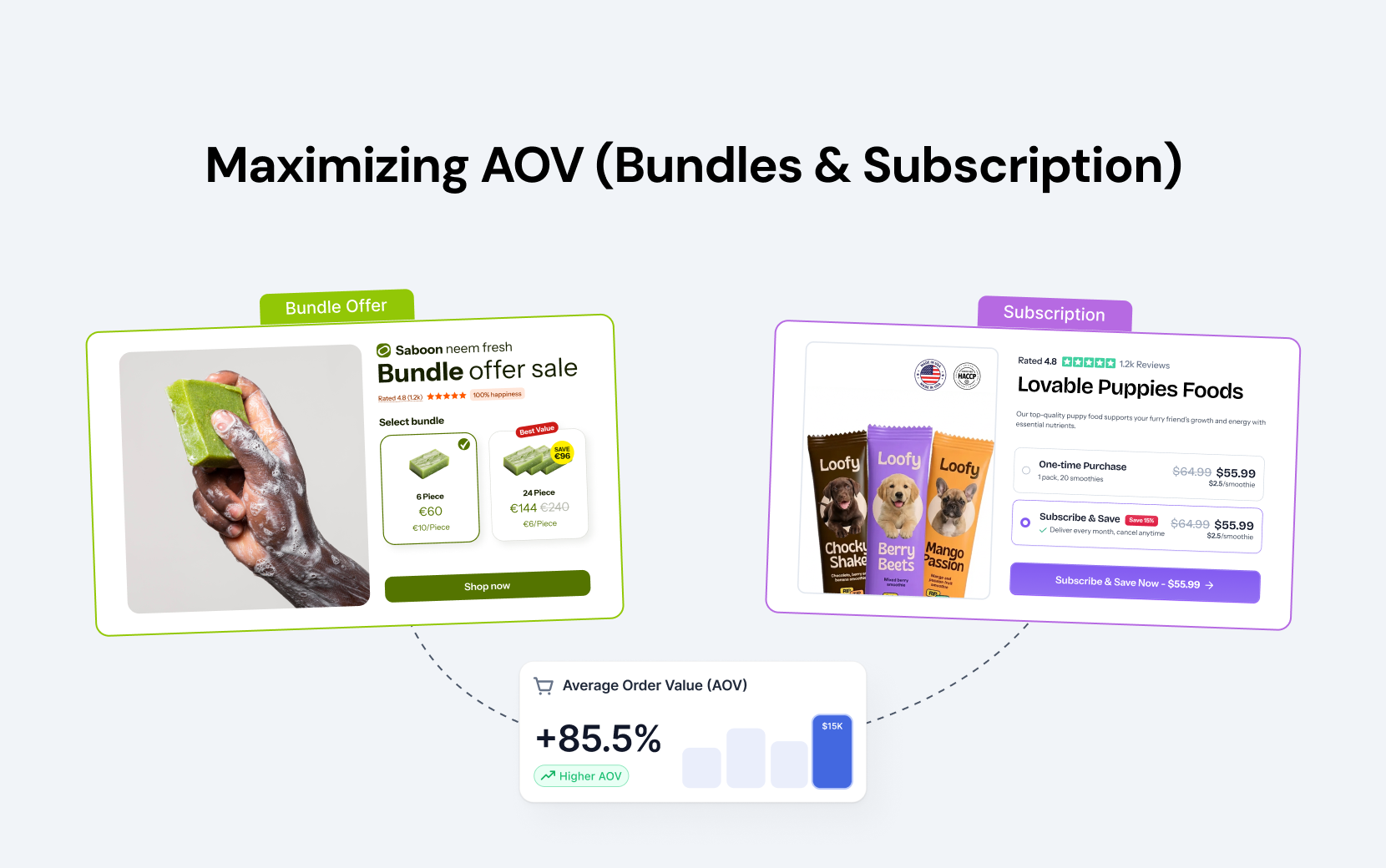
Getting the customer to the site is only half the battle. If your customer acquisition cost is $40, you cannot afford to sell a $40 item. You must structure the offer to ensure every customer is profitable on day one.
Blissy Model: Tiered Pricing Psychology
Blissy masterfully uses tiered bundles to drive average order value. The logic is:
Option 1: 1 Pillowcase ($79) — The anchor price.
Option 2: 2 Pillowcases + 1 Free ($158) — The Best Value choice.
Option 3: 3 Pillowcases + 3 Free ($237) — The Family choice.
Defaulting the user to the "Buy 2 Get 1 Free" option doubles their revenue compared to a single sale. Even with the Free unit, the contribution margin remains significantly higher because shipping three items costs nearly the same as shipping one.
Blissy also doubles down on authority by integrating identifiable medical specialists throughout the page experience. Rather than just listing features, they anchor the narrative with expert-led videos, instructional dropdowns, and success stories that validate every claim.
Huel’s Subscriptions
Similarly, Huel masters average order value maximization by making the Subscribe & Save option the path of least resistance on their Ready-to-drink pages:
Incentive: An immediate 10% price anchor (£39 vs. £43.50) creates a no-brainer decision for the value-conscious buyer.
Retention: By automating the 4-week delivery cycle, Huel secures predictable cash flow, building a deep brand habit.
Psychological win: They mitigate commitment phobia by highlighting flexibility — cancel, swap, or skip — ensuring the subscription feels like a convenience, not a trap.
Trend 4: Order Bump
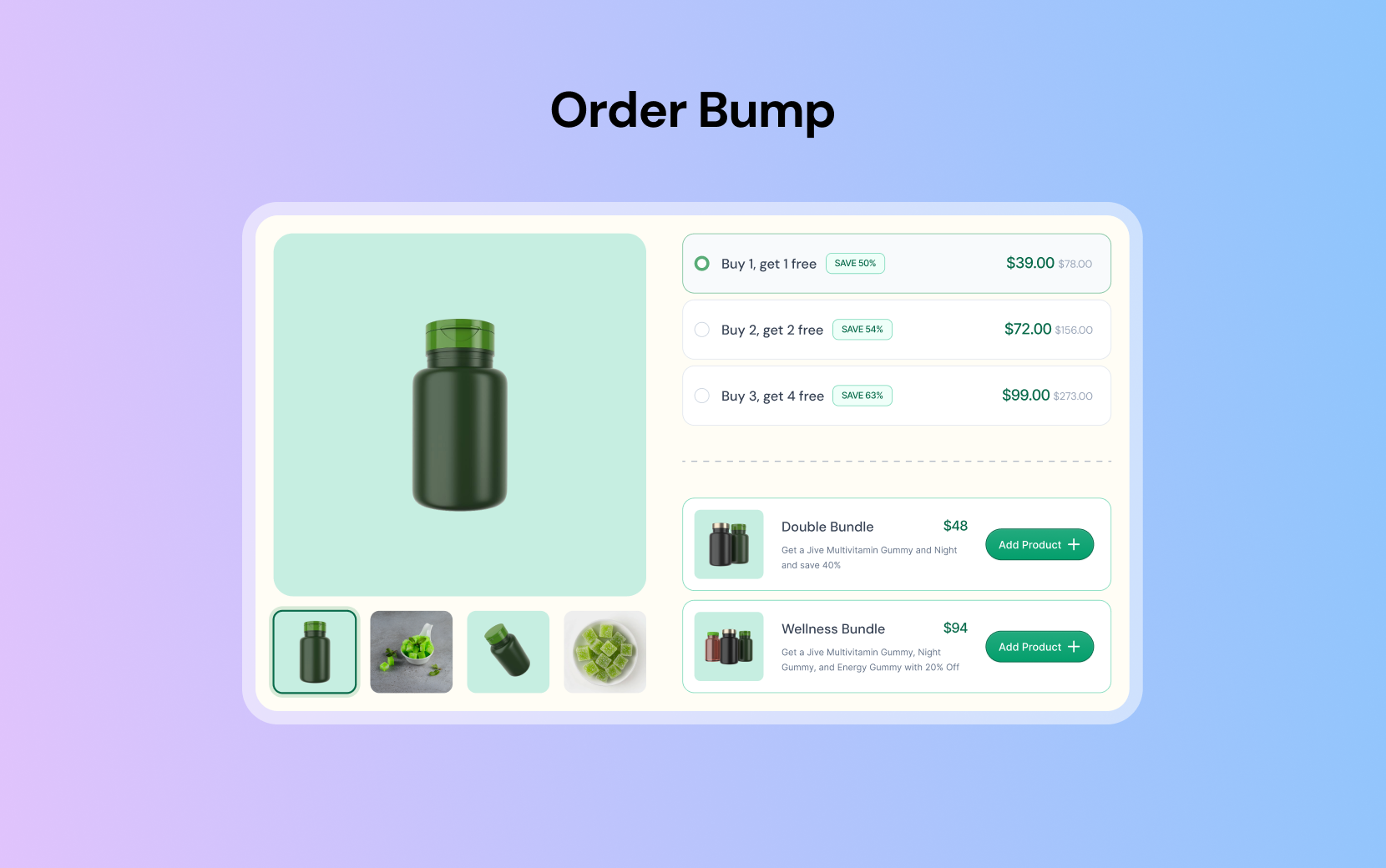
Once the customer decides to buy, the moment between Add to Cart and Checkout becomes the most profitable space in your funnel. This is the home of the order bump.
Huel Taster Bundle Analysis
If you add a Huel’s Grab & Go Bundle subscription to your cart, you are immediately offered complementary options to extend your subscription, such as with Daily Greens. The brilliance of this funnel stage lies in the positive reinforcement loop as well. Huel starts with a celebration ('You’ve got FREE SHIPPING 🎉') to lower buyer’s remorse, then introduces a new goal: the 10% discount threshold.
They are categorizing cross-sells with lifestyle-driven copy (such as 'Complete your morning routine' or 'Meal prep made simple') and shift the conversation from buying more powder to optimizing your day. This way, they reduce the cognitive load of choosing a second product by framing it as a logical extension of the first.
This D2C strategy works because it’s driven by gamification:
It creates a psychological itch to complete the bar and unlock the 10% discount.
Shipping is the first goal (already won), which builds trust. The discount is the second goal, which builds profit.
They show Categories (Morning Routine, Meal Prep) which helps the customer self-segment.
Digital Order Bump
In 2026, we also see priority shipping or insured delivery as order bumps increase. This costs the brand nothing but adds $2–$5 of pure profit to the order. Across 10,000 orders, that equates to $50,000 of pure margin.
Trend 5: Post-Purchase One-Click Upsells
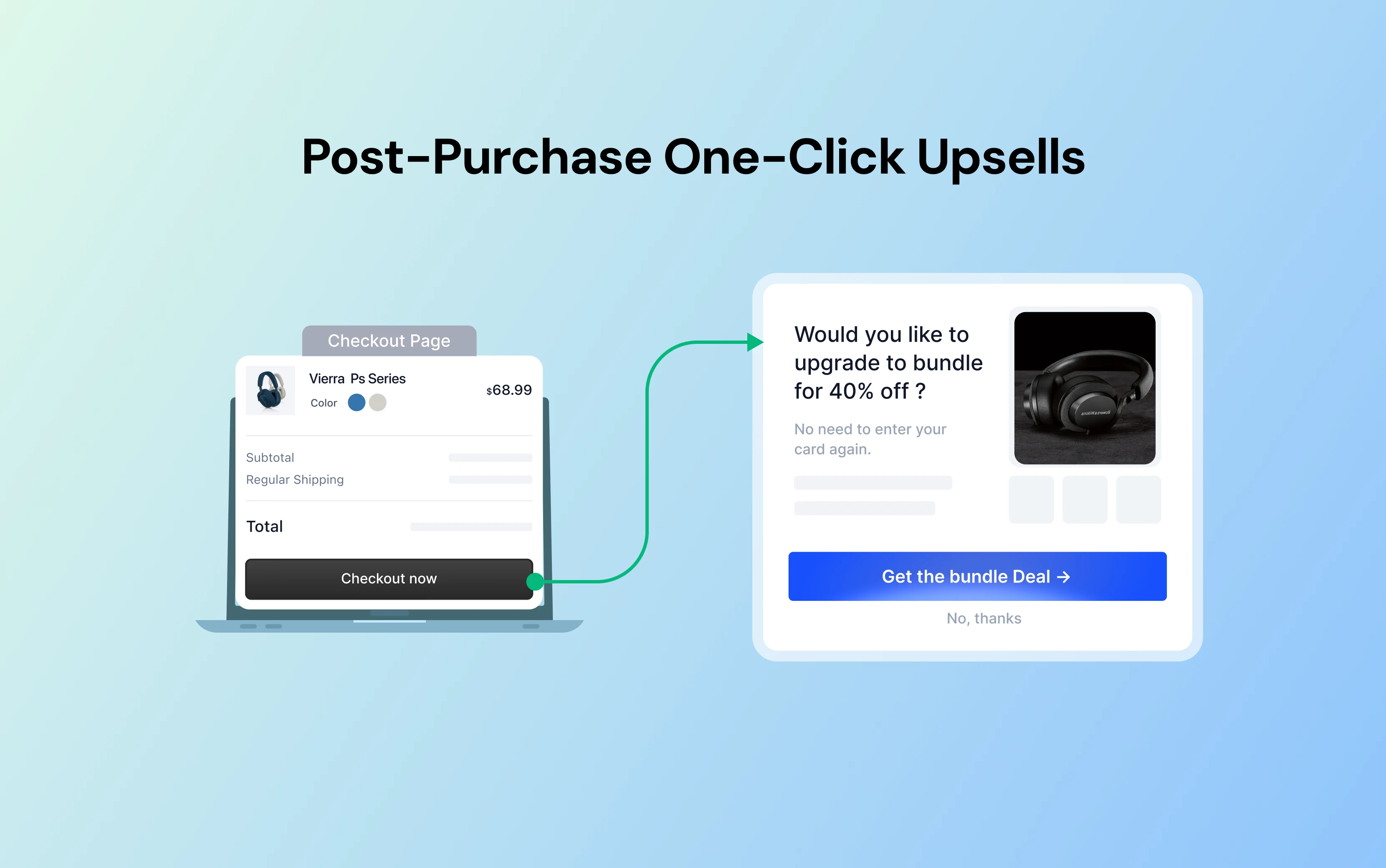
The sale doesn't end when the customer hits Pay. In fact, that is often when the real profit begins, especially if you master the one-click upsell.
One-Click Upsell Logic
Once the payment is authorized, the brand has the customer’s buying energy at its peak.
Offer: "Wait! Your order is being processed. Would you like to add [Product X] for 40% off? No need to enter your card again."
Tech: Using Funnelish, the transaction updates instantly.
Result: A 10–20% take rate on a post-purchase upsell can increase total revenue by 30% without spending a single extra cent on ads.
Upsell Sequence Example for D2C Brands in 2026
If you're only entering the D2C space and you haven't stored valuable information about your users to personalize your offers, the good old tricks might help:
Upsell 1: "More of the same." (If they bought 2 bags, sell them 2 more at a massive discount).
Upsell 2: "Complement." (If they bought coffee, sell them the travel mug).
Downsell: If they decline the big offer, offer a cheaper version of the same thing.
Once you know your unit economics from the inside out, you will be able to juggle these offers as much as you wish to make the most out of your upsell strategies.
Trend 6: AI-Driven & No-Code Vibe Personalization
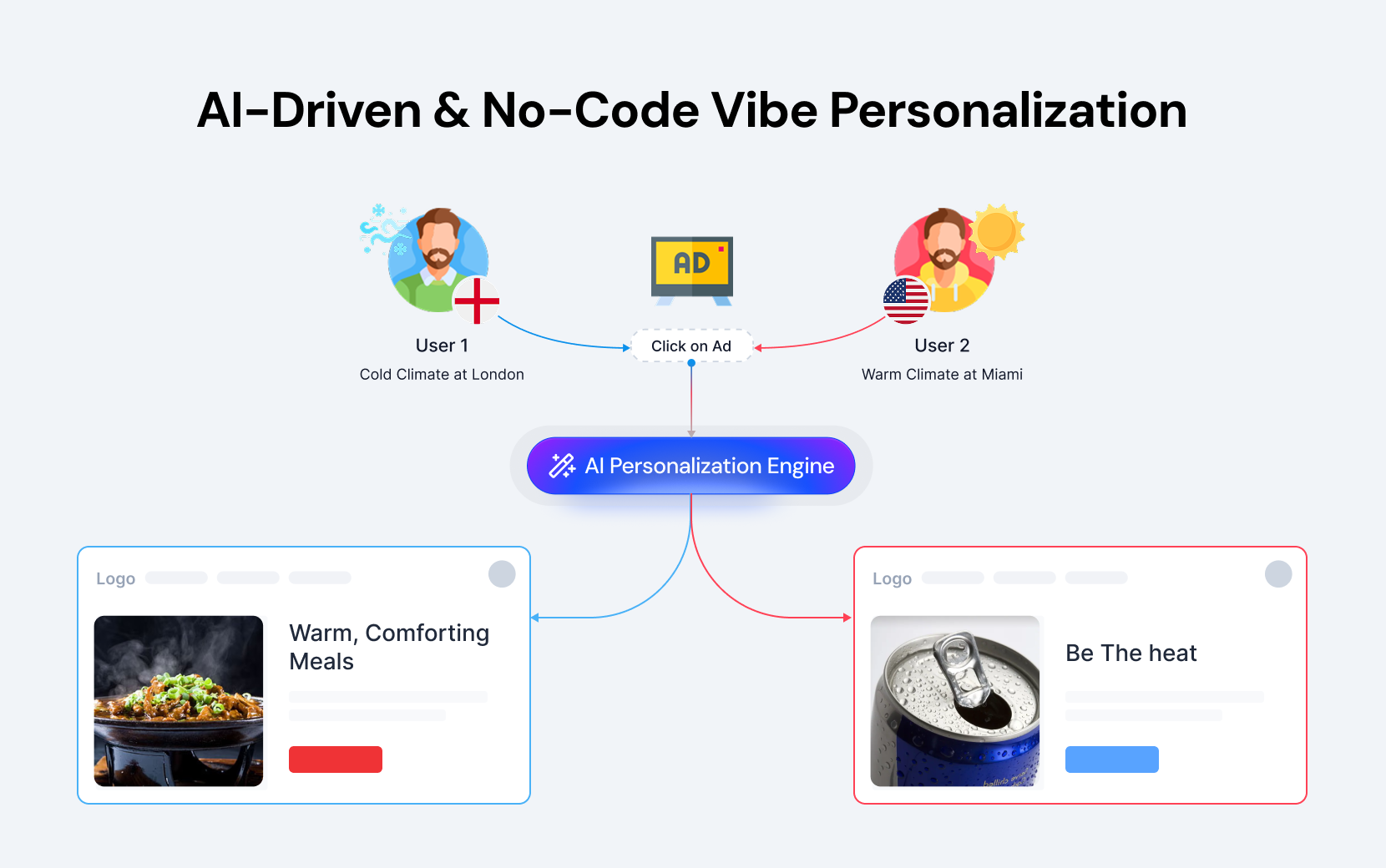
While upsells increase revenue, personalization ensures the customer feels understood throughout their journey. As we move deeper into 2026, we will likely leave the era of the static funnel.
Personalization doesn't mean a simple "Hello [First Name]" anymore. We are now talking about dynamic landing pages. Modern AI and no-code tools can already help you build pages for a unique offer fast and adjust the landing page copy, images, and offers in real-time based on the user's "vibe" — their local weather, previous browsing history, or the hook of the ad they clicked.
If a user clicks an ad for Huel in a cold climate like London, the page might emphasize "Warm, Comforting Meals." If the same ad is clicked in sunny Miami, the landing page might switch to "Chilled Shakes to Keep Going Through the Heat." With location-based funnels, Huel can meet the customer exactly where their mindset is.
Trend 7: Agentic AI as Consultative Support
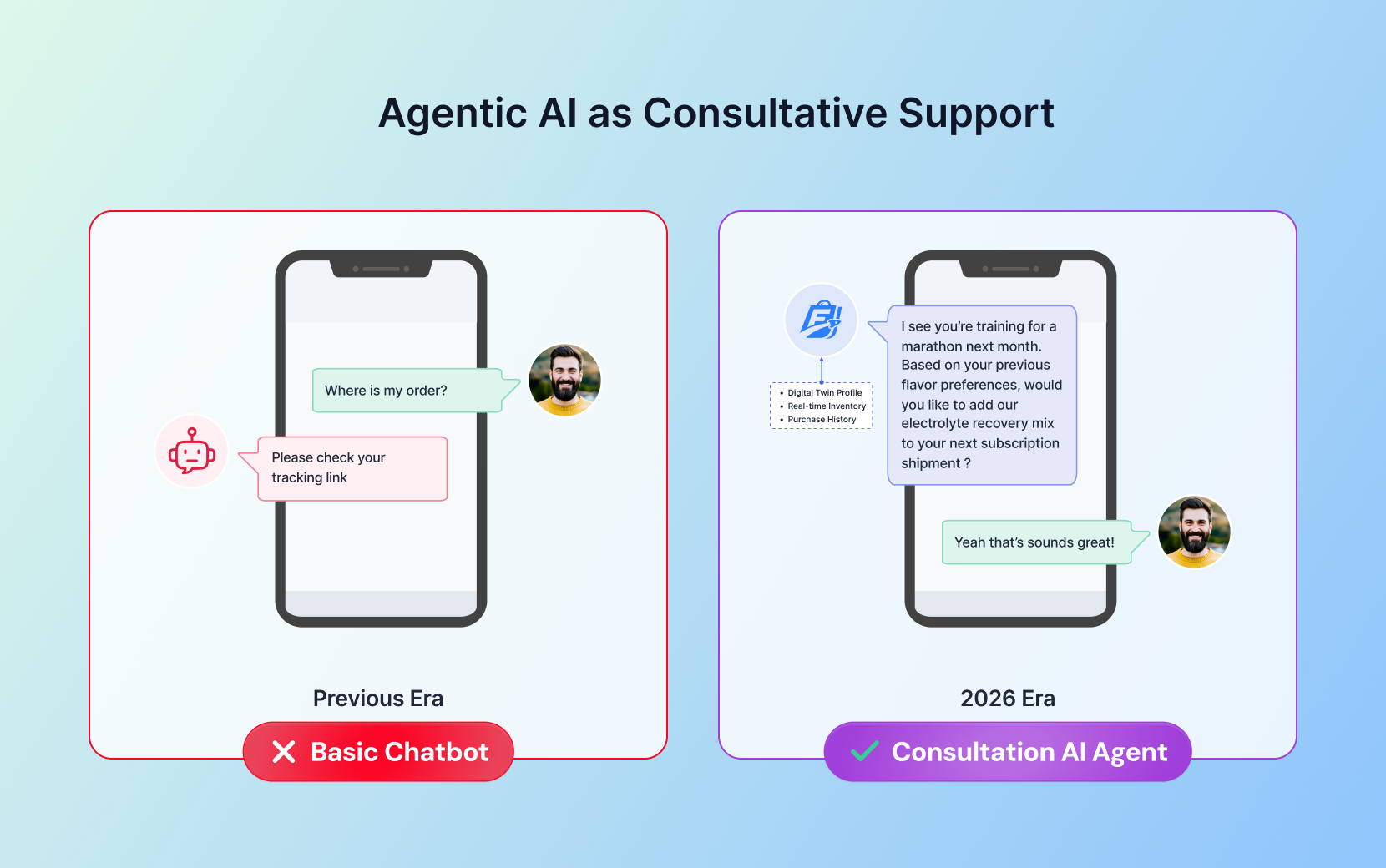
Sometimes, even the best personalization isn't enough to close the sale. When a customer gets stuck or has a specific question, brands now turn to the next evolution of support: Agentic AI.
Do you recall chatbots being extremely frustrating? Now, they are consultative. In 2026, D2C brands use autonomous assistants that do both: answer FAQs and actually help build custom bundles. These agents access real-time inventory and a customer’s digital twin profile to suggest products that solve real problems.
Instead of "Where is my order?" the conversation looks like:
"I see you're training for a marathon next month. Based on your previous flavor preferences, would you like to add our electrolyte recovery mix to your next subscription shipment?"
Trend 8: Hyper-Local Quick-Commerce Fulfillment
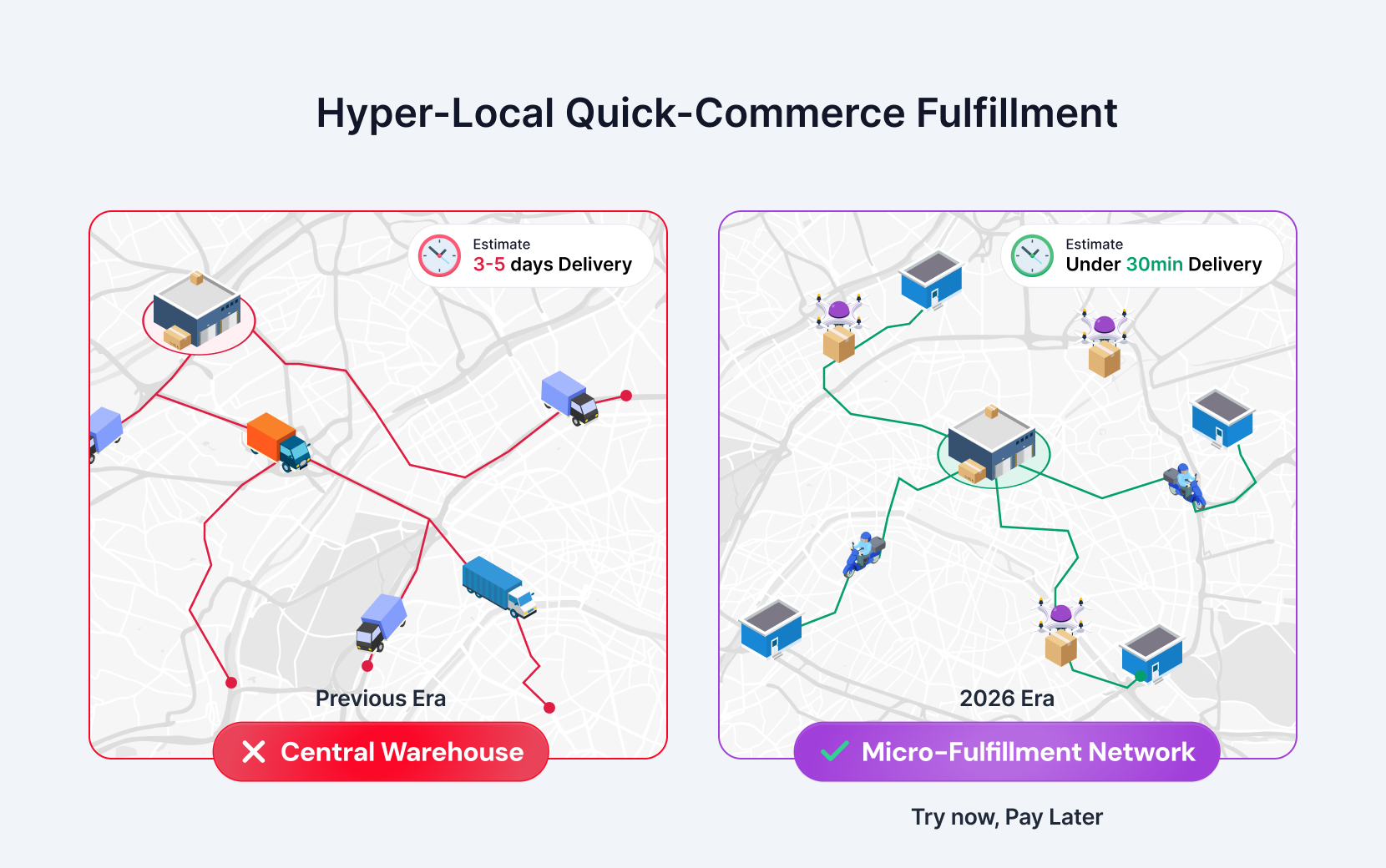
Once the AI has helped close the sale, the customer’s expectation shifts to delivery. We've already talked about how Amazon has set the standard for instant in our previous post about D2C meaning in 2026, and brands are adapting to survive.
In response, they have been moving away from a central warehouse. They are now using micro-fulfillment centers or dark stores in major metros to offer:
Under-30-minute delivery in urban centers via Q-commerce partners.
Try Now, Pay Later, letting customers order for $0 and only paying after they keep the item for seven days — a fitting room experience for home.
Trend 9: Creator-Led Communities over Influencers
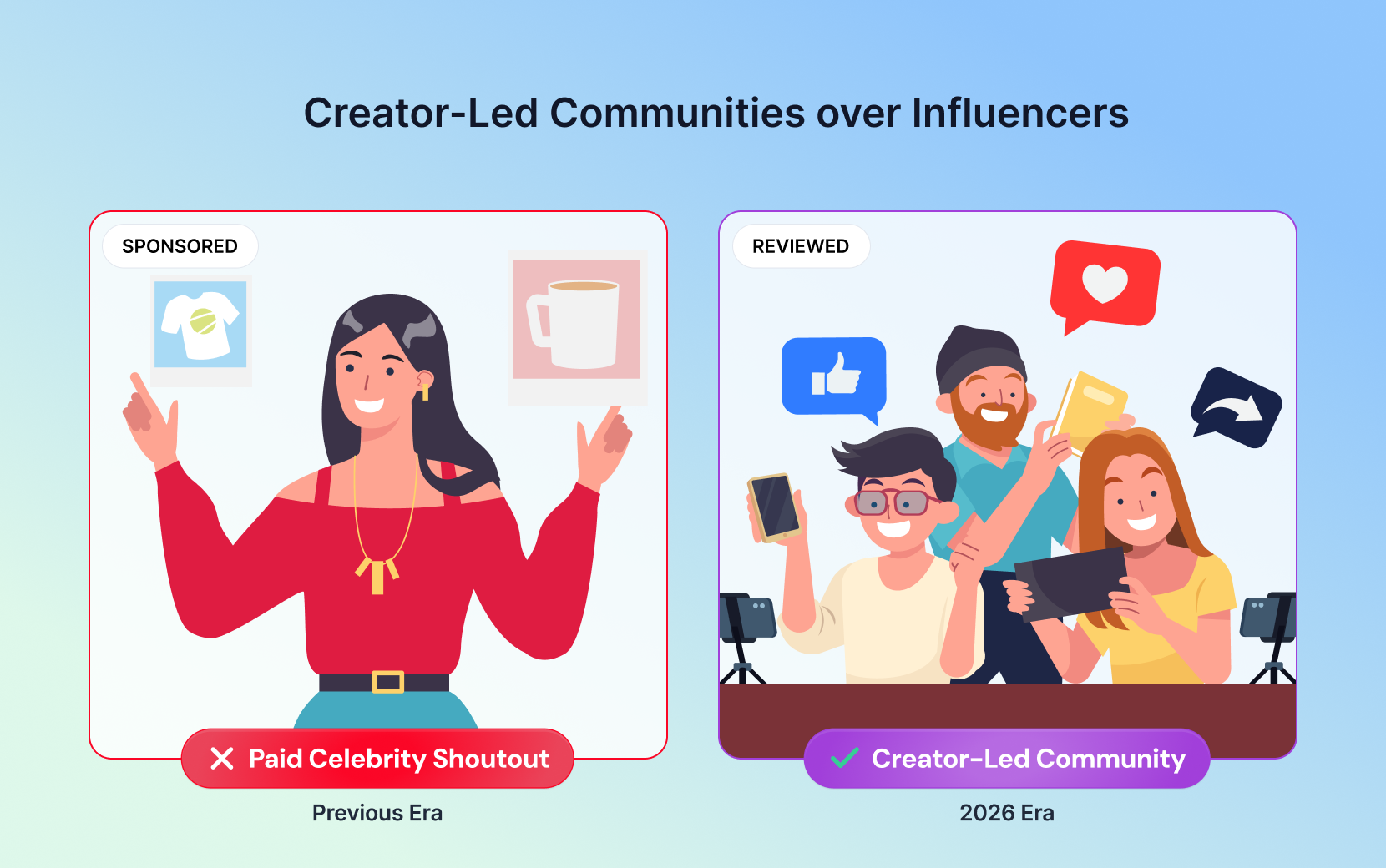
At this stage, it might feel like we’ve done everything to satisfy the customer, from giving them speedy delivery to setting up a ridiculously fast checkout process. However, this all doesn't necessarily build loyalty. To turn a one-time buyer into a brand advocate, you need a voice they trust.
Surprisingly, yet another era (paid celebrity shoutout) is fading. In 2026, success belongs to creator partnerships. Many brands don't rely solely on professional models; they communicate with their customers in a native way (high-converting ads in 2026 look like unfiltered TikToks) and ….get a response!
For example, Blissy focuses on the unboxing experience — luxurious boxes, tissue paper, and a personalized note. They designed this to be filmed and shared, creating a cycle of free traffic.
This creator-led content feeds into the final piece of the puzzle: the community ecosystem. Because a brand withou
Trend 10: Transparency & Sustainability in Brand Messaging
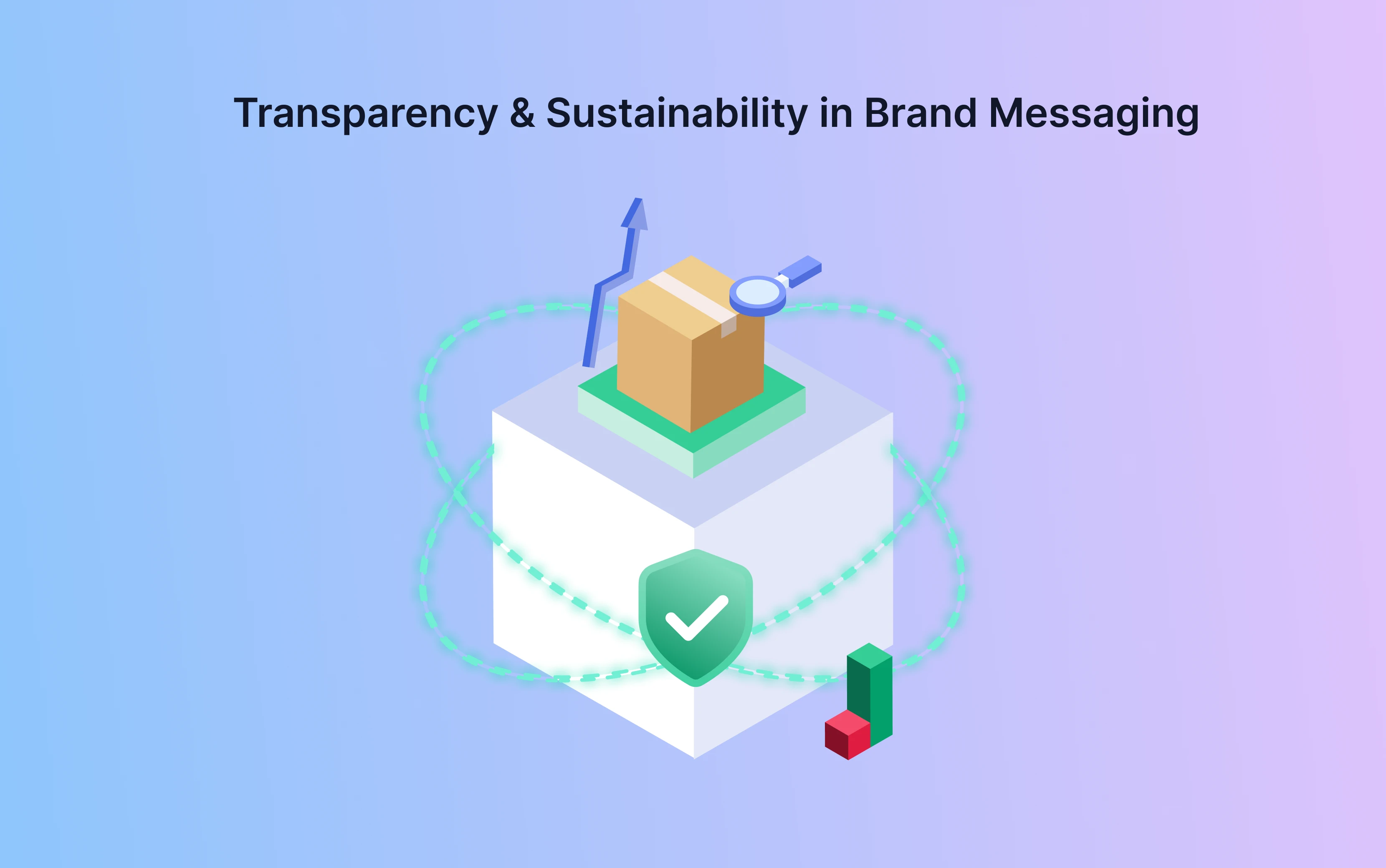
Finally, building a community requires trust, and in 2026, trust is built through radical transparency. Sustainability has moved from a nice-to-have PR footnote to a core conversion driver. Consumers have developed a finely tuned radar for greenwashing; they no longer accept generic eco-friendly stickers. They want the receipts.
Data-Backed Sustainability
Top brands are now treating their supply chain data as marketing assets:
Many brands either intend to or already display the exact carbon footprint on the package, turning an abstract concept into a comparable metric.
Others provide farm-to-cup digital passports, allowing users to scan a QR code and see the specific harvest date and origin of their goods.
This level of detail does two things: it justifies a premium price point by proving quality, and it aligns the brand with the values of a conscious consumer base. When you prove your claims, you lower the skepticism barrier and make the purchase decision easier.
Why Great Stories Often Fail to Load
On the one hand, we have radical transparency that wins the customer’s heart. On the other, technical execution breaks the browser for many. Adding real-time carbon counters, interactive maps, and high-res creator content creates a heavy site.
On a traditional platform, this leads to bloated code and sluggish performance, creating a friction gap where your brand story is great, but your website speed is driving customers away before they see it.
This is where the distinction between a logistics engine and a sales layer becomes the difference between a bounce and a conversion.
Why Funnelish is the Sales Layer Finding the Perfect Sales Layer for Your D2C Business
Every trend above fails if your store can’t execute fast, test fast, and load instantly.
To execute a 2026 strategy, you need a tech stack built for conversion agility. Your backend (like Shopify) becomes the warehouse, which is excellent for inventory, taxes, and shipping. Your Funnelish page builder is the sales floor — a high-performance layer that sits on top to manage the customer experience.
This is the methodology used by brands like Huel and Javy. They take advantage of high-velocity conversion funnels to stay profitable in competitive markets. Funnelish allows you to mirror this architecture without a custom dev team.
1. Speed as a Revenue Driver
Since every 85ms of delay can drop conversion rates by 7%, speed becomes a financial metric. That is why speed optimization is the single most effective way to protect your ad spend. Funnelish allows pages to load in under one second and bypass the heavy theme code of traditional stores.
2. Marketer Agility
With Funnelish, you get the power back to the growth team in a world, where standard stores require a developer to change a headline or swap an image. You can A/B test headlines, images, and offers in real-time, reacting to market trends or vibe shifts in minutes.
3. High-Conversion 2-Step Checkouts
All of the brands we’ve discussed today have killed their standard checkouts that scared away customers with too many fields at once. Funnelish enables you to do the same:
Step 1: Collect only the email and shipping info. This micro-conversion ensures you can recover the cart even if they don't finish.
Step 2: Collect payment. By the time the user gets here, they are already opted-in to the process. Last-minute abandonment is less likely to happen.
4. One-Click Post-Purchase Upsells
The most profitable moment in a funnel is after the initial purchase. You can offer a one-click upsell on the Thank You page. Because the payment info is already securely held, the customer doesn't have to re-enter their card. You get an immediate chance to boost your average order value.
Turn Customer Behavior Into High-Margin Brand Loyalty
The marketing strategy of the future is aggressive on value and soft on friction. Huel, Blissy, and Javvy Coffee demonstrate that you do not need to be Amazon to win. You simply need to be smarter, faster, and more data-driven.
By implementing quizzes to gather customer data, using advertorials to frame the narrative, and taking advantage of landing page builders to maximize AOV with a few tricks, you gain full control over your economics. The target audience is out there, looking for solutions. The brands that stop treating them like traffic and start treating them like a relationship to be nurtured (and monetized) will dominate the market.
Ready to Implement 2026 D2C Funnel Strategies?
Execution remains the only variable. So, grab your high-conversion D2C funnel template and start scaling today.
Summary Checklist for Brand Owners
Do you have a Quiz to collect zero-party data?
Does your traffic go to a Micro-Funnel rather than a generic catalog?
Have you tested an Advertorial to build authority?
Do you have a One-Click Upsell sequence in place?
Is your checkout form optimized for mobile speed?
Are you defaulting to Subscription/Bundles to protect your margins?
Frequently Asked Questions
What is D2C marketing?
D2C marketing (or direct-to-consumer marketing) is a strategy where a manufacturer sells its own products or services directly to end users, skipping intermediary retailers. D2C companies make this move to gain complete control over their brand messaging and the customer experience. They use digital channels, like their own e-commerce websites and social media channels, to connect with their target audience.
This approach also allows them to collect first-party data (specifically consumer data), which is essential for creating personalized content and building strong customer relationships.
What is D2C vs B2C?
While D2C is a specific type of business-to-consumer (B2C) model, the difference lies in the supply chain. Traditional B2C relies on retail partners or traditional retailers to handle selling products. D2C removes these middlemen, giving brands direct access to their customer base.
A more streamlined supply chain management leads to significant cost savings and higher profit margins. It creates a tighter loop for customer feedback, so that D2C companies get a competitive edge when adapting to customer behavior.
Is Amazon a D2C or B2C?
Amazon is primarily an online marketplace (B2C) where other manufacturers list their items to reach consumers online. However, when Amazon sells its own private-label goods (like Kindle), it acts as a direct seller.
For most brands, Amazon is a channel to increase sales and find potential customers, but it limits your ability to own the sales funnel. On Amazon, you can't easily execute marketing campaigns to drive sales or use advanced search engine optimization to build your own site authority. You also miss out on the deep consumer data needed to improve sales strategies.
What are D2C brands?
D2C brands are companies that sell to shoppers using a customer-first approach. They rely on digital marketing tactics, like influencer marketing, social media engagement, and user-generated content, to lower customer acquisition costs. To ensure customer retention and long-term loyalty, they focus on personalized experiences.
For example, a beauty brand might use a quiz to match a product to your exact skin tone, or offer free trials and special promotions. By building an online community and focusing on high-value customers, these brands create huge growth opportunities that aren't possible when selling products on generic marketplaces.
Table of contents
Boost your eCommerce
sales today

24/7 support
No credit card required
Cancel anytime
24/7 support
No credit card required
Cancel anytime
