

How to Reduce Abandoned Carts: 12 Proven Fixes
13 July 2025
Anna B.
6 minutes
Cart abandonment is the quiet tax on every ecommerce business. Someone fills an online shopping cart, reaches the checkout page, and vanishes — and it happens at staggering scale. The Baymard Institute's meta-analysis of 49 studies puts the average cart abandonment rate at 70.22%, meaning roughly 7 of every 10 shoppers who add a few items leave without buying. That figure has barely moved in over a decade, which tells you most online retailers still haven't fixed the structural problems in their checkout flow.
The encouraging part: while about 43% of that is unrecoverable "just browsing" behavior, the rest is winnable, and Baymard estimates $260 billion in lost orders is recoverable in the US and EU through better checkout design alone. Below are 12 effective solutions to reduce abandoned carts and turn more of those abandoned shopping carts into completed purchases.
1. Kill unexpected costs — show shipping fees upfront
This is the single biggest and most fixable cause. Baymard's research finds 48% of shoppers abandon because extra costs — shipping costs, taxes, or additional fees — made the total higher than expected. Online shoppers don't object to paying for shipping; they object to discovering high shipping costs at the last step.
Display shipping costs on your product pages or in the cart before checkout, show a shipping estimator early, and be transparent about any fees. Stores that surface costs before the checkout process usually see materially lower abandonment, because the surprise — not the cost — is what deters customers.
2. Offer free shipping (and use thresholds), no unexpected shipping costs
Closely related: free shipping is the strongest single incentive in ecommerce, with surveys consistently showing most shoppers won't complete a purchase without it. Rather than absorbing the cost on every order, build it into your pricing and use free shipping thresholds tied to your average order value — a progress bar nudging "You're $12 away from free shipping" can both reduce shopping cart abandonment and lift order size at once.
Pairing transparent shipping with free returns can further reassure hesitant potential customers worried about commitment.
3. Offer multiple payment methods and digital wallets
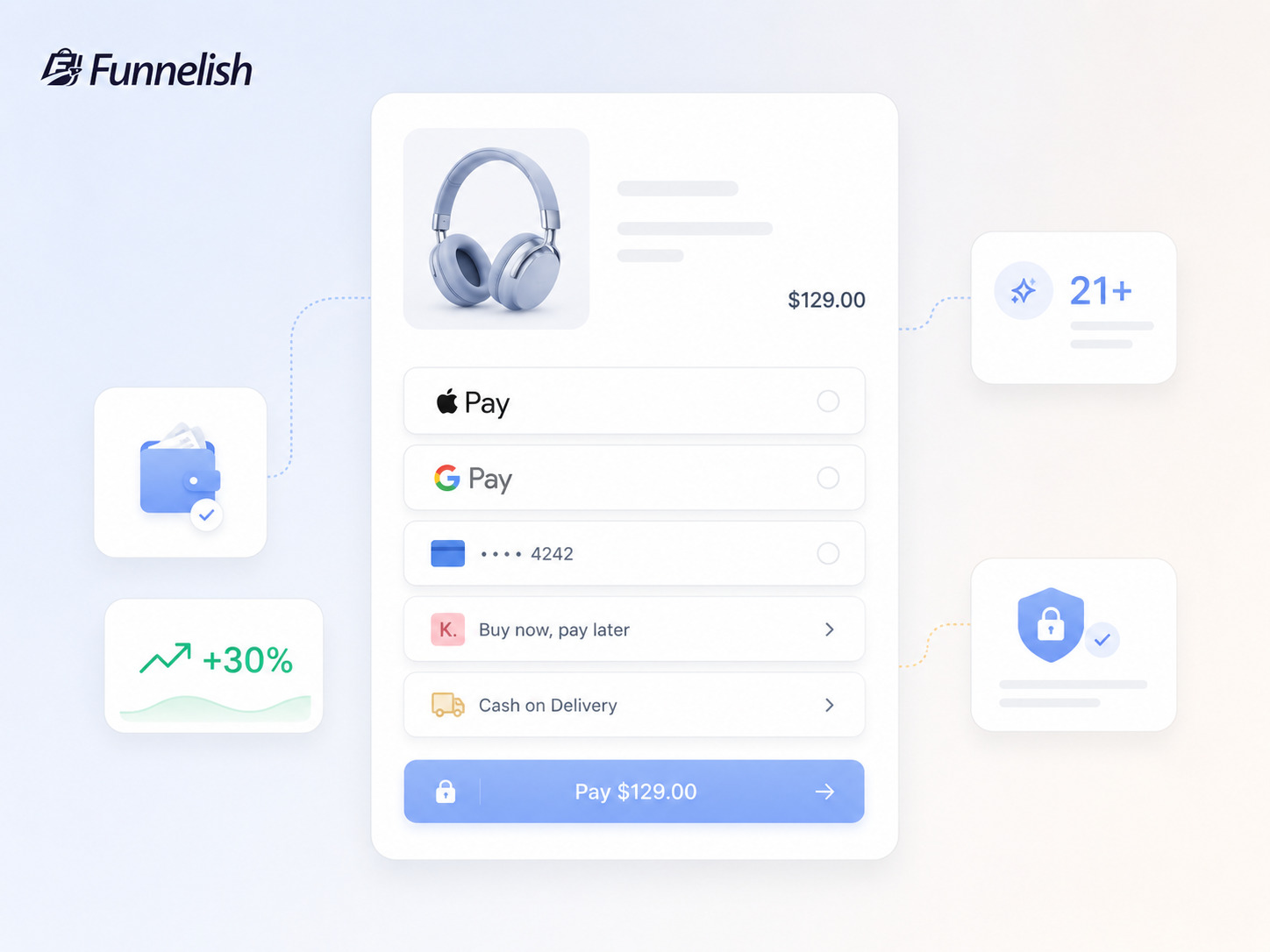
A checkout that lacks a shopper's preferred payment method loses the sale outright — Baymard data attributes a meaningful share of abandonment to missing payment options. Digital wallets are now dominant, not optional: Stripe's research found businesses offering Apple Pay saw an average 22.3% increase in conversion. Beyond traditional card payments, your store should accept Google Pay, Apple Pay, and buy-now-pay-later services.
A checkout built on Funnelish, which supports 21+ payment options including Google Pay, Apple Pay, and Cash on Delivery, removes a whole category of abandonment — and Funnelish merchants have reported conversion lifts of over 30% simply from giving shoppers more ways to pay.
4. Allow guest checkout — don't force to create an account
Forcing account creation is the second-biggest abandonment driver, cited by 26% of shoppers. First-time buyers want to test the online shopping experience before committing to an account, and requiring customers to create an account before they can buy adds friction at the worst possible moment.
Always offer a guest checkout option, and invite account creation after the purchase is complete, when you can frame it around order tracking rather than as a barrier to the buying process.
5. Optimize page speed and the mobile checkout experience
Even a one-second delay during the purchase process bleeds customers, and slow load times during checkout are especially fatal once a shopper has decided to buy. The mobile gap makes this urgent: mobile carts are abandoned at 80% versus 66% on desktop, yet mobile drives over 60% of traffic.
Your entire checkout experience must be fast and built for mobile devices — large tap targets, autofill support, and a layout that works one-handed. Because the page foundation drives so much of this, building your checkout on pages engineered to load in under a second removes one of the most common reasons mobile shoppers bail.
6. Simplify the checkout flow — fewer fields
A long or complicated checkout process drives 22% of abandonments. Baymard's usability testing shows an ideal checkout flow can be as short as 7–8 form fields, yet many stores ask for far more. Strip every field that isn't strictly required to complete the order, combine steps where you can, and lean on autofill to reduce the work you put on the customer.
A simplified checkout with a clear progress indicator ("Step 2 of 3") reduces anxiety and keeps shoppers moving toward purchase completion.
7. Address security concerns with trust signals
Around 25% of shoppers abandon over security concerns — they simply don't trust the site with their payment details. This hits newer brands hardest. Displaying security badges near the payment form, showing recognized payment logos, and using visible SSL/trust indicators measurably lifts conversion, particularly for less-familiar stores. The moment a shopper is about to enter payment information is exactly when reassurance matters most, so place those signals right at the point of entry.
8. Use social proof at the point of decision
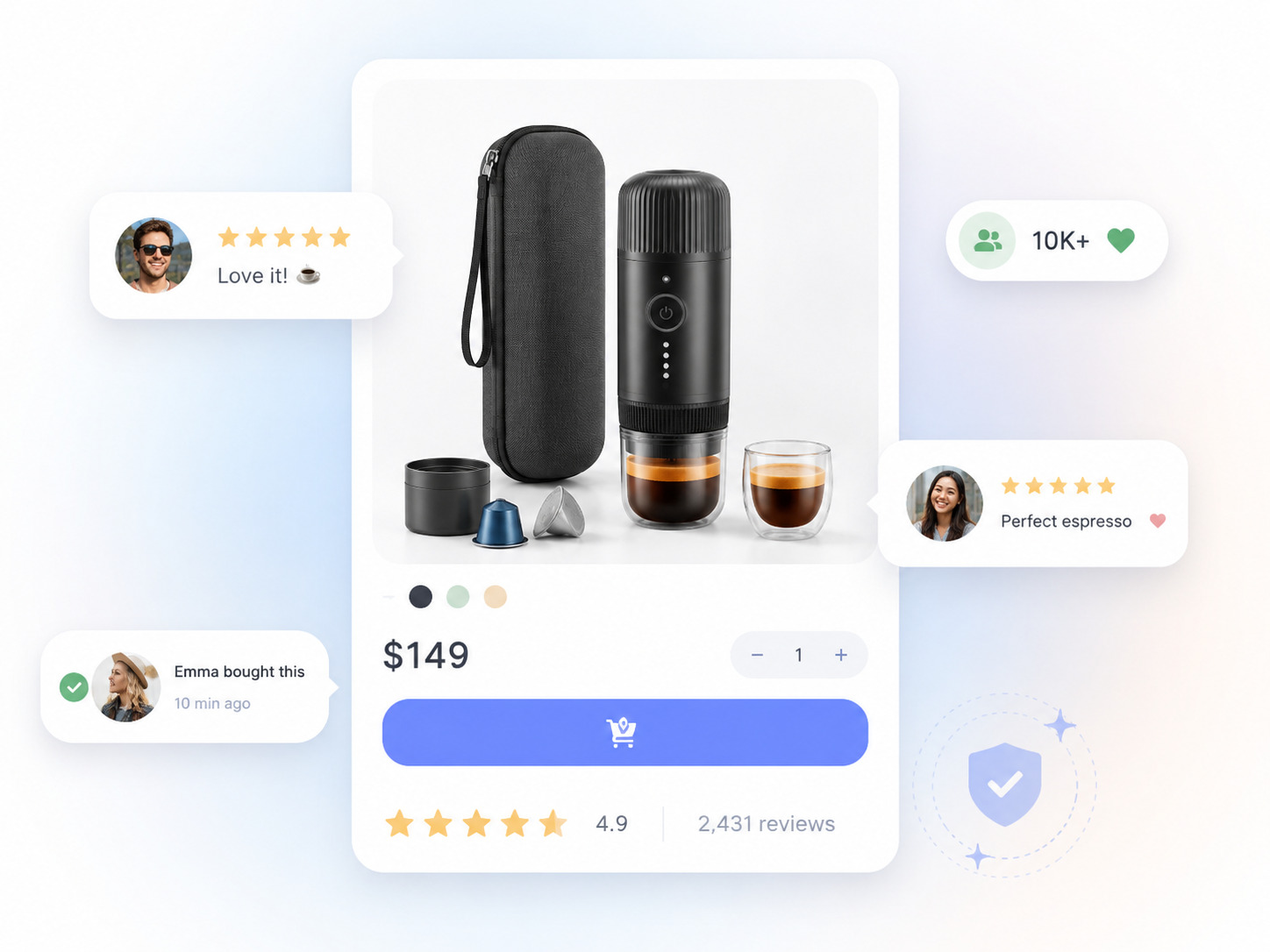
However digital commerce becomes, people still trust people. Adding genuine customer reviews and ratings on your product pages and checkout page reduces hesitation, and recent benchmarks show social proof elements like reviews and buyer counts cut abandonment by around 8% on average. Recent-purchase notifications ("Peter bought this 10 minutes ago") tap the same psychology. Just keep it honest — real reviews and real activity build the customer loyalty that fake urgency destroys.
Read more: Shopify Checkout Optimization
9. Recover lost sales with abandoned cart emails and SMS
Not every shopper is ready to buy on the spot, and cart recovery is how you win back the persuadable ones. Automated abandoned cart emails remain one of the highest-ROI tools in ecommerce, and the first message sent within roughly an hour drives most of the recovered revenue.
Adding SMS, which earns far higher open rates than email, lifts recovery further on higher-value carts. A built-in email and SMS automation system lets you trigger these sequences automatically — and a modest one-time discount code in the follow-up often tips an undecided shopper into a completed transaction.
10. Allow cart saving for slower buyers
Not all shoppers move at the same pace. Some feel rushed by low stock messaging, while others simply want time to think. Letting customers save their online shopping cart — or return to a persistent cart later — builds trust and respects the customer journey. If your product genuinely caught their attention, a saved cart gives them a frictionless path back, and it pairs naturally with your recovery emails.
Read more: WooCommerce Abandoned Cart: The Only Fix You Need Right Now
11. Offer a money-back guarantee and clear returns
With countless stores competing and plenty of scams around, a visible money-back guarantee directly addresses customer concerns about risk. Display your guarantee and return policy during the checkout process, not buried in a footer — seeing it at the decision point reassures shoppers and lowers abandonment while building the kind of brand trust that earns repeat business and new customers.
12. Write clear CTAs and enable one-click payments
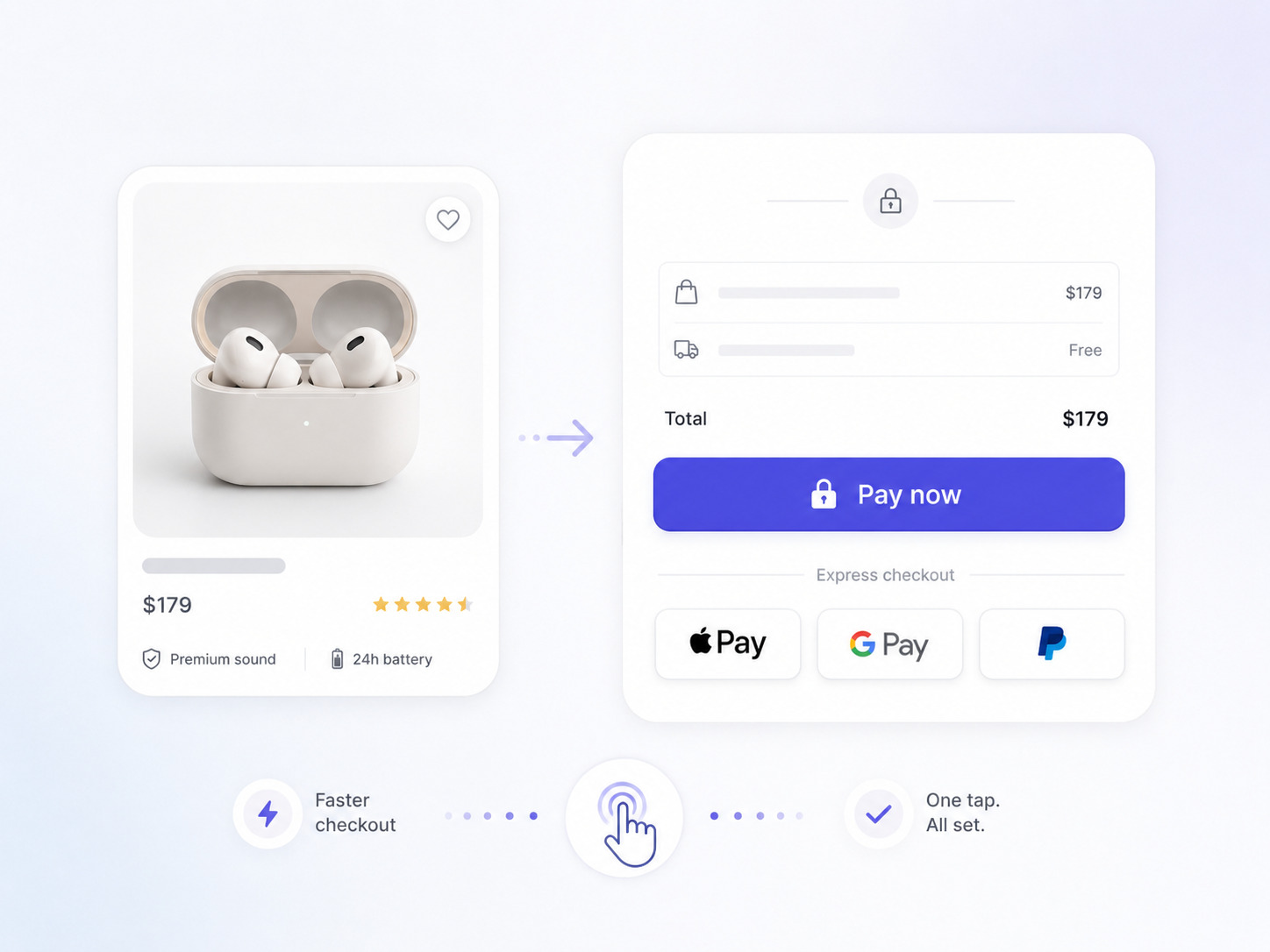
At checkout, your calls to action should be simple and direct — strong, unambiguous buttons like "Pay now" or "Complete order" can outperform vague alternatives because they tell shoppers exactly what happens next. Then remove the final friction with one-click and express payments: digital wallets cut a typical checkout from dozens of steps down to a few taps, which is precisely why they convert so well. The less effort between intent and completed purchase, the more orders you keep.
Bringing it together: fixing cart abandonment in 2026
Cart abandonment isn't a glitch — it's a structural problem with well-documented, fixable causes. The data points the way: kill surprise shipping costs, offer free shipping and guest checkout, accept the digital wallets shoppers expect, strip the checkout to its essentials, and earn trust with security badges and social proof. Then recover the winnable carts with timely email and SMS.
Fix the friction first and deploy recovery on the smaller pool of distracted shoppers, and you'll convert far more of those 7-in-10 abandoned carts into sales — without spending a cent more on traffic.
Table of contents
Boost your eCommerce
sales today

24/7 support
No credit card required
Cancel anytime
24/7 support
No credit card required
Cancel anytime
