

Best Affiliate Marketing Platforms 2026: Guide for Beginners & Pros
12 February 2026
Anna P.
15 minutes
What's up with affiliate marketing these days? If strategies from 2020 are still in use, money is being left on the table. In 2026, industry is no longer about spamming links in forum comments or relying on low-quality arbitrage traffic. It has evolved into a sophisticated ecosystem driven by first-party data, algorithmic trust, and partner marketing.
With the rise of AI search summaries, privacy regulations like GDPR 3.0, and strict browser sandboxing, affiliate tracking has become harder. You need reliable server-side tracking, detailed analytics, and attribution models that survive cookie-less browser updates.
Choosing the best affiliate marketing platforms is the first step in building a serious business in 2026. Whether looking to monetize a niche blog, YouTube channel, or paid media funnel, platform choice dictates margins. We will break down top networks, specialized SaaS programs, and why infrastructure tools like Funnelish offer the most lucrative affiliate partnerships in the current economy.
2026 Economy: Why Affiliate Now Means Partner
To understand where money flows today, one must understand the macroeconomic shift. The creator economy has matured. Brands have realized that cold advertising (interruptive ads) is becoming prohibitively expensive due to signal loss on platforms like Meta and TikTok.
Consequently, brands are shifting budget to performance partnerships. They need creators who own the relationship with the customer. This is why affiliate marketing is being rebranded as partner marketing. It implies a two-way street. In 2026, the best platforms provide you with data, creative assets, and direct lines of communication. If a platform treats you like a blind number, it is a relic.
Furthermore, the rise of sovereign commerce — creators building their own shops — means the tools that power these shops (SaaS) are the new gold rush. Selling a t-shirt is low margin. Selling the software that sells the t-shirt is high margin. This distinction is the core thesis of profitable affiliate marketing in 2026.
Criteria for Platform Selection: Technical Vetting
Before diving into networks, establish a vetting framework. In 2026, signing up for a program is a business investment of time and reputation. Do not accept default terms.
Attribution models: Does the platform support First Click, Last Click, or Time Decay? In a complex buyer journey, Last Click (standard in 2015) often cheats content creators who educate the user early in the funnel. Look for platforms offering assisted conversion metrics.
Server-to-Server (S2S) tracking: Client-side pixels are dying due to ad blockers and browser privacy features. If a network does not offer API-based conversion reporting (CAPI), you will lose 15-20% of your data instantly.
Payment thresholds & currencies: Global affiliates need multi-currency support. Crypto payouts have also become standard for many tech-forward networks to avoid high Forex fees.
Data portability: Can you export your lead data? If a platform holds your data hostage, you cannot build your own email list or retargeting audiences.
Top 5 Traditional Affiliate Program Networks
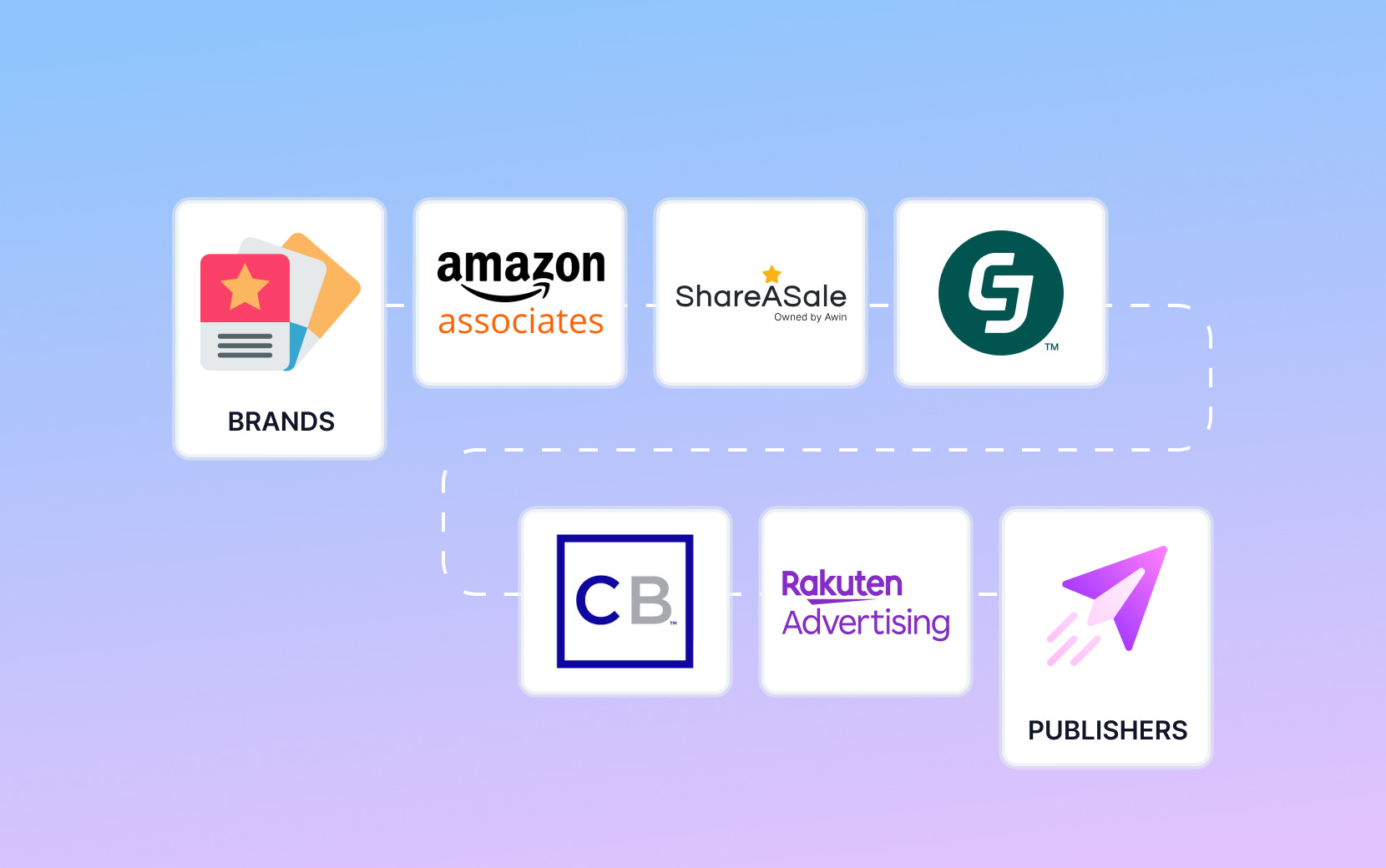
Traditional networks are intermediaries that connect brands with publishers. For beginners, these might be the best entry points because they offer access to thousands of companies and products under one platform. However, the gap between premium and junk networks has widened.
1. Amazon Associates
Amazon remains the elephant in the room. While commission rates have tightened over the years, conversion rates remain unbeaten. Everyone has an Amazon account. When traffic is sent to Amazon, you earn on the entire cart, not just the product you're selling.
2026 Reality Check
Amazon has aggressively pivoted to on-platform content. The Amazon Influencer Program (video reviews on product pages) is now more lucrative than linking from external blogs.
Pros:
Massive trust factor
Halo effect (earn on entire cart)
High mobile conversion rates
Global logistics handling
Cons:
Low commissions (1-4%)
Short 24-hour cookie duration
Strict terms regarding email links
No customer data access
Best for: Lifestyle bloggers, tech reviewers, high-volume creators.
Use Amazon to monetize general traffic that doesn't fit a specific high-ticket offer. It is your safety net, not your retirement plan.
2. ShareASale
Now fully integrated into Awin, ShareASale is a powerhouse affiliate marketing network. It hosts over 25,000 merchants. You will find everything from mattress companies to niche software. Their affiliate system is robust, offering real-time reporting and reliable payouts.
ShareASale has survived because it dominates the mid-market — brands too big for a simple Shopify plugin but too small for enterprise contracts.
Pros:
Diverse marketplace
Reliable payments (never misses a cycle)
Excellent search tools for niche finding
Power rank system to spot trending offers
Cons:
Interface feels dated compared to SaaS tools
Application process per merchant can be slow
Reporting lacks visual depth of modern dashboards
Best for: Home & garden, fashion, niche hobby sites.
Look for merchant auto-approval lists within ShareASale to test products quickly without waiting days for a manager to review your application.
3. CJ (Commission Junction)
CJ is where Fortune 500 play. If you want to promote major companies like GoPro, Barnes & Noble, or IHG Hotels, this is the place. CJ requires a professional approach. They focus on quality content publishers and have strict approval processes.
In 2026, CJ will continue investments in cross-device tracking. They know users browse on mobile and buy on desktop. Their graph technology helps bridge this gap, saving commissions that would otherwise be lost.
Pros:
Premium global brands
Advanced tracking capabilities
Content certified program for higher rates
Robust API for advanced developers
Cons:
Harder to get accepted into programs
Strict performance requirements (dormancy fees)
Steep learning curve for dashboard
Best for: Established publishers with significant traffic.
CJ is excellent for travel and finance niches. If you are in credit cards or luxury travel, CJ might be the best choice.
4. ClickBank
ClickBank is synonymous with digital products, e-books, and courses. While they have physical offers (supplements), bread and butter is information. Because digital goods have zero reproduction costs, commission structures here are aggressive — 50% to 75%.
However, ClickBank in 2026 is a different beast than 2020. They have cracked down on non-compliant health offers. The marketplace is cleaner, but competition is fiercer. The Video Sales Letter is still the primary conversion mechanic here.
Pros:
Extremely high commissions
Vast library of products
Generally easy to join
Weekly payouts available
Cons:
Quality control varies drastically
High refund rates on bad products
Aggressive up-sells can annoy audiences
"Get rich quick" stigma on some offers
Best for: Email marketers, paid traffic specialists.
Don't send cold traffic to a ClickBank text page. Send them to a bridge page (a pre-sell article) that frames the problem, then link to the VSL. This increases conversion by 20-30%.
5. Rakuten Advertising
Rakuten was voted the #1 affiliate marketing network for years. (PR Newswire) They focus on long-term relationships rather than transactional interactions. The interface is intuitive, and they offer deep linking tools that make product promotion seamless.
Rakuten operates on a quality-over-quantity model. You won't find thousands of junk merchants here. You will find Sephora, New Balance, and high-end tech.
Pros:
High-quality brands
Excellent support for publishers
User-friendly dashboard
Ad rotators that optimize automatically
Cons:
Smaller network size
Payment terms can be slow (Net 60 sometimes)
Strict entry barriers
Best for: Fashion, lifestyle, luxury content creators.
Rakuten is invested in attributed sales. If you are an influencer who drives brand awareness, Rakuten's technology is better at proving your value to the brand than other networks.
Specialized Platforms: Rise of SaaS & B2B
While traditional networks move physical goods, real affiliate income wealth in 2026 is in SaaS (Software as a Service). Why? Recurring revenue.
Economics of Recurring vs. One-Time
Scenario A (Amazon): You sell a $100 Camera. Commission is 3%. You earn $3.00. Transaction ends.
Scenario B (SaaS): You sell a $100/month software subscription. Commission is 30%. You earn $30.00 in Month 1. The user stays for 18 months (average LTV). You earn $540.00 total.
The effort to convert customer A and customer B is roughly the same. The payout difference is 180x. This is why smart affiliates migrate to SaaS.
Impact
Impact (formerly Impact Radius) disrupted the industry by framing itself as a partnership management platform. Favored by tech companies like Canva, HubSpot, and Shopify, Impact provides a comprehensive solution for tracking cross-device conversions.
Impact allows for contract customization. A brand can pay you $10 for a lead, $50 for a trial, and $100 for a sale. This flexibility aligns incentives perfectly.
Key feature: Flexible contracting allowing for bonuses based on customer referral quality, not just sales.
PartnerStack
PartnerStack is built specifically for B2B SaaS. If promoting productivity tools, CRM systems, or marketing software, you will end up here. It creates a community feel, providing resources and assets directly from vendors to help sell.
PartnerStack has a unique marketplace where vendors recruit you. If you perform well for one SaaS, others in the ecosystem will invite you to join their programs.
Key feature: Built-in challenges and rewards to gamify earnings.
High-Ticket SaaS Affiliate Income in 2026
SaaS is not only CRM or project management software; you can look into more versatile solutions that form essential infrastructure for businesses. A successful affiliate program is the one that powers the business itself.
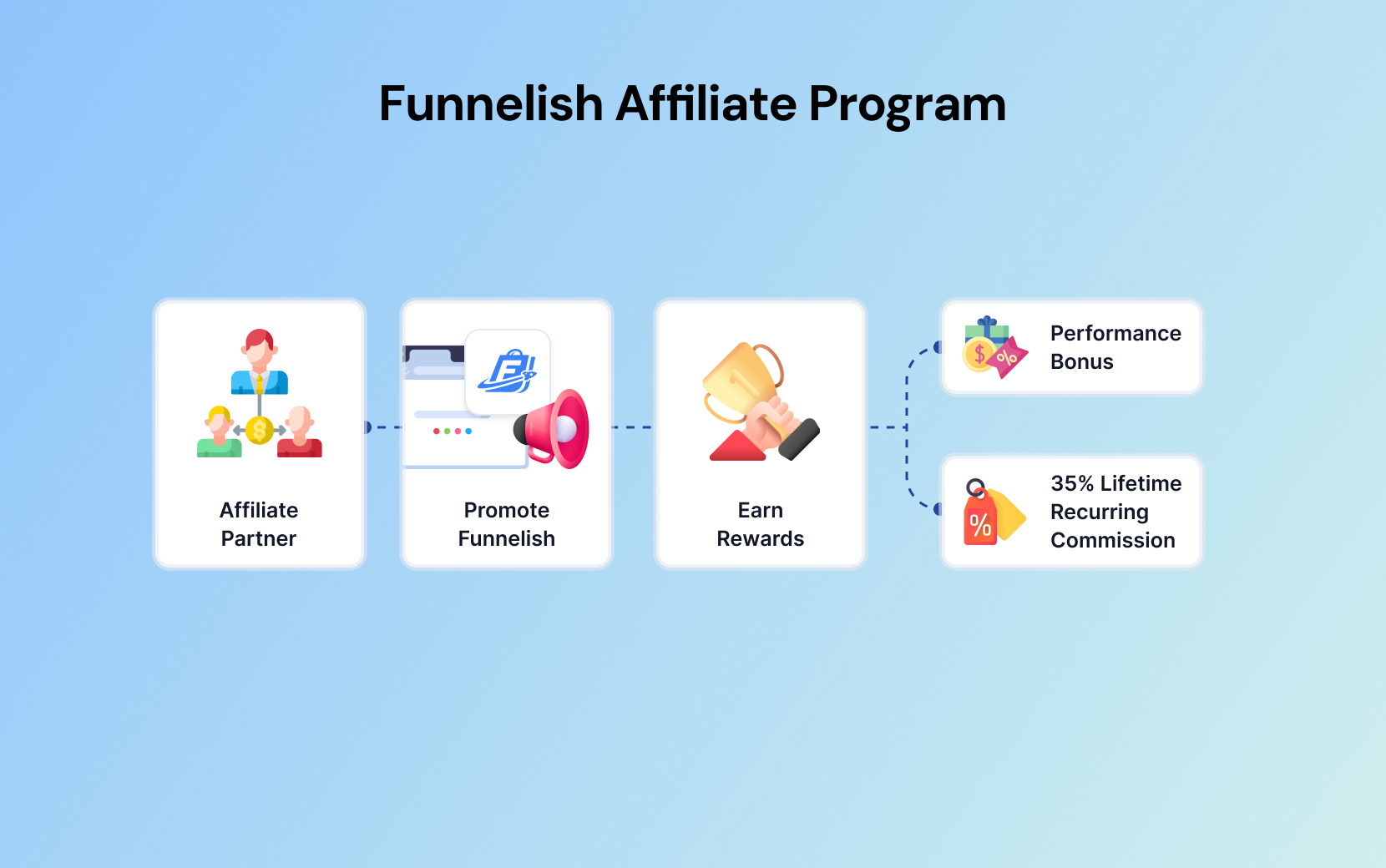
Funnelish Affiliate Program
In the digital economy, every business needs a sales funnel. They need to turn traffic into revenue. Funnelish is a bridge between ClickFunnels/marketing platforms and Shopify. It increases conversion rates and average order value.
When promoting Funnelish, you are selling a necessity. In a recession or a tight economy, businesses cut luxuries. But they do not cut the tools that bring in money. Funnelish is a revenue-generating tool, making it recession-proof.
Why Funnelish Stands Out in 2026
Promoting a tool that helps others earn money is the easiest sale you can make. You are providing value, and we're giving this value back to you.
35% Lifetime Recurring Commission
We don’t offer one-time CPAs that leave you hunting for next month's rent. You earn 35% on every plan (ranging from $49 to $199/month) for the lifetime of the customer. That means a single referral pays you dividends for years if they stay.
Performance Cash Bonuses
We reward volume. Beyond the standard commission, you unlock extra monthly cash bonuses — an additional $500/month at 100 active referrals and $1,000/month at 200 active referrals. This allows top partners to treat this program as a primary income source, not a side hustle.
All-in-One Business Machine Stickiness
Funnelish has evolved beyond a simple bridge tool. It is now a complete Shopify/WooCommerce alternative featuring funnels, a native blogging platform, and smart automations without the hidden transaction fees competitors charge. Because users run their entire business infrastructure on Funnelish, churn is exceptionally low, stabilizing your recurring income.
Viral Share Funnel Strategy
You can embed your unique affiliate ID directly into Share Funnels. When you share a successful funnel template with your audience, they sign up for Funnelish to use it, and you automatically get the credit. It is the most organic way to drive conversions.
Instant Access, No Red Tape
Unlike legacy networks that make you wait days for approval, our program is open to e-commerce experts and agencies immediately. Sign up, grab your link, and start tracking clicks in real-time with our 30-day cookie window.
Try Funnelish Affiliate Program
Comparison: Networks vs. SaaS
Understanding the difference between different affiliate programs is key to strategy. Here's a short wrap up:
Feature | Traditional Networks | SaaS/Specialized (Funnelish) |
Product type | Physical goods, one-off purchases | Software, subscriptions, services |
Commission type | One-time fee (CPA) | Recurring revenue (%) |
Commission rate | Low to medium (1% - 20%) | High (20% - 40%+) |
Cookie life | Short (24 hours - 30 days) | Long (30 days - Lifetime) |
Relationship | Transactional | Partnership-focused |
Barrier to entry | Low | Medium (requires understanding the tool) |
Competition | High (everyone links to Amazon) | Moderate (requires explanation) |
Asset value | Low (income stops when you stop) | High (income builds up) |
Actionable Checklist: Vetting a Platform
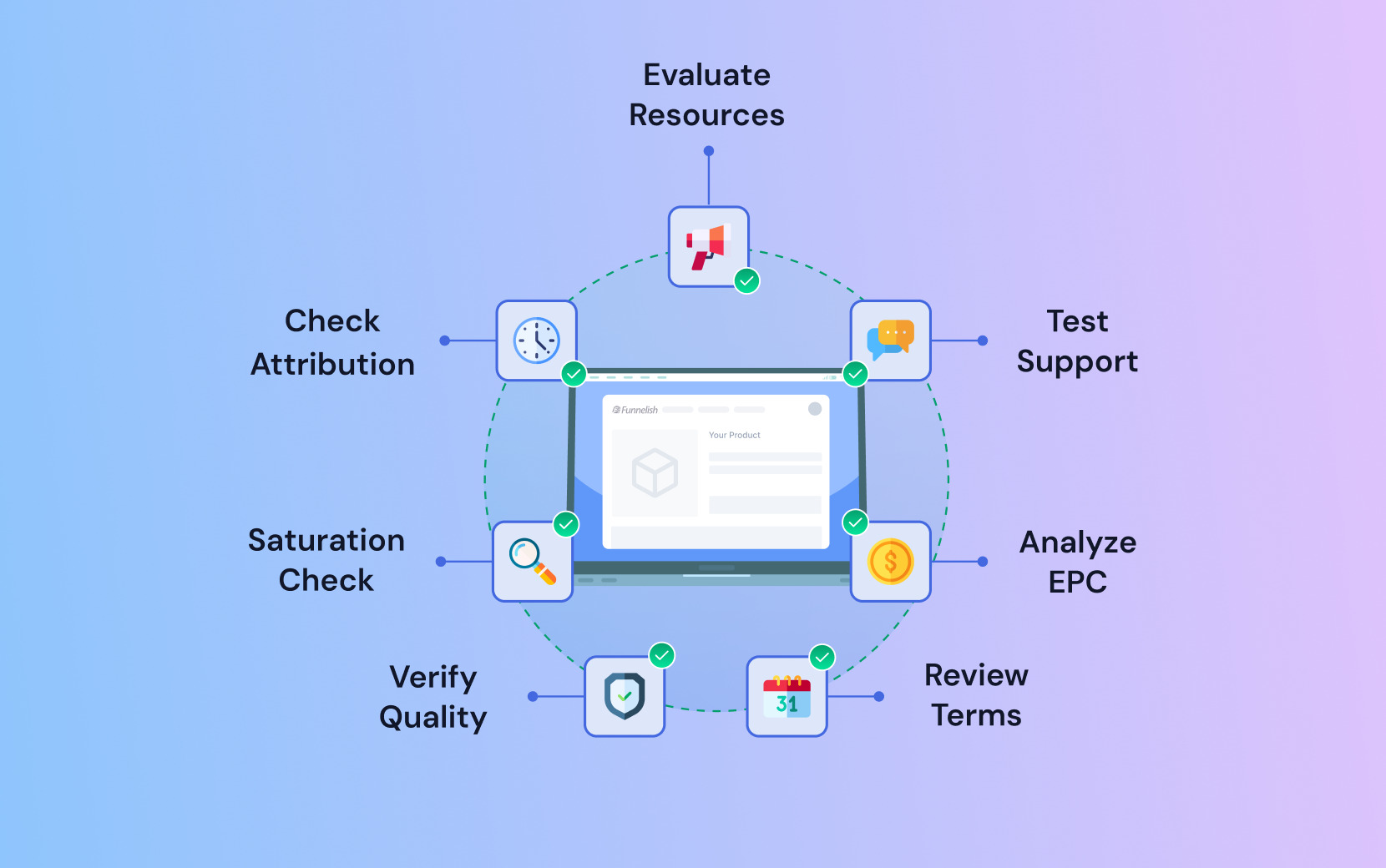
Not all affiliate platforms are created equal. Before spending money on ads or time creating content, use this checklist to ensure the program is worth the effort.
1. Check Attribution Model
Does the program use last-click attribution? In 2026, you want platforms that offer multi-touch attribution or longer cookie windows. You don't want to do the work of educating customers only for them to Google the brand name, click a generic ad, and cut you out.
2. Evaluate Marketing Resources
Does the program provide high-quality banners, email swipes, and promo codes for the audience? A successful affiliate program equips partners for success. If you have to create every asset yourself, the program is lazy.
3. Test Their Support
Send a ticket to the affiliate manager. Do they reply? If support is non-existent for you, it will be non-existent for customers you refer. This leads to refunds, chargebacks, and lost commissions.
4. Analyze EPC (Earnings Per Click)
Most networks display this metric. It tells you the average earnings for every 100 clicks sent. High EPC indicates offer converts well. Low EPC means the landing page is broken or the offer is bad.
5. Review Payment Terms
Net-30? Net-60? You need cash flow to reinvest in the business. Look for reliable tracking and timely payments. Avoid networks with a reputation for shaving leads (hiding conversions).
6. Verify Product Quality
Never promote something you haven't vetted. Reputation is currency. If you promote a scam or a low-quality tool, the audience will never trust your affiliate link again.
7. Saturation Check
Search for the product on YouTube. Are there 10,000 reviews? If so, the market might be saturated. Or, it might be proof of volume. Look for blue ocean opportunities where the product is proven, but content is scarce.
Strategies to Drive Growth in Partner Marketing
Once you have selected affiliate marketing platforms, you need traffic. But traffic is a vague term. You need intent.
Content Marketing: VS and Alternative Strategy
In 2026, generic review posts are dominated by AI content farms. You cannot compete there. You must compete on nuance.
Versus post: "Funnelish vs. ClickFunnels 2.0". People searching for this are holding a credit card. They just need a final push.
Alternative post: "Best Shopify Checkout Alternatives". These users are unhappy with their current solution. They are high-intent leads.
Case studies: "How I increased AOV by 30% using Funnelish". Stories sell better than features. Show the graph. Show the numbers.
Email Marketing: Nurture Loop
Email allows you to nurture leads away from the distraction of social media.
Lead magnet: Offer a free checklist ("The Ultimate E-commerce Launch Checklist").
Bridge: In the email sequence, explain that step 4 of the checklist (checkout optimization) is hard.
Solution: Introduce Funnelish as the tool that automates step 4.
Logic: You aren't selling; you are helping them complete the checklist.
Paid Advertising: B2B Context
If commission rates are high enough (like with high-ticket affiliate program from SaaS), you can afford to run ads on Google or Facebook.
YouTube Ads: Run tutorials as ads. Target keywords like "dropshipping tips". Show a 2-minute clip of you solving a problem using the tool.
Google Search: Bid on solution-aware keywords. "Reduce cart abandonment rate". Do not bid on brand names unless allowed.
Retargeting: If someone visits your blog post about Funnelish but doesn't buy, retarget them with a case study ad.
Social Proof: Community Engineering
Use affiliate forums and social media groups to understand what people are struggling with.
Reddit & Quora: Find threads where people ask "How do I customize my checkout?"
Answer: Write a detailed, helpful guide. Do not just drop a link. Explain how to do it. Then, say "I use Funnelish to automate this, here is a link."
Value first: If you provide 90% value, people will happily click your link to give you the credit.
Future of Affiliate Marketing: 2027 and Beyond
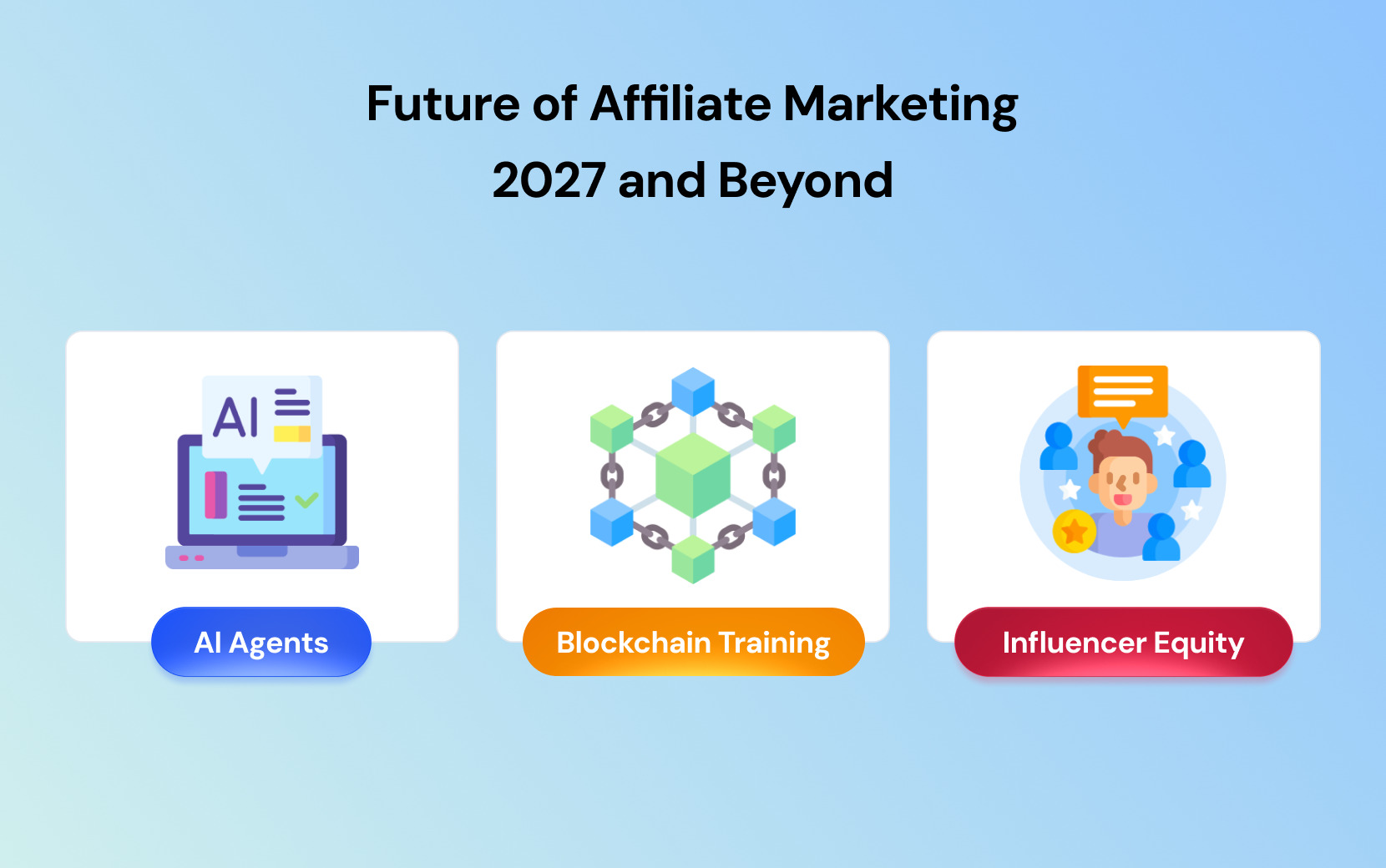
As we look beyond 2026, the industry is moving toward tighter integration.
AI agents: Soon, users will ask their AI assistant, "Buy me the best software for funnel building." The AI will make the purchase. Affiliates will need to optimize for being recommended by AI. This means high authority, clear technical documentation, and positive sentiment across the web.
Blockchain tracking: We may see a shift toward blockchain-based attribution to solve the cookie loss problem definitively. This would create an immutable ledger of referrals.
Influencer equity: Top affiliates will stop asking for commissions and start asking for equity. "I will promote you for 2% of the company." This aligns long-term incentives.
To succeed, you must focus on building an audience that trusts you. Whether you choose Amazon Associates for volume or a partner program like Funnelish for value, consistency is key. Don't try to join many other affiliate programs at once. Pick two or three that align with the niche. Master them. Build content around them. Create a narrative that helps the audience achieve goals.
Want to Start Generating Recurring Revenue?
Join the Funnelish Affiliate Program today.
Stop chasing one-off sales that leave you unemployed on the first of every month. Build a portfolio of recurring revenue that grows with you. Partner with the tool that powers the world's best sales funnels.
FAQ
Can you make $100 a day with affiliate marketing?
Yes, but the math depends on your choice of platform. To make $100 a day with Amazon (at 3% commission on $20 items), you need to sell ~165 items daily. That requires massive traffic. However, with a high-ticket SaaS program like Funnelish, you only need a handful of active subscribers to hit that benchmark passively.
In 2026, the goal is not to work harder for traffic, but to choose offers that pay more for the same effort.
What are the highest-paying affiliate platforms?
The highest-paying falls into two categories: high-ticket, one-time vs. high-lifetime value.
High-ticket one-time: ClickBank or specialized finance networks (credit cards) pay $100-$500 per sale.
High-lifetime value (recommended): Direct SaaS partner programs (Funnelish, HubSpot, or Semrush). While the initial payout might look lower, the 30-35% recurring commission means a single customer can be worth thousands of dollars over their lifespan.
Can you make $10,000 a month with affiliate marketing?
Absolutely. This is the benchmark for super affiliates. To hit $10k/month, you need to move away from low-margin physical goods and into B2B software or high-end finance. The most stable path to $10k/month is building a portfolio of recurring revenue.
For example, referring 500 users to a $60/month software at 35% commission gets you to ~$10,500/month passively.
What are the best platforms to work as an affiliate?
For B2B and Software (where the margins are highest), the best ecosystems are PartnerStack, Impact, and direct in-house programs like Funnelish. These platforms offer better tracking (server-to-server) and transparency than older, opaque networks. For physical retail, ShareASale and Rakuten remain the gold standard for reliability.
Which affiliate is best for beginners?
Amazon Associates is often cited as the easiest because approval is instant, but making significant money there is extremely difficult for beginners due to low commissions. A better strategy for beginners in 2026 is to join a program for a tool you already use and understand. Promoting a solution (like the funnel builder you use to run your business) is authentic, easier to sell, and builds recurring income from day one.
Is Amazon affiliate free?
Yes, the Amazon Associates program is free to join. However, it comes with a probation period. You must make three qualified sales within the first 180 days, or your account will be closed. It is a low-risk entry point, but it should not be the only revenue stream for a serious business.
What are high-paying affiliate niches?
In 2026, the money has moved to where the pain is greatest:
B2B SaaS / e-commerce infrastructure: (e.g., Funnelish, Shopify). Businesses must pay for these tools to survive, making churn low and payouts high.
Fintech: Trading platforms, crypto exchanges, and credit cards pay high CPAs.
Biohacking & high-end health: The shift from generic vitamins to high-tech health supplements and wearable tech has created a new high-ticket consumer market.
Table of contents
Boost your eCommerce
sales today

24/7 support
No credit card required
Cancel anytime
24/7 support
No credit card required
Cancel anytime
