

Ecommerce Customer Journey Map: How Shoppers Find, Buy and Come Back in 2026
15 September 2026
Anna P.
9 minutes
Some of your buyers will have picked a product before they reach your store. They've asked an AI assistant, watched a creator's review or compared prices across three tabs, and your pages get the last few minutes of a decision that started somewhere else.
Mapping the ecommerce customer journey shows you what happens in those minutes and around them: where buyers come from, where they stall and what brings them back. Below you'll find a fill-in template, a worked example built on 2026 data and a free funnel that covers the buying stages.
What Is an Ecommerce Customer Journey?
It's every step a shopper takes from first noticing a product to buying it, receiving it and deciding whether to buy again. Katherine Lemon and Peter Verhoef's , published in the Journal of Marketing in 2016, split that path into three stages: prepurchase, purchase and postpurchase. Every touchpoint counts, including the ones you don't own, like a forum thread or the parcel on the doorstep.
An ecommerce customer journey map puts all stages on one page. You'll give each stage a column, and each row will answer a question about the buyer: what they want, where they are, what they're asking and what could stop them.
You'll also hear the term ecommerce user journey. That term covers the clicks and screens inside your store, from landing page to thank you page, while the customer journey includes everything before and after the visit.
How Is the Ecommerce Journey Changing in 2026?
Online sales have kept growing faster than retail as a whole. The Census Bureau's put US online sales at $340.2 billion in the second quarter of 2026, or 17.1% of all retail sales. That's 12.2% more than a year earlier, while total retail grew 6.7%.
Phones have claimed a growing share of the customer journey ecommerce shoppers take at peak season. Adobe tracked more than 1 trillion visits to US retail sites for its . Smartphones carried 56.4% of online transactions between 1 November and 31 December 2025, up from 54.5% a year before, and traffic from generative AI tools to retail sites rose 693.4%.
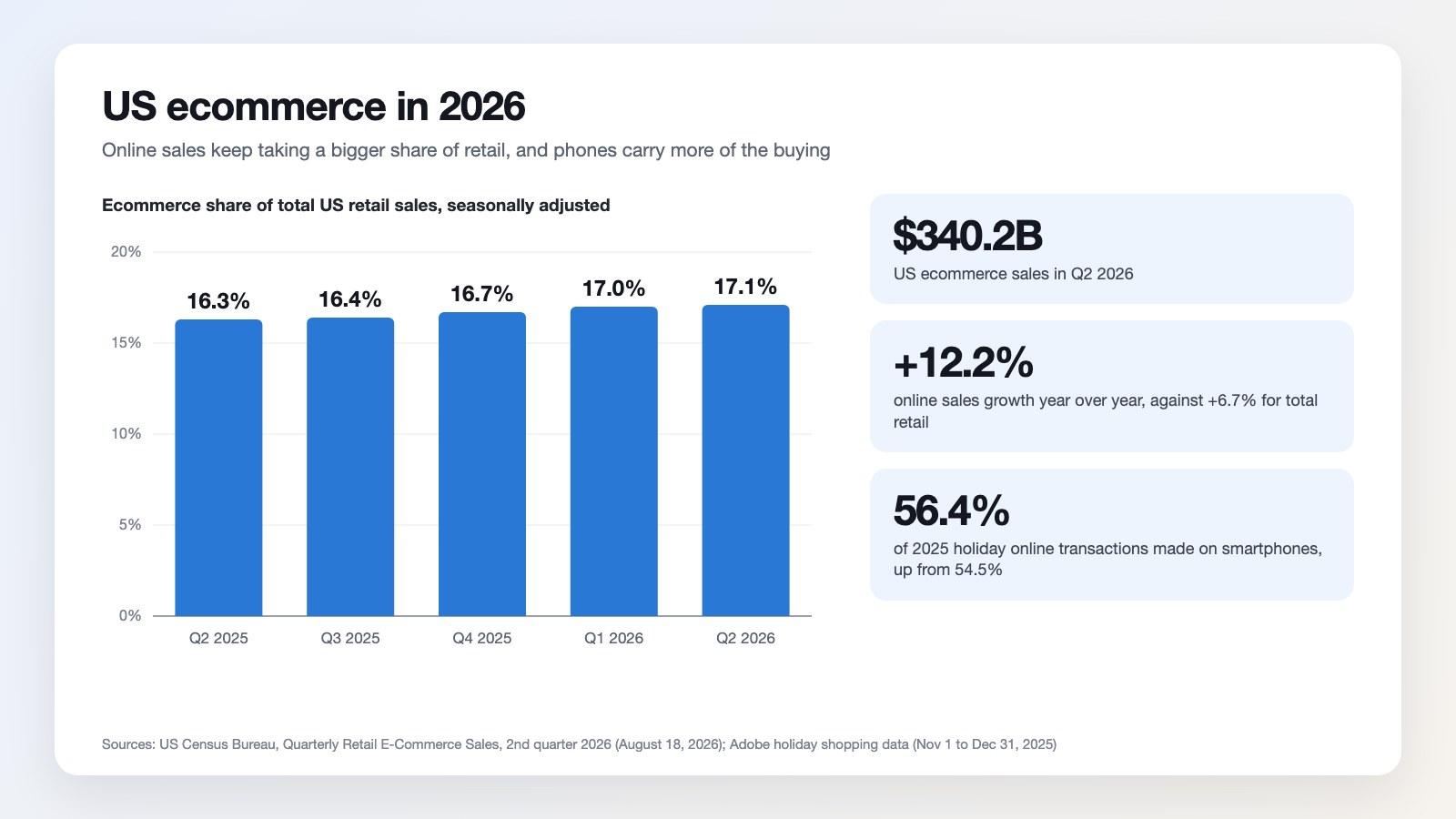
US online sales climbed from 16.3% to 17.1% of retail in a year, while phones took 56.4% of holiday transactions.
Where journeys start has changed even faster. Salesforce's tracked agentic search, where a shopper asks an AI assistant to find and compare products. As the first step of a purchase, it grew 200% in a year. From August 2025 to May 2026, the rate of shoppers discovering products on brand-owned sites and apps fell 7%, and traditional search fell 15%. AI assistants, social media AI and delivery apps grew 38% over the same months.
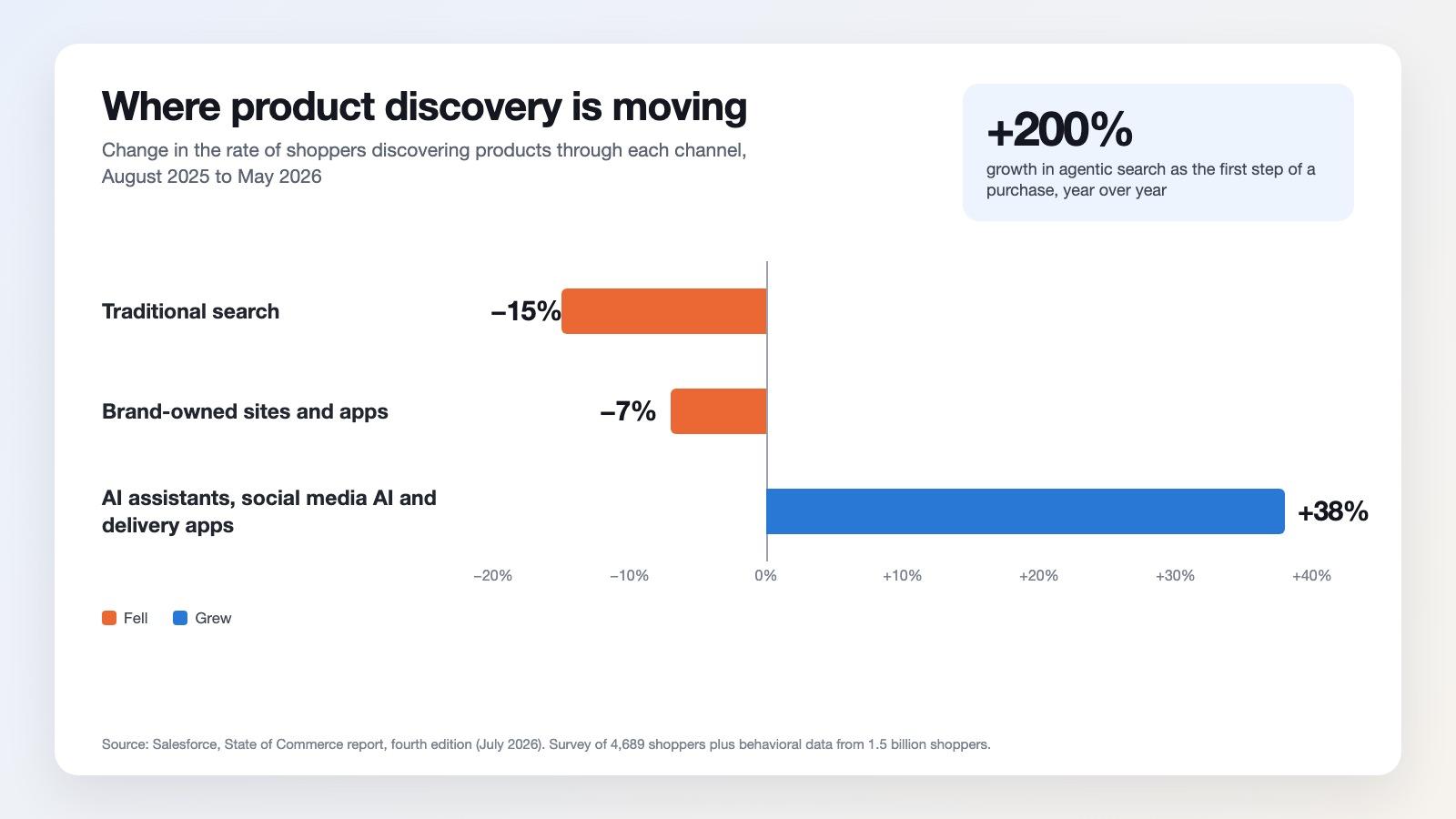
Fewer shoppers now start the ecommerce shopping journey on search engines and brand sites, and more start in AI assistants and apps.
Caila Schwartz, who leads agentic commerce shopper insights at Salesforce, warned that by the time shoppers reach your site, "they've already formed an opinion." That changes your landing page's job. It'll have to confirm a choice the shopper began making in a chat window or a social feed.
Journeys loop back on themselves, too. For her 2025 , Carys Egan-Wyer asked 13 Gen Z shoppers to draw their own second-hand buying journeys. They'd moved between online and offline touchpoints across several sellers, set up notifications, checked products in physical shops before buying online and read reviews to decide who to trust. Don't expect your own ecommerce journey to look as tidy as a funnel diagram.
How Customer Journey Mapping Helps Ecommerce
Ecommerce customer journey mapping turns scattered complaints into a list you can fix in order. The map will show which stage lost people and the last page or email they touched, and you won't have to guess why sales dipped.
A map also shows where your pages contradict each other. In a 2025 survey of 775 omnichannel shoppers, Wei Gao and Ning Jiang found that shaped the experience. Touchpoints that shared a theme, stayed consistent, fit the shopper's situation and linked to each other produced better experiences. If your ad promises free shipping and your checkout adds $9, you'll spot the break on the map before a buyer does.
Trust gaps show up too. Miguel Ángel Moliner Tena and Vicent Tortosa-Edo surveyed 1,123 Spanish consumers in 2025 and found online customer experience had the strongest effect on shoppers' , ahead of satisfaction and trust. Mark every point in your customer journey for ecommerce where you ask for personal data. A clunky form there can leave shoppers wondering what you'll do with their details.
How to Map Your Ecommerce Customer Journey
Block out an afternoon and bring in whoever answers customer emails. They'll already know where buyers get stuck.
1. Start with One Buyer
Choose a single persona built from real orders, reviews and support tickets: who they are, what the product fixes for them and what nearly stopped them buying. Your ecommerce buyer persona and customer journey should come from the same data, or you'll end up mapping a shopper who doesn't exist.
2. Set the Stages
Use five stages: discover, consider, buy, receive and come back. The first three cover Lemon and Verhoef's prepurchase and purchase stages. The last two split postpurchase in half, since delivery and reordering go wrong for different reasons. They'll become the columns of your ecommerce customer journey map.
3. List Every Touchpoint
Under each stage, write down where the buyer meets you: an AI answer, a creator video, a search ad, your landing page, checkout, the confirmation email and the parcel. Include the stretches of the customer journey ecommerce stores can't see, like third-party reviews and forums. You won't control them, and they'll still shape what people expect when they land.
4. Add One Number per Stage
Your analytics already record a large part of the ecommerce website customer journey. Pick one number for each stage and check it weekly: traffic by source for discovery, product page conversion for consideration and checkout completion for the purchase. Once orders arrive, count "where is my order" emails, and a month or two later, look at the share of buyers who've ordered again.
5. Write the Fix Next to the Problem
Next to each stage, note the largest drop-off and one change you'll test. A customer journey map ecommerce teams can act on also names an owner and a deadline for every fix. Rank the fixes by how many buyers each one reaches, and you'll know where to start.
Ecommerce Customer Journey Map Example
Here's how a map looks for an ecommerce customer journey that begins in an AI chat and ends with a second order. The store sells over-ear headphones through a single funnel, and we've pulled the figures from the 2026 research above. Swap in your own once you've got a month of data.
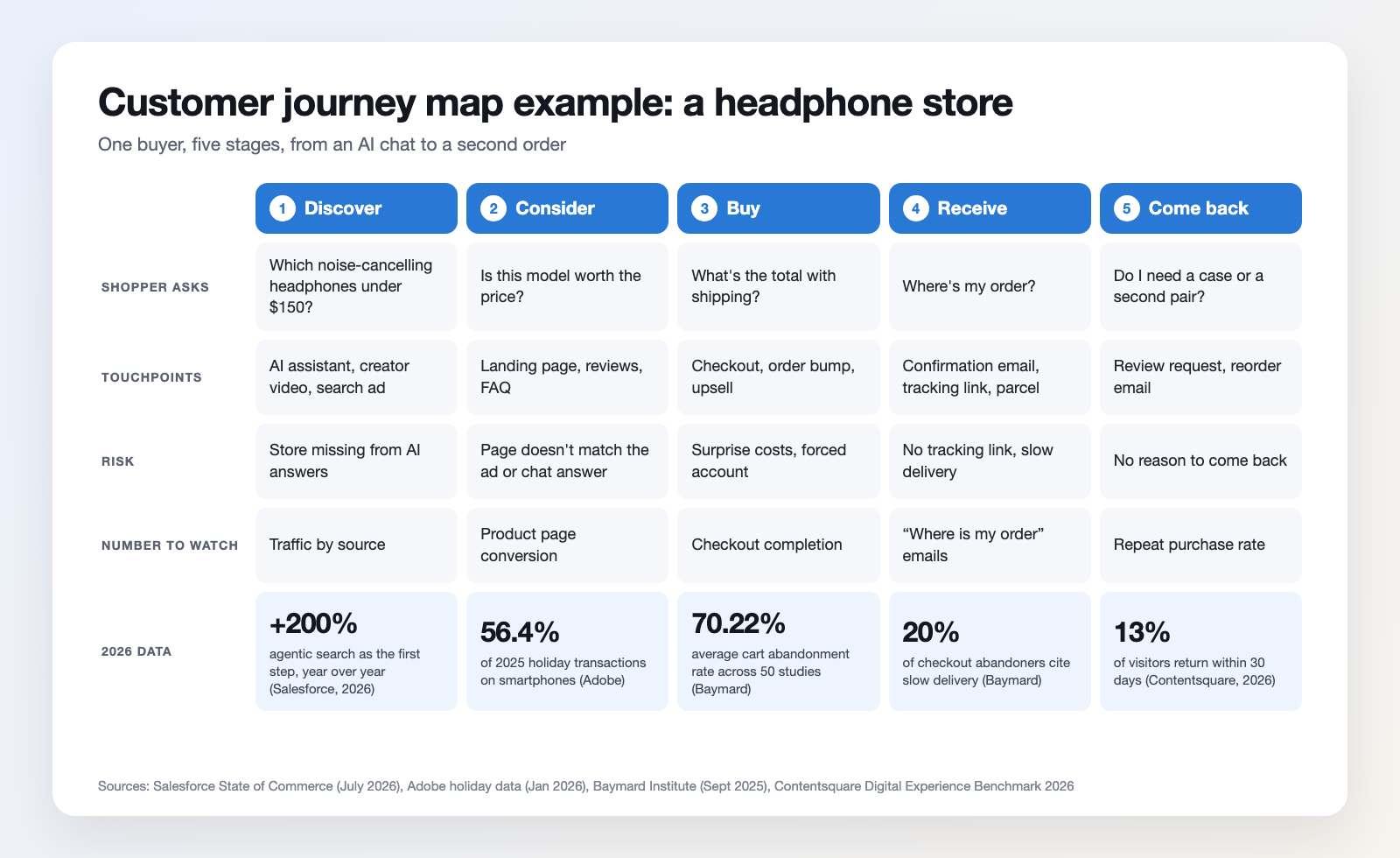
A filled-in ecommerce customer journey map for a headphone store, from AI search to the second order.
Read it one column at a time. At discovery, the shopper has asked an assistant for noise-cancelling headphones under $150 and arrives with a model in mind. At checkout, a surprise cost will be the biggest risk, as the next section shows, and the last column asks what'll bring this buyer back for a case.
Ecommerce Customer Journey Map Template
Copy this table into a spreadsheet, and you'll fill in one column per stage. Keep each cell short enough to read out in a meeting.
Discover | Consider | Buy | Receive | Come back | |
What the buyer wants | |||||
Where they meet you | |||||
Questions they're asking | |||||
What could stop them | |||||
Number to watch | |||||
Fix to test | |||||
Owner and deadline |
Make a separate copy of this ecommerce customer journey map template for each product line. A $30 accessory and a $300 pair of headphones won't follow the same path.
Where Do Shoppers Leave the Journey?
Checkout is the easiest stage to measure. averages 50 studies to a cart abandonment rate of 70.22%. Roughly seven in ten carts don't turn into orders, and some of that's normal: 42% of US online shoppers told Baymard they'd abandoned a cart because they were only browsing.
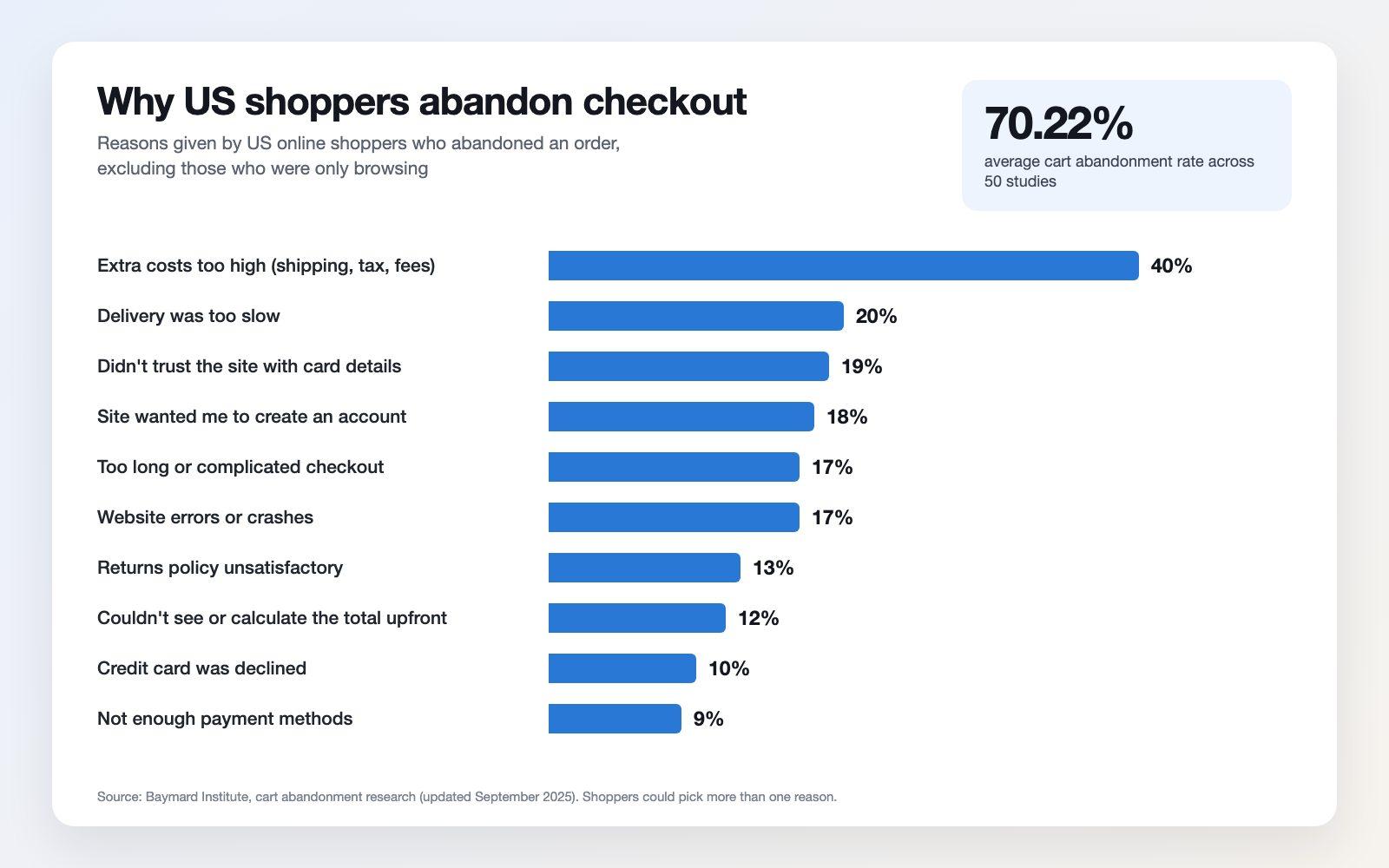
Reasons US shoppers gave for quitting the ecommerce shopping journey at checkout, excluding anyone who was only browsing.
None of the reasons in that chart has to do with the product itself. Extra costs lead at 40%, then slow delivery at 20%, distrust at 19% and forced account creation at 18%. Each one is a stretch of the ecommerce customer journey you can change in your checkout or your policies, and you won't need a new product to do it.
The end of the ecommerce journey leaks too. Contentsquare's , built from 99 billion sessions on more than 6,500 websites, found that 13% of visitors came back within 30 days. When you've paid to win a buyer, the page after payment and your follow-up emails will decide whether that spend brings a second order.
How to Improve the Ecommerce User Journey
Start optimizing ecommerce journey steps at checkout and work back toward discovery, since every buyer has to pass through checkout.
Put the full price on the product page. Shipping, taxes and duties shouldn't show up for the first time at checkout. Baymard found 12% of abandoning shoppers couldn't see or calculate the total upfront, and showing the full price early keeps surprises out of the ecommerce user journey.
Offer guest checkout. Let people pay without creating an account, then invite them to save their details once they've ordered. You'll close an exit that 18% of abandoning shoppers named.
Send AI and creator traffic to the product. A shopper who asked a chatbot about one model will want to see that model first. Point those links at its landing page, with the price and buy button on the first screen.
Build for the phone first. In Adobe's holiday data, 56.4% of transactions happened on smartphones. Aim for a customer journey ecommerce buyers can finish with one thumb: short forms, express wallets and a checkout button that stays in view.
Keep talking after payment. Your thank you page is the last screen of the ecommerce user journey, and it should tell buyers when their order ships. Send the tracking link before anyone asks for it, then time a reorder email for when the product's about to run out.
Launch Your Journey on a Free Funnel Template
Vierra, a free Funnelish template, covers the part of the customer journey ecommerce brands control: a landing page, checkout, upsell and thank you page, built to sell over-ear headphones.
Each page will line up with a stage on your map. The landing page handles consideration with the headline "Hear the motion behind every note" and a Buy Product button near the top. Buyers will pick from five headphone options on the checkout page, including a bundle, backed by a 30-day money-back guarantee. Once they've paid, an upsell offers the PX-L Series at up to 45% off, and the confirmation page tells them an email with order details and tracking has gone out.
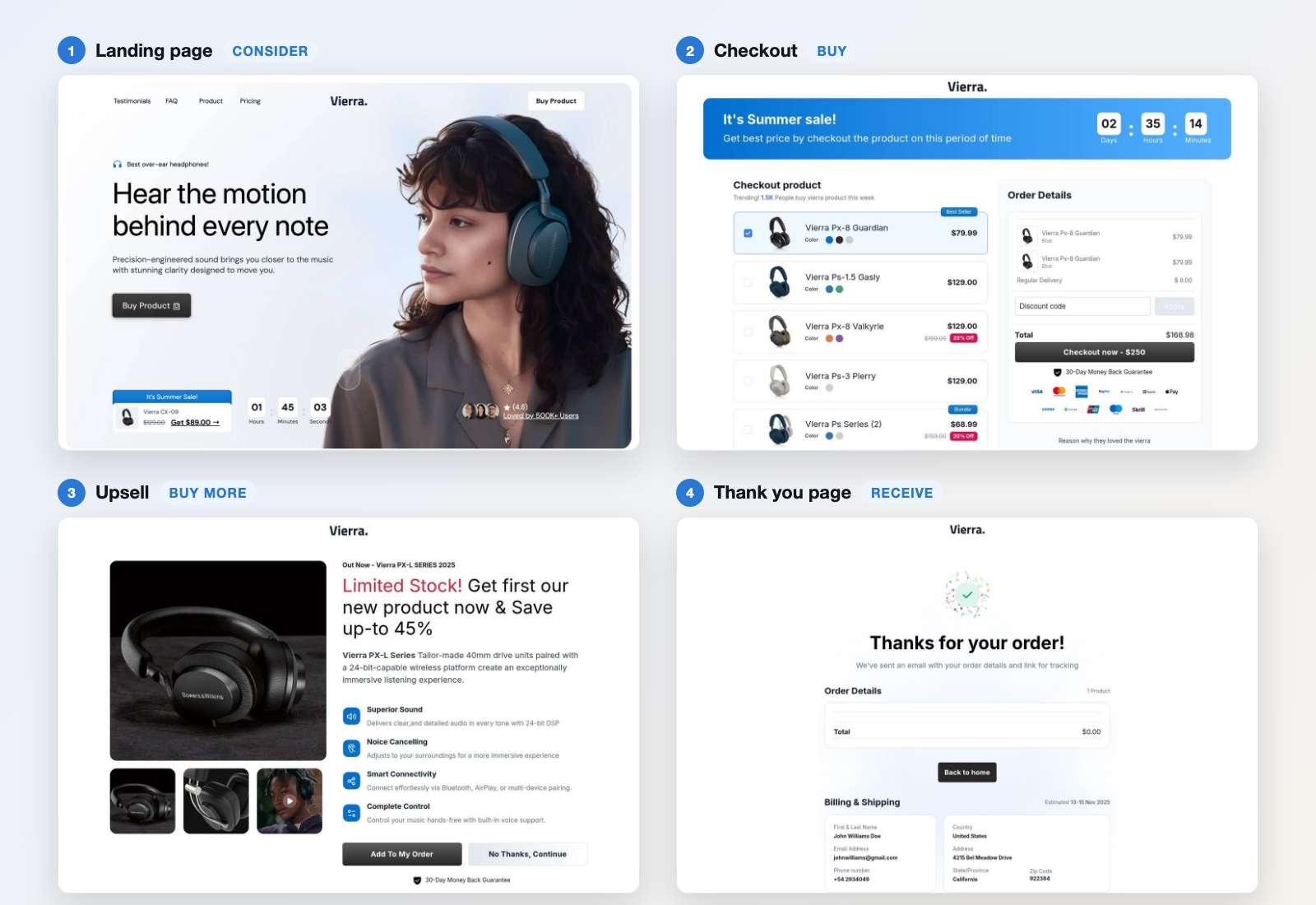
Vierra takes buyers from the landing page through checkout and the upsell to the thank you page.
Once it's live, Funnelish's report six metrics for every funnel step, including conversion rate and page views, and you can A/B test any page. That'll give each stage of your ecommerce customer journey inside the funnel its own conversion rate.
Funnelish plans start at $41 a month billed annually after a 14-day free trial, and no plan adds its own processing fees. Open every page in the , swap in your product, prices and photos, and you'll launch your ecommerce customer journey on pages that already work together.
Start with the stage that loses the largest share of buyers you can count, fix one thing and check the map again next month. If you update your ecommerce customer journey map every quarter, it'll keep up with where shoppers start, including AI chats that weren't part of last year's plan.
Table of contents
Boost your eCommerce
sales today

24/7 support
No credit card required
Cancel anytime
24/7 support
No credit card required
Cancel anytime
