

Sales Funnel Template: Only Template You Need (Free Ecommerce Download)
26 January 2026
Anna P.
Theory is expensive. Execution is profitable.
Most marketers spend weeks debating the psychology of a sales funnel. They draw diagrams on whiteboards and read books from 1998. Meanwhile, their competitors launch a proven template, run traffic, and generate revenue by Tuesday.
In the fast-paced digital economy of 2026, you do not have time to reinvent the wheel. You need a structure that works immediately. One solution is a sales funnel template designed for speed, mobile optimization, and a high average order value.
Today, a sales funnel is not a concept. It is a piece of software architecture and a series of pages designed to do one thing: take a stranger from an ad and turn them into a repeat buyer and a loyal brand advocate with zero friction.
Here is why a sales funnel template beats custom coding, and how you can download the framework used by 8-figure brands on Funnelish.
Why Templates Outperform Theory
In digital commerce, time-to-market is a critical metric. When you build a sales funnel from scratch, you risk accumulating technical debt, potential bugs, and unverified UX decisions that can negatively impact conversion rates. Not to mention, the cycle from the first idea to offer launch can be too long. In many cases, by the time your prospects see the offer, they might have already bought your competitor's products.
Using a pre-optimized template helps you shift the focus from structural development to revenue generation and make marketing activities more dynamic.
Validated UX: Templates are based on aggregated transaction data. Navigation and CTA placement rely on established conversion patterns rather than assumptions.
Performance: A standardized Funnelish template uses cleaner, lightweight code. This minimizes latency and improves page load speed — a key factor in reducing bounce rates.
Resource allocation: Eliminating manual CSS and layout adjustments allows you to allocate resources to high-leverage activities, such as offer structure and copywriting.
If your goal is to minimize abandonment, drive revenue, and test as many offers as you like, you need to prioritize launch time and performance over customization. Ready for the strategic choice to use a verified framework, so you can stop managing pixels and start managing growth? Let's break down how you can do this.
Sales Funnel Template Architecture: How It Works
A sales funnel template is a pre-designed and pre-coded set of web pages that guides potential customers through a specific buying journey. Unlike a website theme, which is made for browsing, a funnel template is designed for action. It removes navigation bars, hides social media links, and focuses the user’s attention on a single path.
Read more: Sales Funnel: What It Is, How It Works & Stages (2026 Mega Guide)
Components of High-Converting Template
A simple but effective pre-designed funnel might look like this:
Landing page: Captures interest and handles objections.
Checkout page: Secure, fast, and simple.
Order bump: An optional add-on before purchase (e.g., "Add priority processing for $4").
Upsell page: A post-purchase offer shown after the credit card is charged.
Thank You page: Confirms the order and sets expectations for future relationships with your brand.
This structure helps you transform a simple transaction into a sales process that maximizes revenue per user and lets them know you stay by their side after the first purchase. The best thing: you don't need to develop it all from scratch. However, you do need to know what exactly you bring to the table for the customer at each stage.
Complete Ecommerce Marketing Funnel Map
You need a validated roadmap before you go to market with your brand-new offer. Below, we map each funnel stage to the specific content you need and the metrics required to track success.
Step | Page Type | Goal | Key Metric |
1 | Advertorial / Landing Page | Educate & persuade Content: Storytelling, Problem vs. Solution narratives, Before & After visuals, and editorial-style testimonials. | Click-Through Rate (CTR) Benchmark example: 15% – 30% (CTR from Advertorial to Product Page). |
2 | Product Page | Offer selection Content: High-quality image galleries, social proof (reviews/UGC), clear specs, and scarcity elements (e.g., "Only 3 left"). | Add-to-Cart Rate Benchmark example: 5% – 10% Add-to-Cart Rate on this page. |
3 | Checkout | Capture payment Content: Trust badges, security seals, multiple payment options (Apple Pay/PayPal), and a simplified, distraction-free form. | Conversion Rate Benchmark example: 40% – 55% (Of those who initiate checkout). |
4 | One-Click Upsell | Increase AOV Content: Complementary products, One-time offer discounts, or "Buy more, save more" bundles. | Take Rate Benchmark example: 15% – 25% accepting the upsell offer. |
5 | Thank You | Retention Content: Order confirmation, referral links, post-purchase surveys, and How-to-use guides/videos. | Customer Lifetime Value (LTV) Benchmark: 20% – 30% (Returning customer rate). |
This linear but value-rich path eliminates the paradox of choice. Customers do not wander. They move forward and learn as much as possible about a particular product/solution, or they leave. This binary outcome allows you to measure success accurately at each stage. Positive trends in your metrics serve as a key indicator of product-market fit.
Sales Funnel Stages Explained (TOFU → BOFU → Post-Purchase)
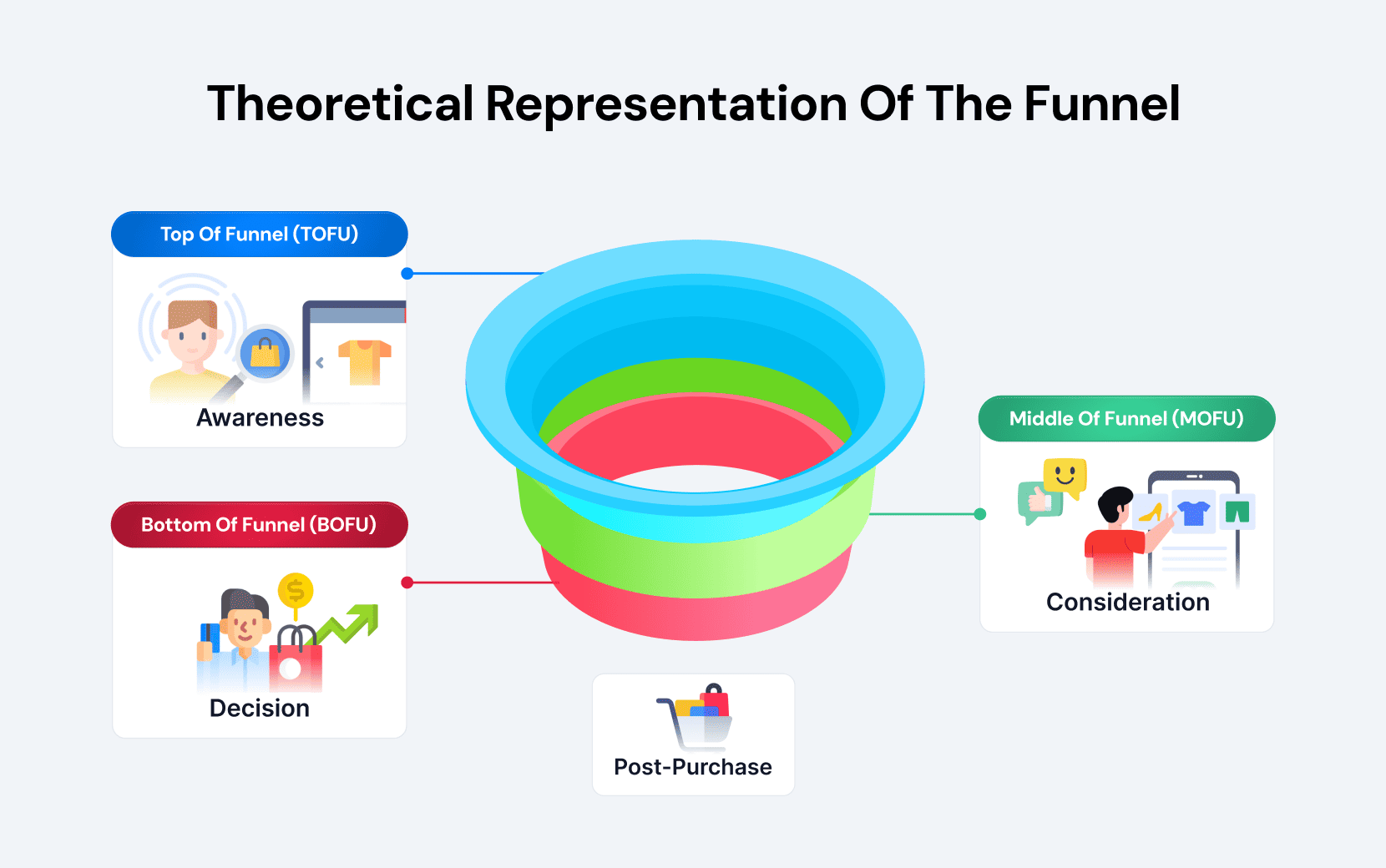
As you can see from the content examples, to use a template effectively, you absolutely need to understand the psychology behind each page. The sales funnel stages dictate what content goes into your template slots.
Top of Funnel (TOFU): Awareness & Education
Your potential customers are scrolling social media. They are not looking for you. Your job is to interrupt their pattern.
Template role: The Landing Page or Advertorial.
Content: heavily visual, problem-focused headlines.
Goal: Move user from "What is this?" to "I need this."
Middle of Funnel (MOFU): Consideration
The prospect is interested but skeptical. They need social proof and logical arguments to justify the emotional desire to buy.
Template role: Reviews section, FAQ blocks, and "How it Works" diagrams.
Content: User-generated content, comparison tables, and guarantees.
Goal: Build trust.
Bottom of Funnel (BOFU): Conversion
The user is ready to pay. Friction is the enemy here.
Template role: The Checkout form.
Content: Trust badges, clear pricing, multiple payment options (Apple Pay, PayPal).
Goal: Secure the transaction in under 60 seconds.
Post-Purchase: Maximization
This is where amateurs stop, and pros make a profit. Once the customer has paid, they are in a buying satisfaction loop.
Template role: Upsell and Downsell pages.
Content: "Wait! Get a second one for 40% off."
Goal: Turn a $50 sale into a $85 sale without extra ad spend.
FREE Sales Funnel Template Preview Images
To help you execute this strategy without building from scratch, we have designed a master template optimized for 2026 consumer behavior. It features mobile-first architecture and built-in speed optimization. It translates the theory of the perfect funnel into an asset you can deploy now.
This free template gives you a perfect shape for your perfect offering:
Clean, Headline-driven Hero Section
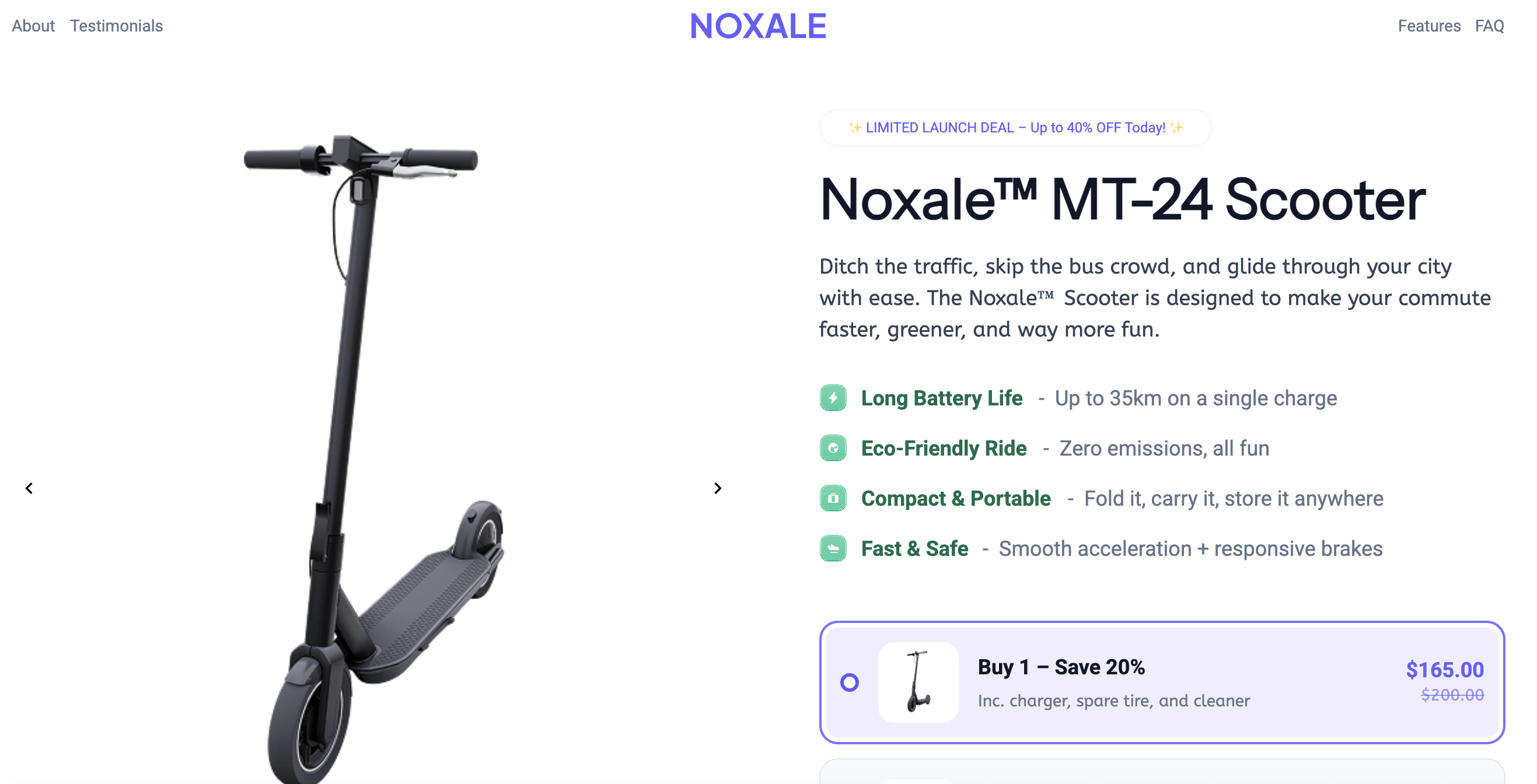
Sticky "Buy Now" Button
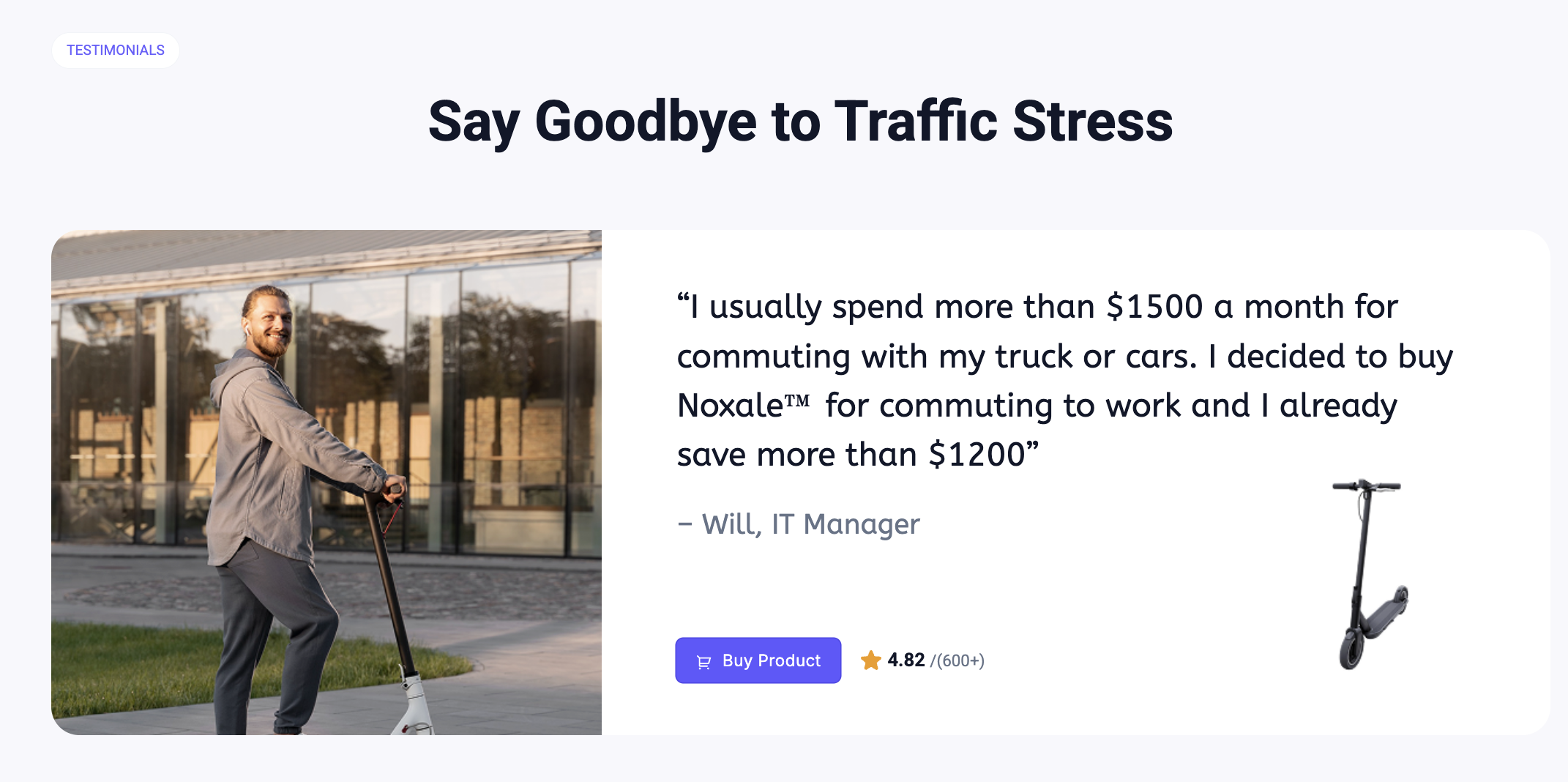
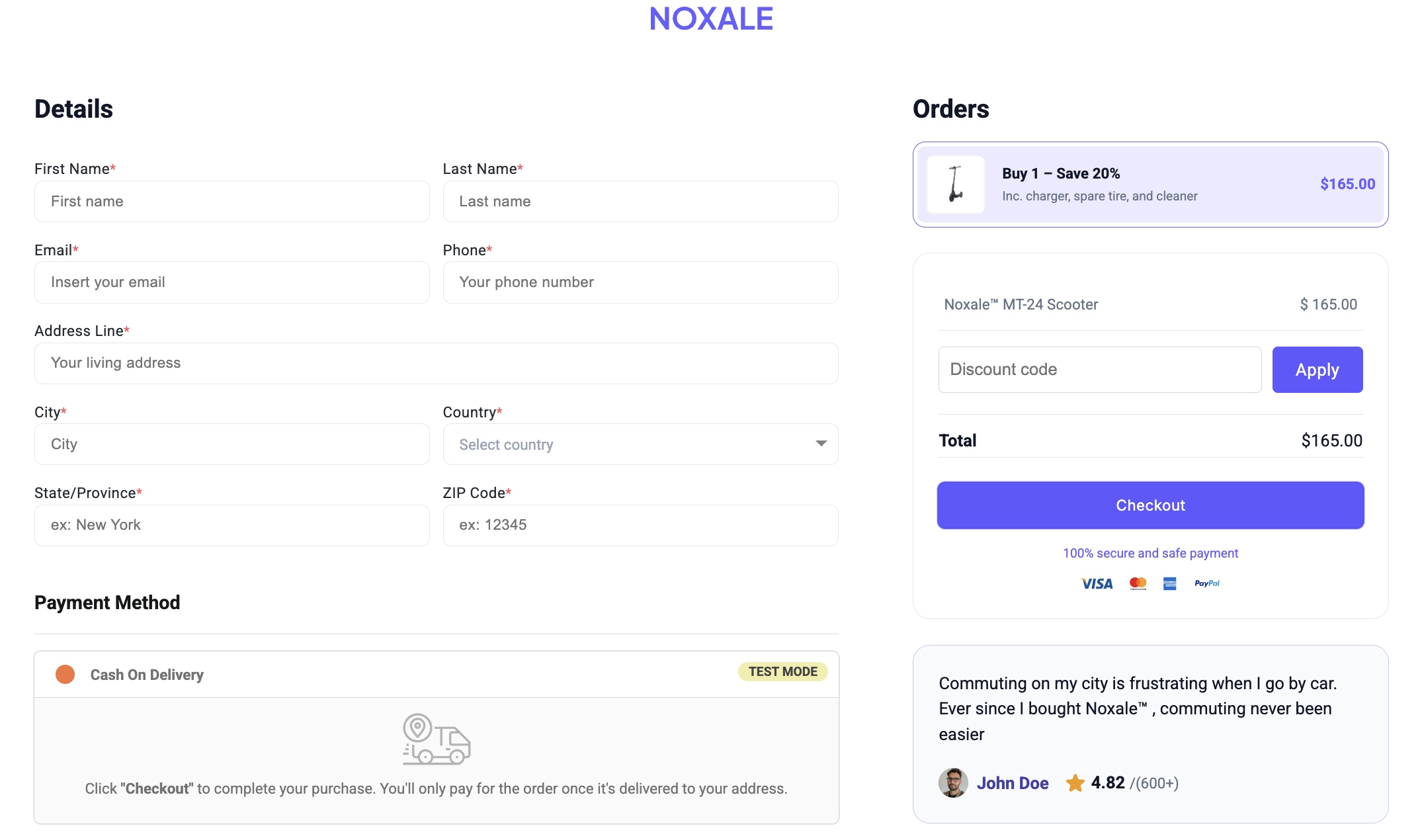
2-step Checkout Form That Captures Emails Early
High-Urgency Upsell Page
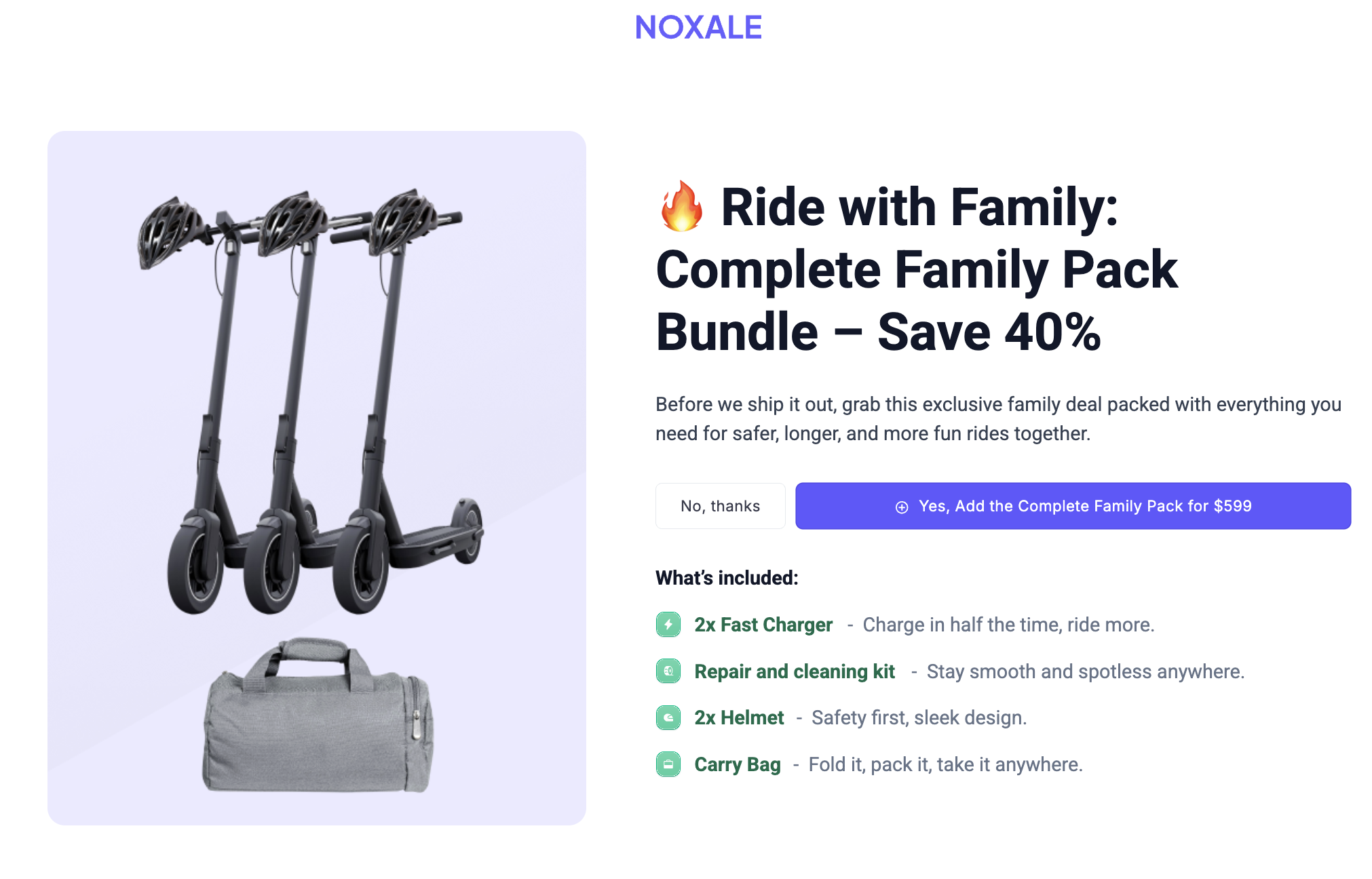
These elements are not decorative. They are functional levers for business growth.
Download Free Templates for an Effective Sales Funnel
We have packaged this exact structure into a one-click import for Funnelish. You can have this live, connected to your Shopify or payment processor, in less than 30 minutes.
Download Free High-Converting Sales Funnel Template 1
Download Free High-Converting Sales Funnel Template 2
Download Free High-Converting Sales Funnel Template 3
Requires Funnelish account. Includes mobile and desktop versions.
How Funnelish Outperforms Shopify
You might ask: "I have Shopify. Why do I need a funnel builder?"
Shopify is a database. It manages inventory, shipping, and backend logistics better than anything else. However, standard Shopify themes are heavy. They load slowly, and they are full of distractions.
Funnelish is a marketing tool that syncs with your Shopify. It is the high-speed sales floor, which adapts to your creative marketing ideas in no time, while Shopify handles the warehouse to ensure your products reach buyers in a timely manner.
Feature | Standard Shopify Store | Funnelish Funnel |
Page Load Speed | 2-4 Seconds | Often < 1 Second |
Navigation | Full Menu (Distracting) | None (Focused) |
A/B Testing | Requires Apps/Code | Native & One-Click |
Upsells | Clunky / Cart-based | True One-Click Post-Purchase |
Checkout | Generic | Fully Customizable |
For paid advertising, speed and focus are the only metrics that matter. Funnelish delivers both without disrupting your backend operations.
Best Sales Process Practices for 2026
While a template provides the necessary infrastructure, consistent performance always comes from operational refinement. The following principles will help you maintain a fluid and efficient pipeline.
Minimize Interaction Cost
Since every additional click represents a potential exit point, your goal is to consolidate the user journey. To preserve high purchase intent, try merging your product education and checkout inputs into a unified view. A 2-step order form will be a wise move here, as it captures contact details early while still keeping the interface clean and manageable for the user.
Prioritize Mobile Architecture
Most of your audience will likely encounter your brand on a mobile device, making responsiveness a financial necessity rather than a design preference. Your layout must prioritize vertical navigation and touch-friendly targets to accommodate traffic from social platforms. If the interface is difficult to navigate on a phone, you risk alienating your largest segment of potential customers.
Optimize for Latency
Page speed is a functional feature of your sales funnel. Because even minor delays can undercut conversion rates, you need to compress assets and serve content through a global CDN. The technical rigor ensures that your offer loads as quickly as your customer makes decisions, so none of them bounce due to heavy scripts.
Establish Immediate Validation
Instead of burying reviews at the bottom, put trust indicators — such as star ratings or key testimonials — below your main headline. Early confirmation answers the user's trust questions immediately, encouraging them to engage with the rest of your narrative.
Real Examples of Winning Funnels
Let’s look at how brands already use these templates to dominate their market.
1. Subscription Engine: AG1 (Athletic Greens)
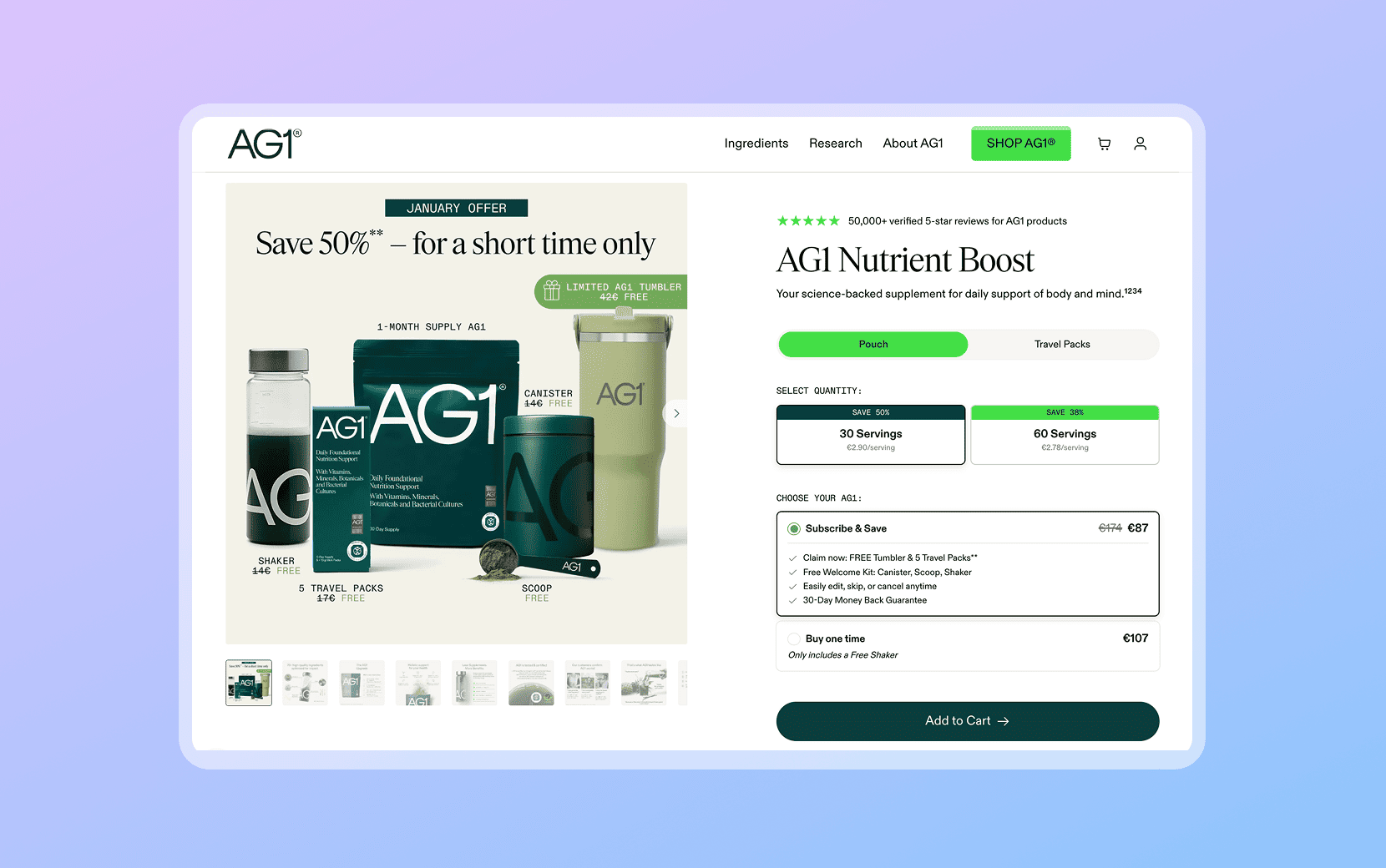
Sector: Health & Wellness (consumables)
Strategy: AG1 dominates the supplement space by prioritizing retention over single-purchase revenue. Their funnel is designed to make the subscription model the path of least resistance.
Acquisition layer: Traffic is driven via long-form podcast reads or trusted influencer content (e.g., Tim Ferriss, Joe Rogan), which is a pre-sell advertorial.
Offer: The AG1 Nutrient Boost landing page defaults to the Single Subscription option rather than a one-time purchase. To reduce friction, they incentivize this commitment with high-perceived-value bonuses: a free welcome kit (Canister, Scoop, Shaker) and five travel packs.
By front-loading value in exchange for a subscription, AG1 secures a recurring revenue stream, offsetting high customer acquisition costs with exceptional lifetime value.
2. Authority Bundle: HexClad
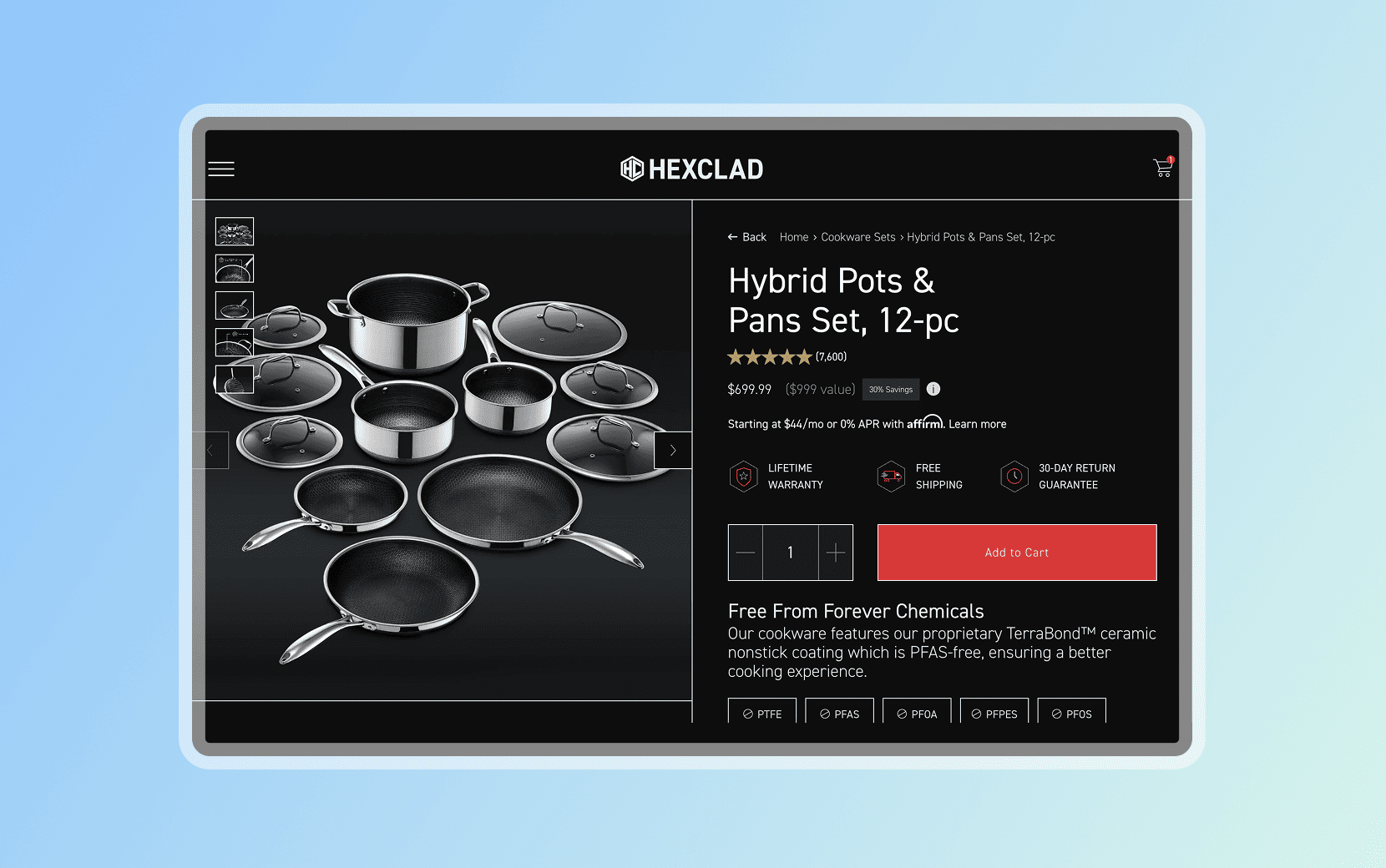
Sector: Home & Kitchen (high-ticket durables)
Strategy: Selling premium cookware online requires overcoming skepticism about quality. HexClad leverages a hybrid funnel that combines intense social proof with aggressive bundling logic.
Acquisition layer: High-production video ads featuring authority figures (most notably Gordon Ramsay) demonstrate the product's durability in a professional environment.
Offer: Instead of selling a single pan, the funnel directs users to a 12-Piece Hybrid Cookware Set. The page uses anchor pricing (striking through the individual SKU total) to highlight the savings of the bundle.
Upsell: The checkout flow utilizes one-click upsells for lower-friction items like specialized cleaning sprays or knife sets, which complement the main purchase without requiring a second decision process.
This structure inflates the initial AOV big time, allowing HexClad to bid aggressively on paid media and maintain profitability on the first transaction.
3. Cross-Sell Ecosystem: Ridge
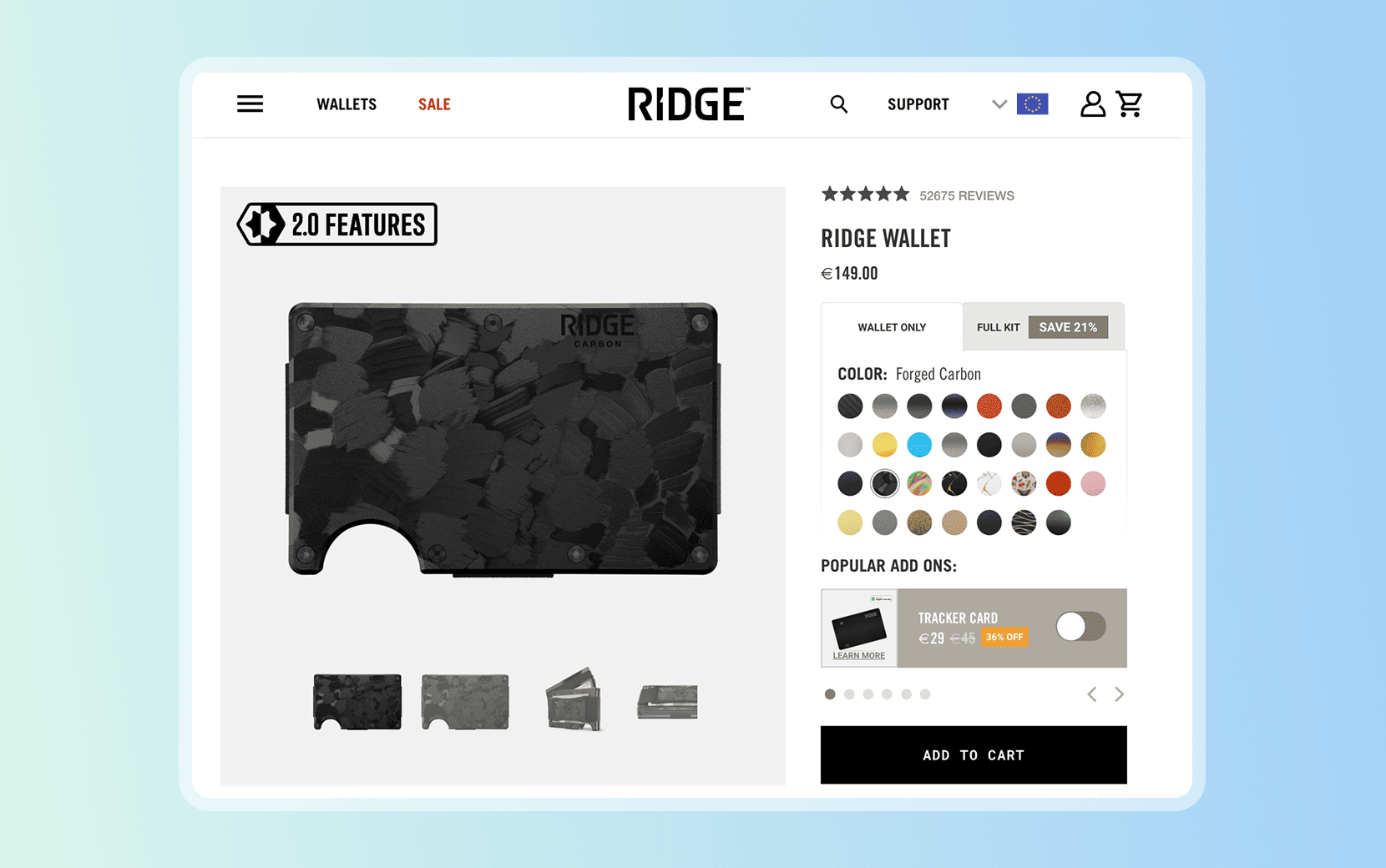
Sector: Accessories (everyday carry)
Strategy: Ridge transformed a simple utility item (a wallet) into a comprehensive lifestyle brand by mastering the ecosystem funnel. Their architecture focuses on expanding the cart size by solving related problems.
Acquisition layer: Direct-response video content focusing on the minimalism and durability of the core wallet product.
Offer: A clean, mobile-optimized product page that emphasizes material selection (Carbon Fiber, Titanium).
Upsell: Once the wallet is in the cart, the funnel triggers a frequently-bought-together logic or a post-purchase offer for the "Key Case" or "Bolt Action Pen."
By positioning accessories as necessary components of the daily carry system rather than random add-ons, The Ridge turns a €149 wallet customer into a $178 ecosystem buyer.
Common Mistakes When Creating Funnels
But even with a high-performance template, the variables you inject — copy, offer, and logic — determine the final yield. You also need to ensure these elements are calibrated correctly for maintaining conversion integrity.
Go through these short but actionable reminders and save them for later to make sure you don't lose focus on the sales mechanics of the digital age during the creative process.
Overcomplicating Copy
Don't just write directions or list features — that is flat, cold, and kills conversion. If you're aiming for your marketing to perform, you need to go beyond explaining the product. Try selling the status, confidence, and relief the product provides.
People buy emotionally and justify logically, so:
Sell emotions, not features. Not a "metal grill with four legs"; sell "unforgettable family moments and effortless hosting."
Show the elevated self. Meet the customer where they are emotionally and show them the better version of themselves they achieve with your product.
Create urgency. Use scarcity and immediacy (e.g., "selling out tonight") to kill hesitation and make waiting feel like a loss.
Watch the video to learn more:
Weak Offer
A funnel cannot save a bad product or a bad price. If your offer is generic, no amount of optimization will help. Bundle your products. Add a digital guide. Create a no-brainer deal that makes the customer feel foolish for saying no.
Ignoring Data
You must track key metrics. If your click-through rate is high but your add-to-cart rate is low, your price or product description is the problem. If people add to cart but don't buy, your shipping price might be too high. Use data to diagnose the leak.
Asking Too Much Too Early
Every additional field in a form adds friction, so only ask for information when it clearly supports the next step of the funnel. Phone numbers, for example, can be extremely valuable for sales, support, or SMS follow-ups, but asking for them too early can reduce sign-ups if users don’t yet see the benefit. The goal isn’t to collect less data, but to collect the right data at the right moment.
Launch Your High-Performance Sales Funnel Today
You now have the roadmap used by market leaders to turn traffic into recurring revenue. The theory has been validated, the architecture is mobile-ready, and the technical heavy lifting has been resolved.
Instead of spending another month in the planning phase, you can move to execution right now. The focus of your business should be on the quality of your product and the strength of your offer, not on the code that delivers it. By deploying this proven framework, you ensure that your sales process is as professional and efficient as the brand you are building.
Get Your Free Sales Funnel Template for 2026 Now
FAQs
What does sales funnel include?
A sales funnel includes a series of steps: a traffic source (ads), a landing page (interest), a checkout page (decision), and a post-purchase upsell sequence (action). It creates a controlled environment for sales.
What is purpose of funnel?
The purpose is to filter traffic and guide prospects toward a specific action, usually a purchase or lead submission. It eliminates distractions found on standard websites to maximize conversion rates.
What are 5 stages of sales funnel?
The five modern stages are Awareness (discovery), Interest (research), Consideration (comparison), Conversion (purchase), and Loyalty (retention/advocacy).
How to create sales funnel for free?
You can map out a funnel on paper for free. To build one digitally, you can use free trials of software like Funnelish to access templates, import them, and launch before the trial ends to generate revenue to cover the cost.
What is sales funnel in digital marketing?
In digital marketing, a sales funnel is the automated process of turning a website visitor into a customer using targeted content, retargeting ads, and email sequences. It is the engine of online business growth.
What is difference between sales pipeline and funnel?
A sales funnel focuses on the customer's journey and conversion rates across a large audience. A sales pipeline is used by sales reps to track specific deals and contracts in a B2B context.
Why do sales funnels fail?
Funnels fail due to friction (slow loading, too many clicks), weak offers, or a disconnect between the ad message and the landing page headline.
How do I increase funnel conversion rate?
To increase funnel conversion rates, eliminate friction and amplify trust. Speed up your pages, showcase real social proof, streamline the checkout process, and retarget high-intent users who abandon before purchasing. Winning funnels don’t rely on traffic alone, they optimize every step to convert more of what they already have.
Table of contents
Boost your eCommerce
sales today

24/7 support
No credit card required
Cancel anytime
24/7 support
No credit card required
Cancel anytime
