

Is Shopify Legit? A 2026 Guide to Safety, Scams & Trust
21 June 2026
Anna P.
8 minutes
Quick answer: Yes, Shopify is legit. It's one of the most trusted e-commerce platforms in the world, used by millions of businesses across 175+ countries, and it's certified PCI DSS Level 1 compliant with SSL encryption on every store. But there's a crucial distinction most people miss: Shopify the platform is legit, while individual Shopify stores are run by independent sellers — and not every one of them is trustworthy. This guide covers both sides so you can shop confidently and, if you're a seller, build a store customers trust.
Think of it like a shopping mall. The building has security guards, cameras, and strong locks, but each store inside is run by a different owner. Shopify provides enterprise-grade security for the whole mall; the legitimacy of any single shop still depends on who's running it.
Is Shopify a legit and secure platform?
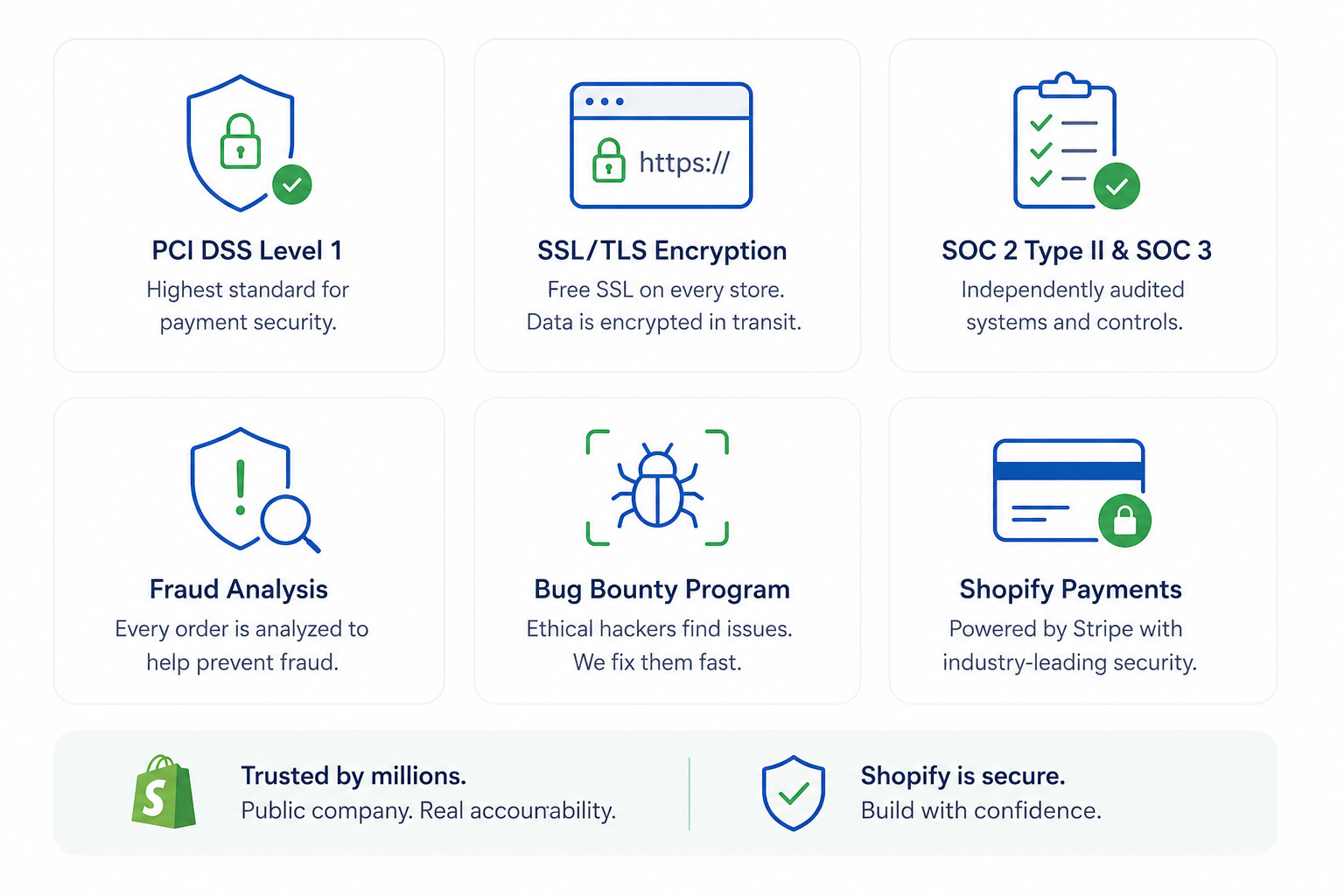
From a technology and compliance standpoint, Shopify is a genuinely secure platform — often safer than a DIY setup. It meets the security benchmarks that serious e-commerce platforms are held to, and it has done so at massive scale for years. Here's what backs that up:
PCI DSS Level 1 compliance. This is the highest level of payment security available for handling credit card data. Because Shopify is certified at this level, every store built on it is PCI compliant by default, so payment information is processed through industry-standard secure systems.
SSL/TLS encryption on every store. Each Shopify store gets a free SSL certificate, meaning the padlock in your browser is real and all financial transactions are encrypted in transit. Your payment details and customer data can't be easily intercepted.
Independent security audits. Shopify maintains SOC 2 Type II and SOC 3 certifications, confirming that the platform's systems and internal controls are independently audited and validated.
Built-in fraud analysis tools. Every order generates a fraud analysis score, flagging indicators like mismatched billing and shipping addresses, high-risk IPs, and unusually large orders so Shopify merchants can catch fraudulent transactions before they become chargebacks.
A public bug-bounty program. Shopify rewards ethical hackers through HackerOne to find and fix vulnerabilities before criminals can exploit them.
Shopify Payments. Its built-in payment processor is powered by Stripe, one of the most trusted payment processing companies in the world, and inherits all the encryption and PCI protections above.
On top of that, Shopify is a publicly traded company, which adds a layer of transparency, regulatory oversight, and financial accountability you don't get from anonymous, fly-by-night platforms. It powers stores for household names alongside millions of small businesses. So when the question is "Is Shopify safe as a platform?" — the answer is a clear yes.
So why do people ask "Is Shopify legit"?
Because the platform's legitimacy gets confused with the trustworthiness of individual stores. Anyone can create a Shopify store relatively quickly, and Shopify doesn't manually review every single one before it goes live. That openness is exactly what makes the platform accessible to legitimate Shopify sellers and small businesses — but it also means scammers can use the same professional-looking tools to set up fake shops.
This is the key thing to understand: Shopify is not a scam, but not every Shopify store is legit. Shopify provides the secure infrastructure and the marketing tools; it doesn't vouch for the honesty of each seller. The good news is that Shopify platform does act against bad actors — its Acceptable Use Policy prohibits fraud, counterfeits, and false advertising, and stores that violate it can be shut down when reported.
Still, your safety as a shopper ultimately depends on the specific store you're buying from.
How to tell if a Shopify store is legit (for shoppers)
Fraudulent stores in 2026 can load fast, look modern, and even mimic established brands, so "Does it look professional?" isn't enough. Before you buy, check these signals:
Unusually low prices. If designer items, electronics, or trending gadgets are priced far below market, be cautious — ultra-low prices on high-demand products are the classic bait of suspicious sites.
Domain age and contact details. Brand-new domains with no history, and stores with no real contact information, are red flags. Legitimate sellers provide verifiable contact details.
Independent reviews. Look for customer feedback on trusted third-party review sites, not just the testimonials on the store itself. Search the store's name plus "scam" or "review."
Secure checkout and payment methods. Confirm the padlock and HTTPS at checkout, and prefer secure payment methods like Shopify Payments, Shop Pay, or PayPal, which offer buyer recourse. Avoid any store pushing you toward wire transfers or unusual payment systems.
Quality of the store itself. Spelling mistakes, low-quality product images, stolen photos, and poor communication are common signs of a fake or low-quality store.
Pressure tactics. Fake countdown timers, borrowed influencer clips, and bogus "as seen on" badges exploit urgency. Real urgency is fine; manufactured pressure paired with other red flags is not.
The smart approach is trust but verify: rely on Shopify's protected checkout and encryption, but vet the merchant as carefully as you would any unfamiliar site. If a deal feels off, avoid it.
Common Shopify scams to watch for
While the platform is secure, no online marketplace is completely immune to fraudulent activities. A few of the most common Shopify scams target shoppers and sellers alike:
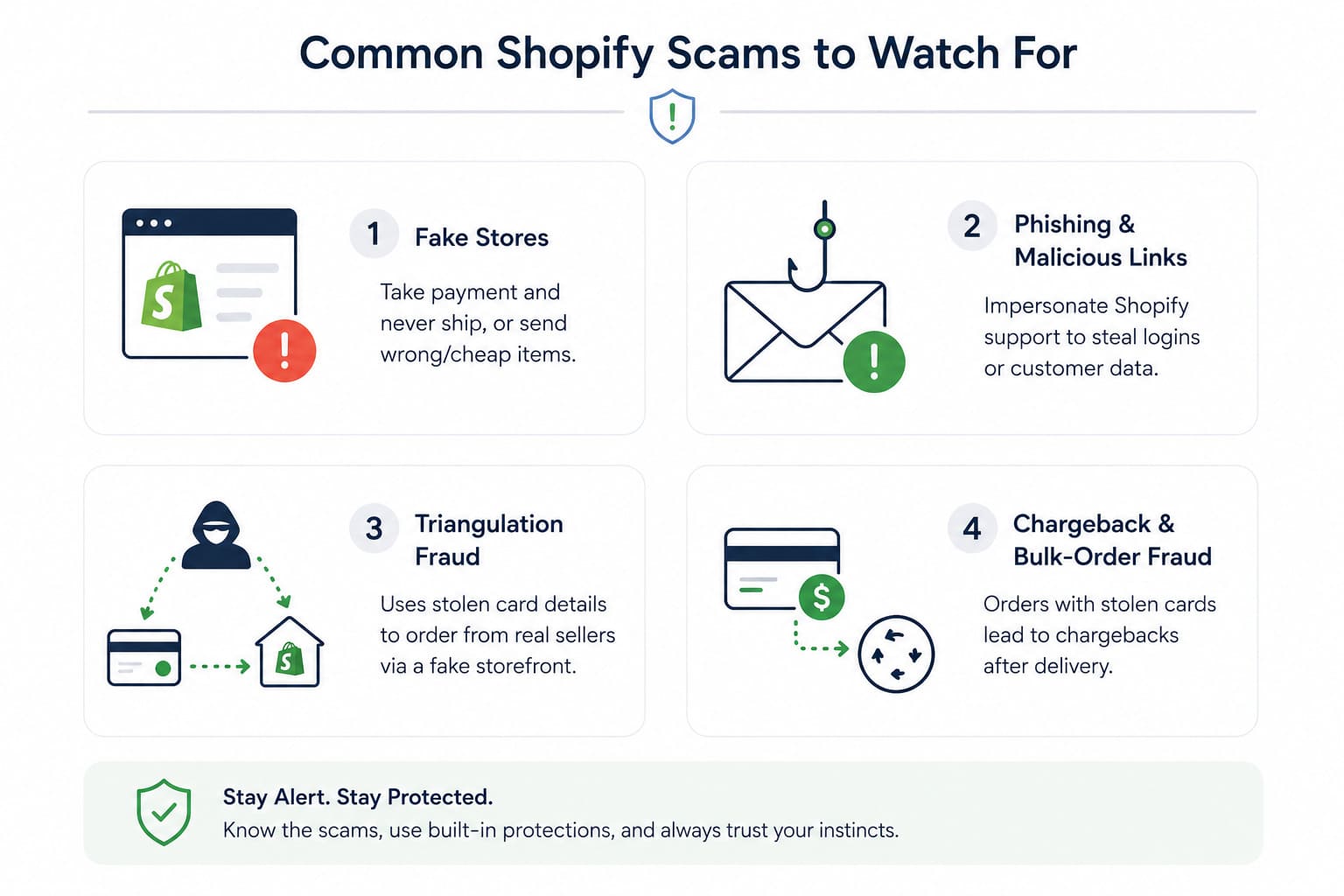
Fake stores that take payment and never ship, or send a completely wrong item or cheap imitation.
Phishing and malicious links impersonating Shopify support to steal a store owner's login or customer data.
Triangulation fraud, where a scammer uses stolen credit card details to fulfill an order placed on their own fake storefront — leaving the real cardholder and the legitimate seller exposed.
Chargeback and bulk-order fraud, where orders placed with a stolen credit card lead to chargebacks once the real owner notices.
Knowing these patterns is half the defense. The other half is using the protections already built into the platform.
How to make your Shopify store look legit (for sellers)
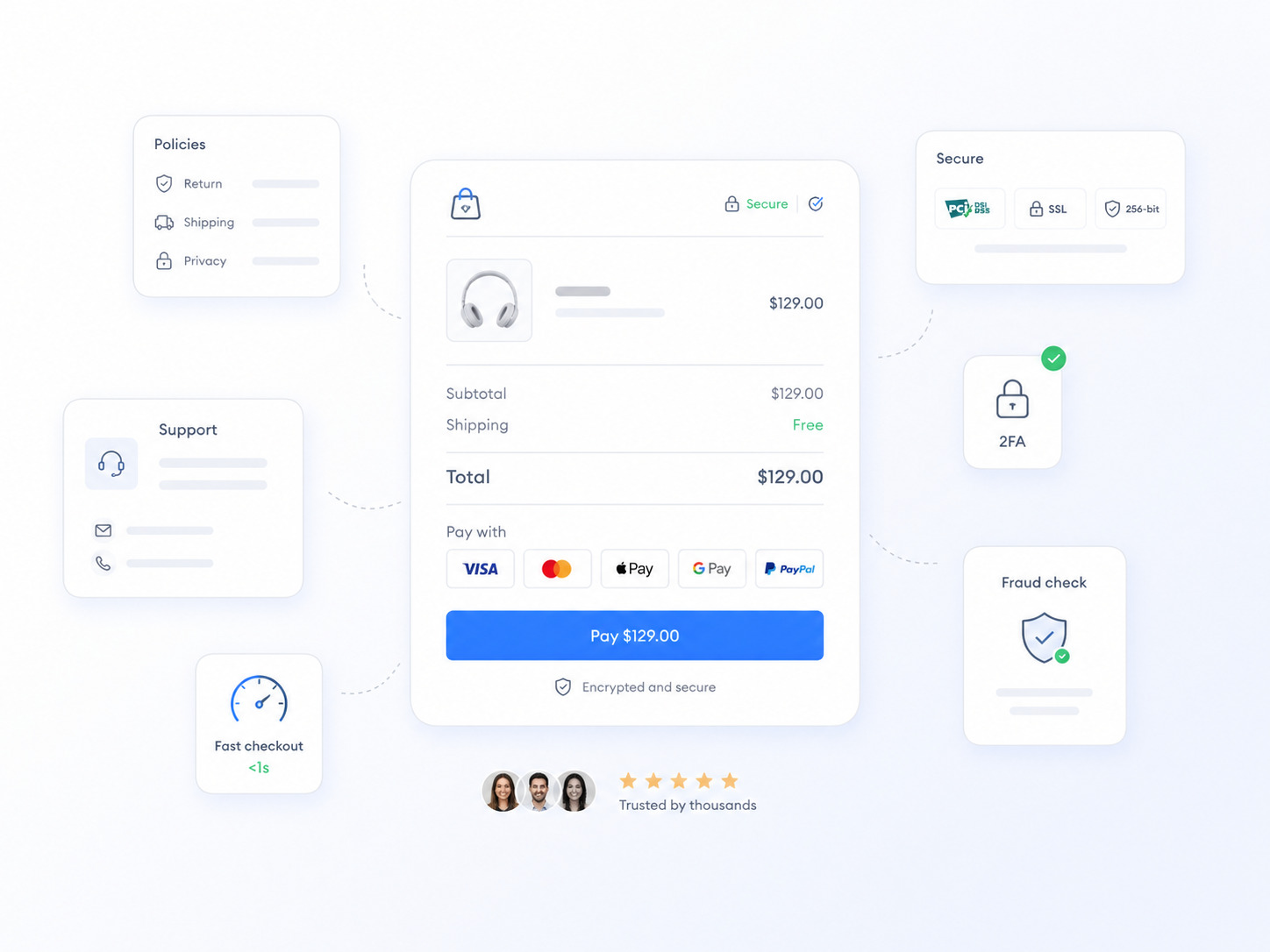
If you're a serious seller, signaling trust is just as important as having it. Shoppers are wary, so make legitimacy obvious:
Be transparent on pricing and policies. Show all prices, fees, and shipping costs upfront, and make your return and refund policy easy to find. Surprises at checkout drive cart abandonment and erode customer trust.
Display trust badges and security seals. Show recognized payment logos and certifications near checkout. These trust badges reassure customers that their payment information is safe.
Protect your account. Enable two-factor authentication for yourself and staff, and use Shopify's staff permissions to limit access to sensitive customer data — a key defense against account takeovers.
Use the fraud analysis tools. Review the fraud score on every order and cancel suspicious ones before they ship.
Tell your brand story and provide real contact details. A genuine About page, responsive customer support, and visible contact information separate legitimate stores from suspicious ones in a shopper's mind.
There's one more piece many sellers overlook: the buying experience itself signals legitimacy. A slow, clunky, or generic checkout makes even an honest store feel risky. The best alternative is a polished, fast, and conversion-focused funnel — a tool like Funnelish lets you build clean landing pages and a smooth checkout that loads in under a second, which both reassures shoppers and reduces the friction that causes cart abandonment.
Pair that with secure, recognized payment methods and clear policies, and your store reads as trustworthy at every step.
Is Shopify safe for your credit card and data?
Yes. Because Shopify is PCI DSS Level 1 compliant and encrypts every transaction with SSL, your credit card data is handled through the same industry-standard, audited processes that protect major financial institutions. Shopify Payments adds Stripe-grade security on top.
The practical risk to shoppers almost never comes from Shopify's infrastructure being breached — it comes from choosing to buy from an untrustworthy individual store. Protect yourself by verifying the seller and using a payment method with buyer protection, and your financial transactions on Shopify are well secured.
Bottom line: is Shopify legit?
Yes — Shopify is a legitimate, secure, and trusted e-commerce platform, and it has the compliance credentials (PCI DSS Level 1, SSL, SOC 2/3), the scale (millions of merchants in 175+ countries), and the public-company transparency to prove it. The nuance worth remembering is that Shopify provides the secure platform and the tools, but it doesn't guarantee the honesty of every store built on it.
For shoppers, that means verifying individual sellers before you buy. For sellers, it means using Shopify's robust security features and signaling your own legitimacy clearly. Approach it that way, and you can shop — and sell — on Shopify with confidence.
Frequently asked questions
Is Shopify a scam?
No. Shopify is a legitimate, publicly traded e-commerce platform trusted by millions of businesses worldwide and certified PCI DSS Level 1 compliant. However, because anyone can open a store on it, some individual stores may be fraudulent — so the platform is legit even though not every store is.
Is it safe to buy from a Shopify store?
It's safe to buy from a legitimate Shopify online store. The platform secures your payment with SSL encryption and PCI compliance, but you should still verify the specific seller — check reviews, domain age, contact details, and use secure payment methods like Shop Pay or PayPal.
Can you get scammed on Shopify?
Yes, as with any online platform, scams exist — usually fake stores that don't deliver, send the wrong item, or sell counterfeits. Shopify removes fraudulent stores when reported, but shoppers should vet sellers and sellers should use fraud-analysis tools and two-factor authentication.
Is Shopify Payments secure?
Yes. Shopify Payments is powered by Stripe and protected by the same SSL encryption and PCI DSS Level 1 compliance as the rest of the platform, making it one of the more secure ways to accept and make payments online.
What should I do if I get scammed by a Shopify store?
Shopify doesn't directly refund buyers since transactions are between you and the store owner. Your best option is to dispute the charge with your bank or payment provider, and report the store to Shopify so it can investigate and potentially shut it down.
Table of contents
Boost your eCommerce
sales today

24/7 support
No credit card required
Cancel anytime
24/7 support
No credit card required
Cancel anytime
