

Klaviyo AI Features: What's New, What Works, and Will They Generate Profit?
28 March 2026
Anna P.
11 minutes
Klaviyo is having a moment. The platform that ecommerce sellers already relied on for email marketing and SMS marketing has spent the past 12 months systematically repositioning itself as something larger: an autonomous B2C CRM where AI agents execute campaigns, handle customer service, and optimize performance without anyone prompting them.
Klaviyo co-founder and co-CEO Andrew Bialecki put it directly: "The execution layer in software is moving from humans to agents. What matters now is having both the agents that do the work, and the infrastructure that gives them the full picture of the customer." (Klaviyo Newsroom)
That's a bold statement. The more useful question for ecommerce operators isn't whether Klaviyo's AI vision is ambitious — it obviously is — but whether the specific features shipping right now generate more revenue than doing things the old way. This piece breaks down what's new, what it does, and where the real profit opportunity sits.
What Klaviyo Is in 2026
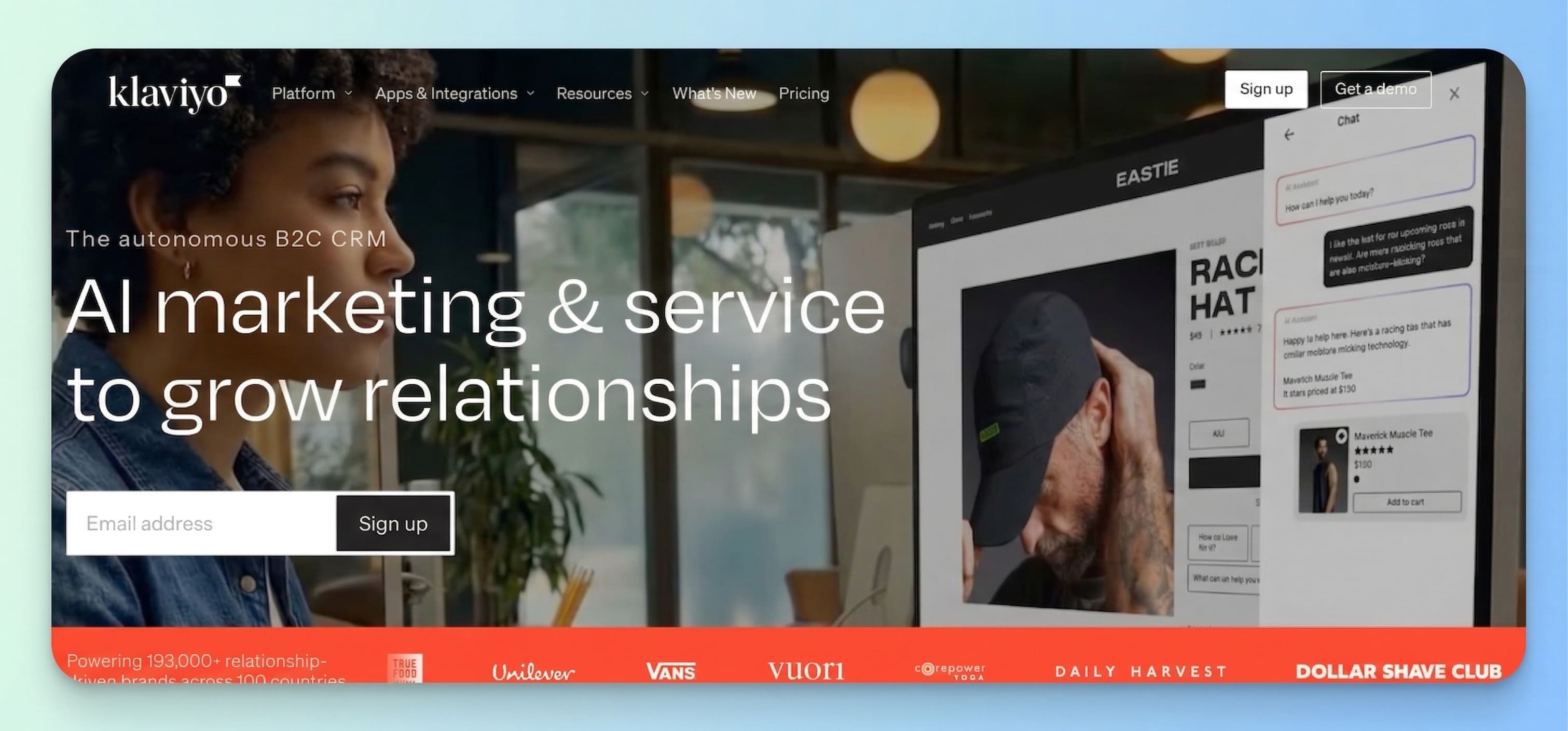
Before the AI features, the foundation. Klaviyo is a customer data platform built for ecommerce. It pulls real-time data from your store — browsing behavior, order data, abandoned cart activity, purchase history — and uses that data to power email and SMS marketing, automated flows, and increasingly, AI-driven decisions about who gets what message and when.
Klaviyo's AI-first B2C CRM now includes a Marketing Agent that autonomously plans and launches campaigns, creates on-brand content, personalizes every send, and continuously learns without prompting — and a Customer Agent that delivers 24/7 personalized assistance to consumers by resolving common questions, recommending products, and escalating to a human agent with full context when needed.
The platform connects to over 350 integrations — Shopify, WooCommerce, and most major ecommerce platforms — syncing real-time data across your entire tech stack from one log in. That data layer is what makes the AI features work. Without it, you're running generic campaigns. With it, you're running personalization at scale.
New AI Features: A Practical Breakdown
Klaviyo shipped five AI features worth understanding individually — they serve different parts of the marketing and service stack, and their revenue impact varies depending on where your operation currently has gaps.
Marketing Agent
Marketing Agent is Klaviyo's most significant new release. It's designed to take autonomous action on your marketing — not just suggest what you should do, but build and launch campaigns without manual execution at each step.
Marketing Agent autonomously plans and launches campaigns in minutes, creates on-brand content, personalizes every send, and continuously learns without prompting. You enter your website, and it builds launch-ready campaigns, sets must-have automated flows live, and gets your first form running — in three clicks, according to Klaviyo.
The intelligence behind it isn't generic. Every campaign Composer generates is grounded on real customer data and shaped by more than 14 years of marketing intelligence and billions of consumer interactions across Klaviyo's 193,000 customers — so outputs aren't based on generic best practices, but on what's proven to work.
The honest reality: Marketing Agent is most valuable for brands that currently leave significant automation on the table — stores that have Klaviyo connected but haven't built out more than a few basic flows. For an operator already running 15 well-optimized automated flows with strong segmentation, Marketing Agent improves efficiency rather than fundamentally changing outcomes. For an operator running just a welcome sequence and an abandoned cart email, it could meaningfully accelerate the automation build-out.
Composer
Composer is a new agentic experience that fundamentally changes how campaigns and flows get built. Describe what you want in plain language — "Run a winback campaign for lapsed VIP customers with a 20% incentive" — and Composer generates a coordinated campaign including audience segments and messaging optimized across channels.
It's in private beta as of late March 2026. The practical promise: campaign creation that previously took a marketing team hours of segmentation, copywriting, and scheduling work gets compressed into minutes. The question — as with all prompt-to-output AI tools — is how much editing the output requires and whether the time saved is real or theoretical. Early access reports from the beta are cautiously positive on speed, with the caveat that brand voice calibration still requires human refinement.
Customer Agent
Customer Agent is arguably the most commercially interesting of the new releases for retailers running at meaningful volume. Klaviyo introduced Agent Guidance alongside it, giving brands precise control over how Customer Agent shows up in every customer conversation — including the agent's voice and tone, communication style preferences, and escalation rules that specify exactly when Customer Agent should hand a conversation to a human.
New out-of-the-box retail skills include order tracking, order editing, subscription editing, returns and exchanges, and loyalty lookup — built directly on Klaviyo's data platform, giving Customer Agent real-time access to the same customer profile that drives marketing.
The profit case for Customer Agent is clearer than for the marketing-side AI features: customer service at scale is expensive, and a well-configured AI agent that resolves 60–70% of routine support inquiries without human intervention reduces support costs directly. The data integration is what makes it genuinely useful — it's not answering questions from a FAQ, it's answering based on the actual customer's order history, subscription status, and loyalty tier.
According to Klaviyo's 2025 AI Shopping Index, 63% of consumers expect AI assistants to be a normal part of online shopping by 2026. The brands that implement Customer Agent well will meet that expectation. The brands that implement it poorly — generic responses, no brand voice calibration, poor escalation logic — will create exactly the frustrating customer experience that drives users away.
Personalized Send Time
One of the less headline-grabbing but practically high-impact features from Klaviyo's recent update cycle: personalized send time uses reinforcement learning to deliver each message when that individual subscriber is most likely to open, click, and convert — based on their real behavioral patterns across every channel. You set the send window, Klaviyo determines the optimal individual send time.
This is one of the AI features with the clearest and most direct revenue impact. Email open rates, and by extension click and conversion rates, are meaningfully affected by timing. Sending at the right moment for each individual subscriber — rather than a blanket 10 AM Tuesday deployment — can lift performance. It's not a transformation; it's a compounding improvement across every campaign.
Mobile Push Notifications and RCS Messaging
Klaviyo extended its reach with the general availability of RCS messaging, enabling richer, more interactive mobile experiences and Instagram auto-replies, allowing brands to respond and convert customers in real time.
RCS (Rich Communication Services) is the evolution of SMS — it supports images, carousels, quick-reply buttons, and branded sender identification, delivering a significantly richer mobile experience than standard text. For brands with a high mobile audience and strong SMS lists, RCS opens a new personalized push notifications channel that performs closer to email in interactivity while retaining the immediacy of mobile push.
Will Klaviyo's AI Features Generate Profit and Help Grow Faster?
The honest answer: it depends on where you are in your marketing automation maturity.
For stores that are underinvesting in email and SMS marketing — sending occasional campaigns but not running behavioral-triggered automated flows, not segmenting meaningfully, not personalizing beyond first-name tokens — Klaviyo's AI features can legitimately accelerate setup and improve performance. Marketing Agent's ability to get a well-structured automation stack live faster is real value.
For stores already running sophisticated email revenue operations, the AI features are efficiency gains rather than step-changes. Composer saves time on campaign creation. Personalized send time improves open rates at the margin. Customer Agent handles support volume. These all compound, but they don't replace the strategic judgment of understanding your customer segments and building the right message architecture.
The risk worth acknowledging: the "vibe marketing era" framing — where AI handles execution and marketers just define outcomes — creates an incentive to trust automation over understanding. The stores that generate the most email revenue aren't the ones that delegate everything to AI. They're the ones who understand their customer data deeply, build deliberate flows grounded in real purchase behavior, and use AI tools to execute that strategy faster.
Klaviyo's customer data platform is genuinely best-in-class for ecommerce. The automation and reporting infrastructure, the direct integrations with Shopify and other ecommerce platforms, the real-time data sync — these are the foundations that generate email revenue. The AI features are most valuable when they're accelerating a strong strategic foundation, not substituting for one.
One Part Klaviyo Doesn't Control
There's a meaningful gap that all the Klaviyo AI features in the world can't close: what happens before a customer reaches your email list in the first place.
Klaviyo works on retention and re-engagement — the customers who have already transacted or opted in. The front end of that funnel — converting cold traffic from ads or organic search into email subscribers or buyers — is a different problem. A standard Shopify product page with a basic email capture popup is doing this job adequately at best.
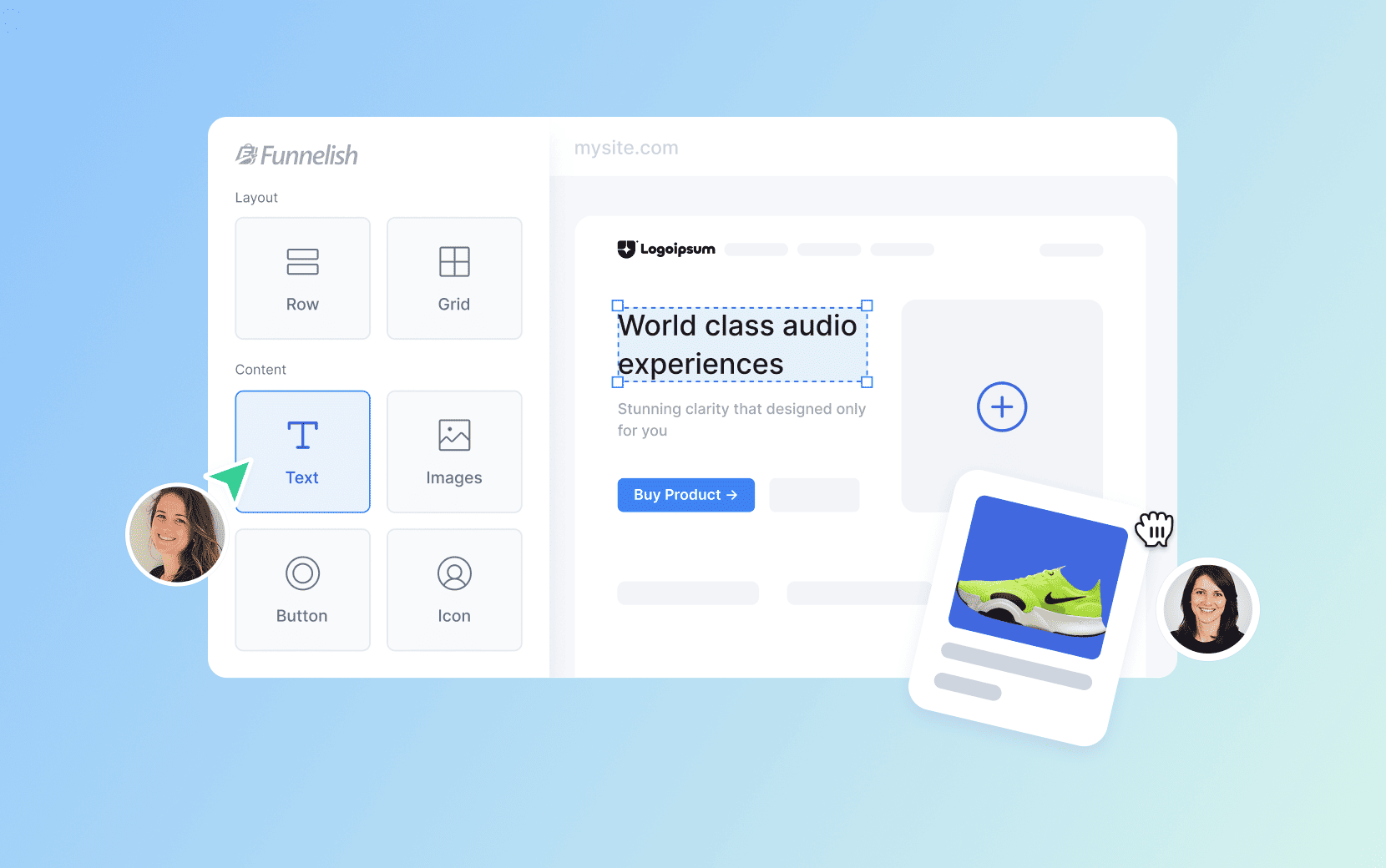
That is why retailers opt for the infrastructure that funnel builders provide. Funnelish's page builder, for example, lets you create dedicated landing pages — built to capture emails through quizzes, lead magnets, or discount offers before a visitor leaves — that feed directly into your Klaviyo flows. A visitor who arrives from a TikTok ad, lands on a fast-loading page, opts in via a quiz, and then moves through a welcome sequence in Klaviyo is a fundamentally different acquisition than one who bounces off a generic product page.
Another feature, the geo-funnels capability, is particularly relevant here: showing different content, offers, and proof elements based on where a visitor is located means the front-end capture page is already doing personalization work before Klaviyo's data platform sees the customer. When those profiles arrive in Klaviyo, they arrive with context — geography, product interest, entry offer — that immediately improves segmentation and flow relevance.
The automation works in both directions, too. Klaviyo's email sequences trigger based on what happens in the funnel. Post-purchase upsell flows fire when an order is confirmed. Abandoned cart emails go out when someone drops off at checkout. The Funnelish checkout and Klaviyo's automated workflows are genuinely complementary for your business and sales — one converts the traffic, the other maximizes the value of every customer relationship that results.
Bottom Line on Klaviyo AI
Klaviyo's AI releases represent a genuine evolution of the platform, not just a marketing app rebrand. The 75+ new features shipped in Q1 2026 alone reflect continued investment in the infrastructure that unifies customer data with the agents that act on it.
The features most likely to generate measurable revenue impact for most ecommerce sellers, in order:
Personalized send time (immediate lift on existing automated sends)
Customer Agent (direct cost reduction and conversion improvement on support interactions)
Automated flows accelerated by Marketing Agent (faster value from the automation stack)
Composer (time savings on campaign creation)
The broader AI vision — an autonomous B2C CRM system where agents handle execution while teams focus on strategy — is directionally correct, and Klaviyo has the data infrastructure to make it credible. Whether it generates profit for your store depends on whether you have the product, the customer relationships, and the front-end conversion infrastructure to put that data to work.
Klaviyo FAQs
Is Klaviyo free?
Klaviyo has a free plan that supports up to 250 contacts and 500 email sends per month — enough to test the platform and build your first automated flows before committing to a paid plan. Paid plans are based on the number of contacts in your account and start at around $20/month for small lists. As your list grows, pricing scales accordingly. Email and SMS can be combined on a single plan. It's worth starting on the free tier to understand the platform's capabilities before scaling.
What is Klaviyo email marketing?
Klaviyo is an email and SMS marketing platform built for ecommerce. Unlike general-purpose email tools, it connects to your store — pulling in real-time data on browsing behavior, purchases, and abandoned carts — and uses that data to personalize campaigns and trigger automated flows. The practical result is that your emails reflect what customers actually did on your site, not just demographic assumptions.
If you're building a funnel on Funnelish and capturing emails at the top of that funnel, Klaviyo is the natural home for the follow-up sequences that turn those leads into buyers.
How does Klaviyo work?
Klaviyo connects to your e-commerce platform via direct integration, syncs customer and order data in real time, and lets you build segments, campaigns, and automated flows based on that data. A standard setup includes a welcome series for new subscribers, an abandoned cart flow for people who start checkout and don't complete it, a post-purchase sequence, and a winback flow for lapsed customers.
Campaigns are sent manually to segments; flows trigger automatically based on customer behavior. The AI features layer on top to optimize timing, generate content, and — increasingly — handle execution autonomously.
What is the 60/40 rule in email?
The 60/40 rule is a general content guideline suggesting that roughly 60% of your email sends should provide value — education, content, product discovery — while 40% are direct commercial asks. The underlying logic is about list health and engagement: an audience that only receives promotional emails trains itself to ignore them.
Klaviyo's segmentation tools make it practical to apply more nuanced versions of this — sending behavioral content to engaged segments and re-engagement offers to lapsed ones — but the underlying principle of not burning your list with constant selling remains sound.
Is Klaviyo easy to learn?
The basics — connecting your store, setting up core flows, sending campaigns — are accessible within a day for most operators. The drag-and-drop editor is intuitive, and Klaviyo's documentation and community are extensive. The complexity scales with what you're trying to do: advanced segmentation, multi-condition flows, custom properties, and the newer AI features all have a learning curve.
Many ecommerce stores get meaningful value from Klaviyo within the first week of setup. Getting to genuinely sophisticated personalization takes longer, and it is where investing time in understanding your customer data pays dividends.
Is Klaviyo like Shopify?
Not really — they serve different functions that complement each other. Shopify is your ecommerce platform: where you build your store, manage products and inventory, and process orders. Klaviyo is your customer marketing layer: where you build email lists, run automated flows, and engage customers after they've interacted with your store. They integrate directly, with Klaviyo pulling Shopify order data in real time.
If you're running Funnelish funnels synced to Shopify, Klaviyo connects to both — capturing funnel-level activity and triggering sequences based on what happens at checkout.
Table of contents
Boost your eCommerce
sales today

24/7 support
No credit card required
Cancel anytime
24/7 support
No credit card required
Cancel anytime
