

TikTok Ecommerce News 2026: TikTok Shop Grows Up
09 July 2026
Anna P.
7 minutes
A few years ago, the idea of buying a $40 serum without leaving a video app sounded like a novelty. In 2026, it's just how a new generation of shoppers buys. TikTok Shop has crossed the line from experiment to serious sales channel, and the whole e-commerce industry is scrambling to keep up.
This post rounds up the TikTok ecommerce news that matter right now — the growth figures, the ownership shakeup that made headlines, the strategic push toward bigger brands, and what any seller should take away from it. Let's dig in.
Numbers: TikTok Shop is no longer a side bet
Start with scale, because the scale is what changed the conversation. TikTok Shop's US sales grew 108% in 2025, and eMarketer projects another 48% jump across the calendar year in 2026. Globally, total ecommerce flowing through the app roughly doubled year over year, and forecasts put worldwide GMV comfortably into the hundreds of billions.
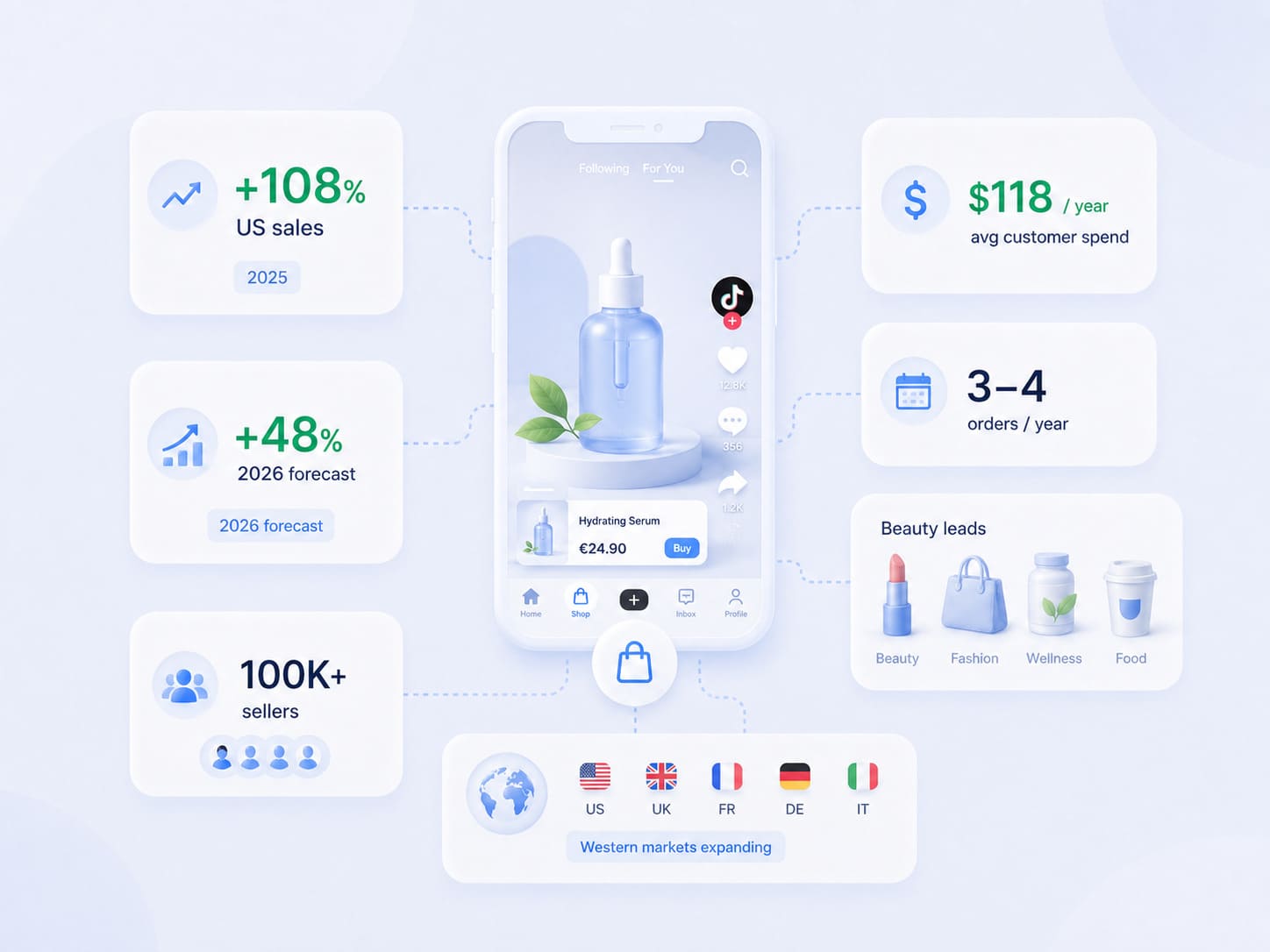
The real story hides in the engagement data, though. Per eMarketer and NielsenIQ, roughly a quarter of US digital buyers — and over half of all social buyers — will purchase products through the app this year. The average customer now spends around $118 annually and makes three to four purchases a year on the platform. That's not a one-off impulse buy anymore. That's a shopping habit, and it's why so many businesses now treat the shop as central to their whole business rather than a fun aside.
A few patterns worth noting from the surge:
The seller base exploded. The US went from a few thousand TikTok shops in mid-2023 to hundreds of thousands by 2026, one of the fastest supply-side expansions any marketplace has seen — small businesses and big brands rushing in side by side.
Certain categories dominate. Beauty leads by a wide margin, generating billions in US GMV on its own, followed by fashion, wellness, and food. What ties the winners together is visual and demonstrable appeal — products that shine in shoppable videos.
The West is catching Asia. Live shopping and social commerce have long been huge in China and across Asia. Now the US, UK, France, Germany, and Italy are following the same curve as TikTok keeps expanding into new markets and countries.
TikTok's US ownership finally settled
For years, the loudest TikTok news had nothing to do with commerce and everything to do with whether the app would survive in America at all. That question got an answer in January.
On January 22, 2026, the TikTok USDS Joint Venture formally closed, transferring control of TikTok's US operations to a majority-American company. ByteDance retains just under 20% to comply with the divest-or-ban law, while a consortium led by Oracle, Silver Lake, and MGX holds the rest. Oracle also serves as the security partner overseeing US user data and the algorithm that decides which videos — and which products — users discover.
Almost nothing changed operationally. Campaigns kept running, Ads Manager kept working, and TikTok Shop never skipped a beat. There's one important nuance buried in the fine print, though. Per reporting on the deal, ByteDance's global entity continues to manage e-commerce, advertising, and marketing on the US app. So while the ownership structure shifted on paper, the commerce engine powering the shop stayed largely intact. The takeaway for sellers is reassuring — the existential risk that hovered over the platform for years has eased, which makes committing real resources to the channel far less of a gamble than it felt like last year.
From bargain bin to brand playground
Early TikTok Shop had a reputation problem. Critics dismissed it as a dumping ground for cheap goods — closer to a bargain marketplace than a place established brands would want their name. That perception is actively being dismantled.
TikTok is now courting larger brands to reshape how the platform is seen, and it's working. Established brands increasingly treat TikTok Shop as a core sales channel rather than a marketing experiment, folding it into their broader omnichannel strategy alongside their own stores, Amazon, eBay, and other marketplaces. The evidence shows up in the enterprise data too — some brands with $30M+ in revenue saw their sales on the platform roughly double last year, finding success that early skeptics didn't expect.
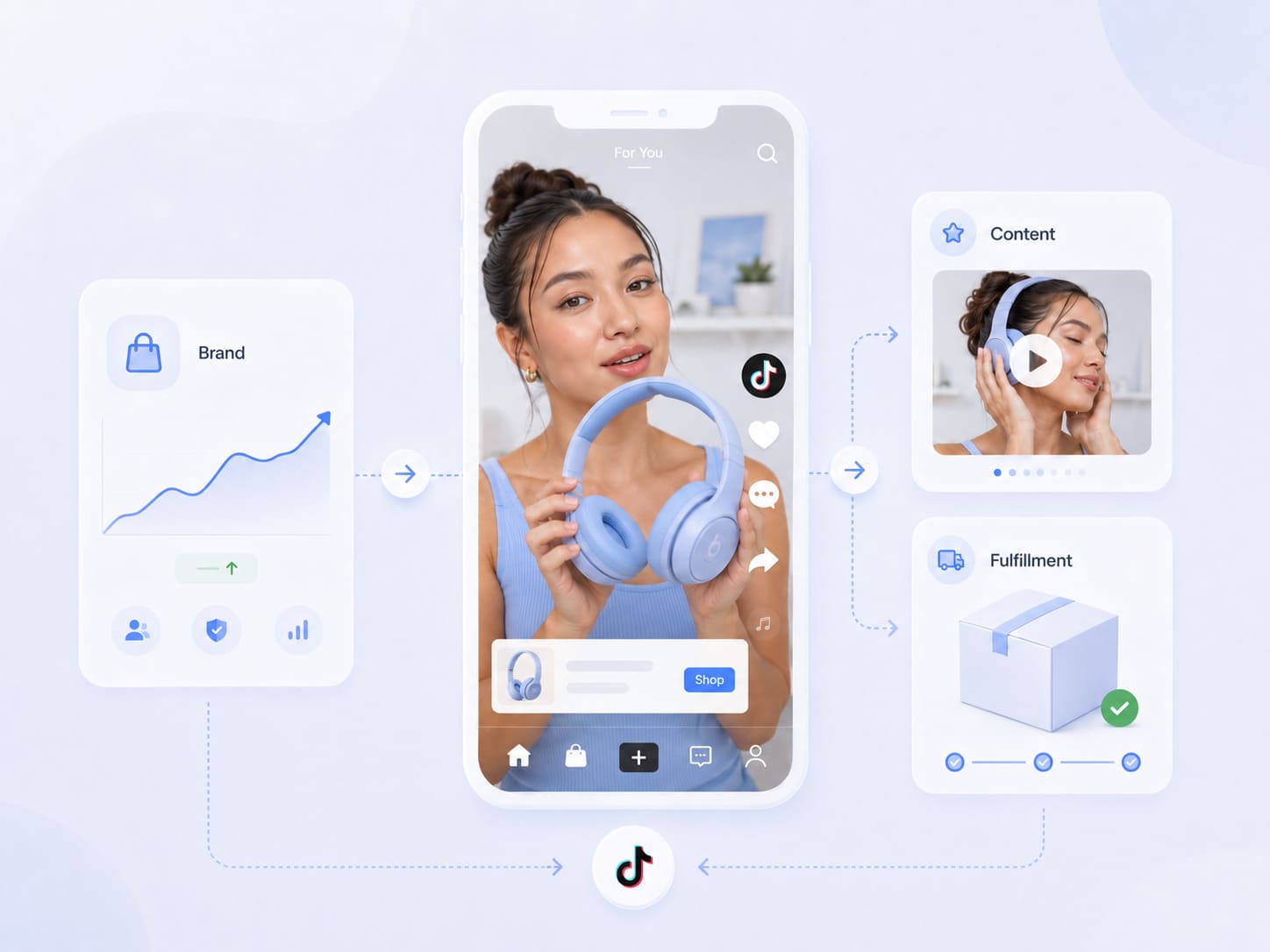
What separates the brands winning from those spinning their wheels comes down to a few habits:
They appoint an internal champion. Someone owns TikTok Shop as a real channel, not a side project handed to whoever has spare time.
They obsess over content, not ads. TikTok's whole content strategy rewards product discovery through entertaining, educational videos — not interruptive ads. Before-and-after transformations, honest product demos, and customer testimonials do the selling. As one co-founder after another has learned, the brands that commit to quality content win the audiences.
They take fulfillment seriously. As the channel matures, operational excellence separates winners from the rest. Reliable inventory, shipping, and customer service now matter as much as a viral clip.
The through-line is simple to state and hard to execute. Content is the single most important component of TikTok commerce, and the brands and creators committing to genuinely good content are the ones pulling ahead.
Read more: #1 Reason Viral TikTok Products Don’t Convert
Live shopping and the affiliate engine
Two features sit at the heart of how TikTok turns scrolling into buying, and both are worth understanding.
Live selling is the first
Borrowed from a model already massive in China, live shopping blends real-time entertainment with instant purchasing, and top creators have generated tens of thousands of dollars — one standout session cleared $50,000 in two hours. It's still a smaller share of US GMV than it is across Asia, but the trajectory points sharply upward, and brands increasingly lean on livestreams for product launches and promotions. Analysts widely expect live commerce to boom in the US over the coming years.
Affiliate marketplace is the second, and arguably the more important
TikTok's affiliate program connects brands with millions of creators who promote products for a commission paid only on completed sales. For a small business, that's a way to get products in front of engaged audiences without a fat upfront influencer budget. For creators, it's turned content into a genuine income stream and a source of inspiration for the next wave of sellers. This creator-driven flywheel — where great video directly drives discovery and purchases — is what makes TikTok fundamentally different from a traditional store, or from checkout-style features on Instagram, YouTube, or Meta's other apps.
Read more: TikTok Ads for Ecommerce: Setup, Costs, and What Works
What it means for sellers
TikTok Shop has real scale, a settled ownership situation that removes a major cloud of uncertainty, growing credibility with serious brands, and a content-plus-creator engine that keeps the flywheel spinning. E-commerce search intent on the app has climbed sharply as more consumers treat TikTok as a place to actively find and discover products, not just stumble on them. Ignoring the channel in 2026 increasingly means handing product discovery to your competitors.
That said, the platform demands its own approach. It rewards native, entertaining videos over polished ads, punishes weak fulfillment, and enforces in-app checkout to keep transactions and customers inside its walls. Success on TikTok Shop looks different from success anywhere else.
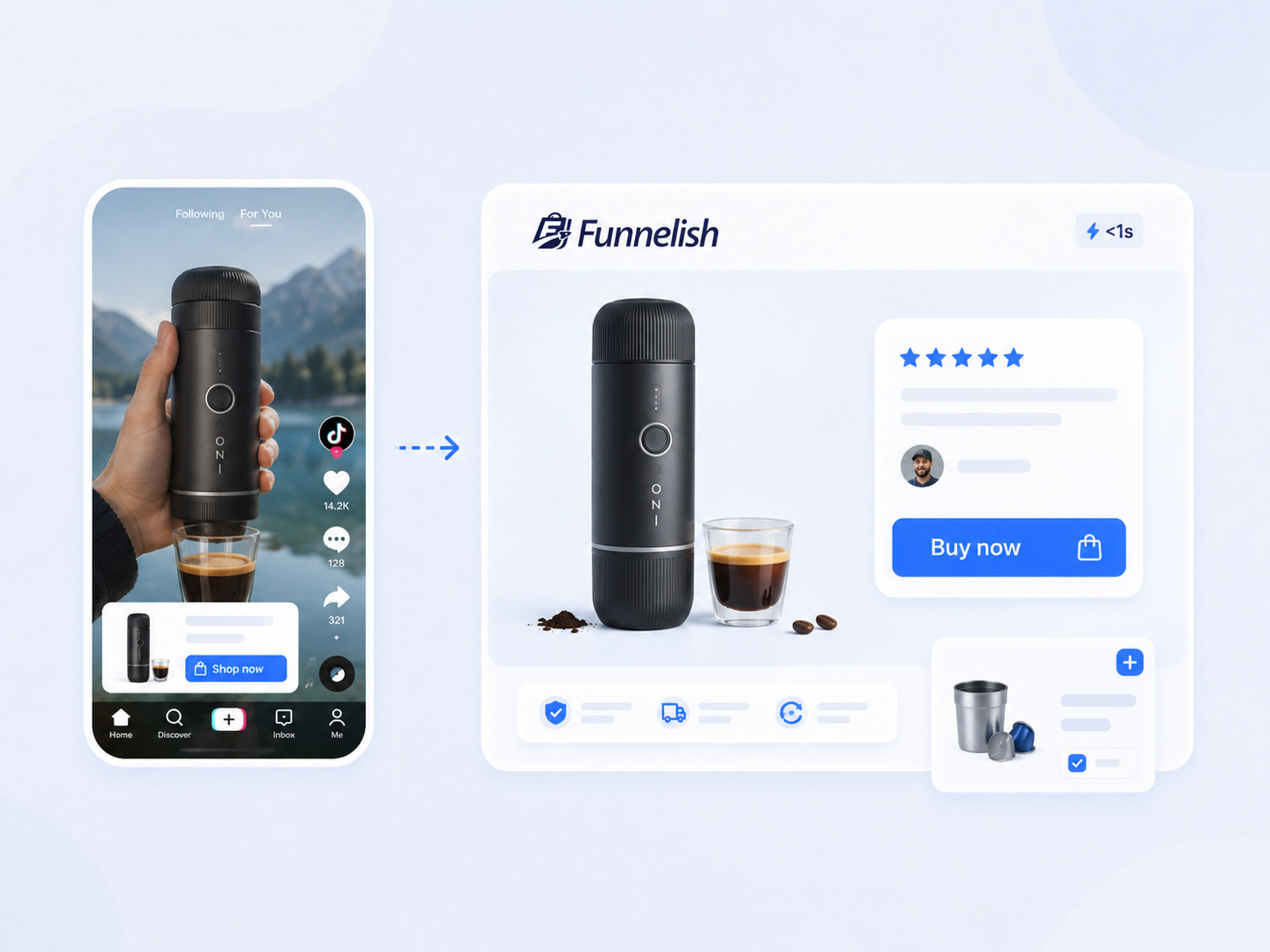
But as the brands winning here have figured out, TikTok is one channel in an omnichannel mix, not the whole business — and a lot of the attention a viral video creates gets captured off-platform, on a brand's own store. When you're the one driving that traffic, the same operational discipline that TikTok rewards applies to where those clicks land: an impulse sparked by a 30-second demo cools fast if the page behind it is slow or cluttered. That's the one spot where a tool like Funnelish for TikTok ecommerce fits into this story — giving you a focused, fast-loading page to send that impulse-driven traffic to, so the buying urge a creator created turns into a sale instead of a bounce.
Frequently asked questions
Is TikTok Shop still growing in 2026?
Yes, and quickly. After US sales grew 108% in 2025, eMarketer projects roughly 48% additional growth in 2026, with the average customer spending about $118 a year across three to four purchases. It's now widely considered the fastest-growing major ecommerce channel in the US.
Did the TikTok ownership deal change TikTok Shop?
Not in any visible operational way. The US joint venture closed in January 2026, transferring control to a majority-American group led by Oracle, but campaigns, Ads Manager, and the shop kept running. Notably, ByteDance's global entity still manages e-commerce and advertising on the US app.
What sells best on TikTok Shop?
Visual, demonstrable products dominate. Beauty and personal care is the top category by a wide margin, followed by fashion, wellness and supplements, and food. Products that look compelling in a short video — especially with before-and-after demonstrations — tend to perform best.
Do I need creators to succeed on TikTok Shop?
Effectively, yes. A large share of sales are driven by the affiliate marketplace and creator content, so brands without an active creator strategy struggle to get visibility. Seeding products to micro-creators is a common way small businesses start before investing in paid amplification.
Is TikTok Shop worth it for small businesses?
It can be, because the affiliate program and algorithm-driven discovery let small sellers reach large audiences without huge upfront costs. Success depends on consistent, genuine videos, competitive pricing, and reliable fulfillment — the platform rewards content quality over follower count.
Table of contents
Boost your eCommerce
sales today

24/7 support
No credit card required
Cancel anytime
24/7 support
No credit card required
Cancel anytime
