

D2C Meaning for Modern eCommerce Brands
06 January 2026
Anna P.
20 minutes
The retail landscape looks completely different than it did ten years ago. Back then, hitting huge revenue numbers usually meant fighting for shelf space in massive department stores or signing wholesale agreements with global distributors. Today, billion-dollar valuations belong to companies that started in garages, shipping products straight to the end customer's doorstep.
This is the direct-to-consumer (D2C) era.
To understand D2C, you have to look at supply chain mechanics, who owns the customer data, and the marketing strategies fueling modern commerce. For entrepreneurs and established brands, moving away from traditional retail channels reshapes how companies sell and how people buy.
Let’s walk through the direct-to-consumer sales approach, why it exploded in popularity, and how tools like sales funnels are changing the way these brands acquire customers.
D2C Meaning in Today’s Landscape
Direct-to-consumer describes a business model where a manufacturer or producer sells their products to the end consumer without third-party wholesalers, retailers, or middlemen.
In the past, a brand produced a widget and sold it to a distributor. The distributor sold it to a retailer, and the retailer sold it to you. Every step added friction, cost, and distance between the creator and the user. The direct-to-consumer model collapses that chain.
The modern definition has expanded, though. Today, D2C is synonymous with digitally native vertical brands (DNVBs). These companies are born online, rely on digital marketing, and obsess over customer experiences. They don’t rely on mall foot traffic anymore. They focus on traffic from Instagram, TikTok, and Google.
Core Components of D2C
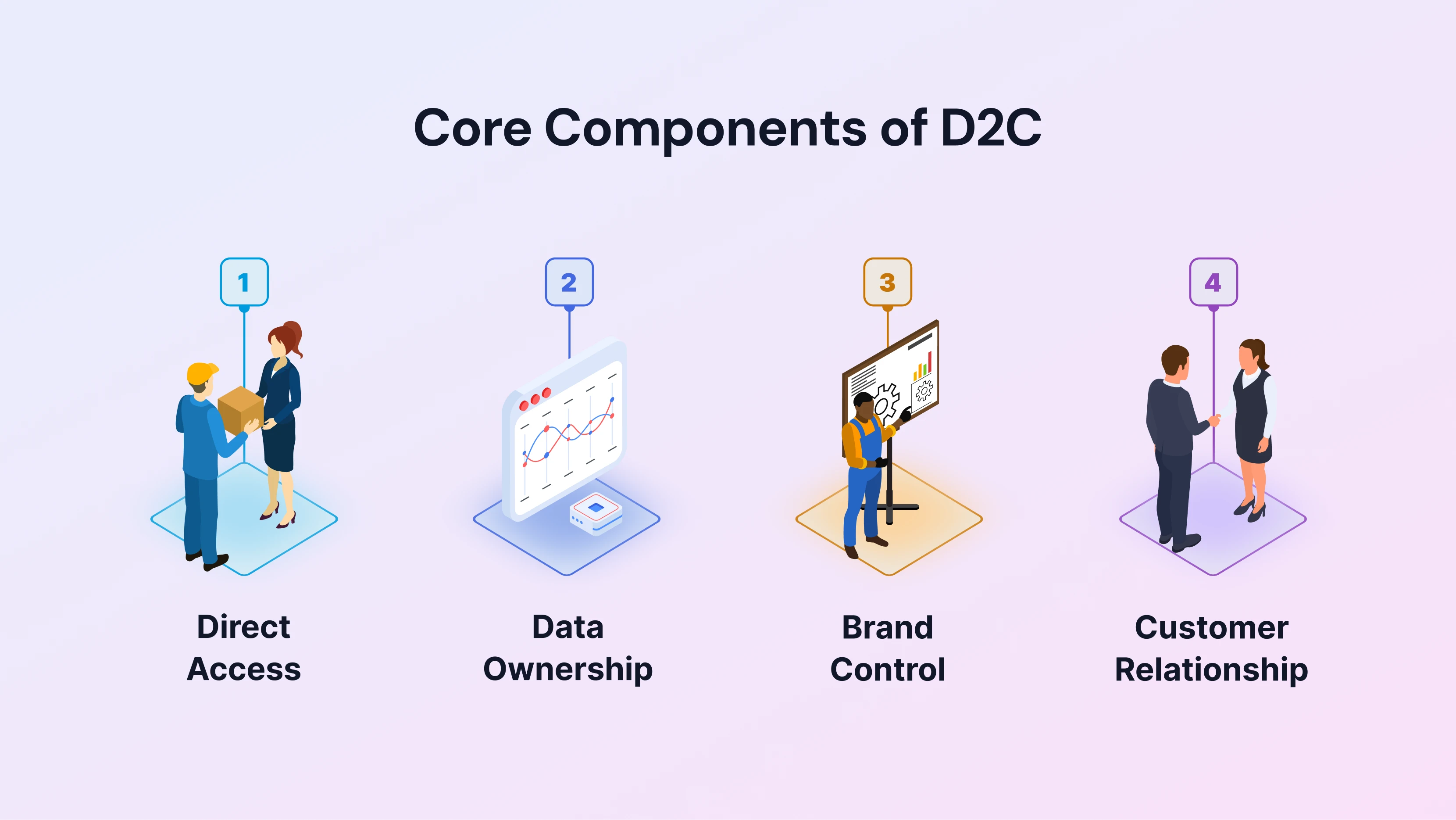
To grasp the concept, look at the four pillars supporting it:
1. Direct access: The brand owns the storefront (usually an e-commerce website).
2. Data ownership: The brand collects and owns all first-party data.
3. Brand control: The brand dictates the pricing, packaging, and messaging.
4. Customer relationship: The brand handles support and feedback directly.
Removing the intermediary gives you complete control over buyer journeys. You aren't at the mercy of a retail buyer deciding where your product sits on a shelf. You create the shelf.
How D2C Evolved (2020 → 2025)
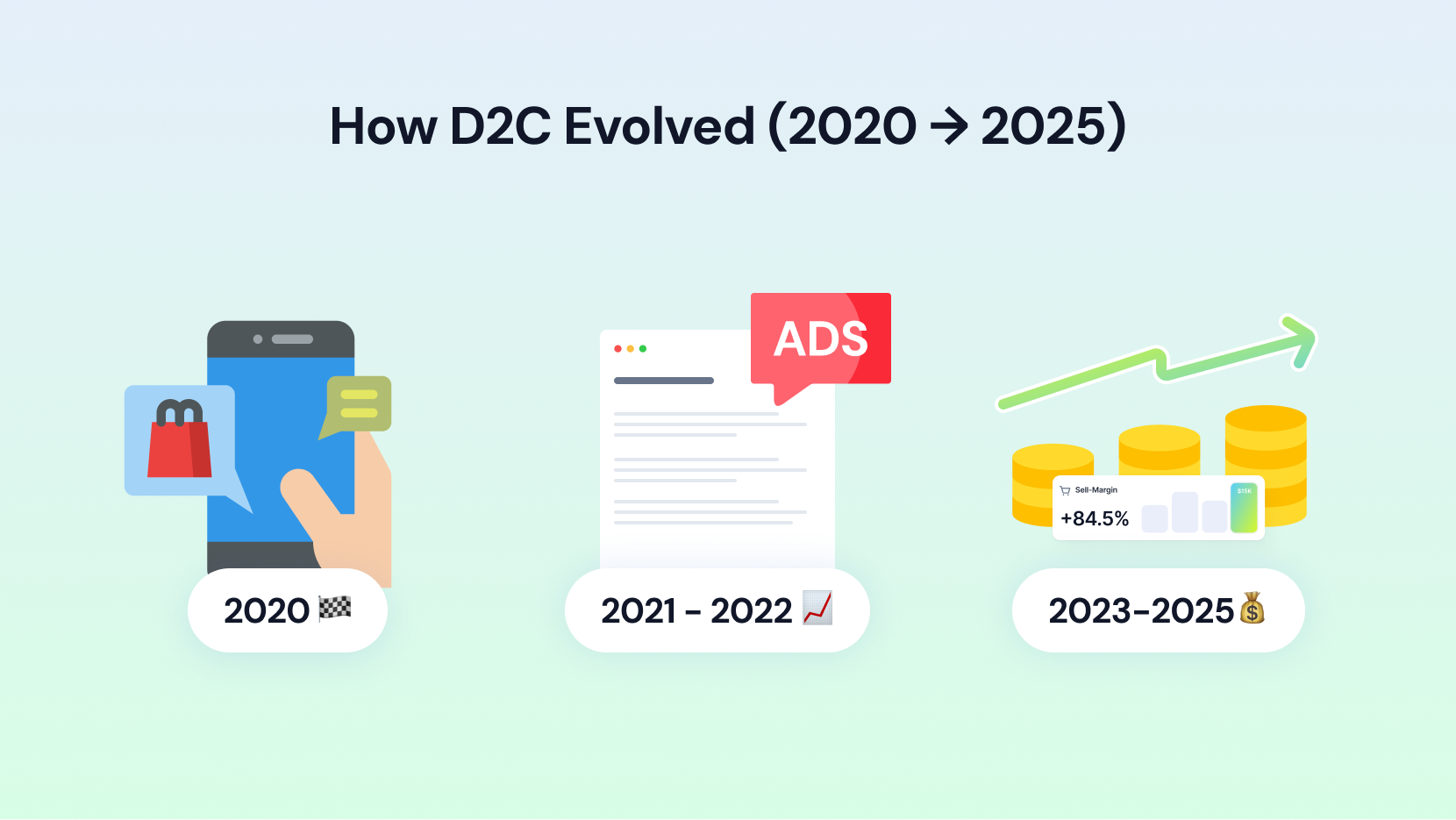
The trajectory of direct-to-consumer sales has been nothing short of vertical, but the strategies have shifted significantly over the last five years.
2020: Boom
The global pandemic was a massive accelerant of many market trends, including the D2C scope. With physical stores closed, consumers had to turn to online stores. Brands that treated e-commerce as a secondary channel had to pivot in no time. Total retail ecommerce sales skyrocketed, pushing adoption forward by five to ten years in a few months.
As businesses turned to pandemic-proof sales channels, worldwide eCommerce revenue increased by 19% in 2020. The consumer migration was strongest in Food & Personal Care products, which saw a 26% revenue surge, while Brazil, Spain, and Japan recorded the largest increase in the number of businesses selling online.
Data from the time pointed to a sustained expansion, with an additional 22% sales growth forecast for 2021 and a steady 8% growth predicted for worldwide retail eCommerce through 2024. Later data confirmed that these forecasts were close to accurate and that the digital shift was sustained well into 2021, even as restrictions eased.
Online retail sales across seven major markets — including the U.S. and China — grew by 16%, rising from $2.5 trillion in 2020 to $2.9 trillion in 2021. The share of internet users making online purchases rose globally from 53% pre-pandemic to 60%, with developing nations seeing the most dramatic adoption. In the UAE, participation more than doubled to 63%, while Bahrain's figures tripled.
By 2021, the United Kingdom and South Korea led the world with the highest online retail share at 28%, while the top 13 consumer-focused e-commerce businesses saw their combined sales balloon to $3.9 trillion, cementing the reality that the pandemic boost was a permanent structural change rather than a fleeting anomaly.
2021-2022: Privacy Shock
As the market matured, it hit a speed bump: privacy changes. Apple’s iOS 14.5 update, enforced in April 2021, severely impacted the ability of advertisers to track customer behavior across apps. This introduced App Tracking Transparency, a framework that altered mobile advertising and shifted the default state of user tracking from allowed to permission required.
The update marked the end of the arbitrage times of cheap social media ads. Under the new rules, apps were required to prompt users for permission to link their data with data from other companies’ apps or websites — a practice known as using third-party data.
With a significant portion of consumers opting out, the Identifier for Advertisers, which allowed for precise targeting and measurement, became inaccessible for users who declined tracking. The feedback loop crashed: Meta, Snap, and other advertising platforms could no longer attribute purchases to specific ads.
Advertisers were forced to rely on Apple’s alternative, the SKAdNetwork, which prioritized user privacy over marketer visibility. Unlike the previous system, SKAN provided only anonymized, aggregate reports with a delay of at least 24 hours, making real-time optimization impossible.
Consequently, customer acquisition costs grew fast as advertisers lost the ability to target niche audiences. However, this shock was not evenly felt. While platforms reliant on third-party data suffered, companies with robust first-party data — such as Google and Amazon — or those using contextual advertising remained almost unaffected, as ATT placed no restrictions on data collected and used within a company's own ecosystem.
2023-2025: Era of Customer Retention and Profitability
In Q1 2024 alone, U.S. retail eCommerce sales topped $268 billion, but the focus has shifted. The winners in this crowded market are those optimizing their LTV:CAC ratio — prioritizing the retention of high-value customers (customer lifetime value) over the expensive pursuit of new ones.
To achieve this, brands have turned to first-party data and predictive analytics as their new engines of growth. By feeding machine learning algorithms with data collected from their customers (rather than relying on third-party brokers), companies can now accurately forecast demand, predict churn, and identify their most profitable segments.
For instance, predictive modeling allowed a home goods brand to discover that its most valuable customer wasn't the Urban Millennial they had been targeting, but rather the Middle-Aged Suburban Mom. The discovery led to an eight-digit revenue increase. (Digital Commerce 360) Such an identity-based strategy ensures that marketing budgets are spent only on messaging that resonates with customers likely to offer the highest long-term ROI.
We also see a distinct hybridization of the business model. D2C is increasingly viewed as a sales channel, not a standalone brand identity. Yes, established brands like Nike and Lululemon continue to dominate the space. However, even they have recognized the limits of isolation.
Nike, for example, has rekindled partnerships with Macy’s and DSW. As D2C sales are forecast to plateau at approximately 14.9% of total retail eCommerce sales by 2025, the pure-play digital model is fading. Brands are diversifying into retail media networks, Connected TV, and marketplaces like Amazon and Target+ to lower acquisition costs. (eMarketer)
It’s safe to say: Giants are acknowledging that meeting the customer where they are — whether online or in a physical store — is the only path to durable profitability.
D2C vs. Retail vs. Wholesale
To understand the strategic advantage a bit deeper, let’s compare the direct model against traditional structures.
Traditional retail channels rely on volume and foot traffic. A brand like Nike selling through Foot Locker benefits from Foot Locker's massive reach. However, Nike surrenders a portion of the margin and loses access to the customer data (yet). They don't know who bought the shoes, only that a pair was sold.
In a wholesale model, the brand is even further removed. They move pallets of product to a distributor who handles the logistics. This is great for cash flow and inventory turnover, but terrible for brand loyalty and direct relationship building.
The direct-to-consumer approach flips this. The volume might be lower initially, but the margin per unit is higher, and the asset value of the customer list is immense.
One Metric That Matters: Contribution Margin
When comparing these models, you must understand the difference in financial reporting. Traditional retail focuses on gross margin (revenue minus cost of goods sold). D2C brands, however, live and die by contribution margin.
Contribution margin is the revenue left over after deducting all variable costs associated with that specific order. This includes:
Cost of goods sold
Shipping and fulfillment fees
Transaction processor fees (Stripe/PayPal)
Customer acquisition cost (ad spend for that specific sale)
As a D2C brand, you might have a higher gross margin than a wholesaler (80% vs 50%), but after paying $30 to acquire the customer on Facebook and $10 to ship the box, your contribution margin might be razor-thin.
This specific unit economic breakdown explains why many legacy brands struggle to adapt. They underestimate the variable costs of acting as their own retailer. The direct model offers higher potential rewards, but it demands strict financial discipline per unit sold.
How Tech, Margins, and Brand Control Ignited D2C Boom
The rise of direct-to-consumer commerce was not merely a reaction to external crises. Apart from shocking catalysts like the pandemic, the D2C model was already poised for structural growth. These three drivers fueled the explosion of this business model even further:
1. Technology Stack
Ten years ago, building an ecommerce website required a development team and a six-figure budget. Today, Shopify, BigCommerce, or WooCommerce let anyone launch a store in hours. Even vibe coding tools now allow for advanced custom website development without writing code.
Specialized tools have also emerged to optimize these stores. Funnelish, for example, lets brands build high-converting sales funnels that integrate with Shopify. With it, you can create niche landing pages for marketing campaigns and get a level of customization and conversion optimization that standard ecommerce themes cannot match.
2. Margin Preservation
In a standard retail model, the keystoning effect (doubling the price at each stage) means a product costing $10 to make might sell for $100, with the brand only seeing $20 of that revenue.
By selling directly, your brand captures the full $100. Even after accounting for target customer acquisition costs and order fulfillment, the higher profit margins allow for reinvestment into product quality and marketing.
3. Desire for Control
As simple as it is, brands grew tired of their destiny being controlled by retail buyers. If a department store decided to drop a line, that brand could go bankrupt overnight. On the other hand, D2C offers brand control. You decide when and how to launch, how to price, and how to tell your story.
Benefits of Direct-to-Consumer Model
Adopting a direct-to-consumer strategy impacts everything from financial health to product innovation.
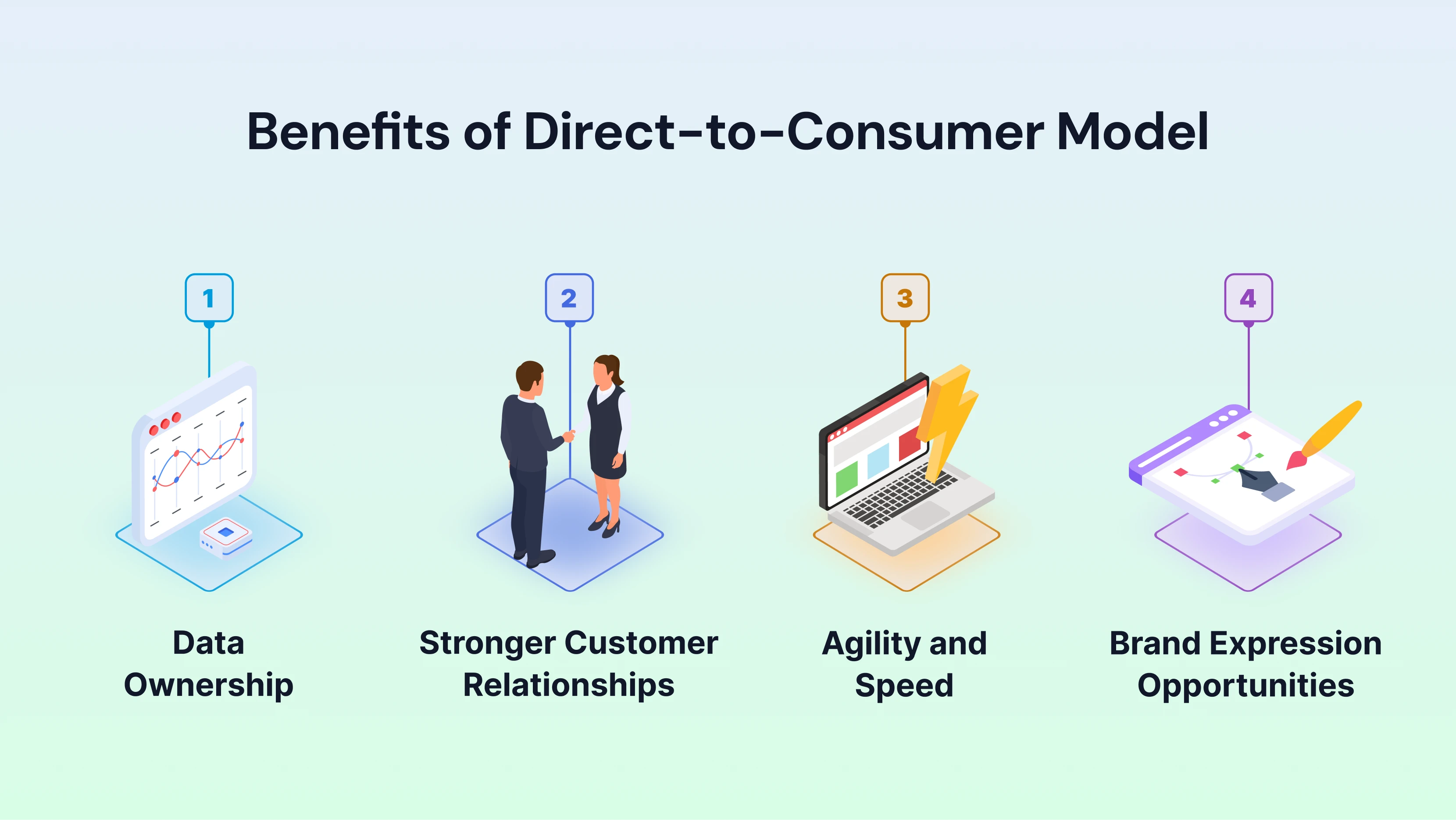
Access to First Party Customer Data
Data is the new oil. When you sell through Amazon or Walmart, they keep the customer data. When you sell D2C, you own the email address, the phone number, the purchase history, and the browsing behavior.
This user data allows for:
Targeted marketing campaigns based on past purchases
Personalized email flows (e.g., "Time to restock!")
Lookalike audiences for ad targeting
Deep customer insights that inform product development
The most sophisticated brands in 2026 go a step further, harvesting zero-party data. While first-party data is passive (tracking what a user clicks), zero-party data is active (what a user tells you).
One way to implement this is by using interactive elements like style quizzes or skin type diagnostics in the funnels. Thus, you can build rich customer profiles before a purchase happens.
The retailer knows: "They bought moisturizer."
You (a D2C brand) know: "They bought moisturizer because they have dry skin, live in a cold climate, and are worried about wrinkles."
Granular data allows for hyper-personalized email flows that retail partners cannot compete with. Your marketing becomes a curated service rather than a spray-and-pray tactic. These data-driven marketing efforts and funnel analytics capabilities eventually lead to an increase in the conversion rate of follow-up campaigns.
Stronger Customer Relationships
When a customer has an issue, they aren’t relegated to a generic department store return desk; they speak directly to the brand. The ownership of the support channel allows D2C companies to turn potential negative experiences into loyalty-building moments.
You can easily layer in personal touches — handwritten notes from founders, exclusive loyalty perks, or direct community engagement — and foster a sense of belonging. This is how casual buyers get transformed into brand evangelists who feel personally invested in the company’s success.
Agility and Speed
Where legacy giants are paralyzed by massive supply chains and 18-month wholesale calendars, D2C brands operate with startup speed. They don't need to predict what will sell a year in advance.
Instead, they can launch a small batch of a new product, test its viability via social ads, gather real-time feedback, and iterate the design within weeks. The test-and-learn capability allows you to capitalize on micro-trends much faster, pivoting your strategy to match shifting consumer demand while the lumbering competitors are still planning for the previous season.
Custom Packaging and Unboxing Experience
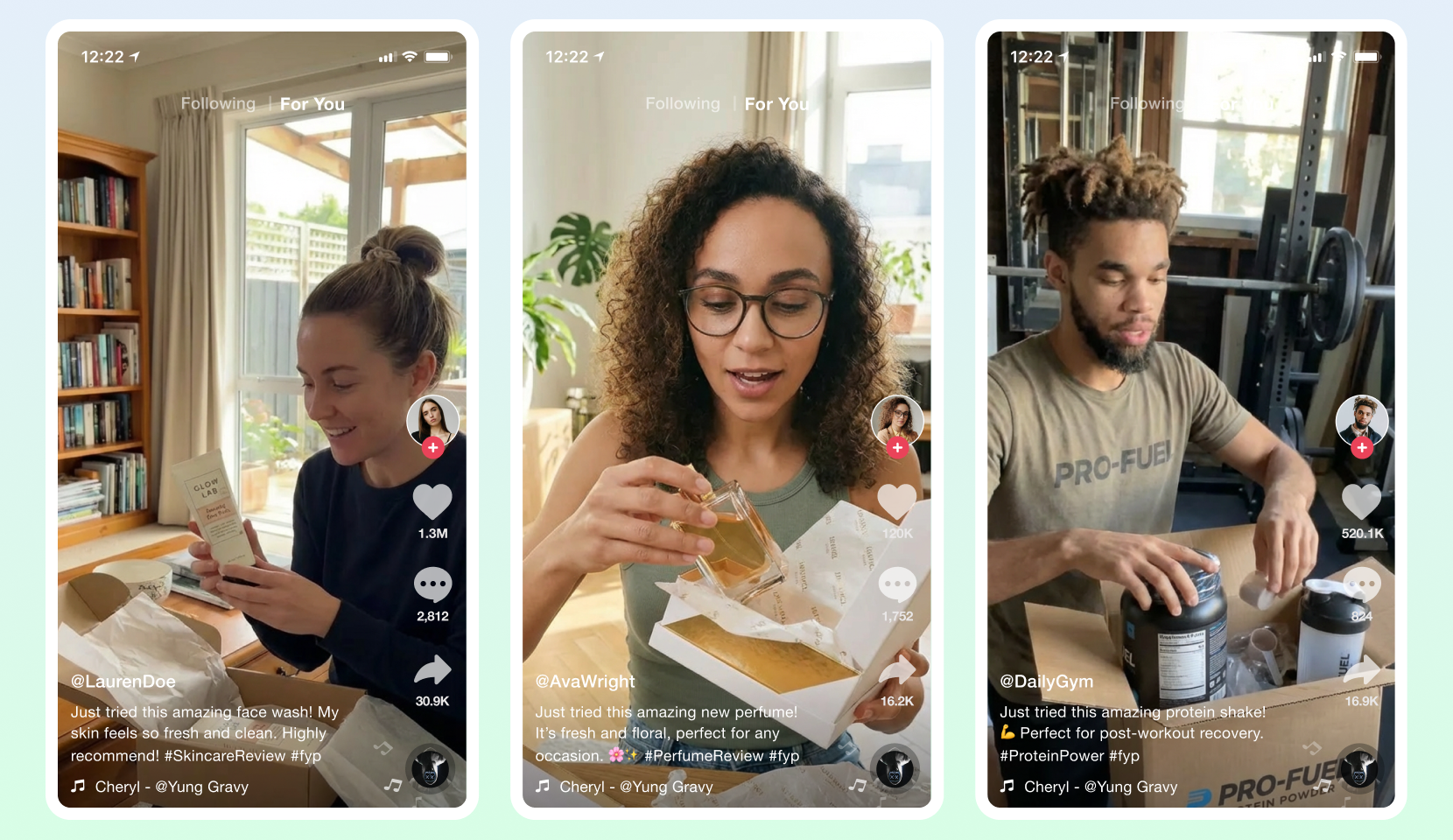
In a physical store, packaging is often purely functional — designed for theft prevention and shelf optimization. In D2C, the package is the marketing channel. Brands now know that the unboxing moment is a critical touchpoint, and they invest in the aesthetics of the arrival experience.
Custom tissue, high-quality boxes, and branded inserts turn a standard delivery into an event. This encourages customers to film and share the reveal on social media, generating a flywheel of free user-generated content that serves as authentic, viral social proof for the next wave of customers. (16.3M videos under #unboxing on TikTok!)
Challenges of D2C
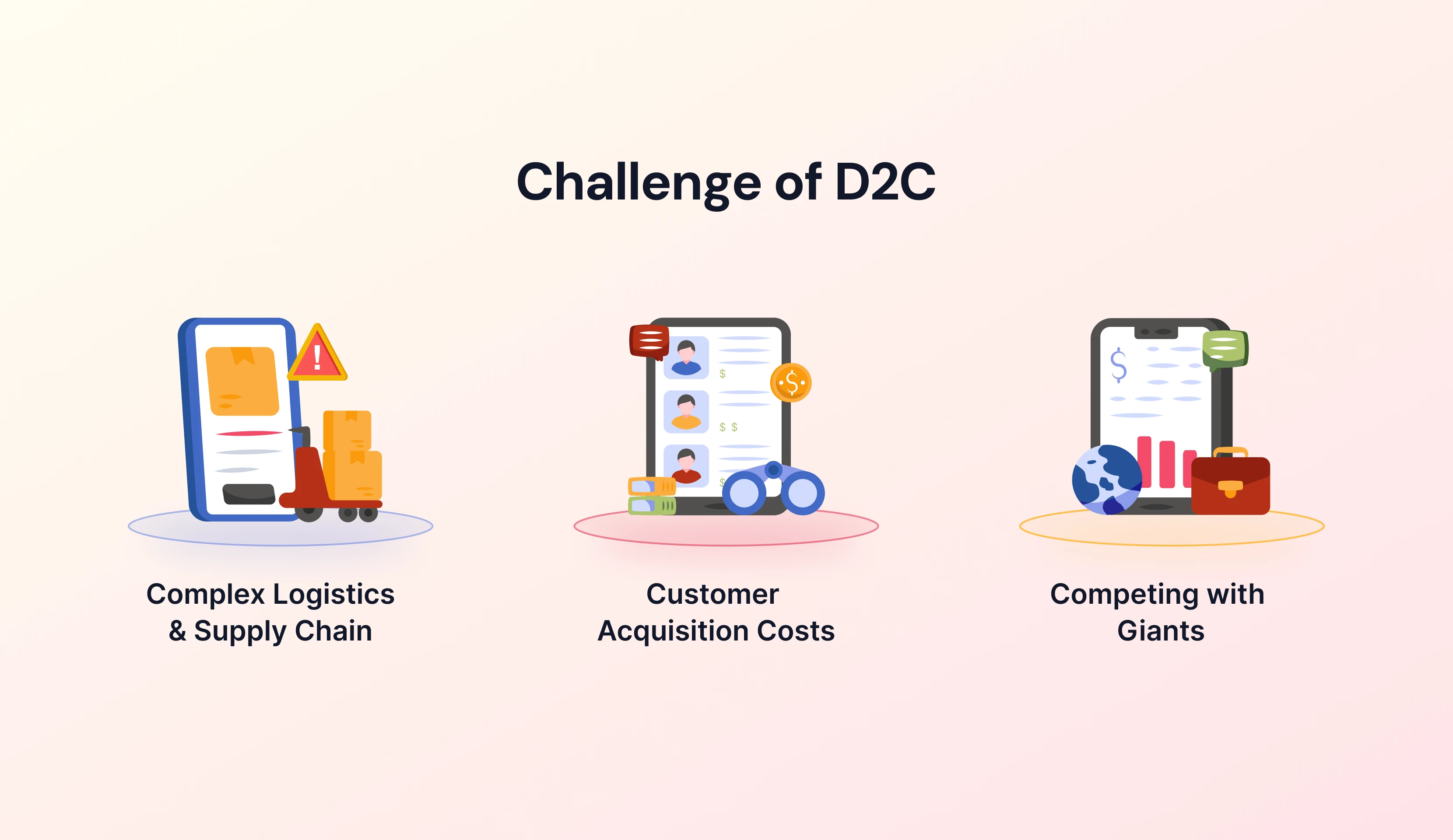
On the other hand, the direct-to-consumer path requires the brand to be good at everything: manufacturing, marketing, logistics, and support.
Logistics and Supply Chain Complexity
You are responsible for getting the product to the customer, including warehousing, inventory management, and shipping. Many brands partner with third-party logistics providers (3PLs) to handle this, but it remains a significant cost center and management burden.
Customer Acquisition Costs
Without the foot traffic of a mall or the search volume of Amazon, you must pay to bring people to your store. We’ve already covered how digital marketing costs have risen steadily. It’s best to constantly optimize your marketing efforts to ensure the cost to acquire a customer does not exceed the profit generated by that customer. (LTV:CAC ratio)
Together with data collection restrictions, another phenomenon — creative fatigue — has become a major component of rising CAC. In the golden age of Instagram (circa 2018), a single high-quality static image could run profitably for months.
Today, TikTok and Reels burn through creative assets at lightning speed. An ad that performs well today might be "ad blind" to the audience by next week. You either need to invest in content production by multiple creators to avoid burnout or take advantage of automated content creation software.
Amazon's Effect on Customer Experience
Starting from 1994, Amazon has been fundamentally rewiring consumer psychology nearly every year. Fast and Free is no longer a perk; it is the baseline requirement. If a D2C brand charges for shipping or estimates a 5–7 day delivery window, cart abandonment rates spike fast.
The issue is: Independent brands lack the massive, verticalized logistical infrastructure of the retail giant. They are forced to rely on third-party logistics providers, where absorbing the cost of expedited shipping eats into profit margins.
Plus, the expectation of frictionless returns creates a reverse logistics nightmare. For an independent brand, the cost of processing a return — shipping, inspecting, and restocking — can wipe out the profit from the initial sale, making the balancing act between customer satisfaction and sustainable unit economics a never-ending, precarious struggle.
If you don’t have a perfectly-planned logistics strategy, you risk getting buried in an avalanche of shipping fees and unrecoverable inventory.
Famous Examples of Successful D2C Brands
Still, many pioneers have paved the way, proving the viability of the model.
Dollar Shave Club
Perhaps the most famous example, even 13 years later. They disrupted the razor market — dominated by Gillette — by offering a subscription model. Their viral video (The Office-vibe clip) explained the value proposition perfectly: stop paying for shave tech you don't need. They sold to Unilever for $1 billion, proving that direct sales could topple giants.
Unsurprisingly, the company has never run out of creative ideas, as it stands among the first to experiment with AI-generated ads, featuring their fictional (or not) rivals in all shapes and sizes.
Liquid Death
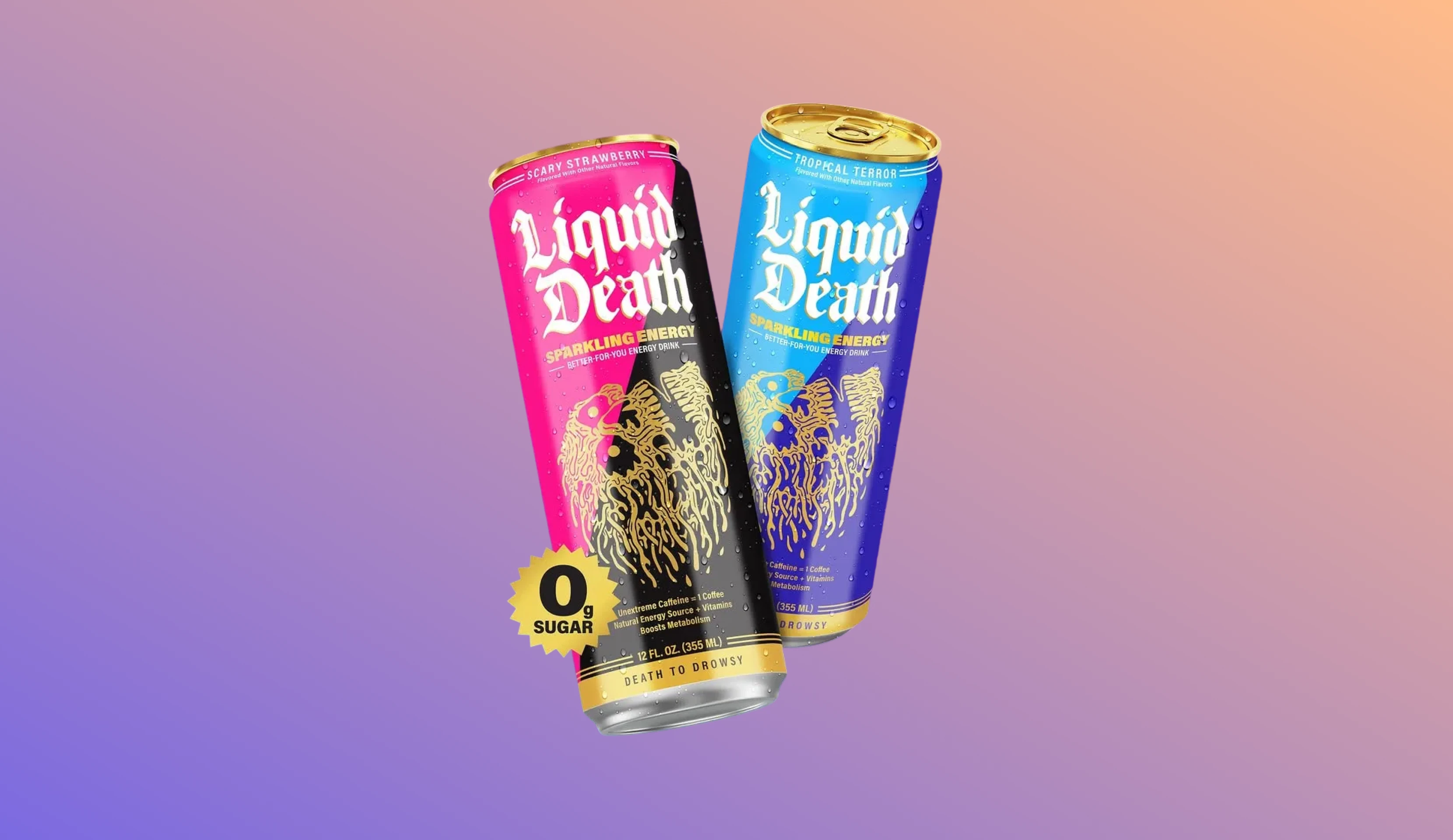
If Dollar Shave Club disrupted pricing, Liquid Death disrupted boredom. They took the ultimate commodity — water — and packaged it like a craft beer with a heavy metal aesthetic. Their strategy proved a vital D2C lesson: you are a media company first, and a product company second.
By prioritizing viral entertainment ("Murder Your Thirst", "Death to Plastic Bottles" ) over traditional marketing, they built a massive owned audience of 7.M followers on Instagram alone. They attracted a great share of these followers way before the beverages hit the shelves of Whole Foods. As a result, Liquid Death sold both water and membership into a subculture.
However, generating this level of hype is only half the equation. Once you have captured the consumer's attention, you need a streamlined mechanism to capture their wallet — and this is where the standard online storefront often fails.
Funnels for Direct-to-Consumer Brands: Maximizing Conversion
Many D2C brands launch a beautiful Shopify store and wonder why their conversion rate is stuck at 1.5%. The problem is the online store format itself. A traditional e-commerce store acts like a catalog. It offers too many choices. When a user clicks an ad for a specific product but lands on a collection page, they get distracted. Analysis paralysis sets in.
To cure this paralysis, top-tier D2C brands of the digital age utilize sales funnels to guide traffic. A funnel is a focused pathway designed to sell one specific offer, eliminating the noise of a general store. The basic flow usually looks like this:
Landing page: Focuses on one product, benefits, and social proof. No navigation bar to distract the user.
Checkout: Simplified and fast.
Order bump: A pre-checkout add-on (e.g., "Add priority shipping for $5" or "Add a mystery gift").
One-click upsell: After the purchase is confirmed, the customer gets an offer for a complementary product (e.g., "Get a second bottle for 40% off").
Thank you page: Order confirmation and next steps.
Read more: Sales Funnels for Beginners: How do they work?
But the success of a funnel isn't just about the order of pages; it relies on the psychology of micro-commitment.
Psychology of Micro-Commitment
Top D2C brands also use multi-step order forms to capitalize on this. Instead of presenting a daunting wall of text asking for shipping and billing info all at once, the form is split (it doesn’t mean it happens on several pages, though).
Step 1: Captures low-friction info like Name and Email.
Step 2: Captures shipping and billing only after the user has mentally committed.
Crucially, if the user abandons the cart at Step 2, the brand has already captured the email in Step 1, allowing for proactive abandoned cart recovery sequences that traditional checkout pages miss entirely.
Once the customer is mentally committed, the focus shifts to maximizing your profits.
Dynamic Profit Maximization
Modern funnels move beyond generic offers to squeeze the most value out of every transaction. Using dynamic logic, you can tailor the order bump and upsell based on what is in the cart.
Sample Scenario
If a customer buys a specific coffee blend, the smart funnel doesn't upsell them tea. It recognizes the SKU in the cart and offers a specific coffee grinder add-on at a discounted rate.
Result
The relevance increases the take rate of upsells, inflating the average order value without extra ad spend. In an era of rising ad costs, the mechanical ability to extract more revenue from every visitor is the difference between breaking even and profitability.
You might feel like orchestrating this level of granularity creates a new challenge: Scale. If you have hundreds or millions of SKUs, manually mapping every trigger product to its perfect upsell partner is operationally impossible. You cannot build a separate funnel page for every single product variant in your catalog.
To execute this strategy without drowning in manual configuration, you need a specialized automation layer.
Integrating Funnelish
Funnelish bridges the gap between high-converting funnel builders and robust e-commerce backends, like Shopify. With Funnelish, you can:
Sync orders: Automatically send funnel orders to Shopify for order fulfillment.
Increase AOV: Use dynamic order bumps and upsells that aren't possible on a standard store page.
Track data: Feed accurate purchase data back to Facebook and Google pixels (crucial for digital channels post-iOS14).
If you move traffic from a general store to a dedicated funnel with a compelling offer, you will see higher profit margins due to increased average order value and conversion rates. So, you get complete control over customer journeys from the first click to the final upsell.
Future of D2C
In short, the direct-to-consumer model is evolving into an omnichannel approach.
Blurring of Lines
We will see more D2C brands entering retail stores. Allbirds, Casper, and Harry's are now found in Target or have their own physical locations. However, they retain their D2C DNA by using these retail spots as acquisition channels to drive customers into their digital ecosystem for repeat purchases.
AI and Personalization
Predictive analytics will allow brands to ship products before the customer orders them (subscription prediction). AI will generate dynamic website experiences, changing the copy and images based on who is visiting.
Users will also likely use generative AI apps, like ChatGPT or Gemini, as a one-stop shop for all their purchases, bookings, tasks, and routines. Brands already integrate into their interface so a customer can make a single prompt and see their goods added to the cart in seconds.
Social Commerce
Social media platforms are becoming storefronts. TikTok Shop and Instagram Checkout allow companies to sell without the user leaving the app. It is always a good idea for a D2C brand to master these digital channels to capture impulse buys.
Micro-Funnel Standard
In 2026, we are seeing the funnelization of the entire store. Winning brands are treating every single SKU as its own business, building dedicated landing pages (micro-funnels) for each product rather than dumping traffic onto a crowded catalog. This approach aligns the user's ad click intent with the destination, increasing conversion rates and making the Add to Cart button obsolete in favor of Buy Now flows.
Read more: How to create call-to-action buttons that will generate results with examples
Digital Product Passports (DPP) & Radical Transparency
Sustainability is shifting from a marketing buzzword to a regulatory requirement. With new EU regulations setting the global standard, brands are adopting digital product passports — QR codes on packaging that reveal the full supply chain journey, carbon footprint, and material sourcing of an item. D2C brands that adopt this radical transparency early are doing more than complying. They are building a trust moat that opaque retail giants cannot cross.
Embedded Finance: Try Now, Pay Later
We are not talking about a standard Buy Now, Pay Later option. The new standard is Try Now, Buy Later, where D2C brands are integrating risk-free trial software into the checkout. This way, they remove the biggest barrier to online shopping: the inability to touch the product.
As you allow customers to order items for $0 and only get charged for what they keep after 7 days, you are bringing the fitting room into the living room, boosting conversion rates on high-ticket items by upwards of 30%.
Conclusion
The direct-to-consumer meaning has evolved from a novel concept to the standard for modern brand building. By cutting out the middleman, brands gain higher profit margins, valuable data, and brand loyalty that traditional retail cannot match.
Success in this arena requires a mastery of supply chain logistics, a commitment to customer experience, and the implementation of advanced marketing strategies. That is why optimizing the customer journey with high-converting D2C sales funnels is no longer optional. They are essential for navigating the rising costs of customer acquisition.
As we move forward, the brands that win will be those that own their data, own their relationship with the end consumers, and execute with precision across every digital touchpoint.
Whether you are a startup looking to disrupt an industry or a legacy company pivoting to digital marketing, the direct-to-consumer model is the clearest path to sustainable growth in the modern economy.
FAQ
What does DTC mean in business?
DTC meaning in business refers to a model where a company manufactures and sells its products directly to the end buyer, bypassing third-party retail partners, wholesalers, and other middlemen. This way, the company can keep full profits and own the customer relationship management.
What does DTC stand for in business?
DTC stands for direct-to-consumer. You may also see it written as D2C. Both terms refer to the same business strategy.
What is the D2C vs B2C business model?
B2C (business-to-consumer) is the broad category of any business selling to individual people (as opposed to B2B, selling to other businesses).
D2C (direct-to-consumer) is a specific type of B2C.
Walmart selling a toaster to you is B2C, but it is not D2C (because Walmart didn't make the toaster).
Dyson selling a toaster to you via the Dyson website is both B2C and D2C.
Is Amazon a D2C?
Generally, no. Amazon is an online marketplace and a third-party retailer. However, Amazon does have its own private label brands (like Amazon Basics), which are technically D2C. But for your brand, selling on Amazon is selling through a third party, not direct-to-consumer. You do not own the user data on Amazon.
What is the difference between DTC and D2C?
There is no difference. D2C and DTC meanings are identical. They are simply different abbreviations for direct-to-consumer.
Table of contents
Boost your eCommerce
sales today

24/7 support
No credit card required
Cancel anytime
24/7 support
No credit card required
Cancel anytime
