

Ecommerce Subscription Model Is the Last Unfair Advantage in D2C — Build One That Sticks
16 April 2026
Anna P.
16 minutes
There's a version of your ecommerce business where every month starts with revenue already in the bank before you've run a single ad, shipped a single order, or acquired a single new customer. That's what a subscription model creates — and it's the reason the economics of subscription-based ecommerce businesses are structurally different from transactional ones.
The global subscription ecommerce market was valued at $536.72 billion in 2025 and projected to reach $859.52 billion in 2026. (The Business Research Company) This isn't a niche model anymore. It's the growth architecture that the most durable D2C brands have built their business around — and it changes how every other metric performs.
The math is simple. Average subscription customers generate 3–5x more revenue over their lifetime compared to transactional buyers. 70% of subscription revenue comes from existing customers rather than new acquisitions. (Swell) When you grow a subscription business, you're not just adding customers — you're compounding them. Each retained subscriber is revenue that didn't require a new ad click, a new conversion, or a new customer acquisition cost.
This guide breaks down how the ecommerce subscription model works, which model fits which business, how to price it, how to reduce churn, and how to build the infrastructure to run it.
Three Types of Ecommerce Subscription Models
Not every subscription works the same way. The three core models have fundamentally different economics, different churn drivers, and different customer relationships. Choosing the right one for your product is the first structural decision — and getting it wrong means building a subscription that fights against customer behavior rather than aligning with it.
Model | How It Works | Best for | Typical Monthly Churn | Example Brands |
Replenishment | Auto-delivers consumables on a set schedule | Supplements, pet food, skincare, coffee | Below 4% | AG1, Native, The Honest Company |
Curation | Delivers a personalized selection the customer didn't choose | Beauty, food, wellness, fitness | 8–12% | Hims & Hers, Thrive Market |
Access | Membership fee unlocks discounts, credits, or premium features | Apparel, fitness, grocery | 5–8% | Fabletics, Thrive Market VIP |
Replenishment Subscription Model
Replenishment subscriptions are built around products customers consume regularly and need to restock. The logic is straightforward: the customer already plans to buy again. The subscription removes the friction of that decision and guarantees the repeat purchase stays with you rather than going to a competitor or Amazon.
Replenishment subscriptions have the lowest churn of any ecommerce subscription category — below 4% monthly — because the customer has a genuine ongoing need for the product. (Marketing LTB) The subscription isn't a lifestyle choice; it's a convenience decision. Cancellation means they have to remember to reorder. That passive inertia works in your favor.
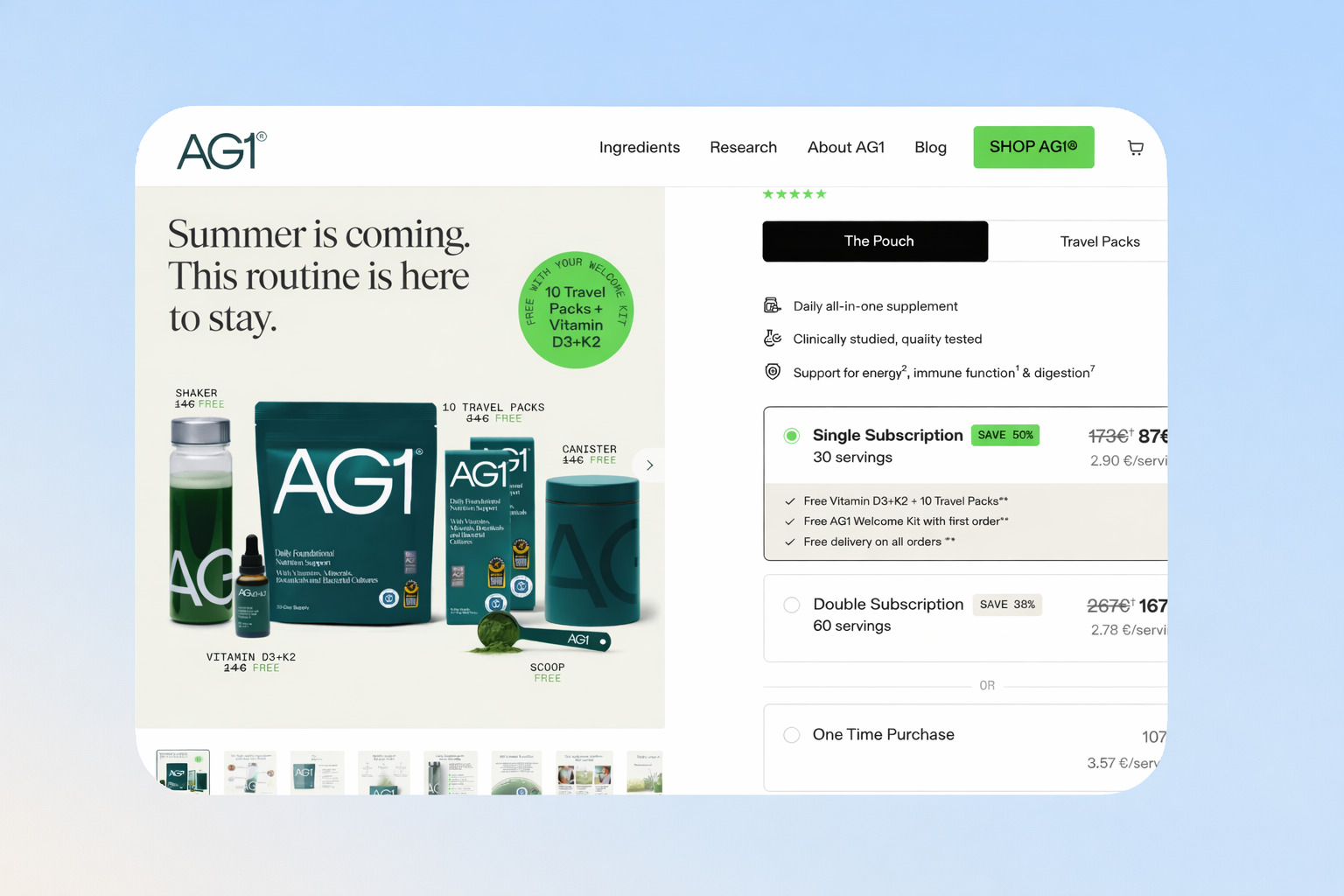
AG1 by Athletic Greens is the clearest current example of replenishment subscription done at scale. A single product — a daily greens powder — sold almost exclusively by subscription at $87/month or $97/month for the Travel Packs. AG1 reached a $1.2 billion valuation on a subscription model built around a single SKU. (Reuters) The entire business model assumes a customer who buys once becomes a subscriber and stays for years. The LTV math only works if the subscription holds.
The replenishment model works for: supplements, skincare consumables, cleaning products, pet food, coffee, protein powder, and any product with a predictable consumption cycle of 15–60 days.
Curation Subscription Model
Curation subscriptions deliver a curated selection of products — often products the customer hasn't chosen themselves — on a recurring basis. The value is discovery, surprise, and personalization rather than replenishment. The customer isn't running out of something; they're buying into an ongoing experience of being introduced to new things.
The curation model creates excitement through discovery and personalization, and works best when the brand can credibly curate products that match customer preferences with each delivery.
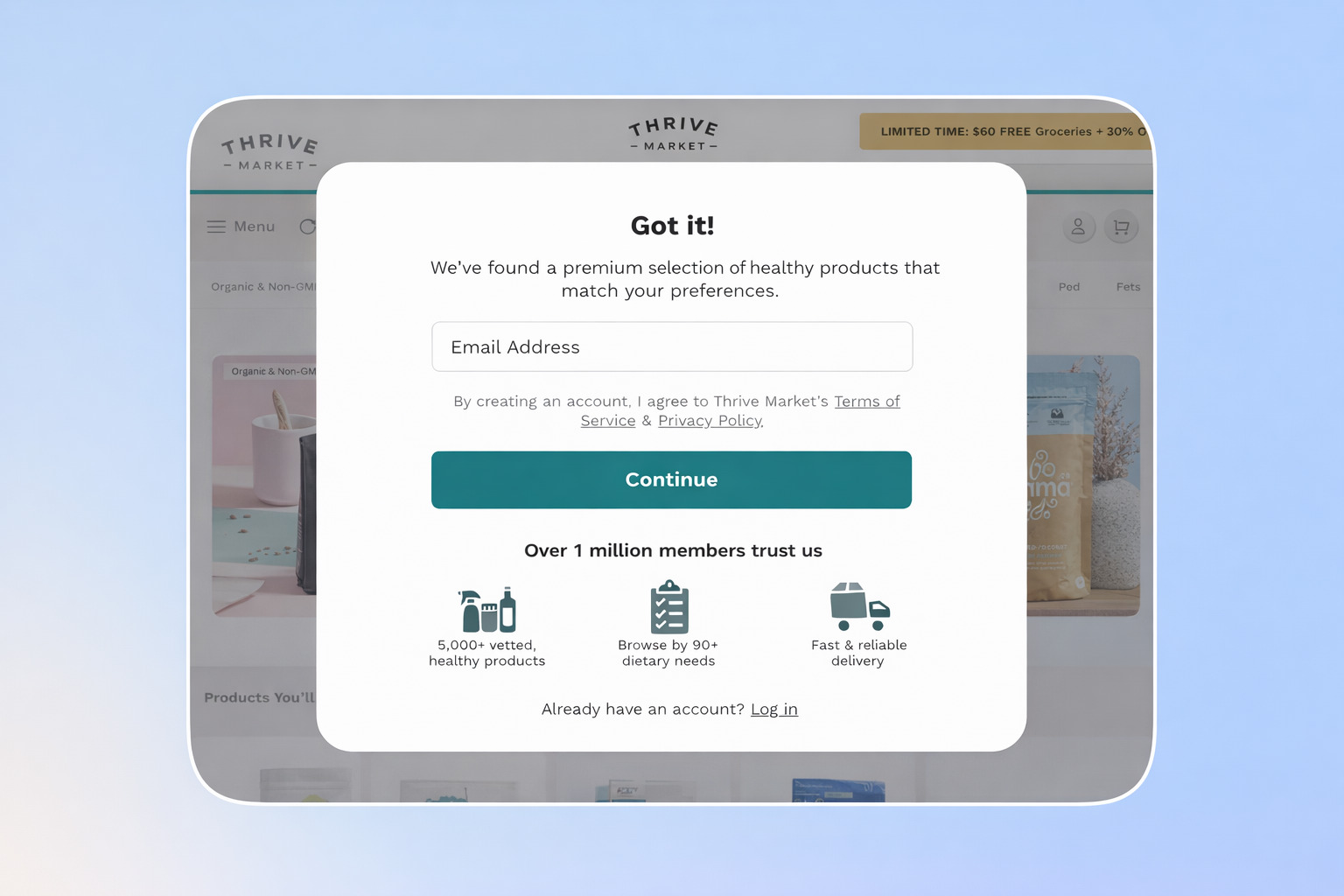
Thrive Market has built one of the most sophisticated versions of this model — a membership-based online store where members pay $59.95/year for access to discounted organic and natural products. The curation itself is in the product selection and the personalized recommendations that improve as the platform understands each member's preferences. Thrive Market is a primary example of how membership-based pricing can foster extreme brand loyalty, with access-based models showing 70% customer retention. (Lumos Business)
Hims & Hers runs a different version of this — subscription-based access to personalized wellness and personal care products, where the curation is driven by a brief intake questionnaire that personalizes what each subscriber receives. The model has scaled to over two million active subscribers by making personalization feel like a service rather than a product feature.
The curation model works for: beauty, wellness, food and drink, fitness, pet products, and any category where discovery has value and where the brand has the credibility to act as a trusted editor.
Access Subscription Model
Access subscriptions sell membership — the right to use a service, buy at member prices, or unlock premium features — rather than delivering physical products on a schedule. The recurring fee creates an ongoing customer relationship that generates revenue independent of whether the customer makes any individual purchase.
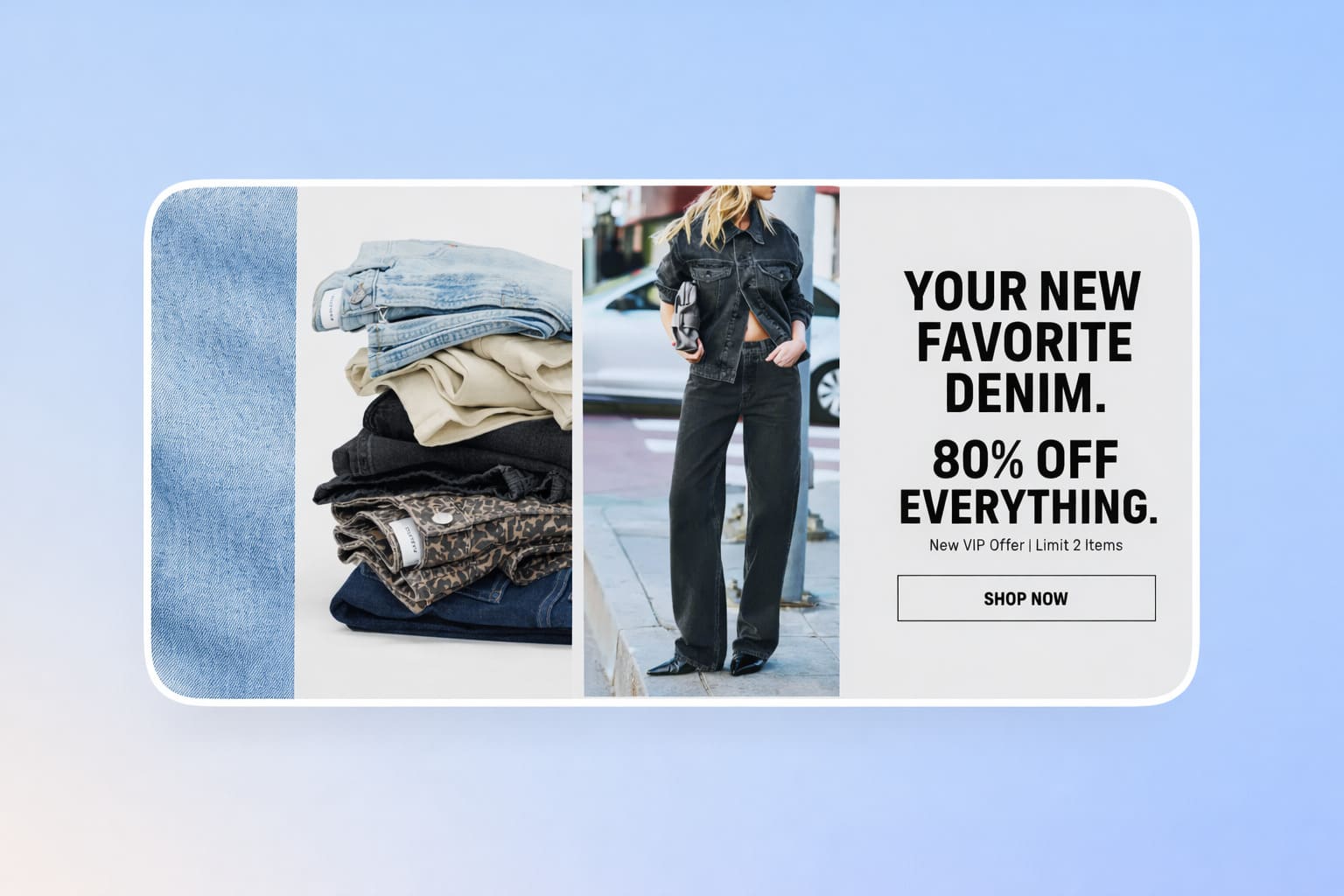
Fabletics runs arguably the most copied version of this in fitness apparel: a monthly VIP membership where members receive credits to spend on discounted clothing, with non-members paying full retail price. Access-based models maintain the lowest churn rates — typically between 5% and 8% — because they provide ongoing membership value that transcends any individual product. The customer isn't just subscribing to a product; they're subscribing to a status and a price advantage that disappears if they cancel.
The access model works for: apparel, fitness, food and beverage, beauty, and any category where price advantage or exclusive access is a genuine and ongoing value proposition.
Economics: Why Subscription Changes Everything
The reason subscription businesses attract so much attention isn't just that they generate recurring revenue — it's that they fundamentally change the relationship between customer acquisition cost and customer lifetime value.
In a transactional ecommerce business, the unit economics look like this:
A customer costs $45 to acquire.
They buy twice over their lifetime at $65 average order value.
Total revenue: $130.
Minus COGS, fulfillment, and acquisition cost, the margin is thin.
Grow the business means spending more on acquisition every month — and acquisition costs only go up.
In a subscription business, the same $45 customer acquisition cost is amortized across every month they stay subscribed. A subscription business with 5% monthly churn and $50 average revenue per user has an average customer lifespan of 20 months and generates $1,000 in revenue per customer. Reduce churn to 3% and that same customer generates $1,667 — a 67% increase in customer lifetime value from a single operational improvement, with no change in acquisition cost or pricing.
This is the compounding dynamic that makes subscription businesses different. Every improvement in retention is worth more than a corresponding improvement in acquisition, because it multiplies across every existing subscriber simultaneously.
Supplement retailers running subscription models often achieve customer lifetime values in the range $680–$920, compared to far lower values for transactional buyers in the same category. The product is the same. The subscription is the difference.
Pricing Your Subscription: Framework That Works
Subscription pricing is where most D2C ecommerce businesses leave money on the table — either by underpricing the subscription relative to the one-time purchase, or by not offering the flexible subscription plans that retain subscribers who would otherwise cancel.
Subscribe-and-Save Discount
The most straightforward subscription pricing approach: offer a meaningful discount on the subscription versus the one-time purchase price. 15–25% is the typical range that converts well without eroding margin unnecessarily.
The discount creates the initial value proposition — "Subscribe and save 20%" — while the convenience and habit formation keep the subscriber long after the discount becomes the expected price rather than a special offer. Auto-ship discounts increase retention by 29%. (Marketing LTB)
Critically, the discount needs to be visible before the customer makes the purchase decision. Showing the subscribe-and-save price on the product page — with the one-time price crossed out — anchors the comparison favorably and makes the subscription the obvious choice for anyone planning to buy more than once.
Tiered Pricing for Subscription Plans
Tiered pricing across subscription plans serves two functions: it captures more value from customers with higher needs, and it creates an upgrade path that increases monthly recurring revenue from your existing subscriber base without requiring new customer acquisition.
A supplement brand might offer:
1-month supply at $49/month
2-month supply at $85/month (saving $13)
3-month supply at $115/month (saving $32)
Each tier is a better deal per unit, and the higher-commitment tiers have lower churn because the customer is further invested in the habit.
Personalized supplement stacks based on health goals can increase average order value by more than 30%. Tier structure is where that uplift lives — getting the right subscriber onto the right tier at sign-up is worth more than any subsequent upsell.
Annual vs. Monthly Subscriptions
Annual subscriptions dramatically improve lifetime value and reduce churn because the cancellation moment is removed from the monthly cycle. A subscriber who would have cancelled at month four because they forgot to use the product doesn't cancel an annual subscription they've already paid for.
The conversion mechanics: offer the annual subscription at an effective monthly discount (typically 15–20% versus the monthly rate), and present it at the moment of initial sign-up rather than as an upgrade path later. First-time subscribers are more price-anchored to the monthly rate than returning customers, making sign-up the optimal moment for the annual offer.
Read more: D2C Strategies from Top Brands to Scale Profitably
Key Metrics That Matter for Ecommerce Subscription Businesses
Running a subscription business without tracking the right metrics means making decisions based on lagging indicators. These are the numbers that tell you where the business is actually going.
Monthly Recurring Revenue (MRR) is the baseline — total active subscribers multiplied by average subscription revenue. MRR is your predictable revenue floor for the month, before any new acquisitions or one-time purchases.
Customer Churn Rate is the most important operational metric. The average subscription churn rate runs at 5.3% monthly, with top-performing subscription businesses maintaining churn below 3%. The difference between 5% and 3% monthly churn is dramatic over 24 months — at 5% churn, a cohort of 1,000 subscribers is reduced to 290 after two years. At 3%, it's 565. That gap compounds directly into revenue.
Customer Lifetime Value for subscriptions is calculated differently than for transactional ecommerce: CLV = (Average Monthly Revenue × Gross Margin) ÷ Monthly Churn Rate. This formula reveals the true value ceiling of your subscription business and sets the upper bound of your viable customer acquisition cost.
Annual Recurring Revenue (ARR) is MRR multiplied by 12 — the standard metric for measuring subscription business scale and the number investors use to value subscription businesses. Growing ARR requires either growing MRR or reducing the churn that erodes it.
Reducing Churn: Where Subscription Businesses Win or Lose
50% of subscription churn is caused by failed card payments — costing $129 billion in revenue across the subscription industry in 2025. (PYMNTS) This is the most underappreciated churn driver in ecommerce subscription management. Half of involuntary churn is a billing problem, not a product or satisfaction problem — and it's almost entirely preventable.
Dunning management — automated retry sequences and card update requests triggered when a payment fails — is the single highest-ROI investment in churn reduction for any subscription business. A well-configured dunning sequence that retries failed payments at intelligent intervals and prompts customers to update expired cards recovers a significant portion of what would otherwise become involuntary cancellations.
Beyond involuntary churn, the voluntary churn drivers follow a predictable pattern:
27% of subscribers would cancel if unable to pause or skip orders, making self-service subscription management controls essential. The pause button is one of the most powerful retention tools available — a customer who needs to skip a month because they have excess inventory doesn't need to cancel; they need to pause. Without a pause option, they cancel. With one, they return.
The primary cancellation trigger for physical product subscriptions is discontinuation of free shipping, affecting 40% of churned subscribers. Building free shipping into the subscription value proposition — and not removing it — is a retention decision as much as a pricing one.
Delivery frequency flexibility is the third major retention lever. Flexible delivery schedules and pause capabilities reduce churn rates compared to rigid subscription structures. A customer who receives product faster than they consume it will cancel. A customer who can adjust their delivery frequency to match their actual consumption won't.
Conversion Problem: Getting First-Time Buyers to Subscribe
The most common failure mode in ecommerce subscription businesses isn't churn — it's getting customers to subscribe in the first place when a one-time purchase option exists.
The psychology of subscription commitment is different from the psychology of a single purchase. A one-time buyer makes one decision. A subscriber makes an open-ended commitment with an uncertain end date. That commitment asymmetry means subscription conversion requires a more deliberate approach to the purchase moment than a standard ecommerce checkout.
Three mechanisms convert first-time buyers to subscribers at the point of purchase:
Make Subscription Obvious Default
Present the subscription option first on the product page with the discounted price visible, and the one-time price as the secondary option. Most customers who don't actively seek out the one-time option will default to the subscription if the value is clear and the discount is meaningful.
Reduce Perceived Commitment
"Cancel anytime" is one of the most powerful copy elements on a subscription product page because it addresses the primary objection — feeling locked in — directly and immediately. 65% of subscribers say flexibility to pause or cancel anytime is the number one reason they subscribe. Making this explicit at the point of purchase lowers the psychological barrier to signing up.
Use Post-Purchase Upsells to Convert One-Time Buyers
A customer who just purchased a one-time order is the highest-intent audience you have for a subscription offer — they've already demonstrated they want the product. A post-purchase offer that presents the subscription with its discount and the "Cancel anytime" guarantee converts at meaningful rates because the product commitment has already been made.
If your ecommerce platform doesn't allow for flexibility, you can build post-purchase upsell infrastructure with Funnelish's page builder, connect it to your store, and set up a direct conversion mechanism for your subscription businesses. After a customer completes a one-time purchase, a post-purchase offer presents the subscription option with one-click acceptance and no re-entering of payment details.
The customer who was a one-time buyer 30 seconds ago becomes a subscriber with a single tap — with no checkout friction, no new payment form, and the purchase psychology of having already committed to the product working in your favor. Every subscription sign-up through this mechanism is a customer who would otherwise have left as a one-time buyer, leaving their future higher lifetime value on the table.
The Shopify sync means every subscription order processes through your existing fulfillment infrastructure. Funnelish handles the conversion moment; your store handles everything after.
Read more: 20+ Ways to Boost Conversions + Tools
Subscription Management Software: Infrastructure That Makes It Work
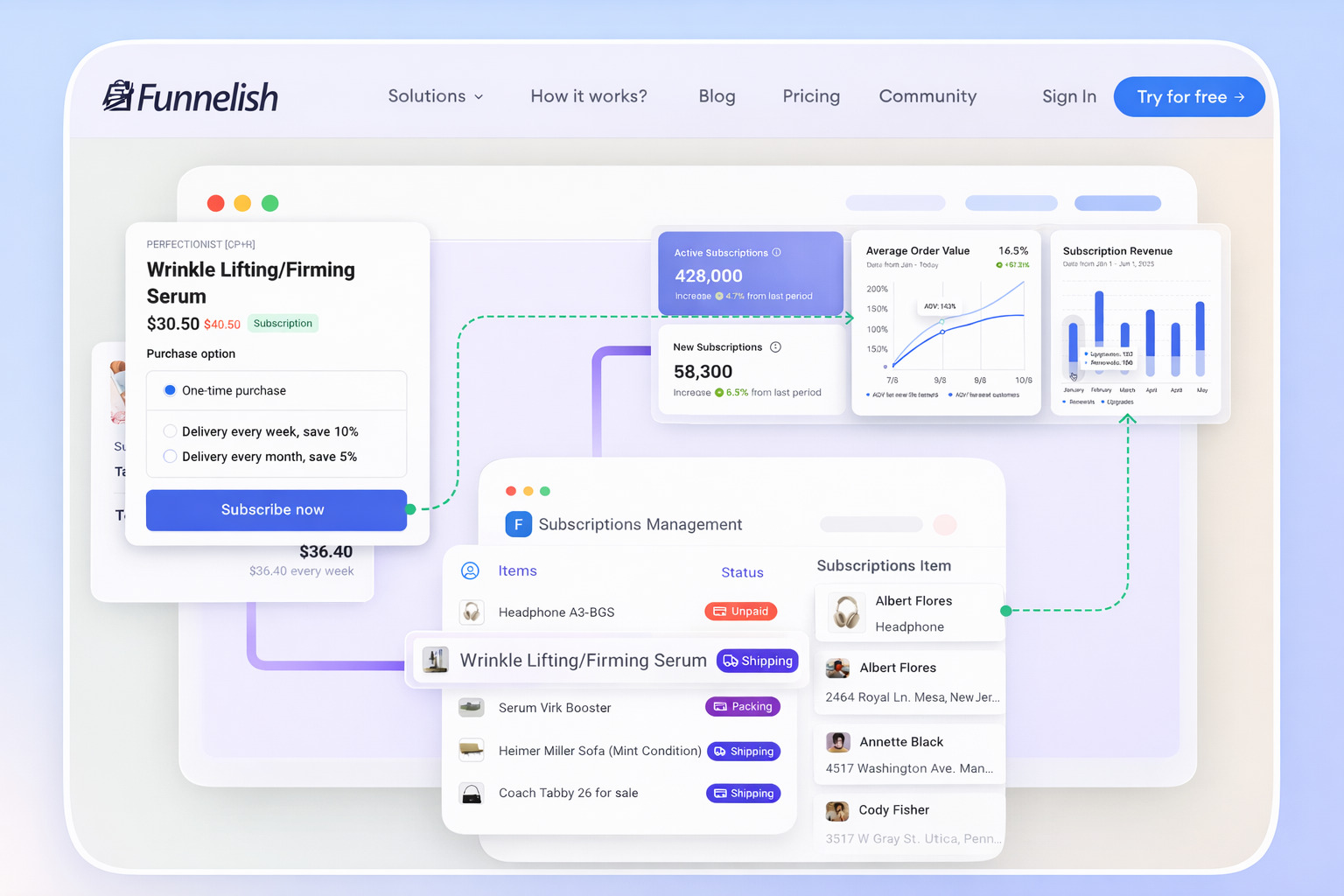
A subscription business runs on its subscription management software in a way that a standard ecommerce store doesn't depend on any single tool. The subscription platform is the operational core — it handles recurring billing, failed payment recovery, subscriber self-service, delivery frequency settings, and the data that drives retention decisions. Getting this infrastructure right makes subscription businesses that compound, not ones that spend their time firefighting billing issues and manually processing plan changes.
Funnelish's subscriptions feature is built into the funnel platform — meaning recurring billing, subscriber management, and analytics all live in the same place as your checkout and post-purchase flows, without stitching together separate tools. Here's what to look for in any subscription management setup:
Flexible Billing and Plan Management
The ability to create multiple subscription frequencies — weekly, monthly, quarterly — with flexible billing cycles, plan upgrades, refunds, and downgrades handled inside the same system rather than routed through a separate tool. Funnelish handles this natively, keeping billing cycles under control without external software.
Subscriber Self-Service and Instant Control
A customer portal where subscribers can pause, skip, change frequency, swap products, or cancel without contacting support. Subscriptions that require a customer to email to make changes can have meaningfully higher churn than those with self-service portals. Funnelish gives subscribers instant control and transparency without any support burden on your team.
Multiple Payment Gateways
Supporting every payment method your subscribers prefer, across every market you sell in. A subscriber who wants to pay with a method your platform doesn't support either doesn't subscribe or churns at renewal when payment fails. Funnelish's gateway pools route transactions through the right payment method for each subscriber automatically.
Powerful Analytics and Subscription Insights
The ability to track active subscriptions, renewal flows, churn by cohort, and the metrics that determine whether your subscription business is growing or quietly eroding — all on one interactive dashboard. Funnelish's analytics gives you this visibility without exporting data to a separate reporting tool.
Abandoned Cart and Failed Payment Recovery
When a renewal fails or a subscriber drops off before completing checkout, automated recovery sequences capture the revenue that would otherwise become involuntary churn — fired within Funnelish without external automation tools.
Start your free 14-day Funnelish trial →
Referral Programs: Acquisition Channel Built Into Your Subscriber Base
Referral incentives increase ecommerce subscription growth by 31%. Your existing subscriber base is your most credible acquisition channel — they have direct experience with the product and a natural incentive to share it with people who have the same need.
A well-structured referral program ties the incentive to subscription behavior: the referrer receives credit when their referral subscribes (not just purchases), and the new subscriber receives a first-month discount that lowers the barrier to signing up. This structure means the referral program compounds alongside the subscription base rather than generating one-time buyers who don't convert to recurring revenue.
Many brands growing fastest in subscription ecommerce in 2026 are using referral programs as a primary acquisition channel because it sidesteps the rising cost of paid social acquisition. A referred subscriber acquired at near-zero cost who pays $49/month for 18 months generates $882 in revenue against a referral incentive of $20–30. The unit economics of referral are fundamentally different from any paid channel.
Subscription Ecommerce in Practice: What It Takes
Running a subscription ecommerce business requires operational capabilities that one-time purchase businesses don't — not necessarily more complex, but different.
Customer support can scale differently with subscriptions. A subscriber has an ongoing relationship with your brand that generates recurring support touchpoints: "When does my next delivery ship," "I need to pause for two months," "I want to change my frequency," "My last box had a damaged item." Building self-service subscription management features reduces support volume — but some volume is unavoidable, and it's worth building for.
Inventory forecasting can becomes more predictable with subscriptions, which is one of the underrated operational advantages of the model. When you know your subscriber count and their delivery frequencies, you can forecast demand with far more precision than a transactional business dependent on marketing performance. That predictability helps reduce both stockouts and overstock — two of the highest operational costs in physical product ecommerce.
Shipping costs need to factor into the subscription economics from the beginning, not be treated as a variable to optimize later. The primary cancellation trigger for subscriptions is discontinuation of free shipping. If free shipping is part of the value proposition at sign-up, it needs to be sustainable in the margin structure from the start.
The brands that build durable subscription businesses in 2026 share one characteristic: they designed the subscription to deliver genuine ongoing value — not just convenience — and they built the operational infrastructure to fulfill that value reliably every month. The subscription model creates predictable revenue, but only if the customer experience is consistently good enough to make subscription renewal the path of least resistance.
Ecommerce Subscription Model FAQs
What is the subscription model of ecommerce?
An ecommerce subscription model is a business structure where customers pay a recurring fee — monthly, quarterly, or annually — to receive products or access services on an ongoing basis. Instead of making one-time purchases, customers subscribe and are billed automatically at the chosen frequency. The model generates monthly recurring revenue and customer lifetime value that compounds over time, making each retained subscriber worth significantly more than a transactional buyer of equivalent spend.
What is a subscription model example?
AG1 by Athletic Greens is one of the clearest current examples: a single product — a daily greens powder — sold primarily by subscription at $87/month, with the entire $1.2 billion business built on the assumption that a first-time buyer becomes a long-term subscriber.
Thrive Market is another: a $59.95/year membership that gives access to discounted organic groceries, where the membership fee is the subscription and the ongoing purchases are the retention mechanism. Fabletics operates on a VIP membership model where subscribers receive monthly clothing credits at member pricing, with non-members paying full retail.
What are the three types of subscriptions?
The three core ecommerce subscription models are replenishment, curation, and access.
Replenishment subscriptions automatically deliver products customers consume regularly — supplements, cleaning products, coffee, pet food — on a schedule that matches their consumption cycle.
Curation subscriptions deliver a personalized selection of products, often items the customer hasn't chosen themselves, creating a discovery experience with each delivery.
Access subscriptions sell membership — the right to buy at member prices, access premium features, or use a service — with the product itself purchased separately within the membership.
Each model has different churn rates, different pricing dynamics, and works best for different product categories.
Table of contents
Boost your eCommerce
sales today

24/7 support
No credit card required
Cancel anytime
24/7 support
No credit card required
Cancel anytime
