

Recurring Revenue Empire: Mastering Shopify Subscriptions in 2026
13 May 2026
Anna P.
12 minutes
Let’s face the harsh reality of the 2026 ecommerce market.
If your online store is built on acquiring a customer for a single, one-off purchase, you are playing a game that is mathematically rigged against you.
The cost of paid ads on platforms like Instagram, TikTok, and Google has skyrocketed. If you pay $45 to acquire a customer who buys a $50 product, your front-end margin is practically non-existent after COGS and shipping. You are essentially doing charity work for Mark Zuckerberg.
To survive and build a highly profitable business today, you must shift your focus from single transactions to recurring revenue.
When you introduce Shopify subscriptions into your ecosystem, you fundamentally alter the financial trajectory of your brand. You stop paying to acquire the same customer twice. You build a compounding revenue stream that provides predictable cash flow, higher valuations, and unparalleled stability.
But slapping a "Subscribe & Save 10%" button onto your Shopify store is not a strategy.
In this deep dive, we are going to break down the hardcore unit economics of the subscription model, deconstruct how niche brands are crushing it, analyze the technical stack you need to execute, and explore how to bypass the standard conversion killers using advanced funnels.
Hard Math: Unit Economics of the Subscription Model
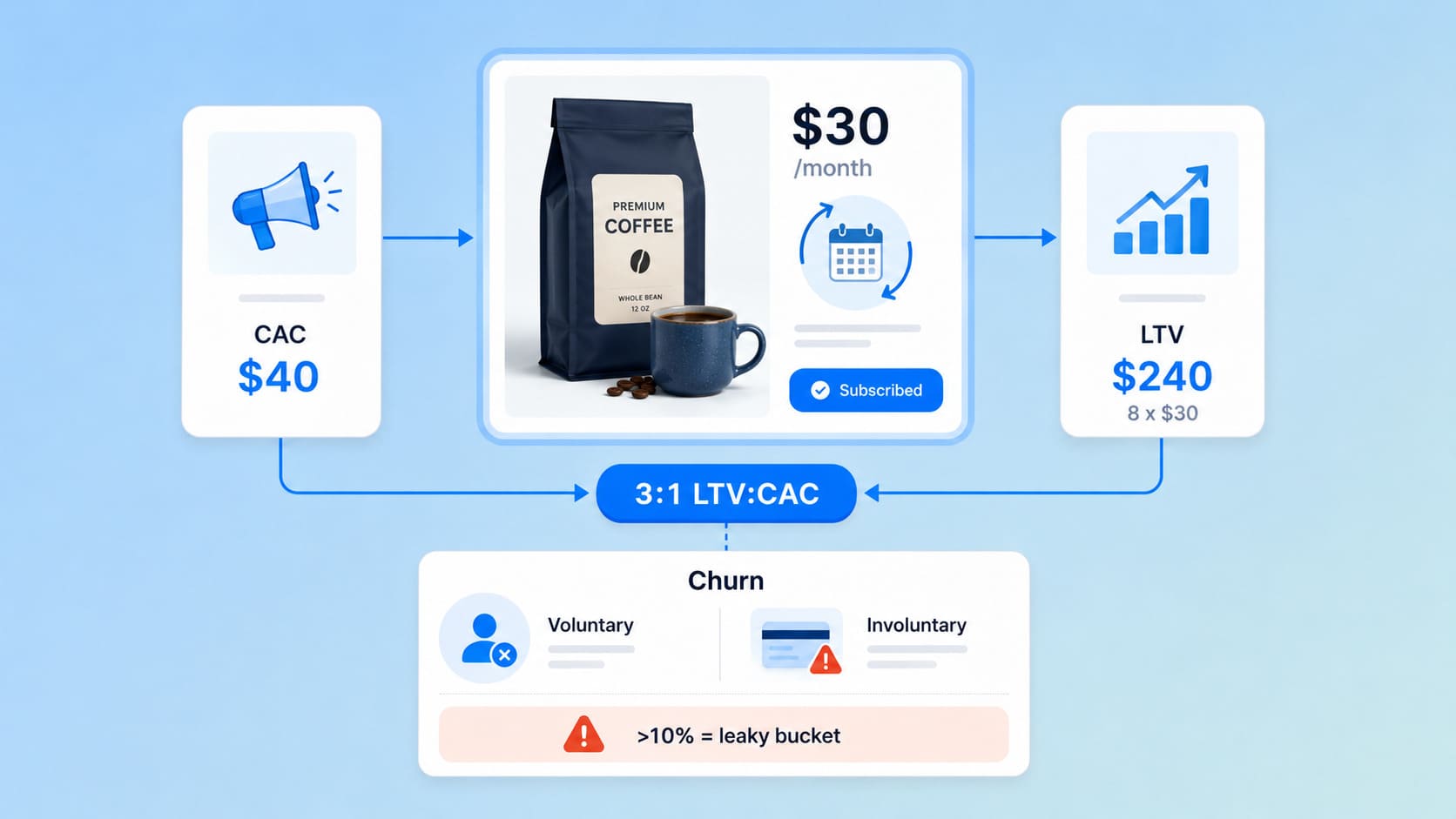
Before we look at the software tools or the design, we have to look at the math. A subscription business lives and dies by three metrics: CAC, LTV, and Churn.
1. Customer Acquisition Cost (CAC)
This is exactly how much money it costs to acquire a new subscriber. In a subscription model, you can afford a much higher CAC than a traditional ecommerce brand.
If you sell a $30 bag of premium coffee on a single sale, you cannot afford a $40 CAC. But if that customer commits to a $30/month delivery for an average of 8 months, their value is $240. Suddenly, spending $40 to acquire them is an incredible investment. Subscriptions allow you to outbid your competitors on ad platforms because your backend economics support it.
2. Customer Lifetime Value (LTV)
LTV is the total revenue a customer generates before they ultimately cancel their paid plans. Your goal as a marketer is to stretch this number out. The longer they continue to pay, the higher your LTV-to-CAC ratio becomes. A healthy subscription brand aims for an LTV:CAC ratio of at least 3:1.
3. Churn Rate
Churn is the percentage of your subscribers who leave every month.
There are two types of churn:
Voluntary churn: The customer actively logs into their account to cancel because they have too much product, don't like it anymore, or are cutting costs.
Involuntary churn: The customer’s credit card expires, gets lost, or triggers a fraud alert, causing the subscription payments to fail. (This is where dunning sequences come in to automatically recover failed payments).
If your monthly churn rate exceeds 10%, you are trying to fill a leaky bucket. You will eventually run out of market share trying to replace the people leaving.
Psychology of Recurring Charge
Why do consumers actually subscribe to physical products? It is rarely just to save 10%.
1. Cognitive Offload
Consumers suffer from severe decision fatigue. Buying toothpaste, dog food, or coffee beans every three weeks is an annoying mental task. A subscription removes the cognitive load. It is the ultimate set-and-forget convenience. They are paying to never have to think about buying that item again.
2. Dopamine of Discovery
This applies to the classic curation-based subscription box. Humans love surprises. When a curated box of unknown international snacks or niche skincare products arrives on a recurring basis, it feels like receiving a gift rather than making a purchase.
3. Commitment Device
Many consumers use subscriptions to enforce a habit they want to have. Subscribing to a daily vitamin pack or a premium fitness supplement forces them to stick to their health goals because the physical product keeps arriving at their door.
Deconstructing Niche Subscription Giants
We all know Dollar Shave Club. Let’s look at three more modern, highly specialized brands that have leveraged the Shopify infrastructure to build recurring empires in uniquely different ways.
Case Study 1: Bite (Because It’s The Earth)
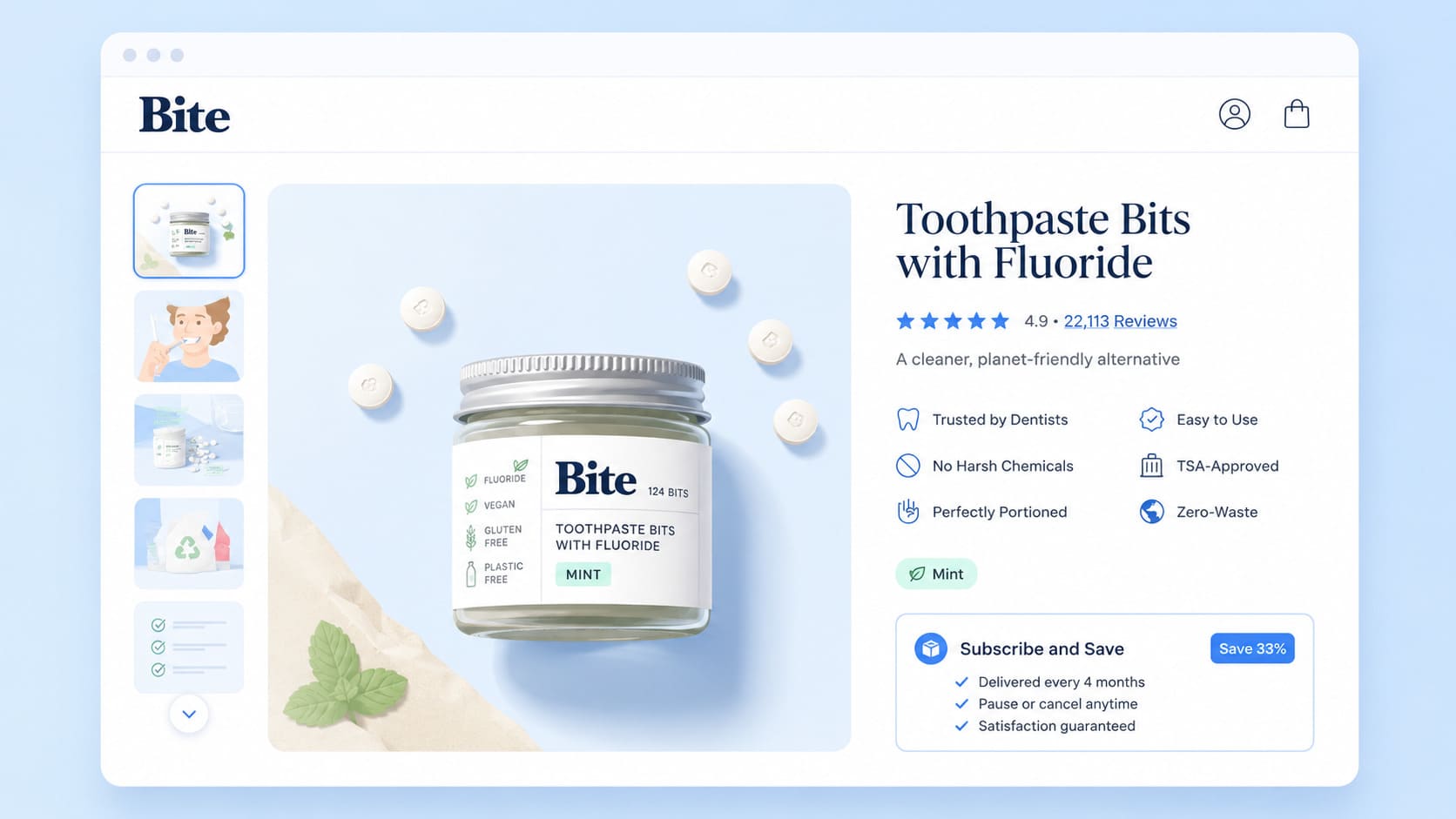
Bite revolutionized the oral care space by replacing plastic toothpaste tubes with chewable toothpaste bits.
Model: Replenishment with a twist.
When customers first choose to subscribe, Bite sends them their toothpaste bits in a beautiful, heavy glass jar. It feels premium. But for all subsequent subscription products delivered every 4 months, Bite only sends compostable refill pouches.
Why it works: They masterfully blended sustainability with unit economics. Shipping heavy glass jars every month would destroy their margins. By shipping light refill pouches on a recurring basis, their shipping cost plummets, increasing their gross margin on every subsequent delivery. Furthermore, having that beautiful glass jar sitting on the bathroom sink serves as a daily physical anchor for the brand.
Case Study 2: Bokksu (Cultural Curation)
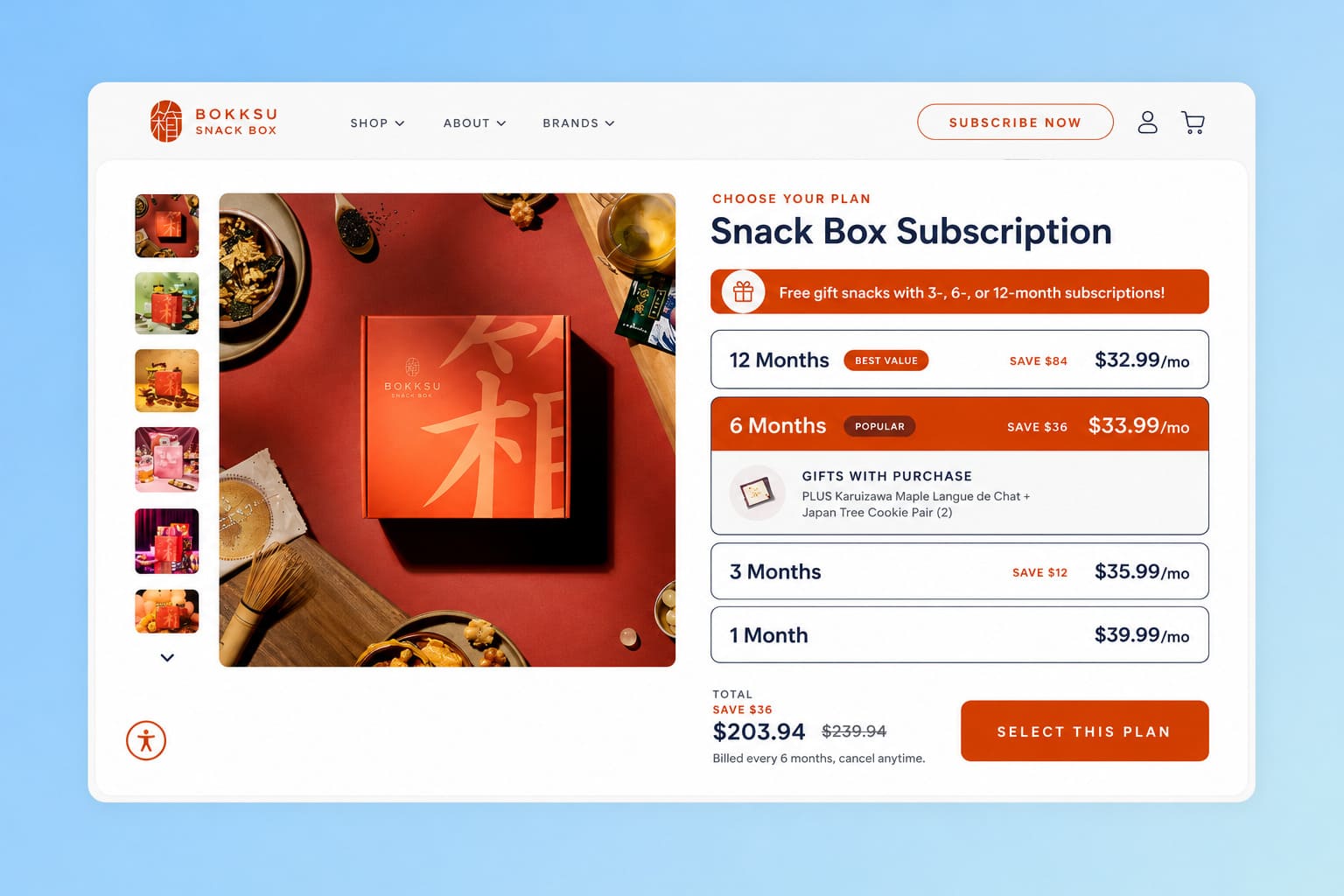
Bokksu delivers a premium subscription box filled with authentic Japanese snacks sourced from centuries-old family businesses in Japan.
Model: Curated discovery.
Bokksu doesn't just send snacks; they send an experience. Each box revolves around a specific theme (like "Seasons of Kyoto") and includes a detailed cultural guide.
Why it works: A standard curation box suffers from high churn because people eventually get bored. Bokksu combats this by deeply integrating content and exclusivity. You cannot buy these snacks at a local grocery store. By locking the products behind a geographical and cultural barrier, Bokksu ensures that if a user wants this specific dopamine hit, they must remain on the active plan.
They also push heavy upfront commitments, offering massive discounts if users prepay for 6 or 12 months at once, securing cash flow instantly.
Case Study 3: Aura Bora (Flavor Rotation)
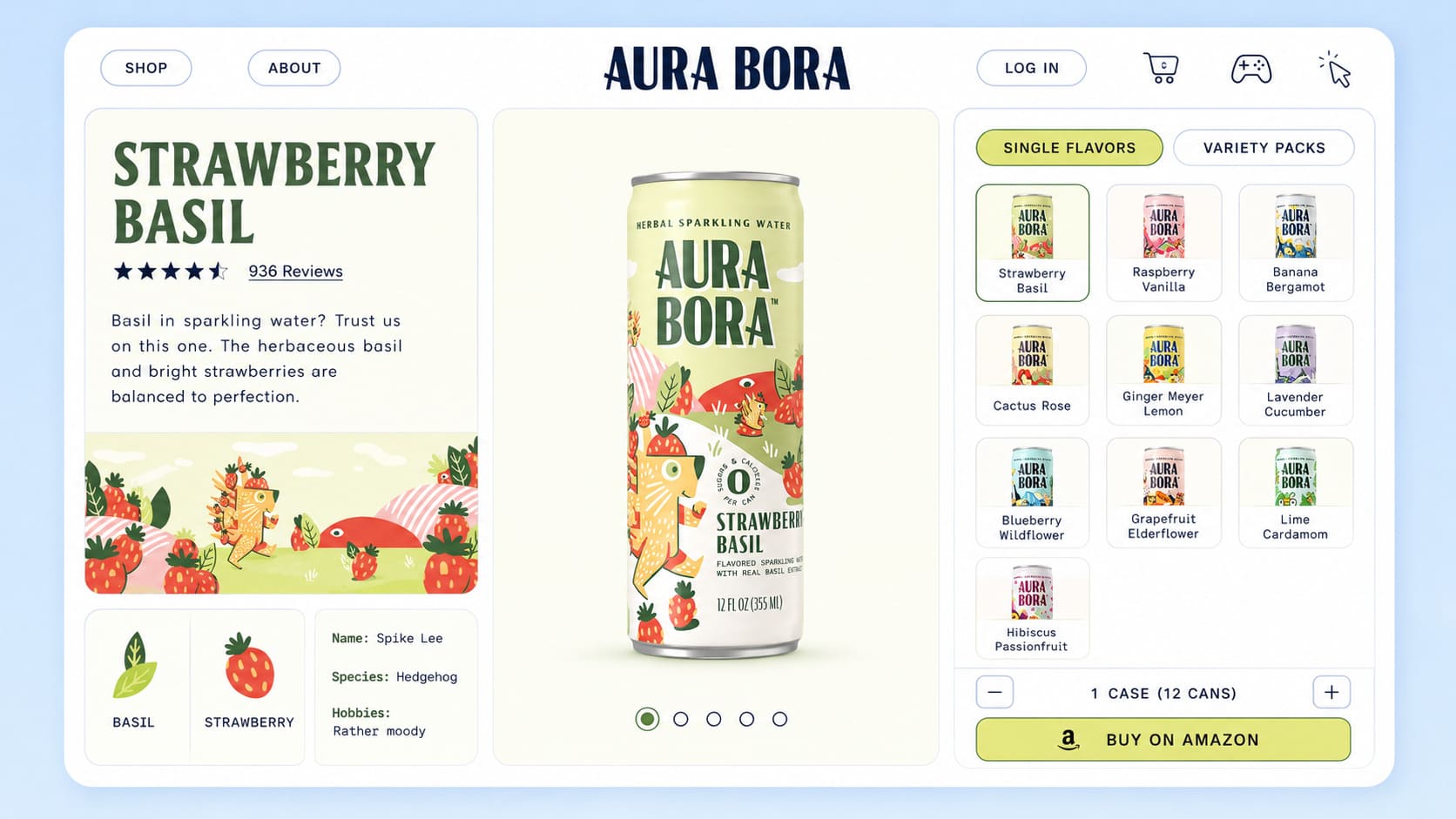
Aura Bora makes craft sparkling water with bizarre, herbal flavor combinations (like Cactus Rose or Basil Berry).
Model: Flexible pantry.
Beverages are heavy, and shipping them is incredibly expensive. Instead of forcing users into a rigid box, Aura Bora uses a highly flexible portal.
Why it works: Flavor fatigue is the biggest reason beverage subscriptions fail. Aura Bora uses advanced features in their subscriptions app to let users swap flavors via text message before their next box ships. If a customer is tired of Lavender Cucumber, they don't cancel; they just swap it for Peppermint Watermelon. By giving the user absolute control over their upcoming delivery, Aura Bora effectively eliminates voluntary flavor-based churn.
Shopify Subscription Architecture
So, how do you build this on your Shopify store?
In the early days, managing recurring billing on Shopify was a nightmare. Recently, Shopify has introduced native Subscription APIs. This means you do not need to hire a developer to write custom code from scratch.
However, native Shopify does not handle the complex logic of subscriptions out of the box. You must install a third-party subscriptions app to act as the engine.
Choosing Your Subscriptions App
There is a massive war currently raging in the Shopify ecosystem between a few heavyweight apps. The heavy hitters in 2026 are Recharge, Skio, and Loop Subscriptions.
When you install one of these apps, it integrates with your Shopify admin.
Here is what the app does:
It adds a dynamic widget to your product pages, giving the user the subscription option (e.g., "One-Time Purchase: $30" vs. "Subscribe & Save 15%: $25.50").
It creates legally binding subscription contracts in the backend when the user checks out.
It securely vaults the customer's credit card information. (Note: To use native Shopify checkout for subscriptions, you must be using Shopify Payments, Shop Pay, PayPal Express, or authorize.net as your payment gateway).
On the billing date, the app's software automatically pings Shopify, triggers the charge, and automatically syncs the new order into your Shopify admin so your fulfillment team can ship it just like a normal order.
Customer Portal: Key to Retention
If a customer has to email your support team to change their address or delay a shipment, they will just call their bank and issue a chargeback instead. It is too much friction.
The more advanced merchants utilize a frictionless customer portal.
When a user logs into your online store, they should be able to:
Skip their next delivery with one click if they have too much product.
Swap their current product for a different flavor or scent.
Add one-time items to their upcoming subscription box (e.g., "Add a $10 lip balm to my next coffee delivery"). This is a massive Shopify AOV booster.
View their order history and redeem loyalty credits.
Cancel their subscription contracts without jumping through hoops.
If you make it easy to cancel, consumers are paradoxically more likely to subscribe in the first place because they feel safe.
Dunning: Recovering Lost Revenue
What happens when a card declines? Good subscription software includes automated dunning sequences.
If a charge fails, the system does not just cancel the order. It will automatically retry the card 3 days later, then 5 days later. Simultaneously, it will send automated emails and SMS messages prompting the customer to update their billing information securely. Proper dunning management can recover up to 40% of failed payments, literally saving your business thousands of dollars in lost recurring revenue.
Migrating Between Apps at Scale
What happens if you outgrow your current app and need to move to a more advanced platform?
Ten years ago, migration was a death sentence. You would lose half your subscribers. Today, because of Shopify's unified APIs, you can securely migrate your entire recurring database.
When you move from App A to App B, you export a highly sensitive CSV file containing all active contracts, vault tokens, and upcoming billing dates. The new app imports this data. When done correctly, the customer experiences zero interruption. They do not have to re-enter their credit card, and their payment history remains intact.
However, because you are dealing with encrypted credit card tokens, you should never attempt to manually migrate at scale without the assistance of the new app's engineering team.
Omnichannel Subscriptions: Retail and Shopify POS
The subscription model is no longer limited to the digital world.
If you run physical pop-up shops, attend trade shows, or operate a brick-and-mortar location, you can now capture recurring revenue in person.
By utilizing Shopify POS, your retail staff can check a customer out using a physical card reader and assign that purchase to a recurring plan.
If you sell premium dog food at a local farmer's market, you don't just sell them one bag. You swipe their card on your POS terminal, they sign the digital receipt, and they are instantly enrolled in a monthly delivery shipped from your warehouse. You turn a local, one-off foot traffic interaction into a compounding asset.
Acquisition Problem: Why Standard Pages Fail
We have established that subscriptions are the holy grail of ecommerce.
But there is a massive, glaring problem that most store owners ignore until it is too late: Selling a subscription to cold traffic is incredibly difficult.
When you run top-of-funnel ads on Meta or TikTok, you are targeting people who have never heard of your brand. They click your ad, land on your standard Shopify product page, and see the subscription option.
They are presented with a choice:
Buy it once for $40
Commit to a recurring charge of $34/month
This introduces massive decision fatigue. The buyer thinks, "I don't even know if I like this yet. I don't want to get trapped in a contract." This hesitation causes them to abandon the checkout. By trying to force the subscription upfront, you tank your initial conversion rate and spike your Customer Acquisition Cost.
You need a way to maximize front-end conversions while still aggressively capturing recurring revenue on the backend.
Funnelish Alternative: Post-Purchase Strategy
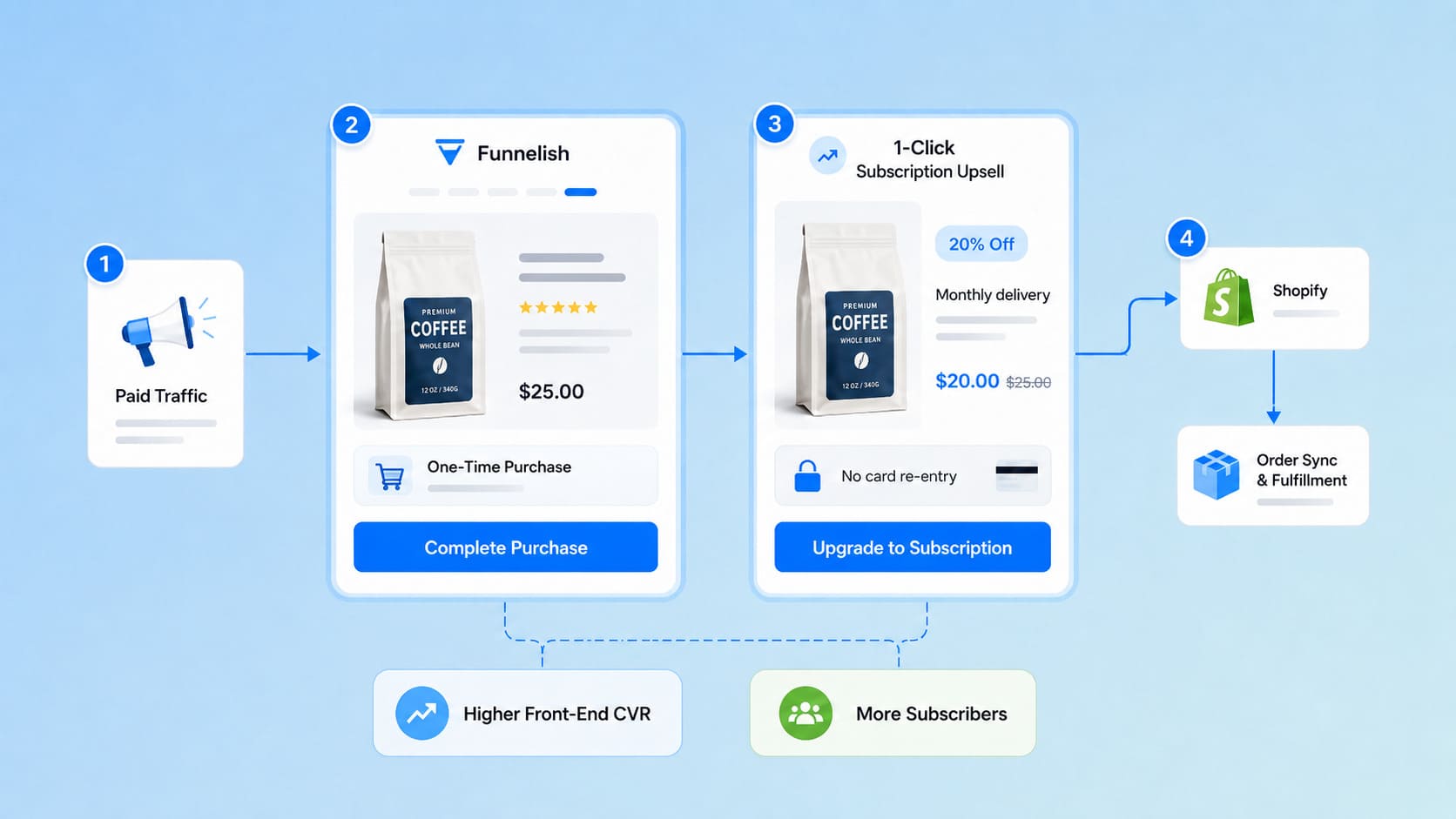
If you want to scale your subscriber base profitably from paid traffic, you must separate the initial purchase from the subscription commitment. Funnelish is a high-performance alternative to the standard Shopify product page experience.
Instead of sending expensive ad traffic to your native store, you route them to a dedicated Funnelish sales funnel that is deeply integrated with your Shopify backend.
Step 1: Frictionless Front-End Sale
On the Funnelish landing page, you do not display the subscription option. You remove the decision fatigue. You sell the product as a straight, one-time purchase.
Because the offer is simple and the Funnelish checkout is lightning-fast, your front-end conversion rate skyrockets. You acquire the customer at a much lower cost. They enter their credit card and hit Complete Purchase. You have successfully secured the sale.
Read more: One-Product Funnel: How to Build One That Turns Strangers into Loyal Customers
Step 2: 1-Click Subscription Upsell
This is where the magic happens.
After the initial payment clears, but before the order confirmation page, Funnelish presents a dedicated post-purchase upsell page.
The copy says: "Wait! Want us to send this to you every month so you never run out? Click below to upgrade this order to a monthly subscription and we'll immediately take 20% off today's order!"
Because Funnelish has already tokenized their payment data, the customer does not have to re-enter their credit card. They do not have to fill out another checkout form. They simply click one button to Upgrade to Subscription.
Result: Predictable, Profitable Growth
By shifting the subscription pitch to the post-purchase sequence, you accomplish two things simultaneously:
You maximize your front-end conversions by removing commitment anxiety.
You convert a massive percentage of those buyers into highly profitable subscribers when their purchase intent is at its absolute peak.
Once the customer clicks that upsell button, Funnelish communicates with your Shopify store. It updates the order, initiates the recurring contract, and syncs all the data perfectly into your Shopify admin for fulfillment.
You get the high-converting architecture of a direct-response funnel, combined with the stable, recurring infrastructure of your main Shopify store.
Read more: Ecommerce Subscription Model Is the Last Unfair Advantage
Bottom Line on Shopify Store Subscriptions
Building a recurring revenue machine is no longer optional for serious e-commerce brands in 2026; it is a mathematical necessity for survival.
Whether you are launching a curated subscription box or simply offering a replenishment option for your physical goods, you must master the unit economics of LTV and churn.
Equip your store with a powerful subscription app, build a customer portal that gives your buyers absolute control, and stop forcing cold traffic into immediate commitments.
By utilizing advanced funnel strategies and post-purchase upsells, you can rapidly acquire new buyers and seamlessly transition them into loyal, long-term subscribers. Stop hunting for new sales every single day. Build the subscription system, capture the recurring revenue, and watch your business scale autonomously.
Frequently Asked Questions
Can Shopify do subscriptions?
Yes. While Shopify natively supports the secure vaulting of credit cards and the APIs required for recurring billing (if using an approved gateway like Shopify Payments), you must install a third-party subscriptions app from the Shopify App Store (like Recharge or Skio) to actually manage the plans and customer portals.
How do I add a subscription to Shopify?
First, ensure you are using an eligible payment gateway. Next, install a subscriptions app from the Shopify App Store. Open the app, create a new subscription plan (e.g., "Deliver every 30 days for 15% off"), and map that plan to your specific products. The app will automatically inject the subscription widget onto your product pages so customers can start subscribing.
Table of contents
Boost your eCommerce
sales today

24/7 support
No credit card required
Cancel anytime
24/7 support
No credit card required
Cancel anytime
