

Geo-Targeting for Global Sellers: Stop Losing International Sales to Generic Experiences
06 March 2026
Anna P.
You've done all the hard work. Your product has product-market fit. Your paid ads are converting. You're shipping internationally. And yet, your conversion rate from German, Australian, and Canadian visitors is noticeably worse than your home market — despite the fact that those visitors came from the same type of ad, clicked the same type of creative, and landed on the same page.
The problem, in most cases, isn't the product. It's not even the price. It's that a visitor in Munich is landing on a page showing USD prices, American testimonials, US shipping times, and checkout copy written for a domestic audience. Every one of those signals — individually small, collectively significant — tells the international visitor that this store wasn't built for them. And people don't buy from stores that feel like they're pointing at someone else.
This is the geo-targeting problem, and it costs eCommerce brands more in lost sales than most attribution tools will ever surface — because the drop-off happens silently, before any meaningful event fires.
What Geo-Targeting Is (And What It Isn't)
Geo-targeting is the practice of delivering different content, ads, or experiences to users based on their geographic location — detected via IP address, GPS data, or cell tower triangulation on mobile devices. The goal is simple: serve the right message to the right person based on where they actually are, rather than treating every visitor to your site as if they were in the same place with the same context.
At the ad platform level, geo-targeting means showing ads only to users in specific locations. Google Ads, Meta, and TikTok all offer location targeting as a baseline feature — you can target by country, region, city, or specific zip codes, and use radius targeting around a physical address or business location. Most eCommerce brands running paid ads are already doing some version of location-based targeting at the campaign level. This is table stakes.
Where geo-targeting becomes genuinely powerful — and where most brands aren't yet operating — is at the landing page and funnel levels. This is where you stop showing everyone the same page and start delivering highly relevant messages to users based on their geographic location: their currency, their language or regional dialect, their local shipping and delivery expectations, and social proof from customers who look and sound like them.
The distinction matters because geo-targeting in your ad manager and geo-targeting in your funnel are solving different problems. The ad platform decides who sees your ad. Your funnel decides what they experience when they arrive. Getting the first part right while ignoring the second is like hiring a bilingual salesperson and then handing them a script written in the wrong language.
Revenue Cost of a Generic International Experience
Let's say you are doing $100,000/month in revenue, with 30% of your traffic coming from the UK and Australia. If their domestic conversion rate is 4% but your international conversion rate is 1.8% — a gap that's realistic and common for brands that haven't localized their funnel — the math is straightforward: you are converting less than half as efficiently from traffic you paid the same amount to acquire. That's wasted ad spend on a significant scale, and most of it is invisible in standard reporting.
The underlying causes are usually some combination of currency friction (visitors unsure whether the price shown is in their currency or USD), shipping uncertainty (no visible information about delivery windows or costs until checkout), unfamiliar social proof (testimonials from American customers referencing American context), and trust signals that don't translate (a "BBB Accredited" badge means nothing to someone in Germany; a payment method not available in their market creates immediate drop-off at checkout).
None of these problems is about product quality. They're about relevance — and relevance is exactly what location-based marketing at the funnel level is designed to solve. Small businesses and large eCommerce brands alike lose meaningful revenue to this gap every month, not because they're running bad ads, but because their geo-targeting efforts stop at the campaign level and never reach the page.
How Geo-Targeting Works in Practice
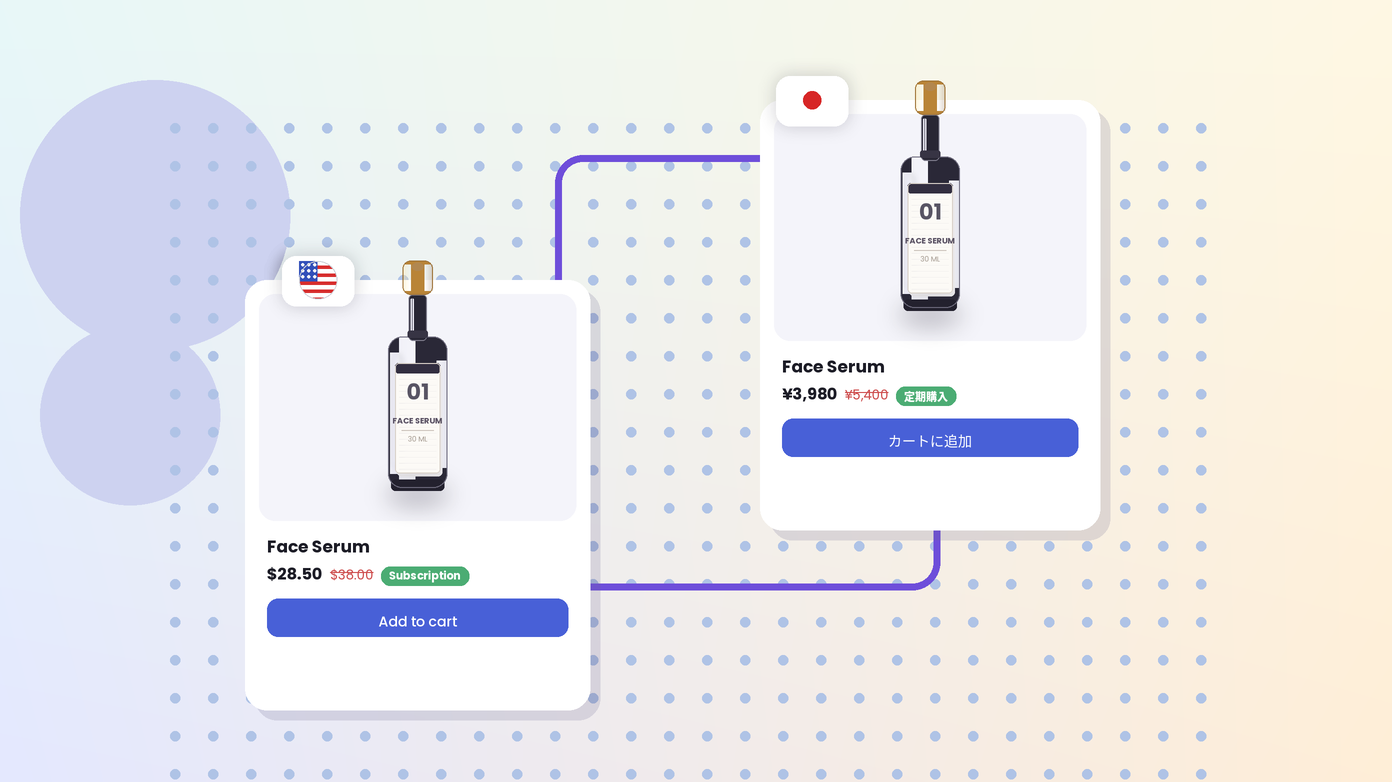
The most effective geo-targeting for eCommerce funnel pages works on several dimensions simultaneously:
Currency and Pricing Display
A visitor from the UK should see GBP. A visitor from Australia should see AUD. This isn't just convenience — it's trust. When prices appear in the user's location currency, the cognitive friction of mentally converting disappears, and the price feels local rather than imported. Brands that have implemented automatic currency display based on a user's location consistently see improved add-to-cart rates from international traffic, with no change to the underlying offer.
Localized Social Proof
Testimonials carry weight when the reviewer feels like a peer. A UK visitor converting from a landing page featuring reviews from UK customers — with recognizable context, familiar phrasing, and relatable scenarios — will convert at a higher rate than the same page with generic American testimonials. Surfacing location-relevant content for local audiences based on detected location is one of the highest-leverage conversion improvements available without changing the offer itself.
Shipping and Delivery Information
International customers have higher uncertainty about shipping than domestic buyers. Showing accurate delivery windows and costs for the visitor's particular location — rather than generic "international shipping" language that raises more questions than it answers — removes one of the most common reasons international visitors abandon before checkout.
Localized Offers and Promotions
A flash sale timed to Black Friday will resonate differently with a US audience than an Australian one. Geo-targeting at the funnel level lets you run location-specific promotions — or suppress promotions at all in geographic areas where they're irrelevant — without building separate ad campaigns for every market. The right message, delivered to the right regional audience at the right time, converts. The same ad served indiscriminately to the entire country or multiple platforms simultaneously does not.
Funnelish's geo funnels feature handles this at the funnel level, automatically detecting visitor location via IP address and serving the appropriate version of the page — currency, content, social proof, and localized advertising offers — without requiring you to build and maintain separate funnels for each market. The logic is configured once; personalization happens in real-time, location-matching for every visitor.
Real-World Examples of Geo-Targeting Done Well
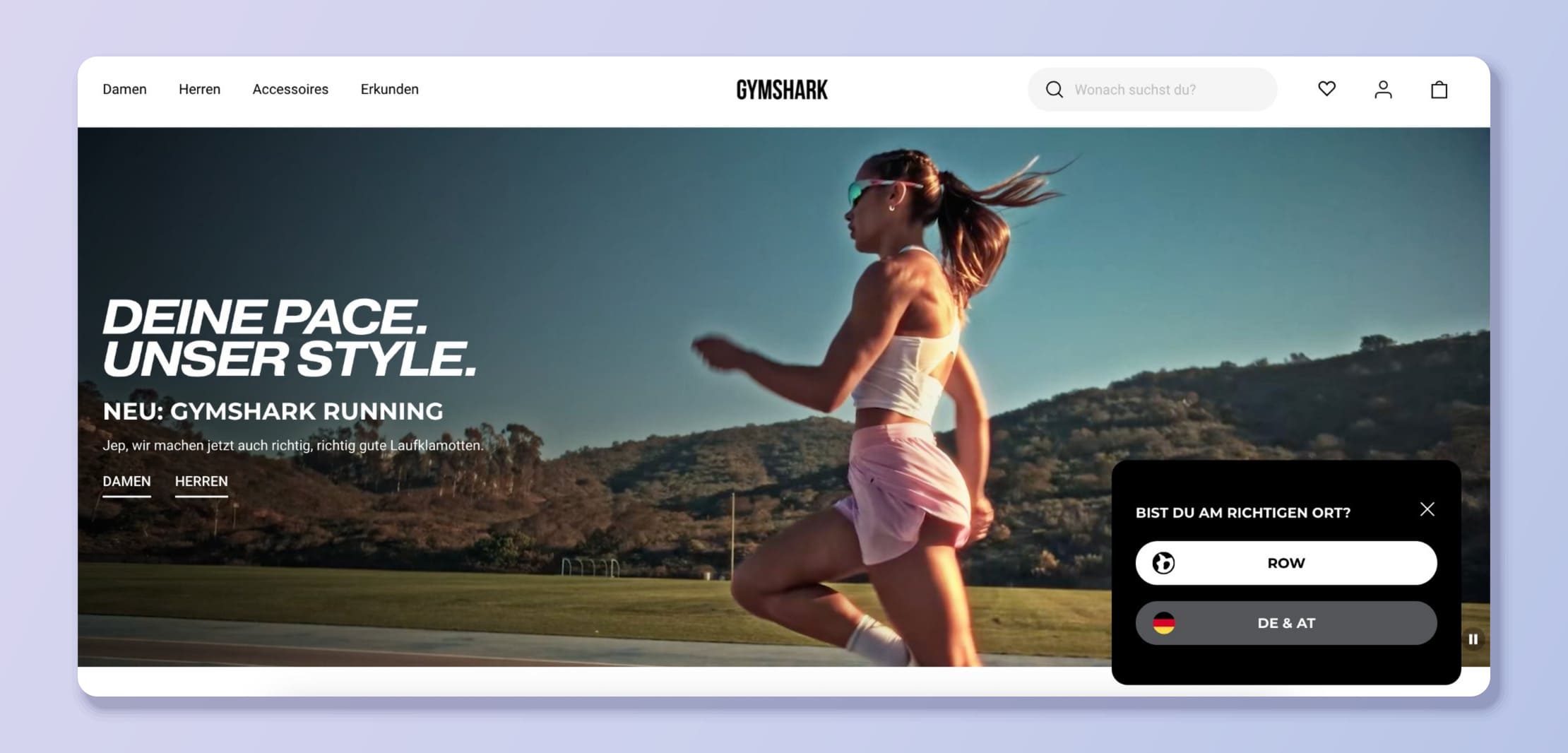
Gymshark localized their product pages by market — not just currency, but sizing conventions, fit descriptions, and model photography that reflected their regional customer base. The company gained popularity in non-UK markets as the brand scaled internationally.
Allbirds runs geo-targeted campaigns where landing page content and social proof rotate based on the visitor's location. An Australian visitor sees Australian reviews, AUD pricing, and content referencing local climate context for shoe recommendations. A US visitor sees an entirely different version of the same page. The ad creative often stays consistent; the page does the localization work.
Coca-Cola's geographic segmentation is the most cited example in marketing textbooks for good reason. Their approach to location-based marketing goes deeper than translation — they reformulate products, adjust sweetness levels, change packaging sizes, and develop local variants based on regional preferences and local culture.
In Japan, they've launched dozens of market-specific flavors. In Mexico, the product is made with cane sugar rather than high-fructose corn syrup. The lesson for eCommerce brands isn't about soft drinks — it's that geographic segmentation isn't decoration. It's a strategic acknowledgment that what converts in one market won't automatically convert in another, and that brands willing to adapt give themselves a real competitive edge.
For smaller eCommerce brands and local businesses scaling internationally, the implementation doesn't need to be as complex as a global CPG operation. Even two or three localized variants — one for North America, one for the UK/Europe, one for Australia/New Zealand — can meaningfully improve conversion rates without requiring a full localization team or a separate ad strategy per market.
Read more: 20+ Ways to Boost Conversions + Tools
Geo-Targeting in Your Ad Campaigns
At the campaign level, geo-targeting best practices for eCommerce in 2026 have evolved beyond simple country-level targeting. A few approaches worth implementing regardless of whether you're running local campaigns or targeting across several locations:
Separate campaigns by market, don't just exclude locations. Running a single global campaign with country exclusions is less effective than running market-specific campaigns with their own budgets, creative, and bid strategies. International markets often have different CPMs, different creative preferences, and different seasonal patterns. A single campaign can't optimize for all of them simultaneously, and the advanced settings available in most ad platforms make market-specific structure more accessible than it used to be.
Use radius targeting around your highest-performing regions. If you have physical locations or if certain metro areas over-index for your product category, radius targeting around those areas — rather than targeting a whole country — can significantly improve ad relevance and reduce wasted ad spend on audiences unlikely to convert. This is especially valuable for local businesses or brands with strong regional concentration.
Layer geo-targeting with demographic data. Location alone is a blunt instrument. The most effective geo-targeted campaigns combine geographic location with behavioral and demographic signals: a radius around a specific zip code, filtered for the income bracket most likely to afford your product, filtered further for the behavioral interests that indicate purchase intent. Location data is the starting point, not the complete targeting strategy.
Match your ad creative to the market. An ad showing a snowy outdoor scene will perform differently in Phoenix than in Minneapolis. A lifestyle image featuring product use that's contextually relevant to the target location — climate, housing style, local culture — consistently outperforms generic creative in geo-targeted campaigns. This doesn't require separate creatives for every market, but it does require paying attention to what makes local audiences feel seen.
Target specific zip codes when you have granular data. If your customer data collection shows that certain zip codes convert at significantly higher rates than surrounding areas — perhaps because of demographic concentration or proximity to certain retail contexts — you can use that location data to target users in those zip codes with localized advertising at a higher bid, while applying more conservative budgets to surrounding geographic areas.
Read more: Geotargeting for eCommerce
Compounding Benefit of Getting This Right Early
Brands that implement geo-targeting at both the ad and funnel levels before they scale internationally have a structural advantage over brands that bolt it on later. The reason is data: every localized variant you run generates location-specific performance data that informs where you optimize, where you invest more, and which markets are worth building dedicated marketing campaigns around.
A brand that discovers early that their Australian conversion rate is way below their US rate — and then identifies through localized testing that currency display and shipping transparency are the primary drivers — can close that gap systematically. A brand that discovers the same thing after spending a lot on international paid ads is solving the problem at a much higher cost, and with more wasted ad spend behind it than necessary.
The technology to implement this is not complicated relative to what it recovers. The only question is whether your current funnel infrastructure supports geo-targeting natively or requires you to build and maintain separate funnels for each market manually. Funnelish handles the geographic detection and content serving automatically, which means the marketing teams responsible for international growth spend their time optimizing offers and creative — not rebuilding pages for every region.
FAQ about Geo-Funnel Landing Pages
What is the meaning of geo-targeting?
Geo-targeting means you set up different ads, content, or experiences for users based on their geographic location. The location signal comes from IP address (most common for desktop), GPS data (most accurate on mobile), or cell tower triangulation.
In eCommerce, geo-targeting operates at two levels: the ad platform level, where you decide who sees your ad based on where they are, and the landing page or funnel level, where you decide what they experience when they arrive. Both matter, but the funnel level is where most brands underinvest — and where the biggest conversion gains are available.
What is an example of geo-targeting?
A kitchen equipment brand running paid ads globally can notice that a visitor is coming from Germany via their IP address. Instead of showing a page with USD prices, American customer reviews, and US shipping times, they set up a funnel that automatically serves a version with EUR pricing, German-language testimonials, and accurate EU delivery information.
The ad was the same ad; the landing experience is localized to deliver relevant content for that particular location. The conversion rate on German traffic improves because the friction points specific to international visitors — currency confusion, shipping uncertainty, unfamiliar social proof — are removed.
What is geo-targeting on Facebook and Google Ads?
Facebook (Meta) Ads Manager and Google Ads allow advertisers to target users by country, region, city, zip code, or a custom radius around a specific address or business location. You can use location exclusions to prevent your ads from serving in markets you don't want to reach, and use location settings to separate budget and bidding by geographic area.
Beyond basic location targeting, these platforms also allow you to layer geographic location with demographic, interest, and behavioral data — so you're not just targeting people in a specific place, but people in a specific place who match additional criteria relevant to your most relevant audiences. The ads manager makes this accessible even for small businesses without dedicated marketing teams.
Does geotargeting work?
Yes, when it's implemented at both the campaign and funnel level. Geo-targeting at the campaign level alone — showing location-relevant ads that lead to a generic, non-localized landing page — captures only a fraction of the available benefit. The conversion improvement from geo-targeting comes primarily from relevance: when every element of the customer experience is aligned with the visitor's actual geographic location and regional preferences, friction decreases, and conversion rates improve.
Brands that implement geo-targeting comprehensively — ads and funnel pages together, with localized social proof, currency, and offers — consistently outperform those that treat it as a campaign-level setting only.
How does Coca-Cola use geographic segmentation?
Coca-Cola's geographic segmentation goes deeper than most brands realize. They reformulate products, adjust sweetness levels, change packaging sizes, and develop local variants based on regional preferences and local culture. In big markets, they've launched dozens of market-specific flavors. In smaller markets, packaging sizes are calibrated to local consumption patterns.
Table of contents
Boost your eCommerce
sales today

24/7 support
No credit card required
Cancel anytime
24/7 support
No credit card required
Cancel anytime
