

How to Increase Shopify Conversion Rate: 15 Proven Ways
29 June 2026
Anna P.
9 minutes
Quick answer: To increase your Shopify conversion rate, attack inconvenience and build trust: speed up your store, optimize for mobile, simplify checkout, add reviews and trust badges, offer free shipping, and run A/B tests. The average Shopify conversion rate is 1.4%, while a good Shopify conversion rate is above 3.2% and the top 10% of Shopify stores convert at 4.7% or higher — so most stores have real room to grow. The fastest wins come from removing friction, not redesigning everything.
Conversion rate optimization is how you turn more existing site visitors into paying customers without spending a cent more on traffic. Here are 15 ways to increase Shopify conversion rates in 2026, ordered roughly by impact.
First, what's a good Shopify conversion rate?
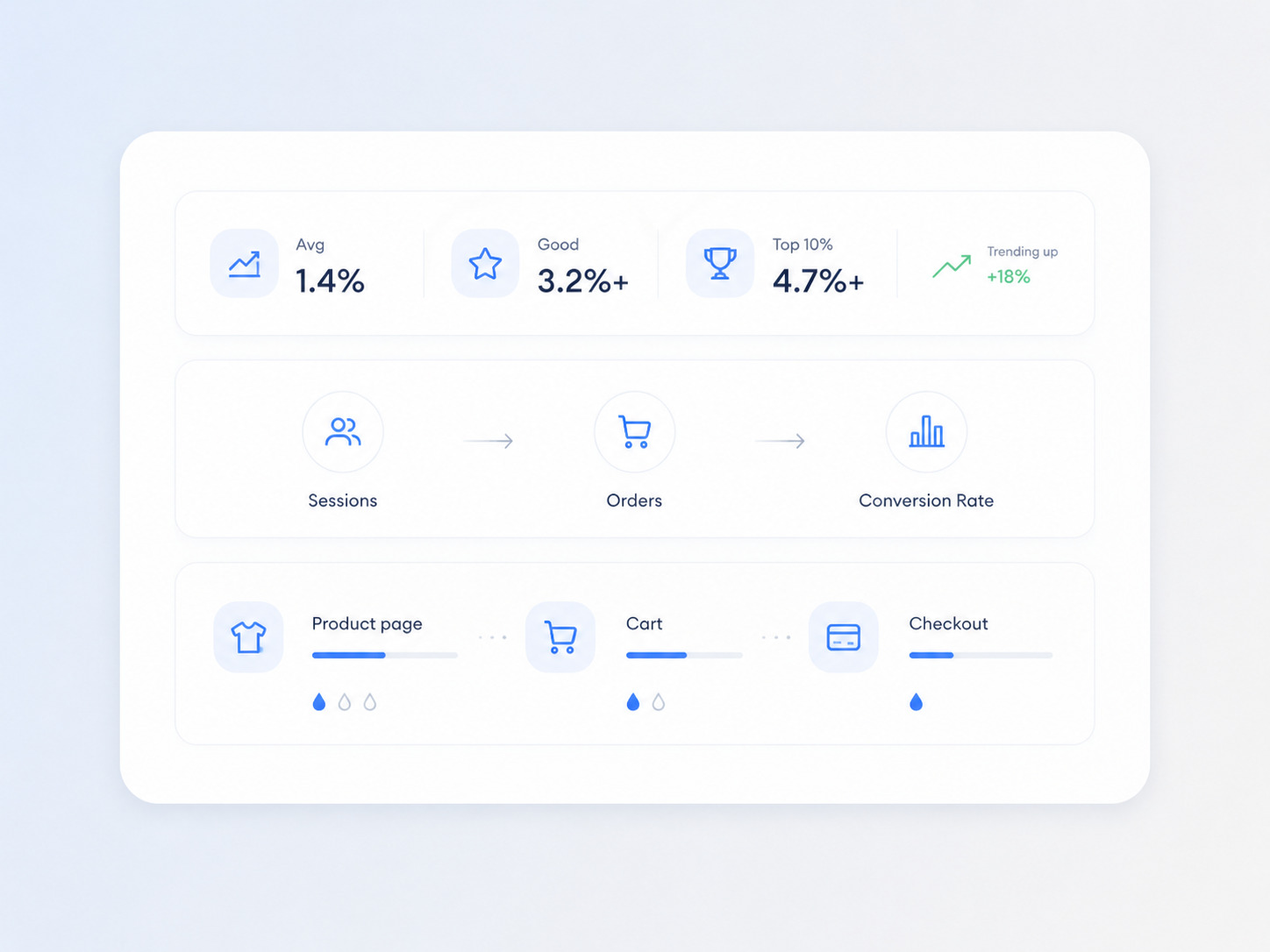
Your Shopify conversion rate is the percentage of site visitors who become paying customers — orders divided by sessions, the headline number in Shopify Analytics and Google Analytics. Per Littledata's benchmark cited in Shopify's CRO guide, the average Shopify conversion rate is 1.4%, with a good Shopify conversion rate sitting above 3.2% (top 20%) and the top 10% converting at 4.7%+.
Industry reports place average ecommerce conversion rates between 1% and 3%, so Shopify stores typically convert slightly below the broader 2.3–3% ecommerce average — largely because they rely on paid traffic and brand-building rather than marketplace intent.
If your Shopify conversion rate is low, don't fixate on the global average. Use Shopify Analytics to find where your funnel leaks — product pages, cart, or checkout — then fix that. Here's how.
1. Speed up your store (page speed is everything)
Site speed is the highest-ROI fix in conversion rate optimization, full stop. A 1-second delay in page load time can reduce conversions by 7%, and your page load time should ideally stay under three seconds to reduce bounce rates. A fast and mobile-friendly store also simply feels professional and trustworthy, which converts.
The catch with Shopify is that heavy themes and stacked apps bloat load times, and there's only so much you can trim. For traffic where speed is make-or-break — paid marketing campaigns, a launch, a viral moment — many Shopify store owners route visitors to a dedicated funnel instead of a heavy storefront page. Building those on a foundation engineered for sub-second load times can remove the single most common conversion killer before you touch anything else.
2. Fix poor mobile optimization
Mobile-optimized layouts are essential since most traffic comes from smartphones — yet mobile conversion rates run well below desktop. Poor mobile optimization is one of the most common reasons a Shopify conversion rate stays low, and closing that gap is your biggest opportunity. Use large tap targets, a sticky add-to-cart button, a clear search bar, thumb-friendly navigation, and accelerated checkout like Shop Pay, Apple Pay, and Google Pay. Since most of your customer journey happens on a phone, the mobile experience is the experience.
3. Showcase reviews and social proof
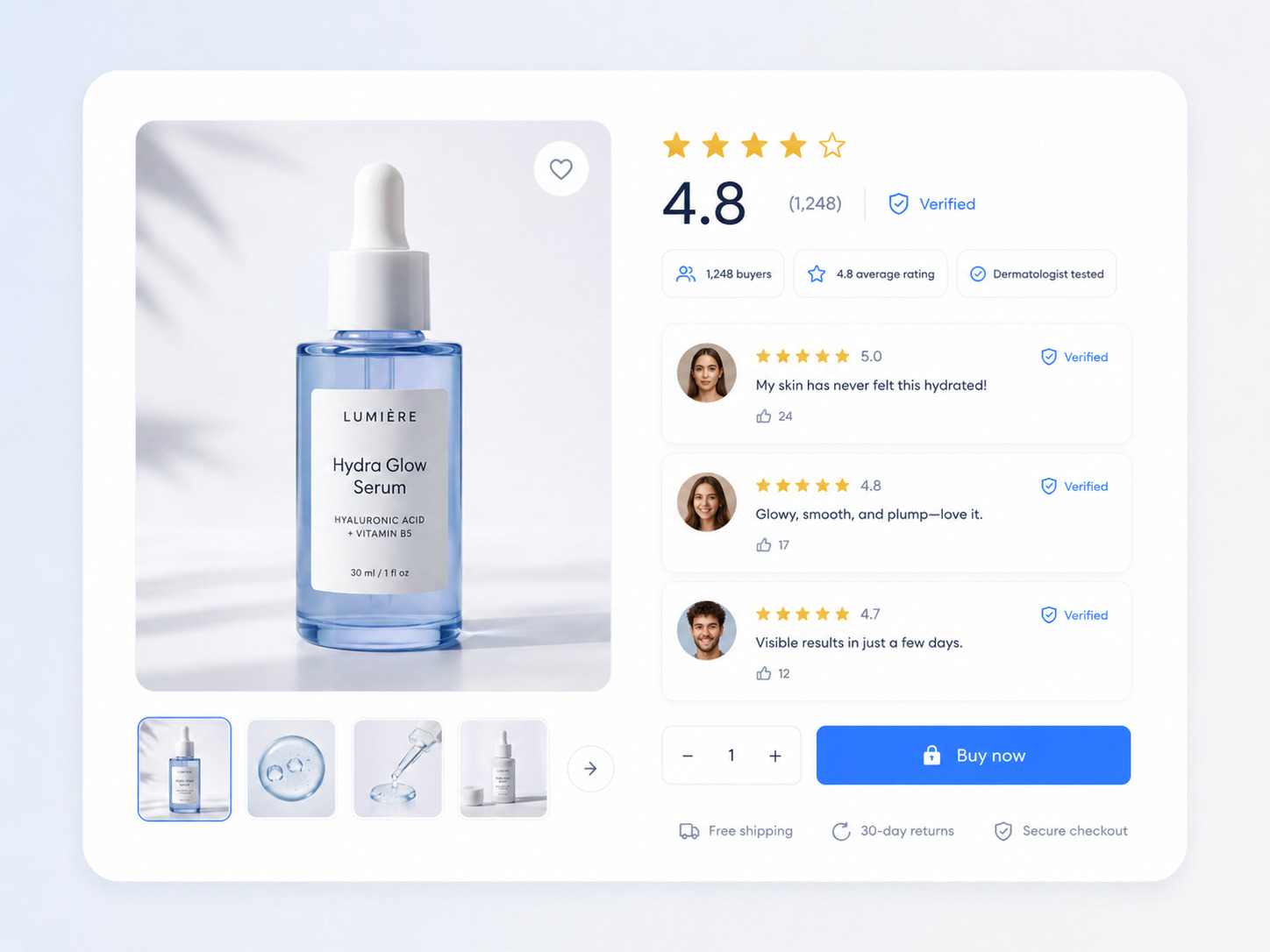
Trust is the silent gatekeeper of every sale. Building trust with social proof helps address customer objections and ease purchase anxiety — and the data is striking: 90% of consumers consider ratings and reviews when it comes to making a purchase decision. Display high-quality reviews, star ratings, and verified buyer feedback near your product and checkout, wherever doubt creeps in. Showcasing this prominently turns hesitation into confidence.
4. Showcase user-generated content
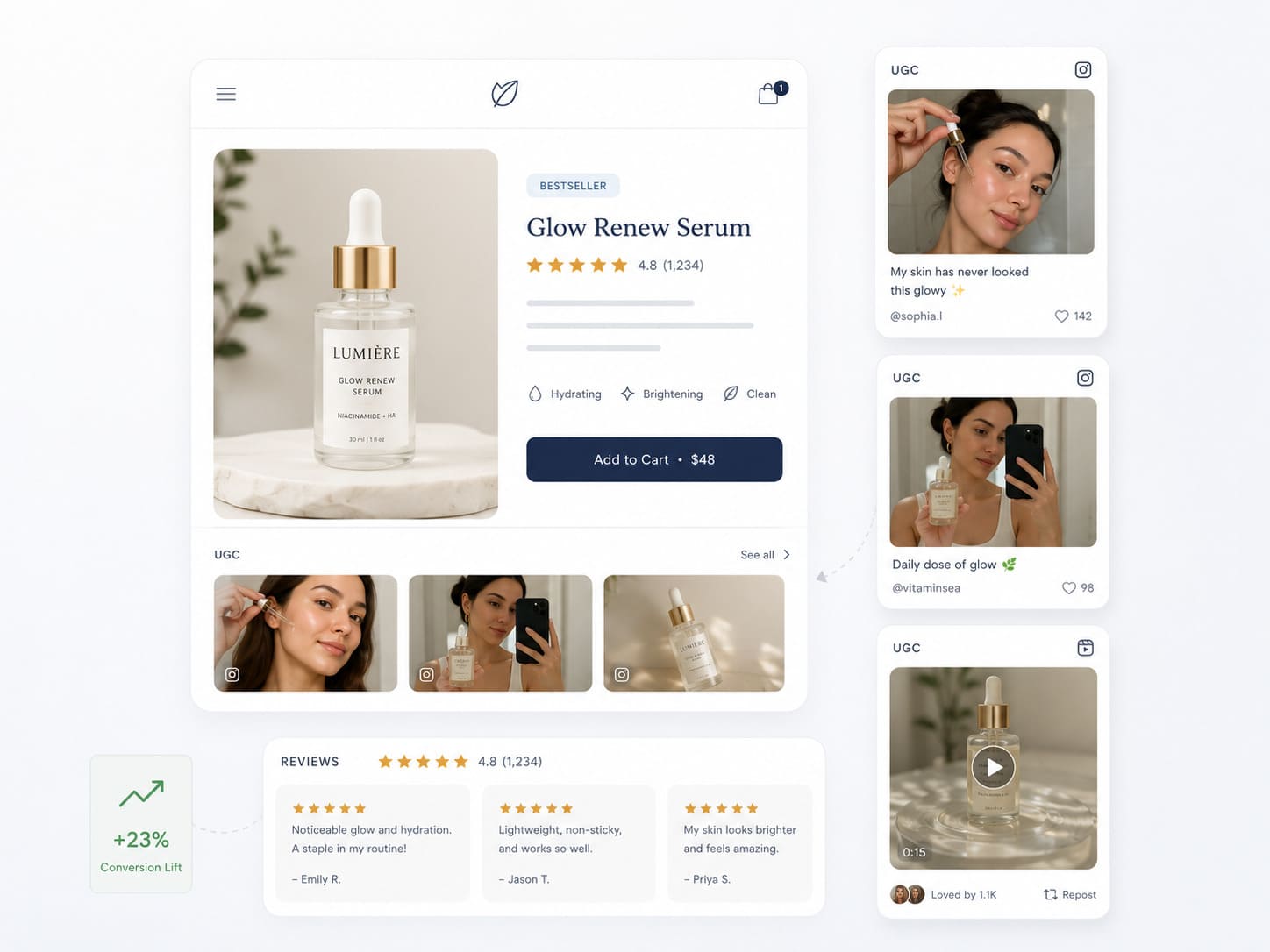
Incorporating user-generated content validates product quality in a way brand copy can't. Displaying UGC — customer photos and videos of real people using your product — can increase trust and conversion rates, because shoppers believe other customers more than they believe you. Feature customer photos on product pages and reposts on social, and actively encourage customers to share. It's free marketing that converts better than any polished ad.
5. Use high-quality product photography

Online, your images are the product — shoppers can't touch it, so visuals carry the sale. High-quality product photography can increase conversion rates significantly, and high-resolution images let customers examine products properly before buying. Show every angle, in real-life context, with zoom and video where it helps. Crisp, professional imagery signals a crisp, professional brand.
6. Write benefit-driven product descriptions
Optimizing product pages means pairing great visuals with persuasive copy. Compelling product descriptions should focus on benefits, not just features — tell shoppers what's in it for them, not just specs. A clear value proposition answering "why this, why now" can turn a browser into a buyer easier, and good descriptions can also reduce the uncertainty that fuels purchase anxiety.
7. Simplify your checkout flow
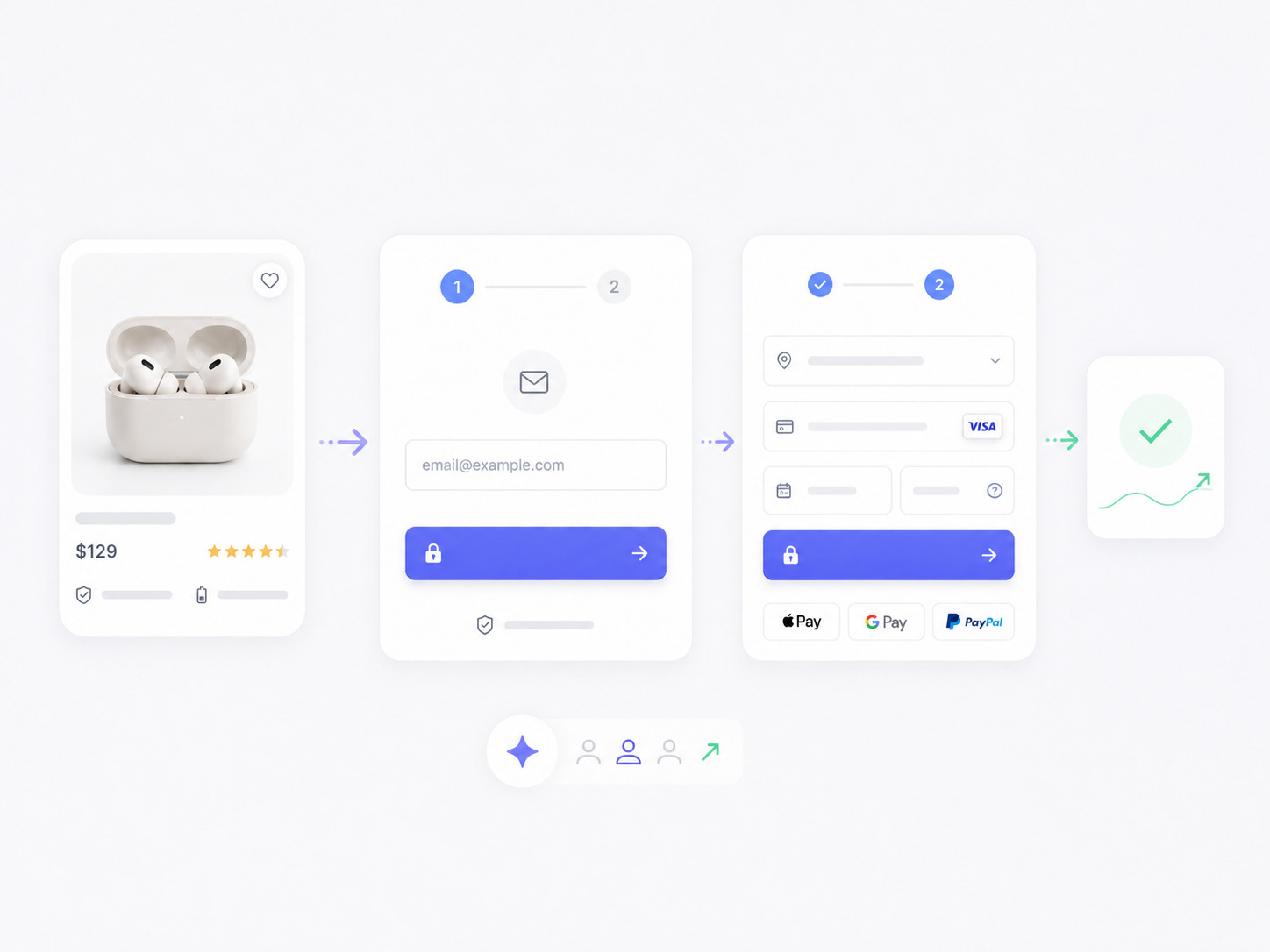
Checkout is where intent goes to die if there's inconvenience. Nearly 70% of ecommerce carts are abandoned, and 21% of consumers abandon carts due to complicated checkout experiences. Cut every non-essential field and keep the path to buy short. Shopify's native checkout is strong, but for funnel-based selling, a streamlined two-step checkout that captures the email first, then shipping and payment, keeps momentum high — so you don't lose the lead even if they hesitate.
Read more: Sales Funnel: What It Is, How It Works & Stages (2026 Mega Guide)
8. Offer guest checkout
Forced account creation is a silent conversion killer. Offering guest checkout options can significantly reduce cart abandonment, because first-time buyers often want to purchase before committing to an account. Always let shoppers check out as guests, and invite account creation after the purchase, framed around order tracking rather than as a barrier.
9. Offer free shipping (and use a threshold)
Unexpected costs are the top abandonment trigger — 55% of customers leave due to unexpected extra costs at checkout like shipping fees and delivery costs. Rather than eating shipping costs on every order, build them into your pricing and use a free shipping threshold with a progress bar ("You're $12 away from free shipping"). It reduces abandonment and lifts average order value at the same time, protecting your profit margins.
10. Display trust badges and secure-payment signals
Displaying trust badges builds confidence during checkout, where shoppers decide whether to trust you with payment details — critical for newer stores. Show recognized payment logos, SSL/secure-checkout indicators, and your guarantees right where payment information is entered.
11. Add honest urgency and scarcity
Urgency marketing taps into human psychology to drive sales — 60% of consumers feel FOMO and buy within 24 hours. Real-time stock levels and low-stock indicators create genuine scarcity, and authentic urgency can transform hesitation into confident purchases. The one rule: it must be real. Countdown timers erode trust the moment they're perceived as fake, so only show a timer on a true deadline and a stock count tied to actual inventory.
12. Raise average order value with upsells
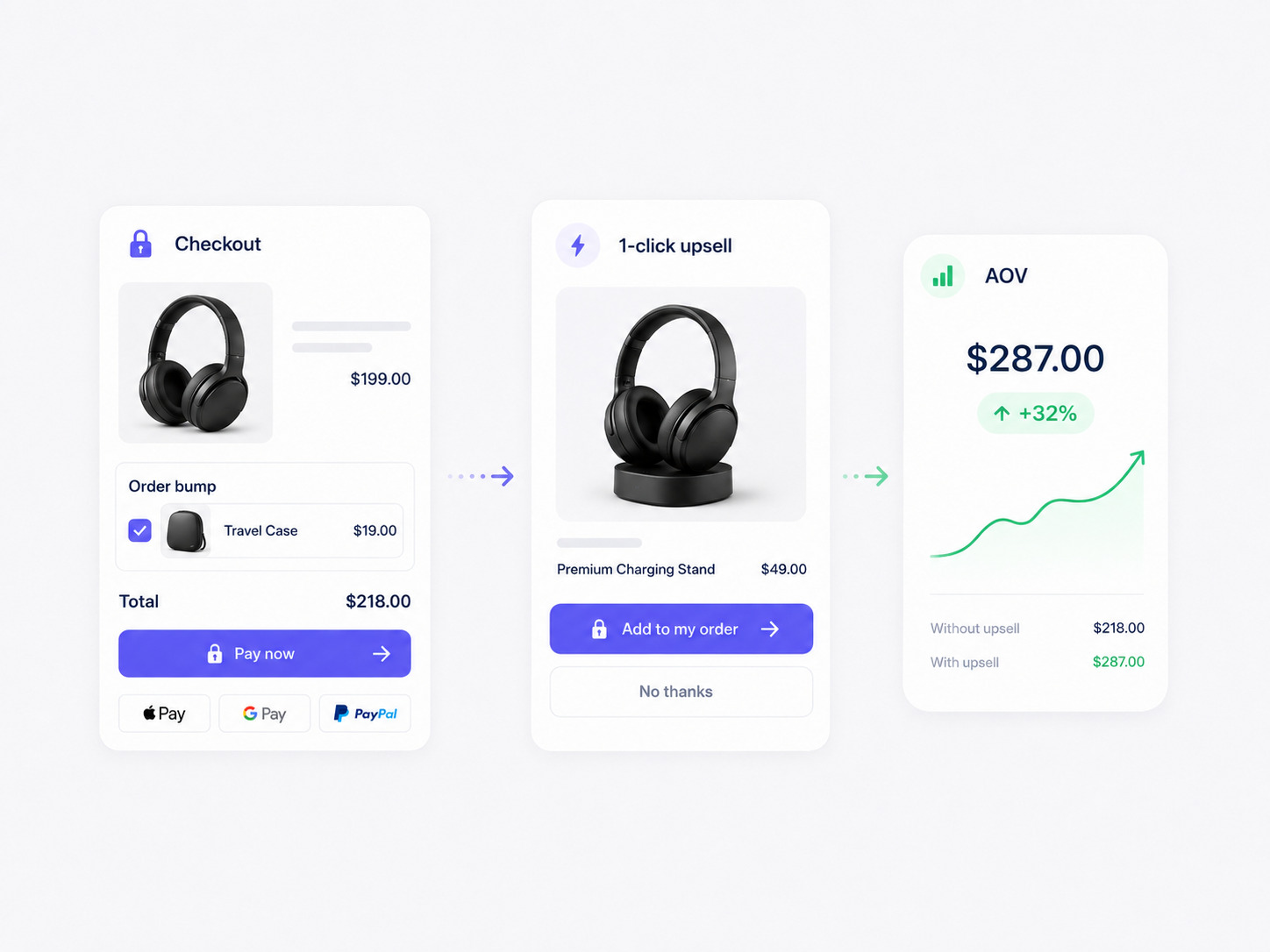
Conversion rate optimization isn't only about more conversions — it's about more value per order. Using upsell can strategie increases average order value: order bumps at checkout and one-click post-purchase upsells let a committed buyer add to their order in a single tap, with no extra traffic. Funnelish makes both easy to deploy with true one-click upsells and order bumps, and a higher average order lifts the customer lifetime value that funds your whole acquisition engine.
Read more: Shopify Upsell Moments You're Missing
13. Recover lost sales and drive repeat purchases
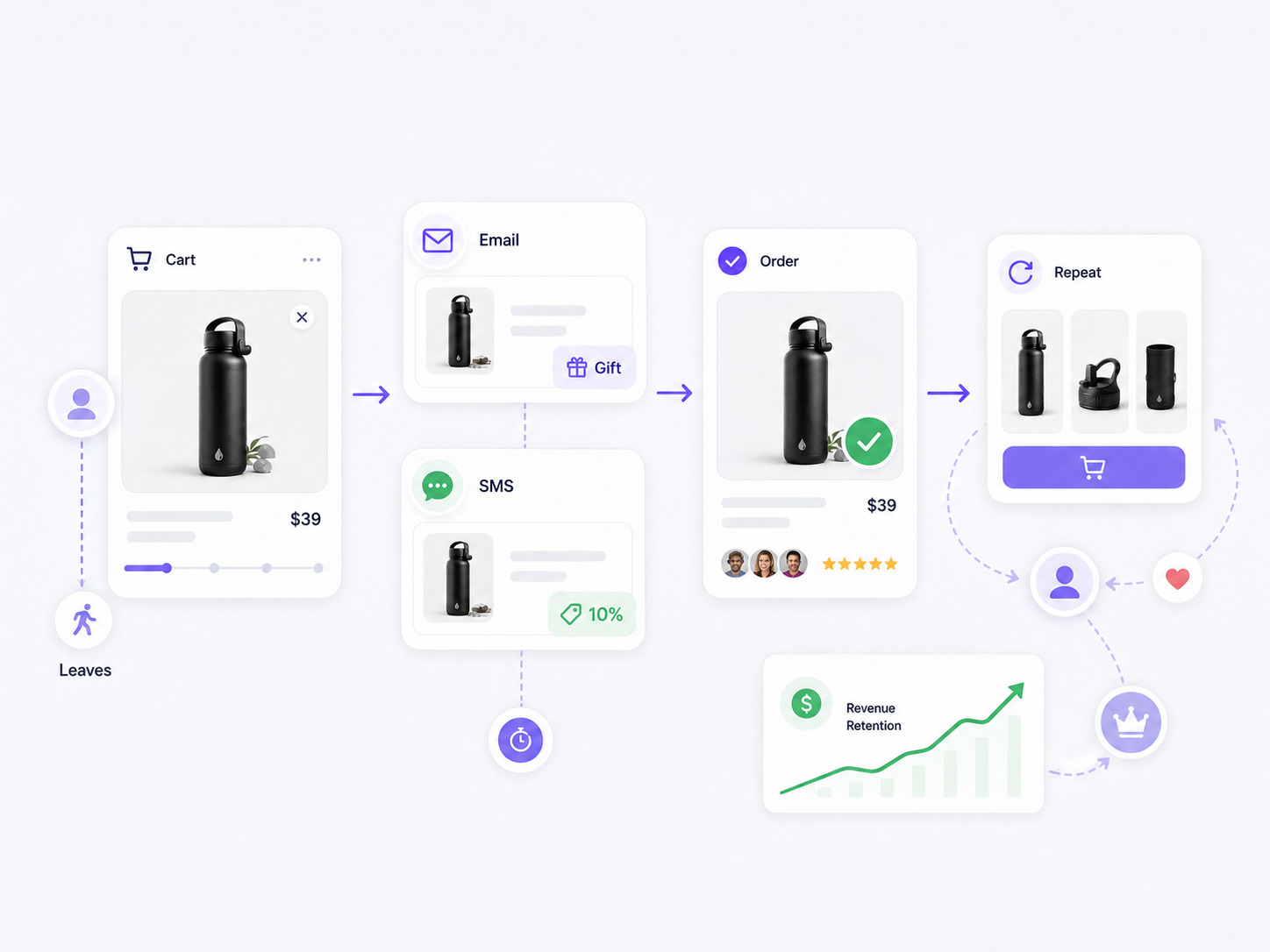
Most shoppers don't buy on the first visit, so recovery is pure upside. Automated email reminders can recover abandoned carts, and personalized marketing can bring shoppers back to the cart. An automated email and SMS sequence that reminds shoppers what they left — with a gentle incentive or free gift — wins back otherwise-lost sales.
This matters long-term, too: a 5% increase in customer retention can boost profits by over 25%, so loyalty programs and personalized follow-ups that turn new customers into returning customers are some of the highest-ROI work you can do.
14. A/B test everything
Stop guessing and let quantitative data decide. A/B testing helps determine which version of a webpage performs better, and the gains compound when you test systematically — one element at a time (headline, hero image, CTA, price), with enough traffic to reach a real conclusion. Native A/B testing on your landing pages makes it easy to run different versions of an offer against each other and keep only the winner. Treat CRO as continuous experimentation, judged against your own past performance.
15. Track conversions and use the right tools
You can't improve what you don't measure. Use Shopify Analytics and Google Analytics for tracking conversions and studying user behavior — where visitors drop off, how category pages and product pages perform, which marketing strategies convert.
The problem on Shopify is that fixing each leak usually means bolting on a separate app for reviews, urgency, upsells, and email capture — and every app you stack adds weight that slows your site back down, quietly undoing your page-speed gains.
A better approach for the high-intent traffic that actually converts is to send it to a Funnelish funnel, where the highest-impact levers from this list — a fast page, one-click upsells, order bumps, A/B testing, and built-in analytics — live in one place instead of five. That way you can see which pages and offers convert and optimize them without piling on tools that drag down performance. Let the data tell you what to fix next.
Bottom line
Learning how to increase your Shopify conversion rate comes down to one principle: remove friction and build trust at every step of the customer journey. Speed up the store, fix mobile, simplify checkout, prove credibility with reviews and trust badges, kill surprise costs with free shipping, and lift average order value with smart upsells — then A/B test your way to steady gains.
You don't need more traffic to grow online sales; you need more of your existing visitors to convert. Fix the leaks one by one, and watch your Shopify conversion rate climb from average toward the top 10%.
Frequently asked questions
What is a good Shopify conversion rate?
The average Shopify conversion rate is 1.4%. A good Shopify conversion rate is above 3.2% (top 20% of stores), and the top 10% convert at 4.7% or higher. Since this varies by industry, price point, and average order value, always benchmark within your own category rather than against the global average.
Why is my Shopify conversion rate low?
The most common culprits are slow page speed, poor mobile optimization, a complicated checkout flow, forced account creation, unexpected shipping costs, and weak social proof. Use Shopify Analytics to find where visitors drop off, then fix that specific leak first.
What's the fastest way to boost Shopify conversions?
Improving page speed and mobile experience usually delivers the quickest wins — a 1-second delay can cut conversions by 7%, and most traffic is on mobile. Offering guest checkout and free shipping are close behind, since complicated checkout (21% of abandonment) and unexpected costs (55%) are top reasons shoppers leave.
How do I reduce cart abandonment on Shopify?
Nearly 70% of carts are abandoned. Reduce it by showing all costs upfront, offering free shipping and a threshold, enabling guest checkout, displaying trust badges, simplifying the checkout, and recovering lost carts with automated email and SMS reminders.
Table of contents
Boost your eCommerce
sales today

24/7 support
No credit card required
Cancel anytime
24/7 support
No credit card required
Cancel anytime
