

How to Test Dropshipping Products in 2026: A Data-Driven Guide
24 June 2026
Anna P.
10 minutes
Quick answer: To test dropshipping products in 2026, validate demand before spending on ads — check Google Trends, run competitor analysis, and confirm margins; order samples to evaluate product quality and shipping times; then run a small, targeted ad test (around $200–$300 per product split across a few creatives) to a dedicated product page, aiming for a conversion rate between 1.5% and 3%. Kill losers fast and scale what the data confirms. Effective dropshipping product testing means validating a product's potential before ad spend — not after.
Here's the uncomfortable truth that makes this skill your top priority: 80–90% of new dropshipping stores fail, largely due to poor testing and choosing the wrong products. With ad costs rising and the global dropshipping market — valued at $365.67 billion in 2024 and projected to grow at a 22% CAGR through 2030 — drawing in more competitors than ever, "spray and pray" is how you go broke. This guide shows you how to test products dropshipping the smart way, so you find a winning product without burning your budget.
Why product testing matters so much
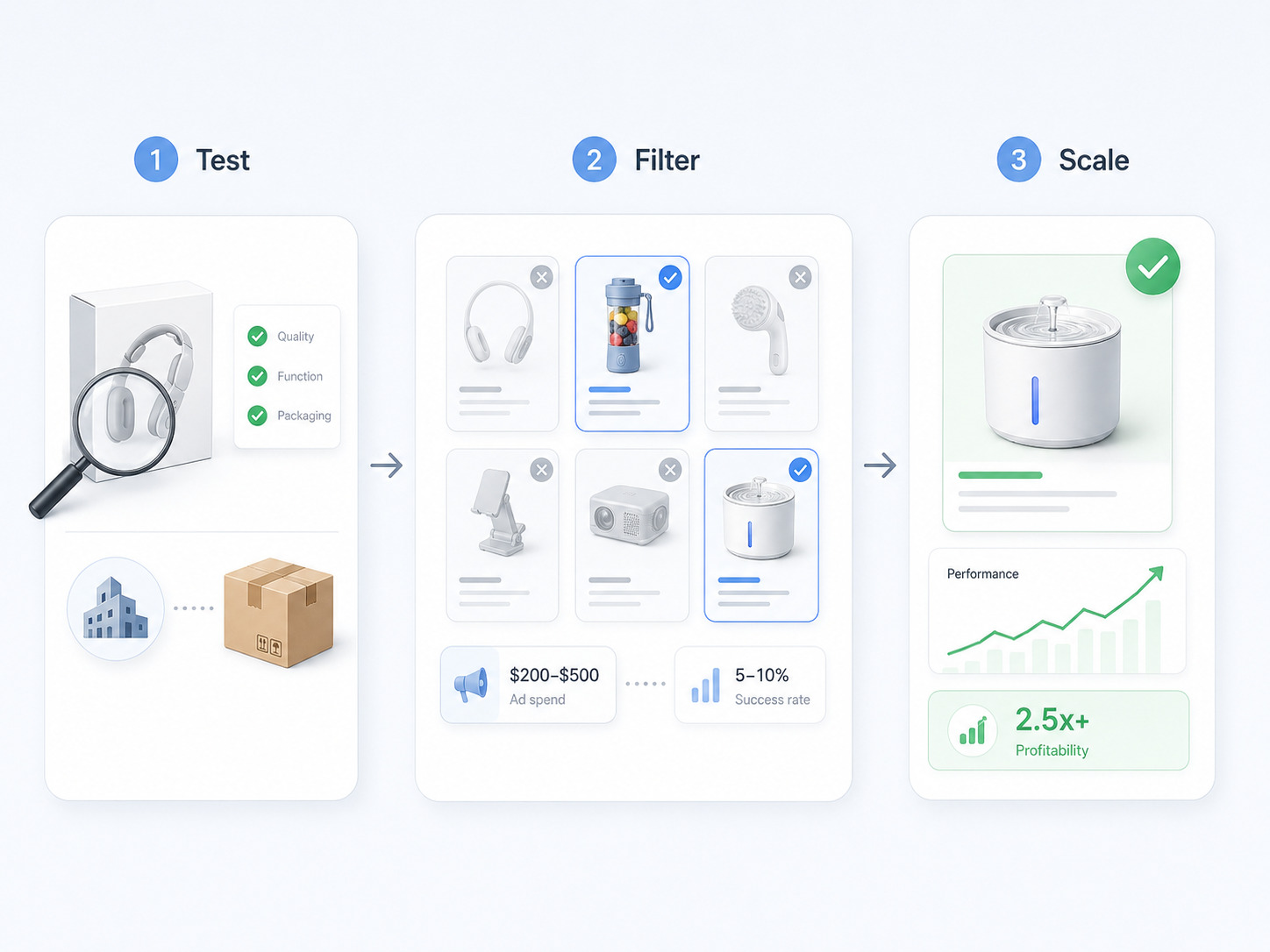
Testing products saves time and money on marketing efforts, prevents losses from poor product choices, and helps you meet customer expectations and needs before you scale. It also vets your supply chain — product testing verifies a supplier's quality before partnership and helps identify subpar suppliers before you sell products to real buyers.
The math is brutal if you skip it. A single product test costs roughly $200–$500 in ad spend, and at a 5–10% success rate, you might burn $2,000–$5,000 before finding one winning dropshipping product. A $1000 ad spend can be wasted entirely on untested products.
That low hit rate means multiple product tests are simply part of the game. Add the fact that a product's margin should be over 2.5x to afford customer acquisition costs, and it's clear: testing dropshipping products requires a data-driven, strategic approach, not gut feeling. The dropshippers who survive run 15–30% net margins with effective validation — most cluster around 15–20% — and they earn it by filtering ruthlessly before spending a dollar.
Step 1: Validate demand before you spend anything
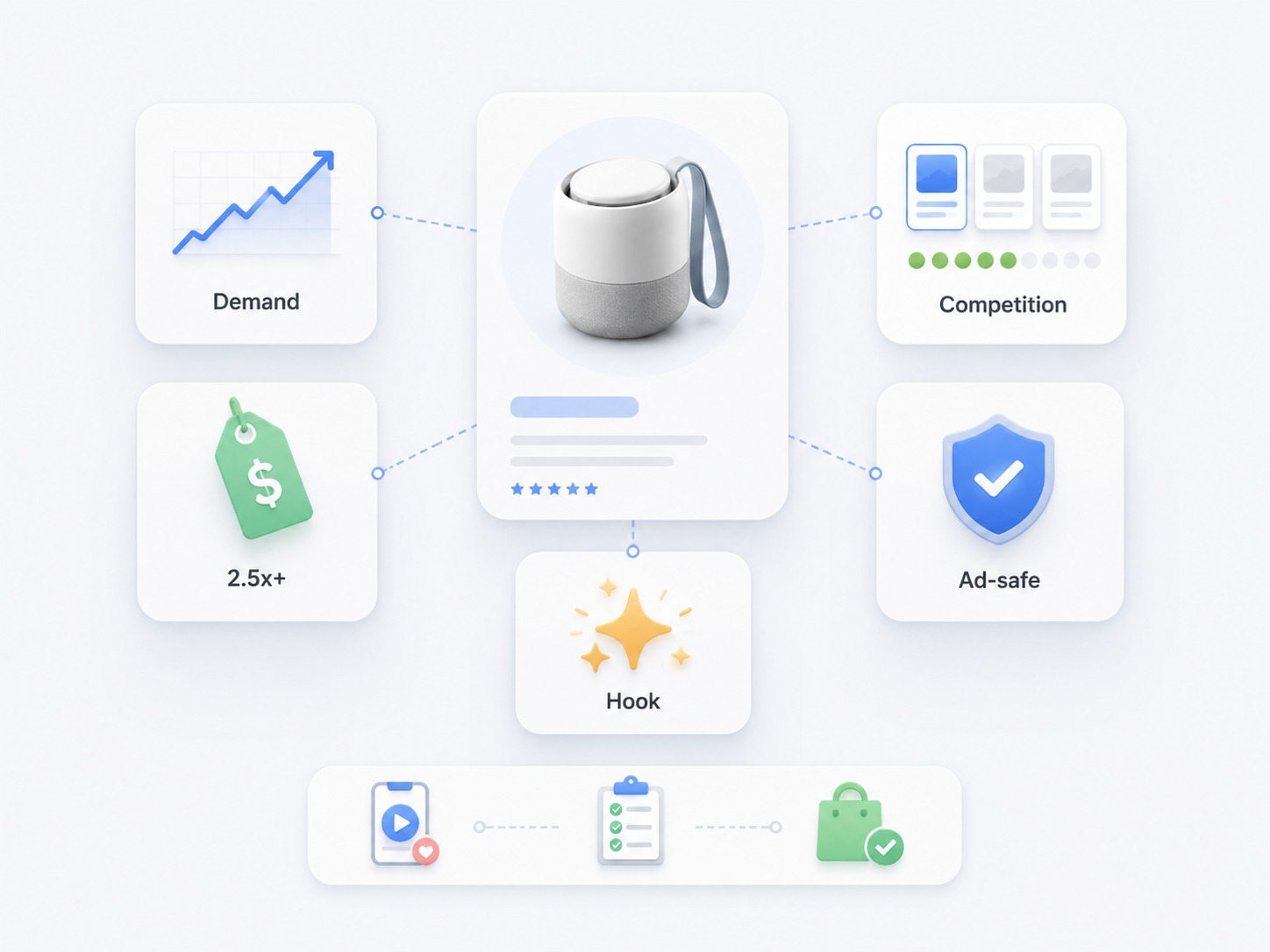
The single biggest mistake is building a dropshipping store and running paid ads to see what happens. Flip that. Validating demand is essential before significant investment, and using a three-layer validation system, a product must pass five validation signals before testing:
Rising demand. Use Google Trends as a validation tool to confirm genuine, sustained interest. Rising = opportunity; flat = mature; declining = too late.
Manageable competition. The most overlooked signal. If 200 stores already sell the same product, you're entering a price war, not a market. Analyzing competitor sales — aim for 5–15 active advertisers — proves demand without killing differentiation.
Healthy margins. If your margin is under 2.5x, you can't afford paid ads. Full stop. Calculate that 2.5x on your true landed cost, not the supplier's sticker price. For products sourced from overseas in 2026, landed cost now includes import duty, because the US ended its $800 de minimis exemption and low-value parcels are no longer waved through duty-free. A product that clears 2.5x on bare product cost can fall under it once duty is added, so run this gate on the real number or it will pass products that should have been cut.
A clear hook. Products should solve a problem or have a wow factor — something you can stop a thumb-scroll with in one image.
Ad viability. Avoid restricted categories (aggressive health claims, before/after imagery) that ad platforms will throttle.
Data-driven research helps you analyze well-selling dropshipping products, and analyzing competitor sales is one of the most important inputs in product selection. Run that competitor research through the Meta Ad Library: if a competitor has run the same creative for nine months, that product is almost certainly profitable.
Beyond the data, validate with a real audience — conduct customer surveys to gauge product interest, or post organic social media content (a TikTok or Reel) to validate demand before paid ads. If a piece of organic content takes off, that's a clear signal. You can also run pre-order campaigns to assess customer demand without committing inventory.
Categories worth watching in 2026 include smart home devices, practical consumables, and problem-solving gadgets — but the signal, not the category, decides which products to sell.
Read more: Most Profitable Dropshipping Niches to Dominate in 2026
Step 2: Order samples and vet your supplier
Once a product passes validation, order sample products before you sell anything. This does double duty: it lets you evaluate product quality and shipping times firsthand, and it tests your dropshipping supplier's reliability — testing ensures you choose high-quality suppliers and helps identify subpar suppliers before you scale.
Order samples from multiple suppliers to compare quality, shipping speed, and communication, because supplier communication quality directly impacts dropshipping success. Language barriers with overseas suppliers who aren't native English speakers can cause costly mix-ups once you're scaling, so working with multiple suppliers gives you a backup. The sample stage is also the moment to confirm your true landed cost for an overseas product, since the import duty that now applies to sub-$800 parcels is part of what each unit will actually cost you once you scale. Better to learn that number here than after you have committed a budget.
Holding the sample product matters for another reason: you can't market what you haven't seen. Filming your own content with an iPhone — instead of recycling the same supplier video 50 other dropshippers use — is often the difference between an ad that converts and one that doesn't. Many suppliers offer free samples or low-cost ones; either way, evaluating shipping times and quality is crucial before scaling dropshipping products.
Step 3: Set up a focused product page (not a full store)
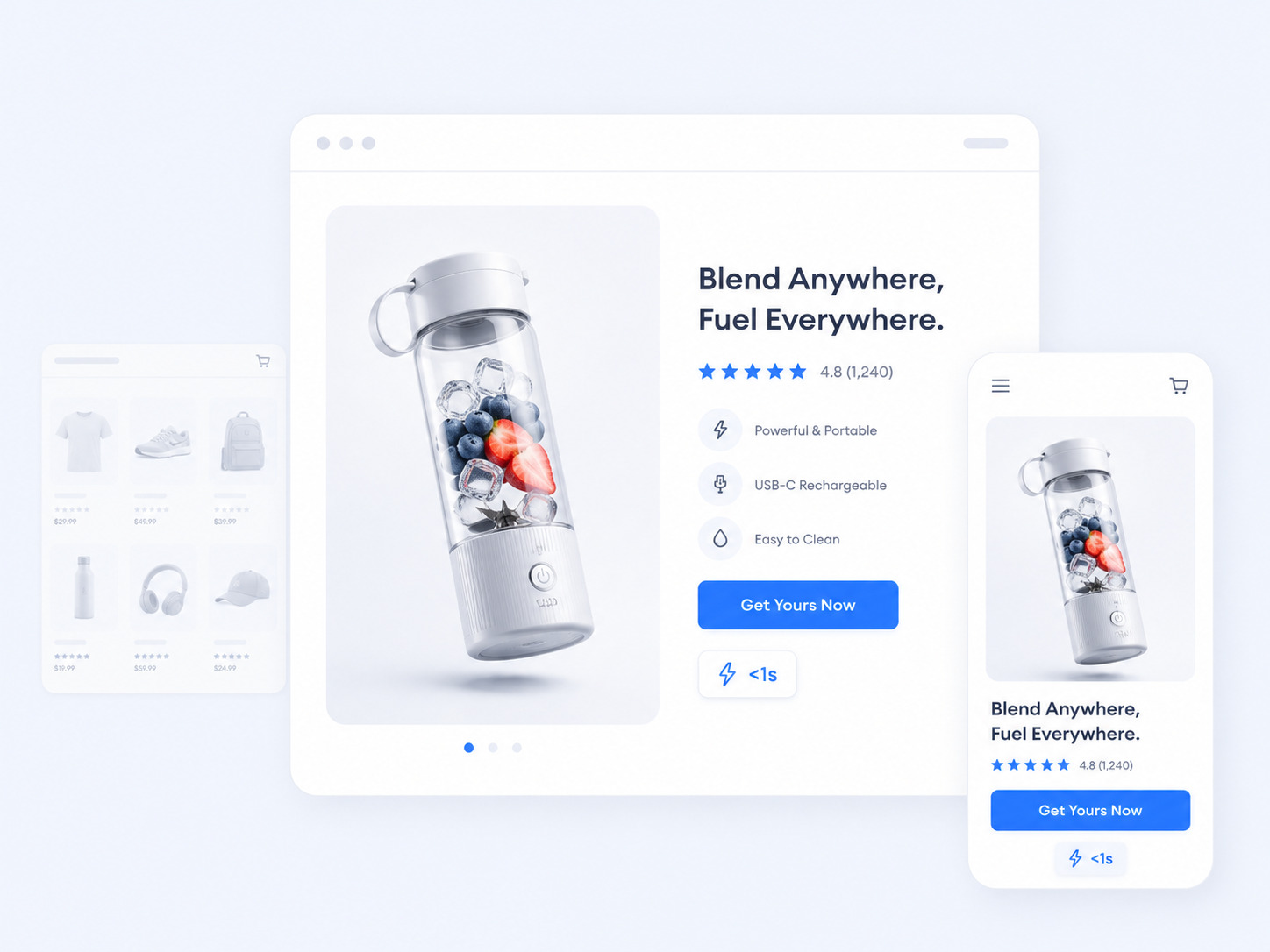
You don't need a finished general store to test a product idea — and you shouldn't. A dedicated product page can help test consumer demand without a full store setup, and high-converting one-product stores can enhance testing efficiency by removing every distraction between the visitor and the buy button.
This is where presentation makes or breaks a test, because a great product on a confusing page still fails. A drag-and-drop page builder on Funnelish lets you stand up a clean, single-offer landing page in an afternoon — a strong hero image or GIF showing the product in action, a benefit-driven headline, reviews, and one clear call to action — without touching code or wiring up a full Shopify store.
Speed matters as much as layout: over half of shoppers abandon a page that takes more than three seconds to load, so building on pages engineered to load in under a second means your test measures the product's appeal, not your site's slowness. The goal is a fair test — if the page leaks traffic or crawls on a mobile device, you'll kill a product that might actually have been a winner.
Step 4: Run a small, targeted ad test
Now — and only now — do you spend on ads. The rule: targeted ad campaigns are more effective than generic ads, and high-quality ads are crucial for successful dropshipping product testing. Give each product a test budget of roughly $200–$300 split across 2–3 creatives, with strict daily limits ($20–$50 per ad set) so a single dud can't drain your account. Inexpensive ad campaigns can effectively drive traffic to your landing pages for testing — remember, early ad spend is about validation and data, not immediate profit.
Run A/B tests to compare product performance — different creatives, hooks, even price points against the same product — and let the data, not your taste, decide. You can also invite a small group to test products for feedback before going wider. The cautionary tale every business owner should internalize: a $1,000 ad spend can be completely wasted on a product you never validated in Step 1. Validating product potential before ad spend is the whole game.
Read more: One-Product Funnel: How to Build One That Turns Strangers into Loyal Customers
Step 5: Read the data and decide
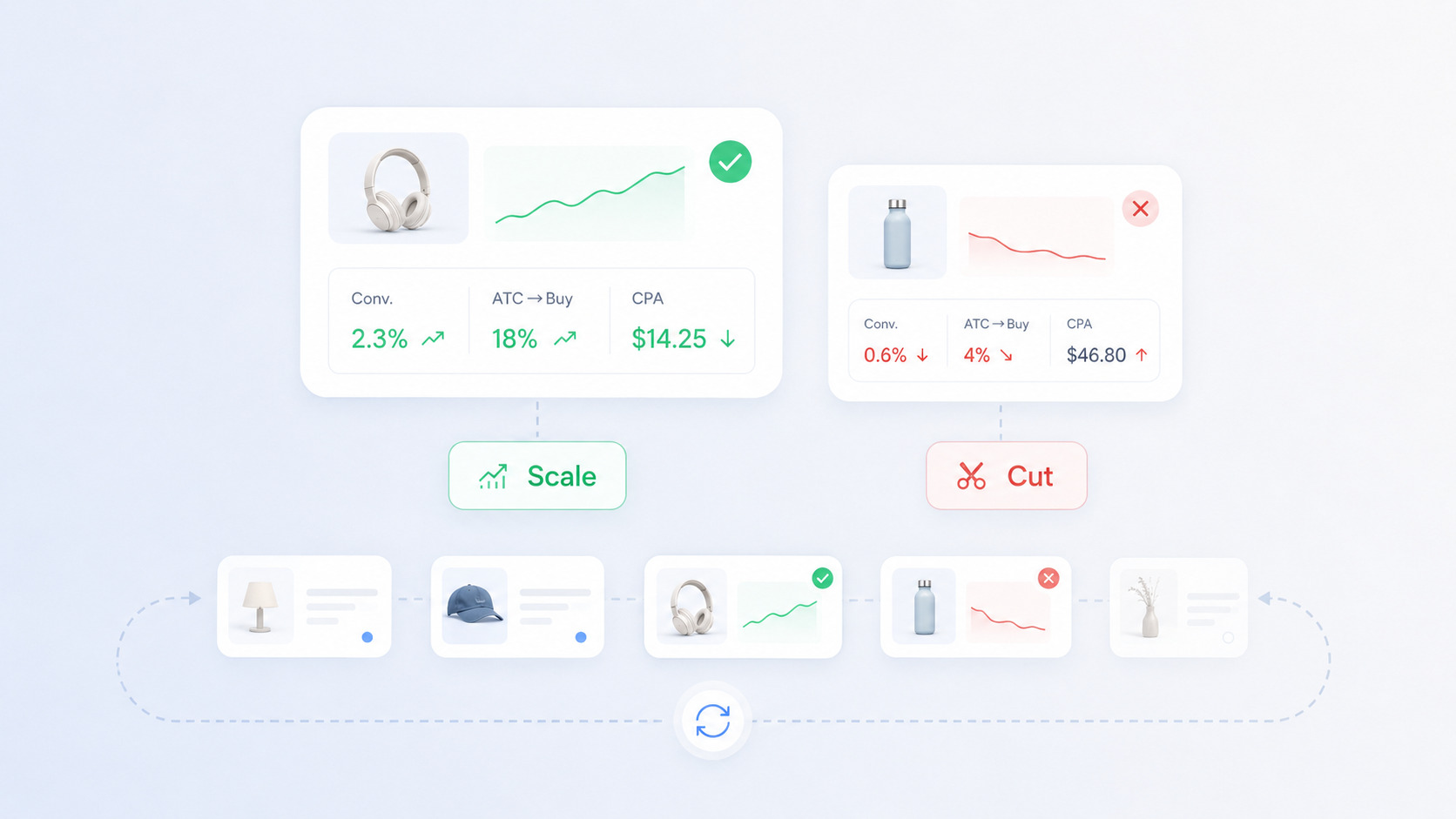
After your test budget is spent, you're looking for specific thresholds. Track three metrics in particular: cost per add-to-cart, add to cart rate, and cost per purchase. Healthy benchmarks to aim for:
A conversion rate between 1.5% and 3% — the recommended target range in dropshipping.
Add-to-cart-to-purchase rate of 15–20% or higher.
Cost per purchase below ~40% of your profit margin, so you have room to scale.
Products that hit these thresholds are your scaling candidates. Products that miss them get cut — immediately, no "one more chance" while you burn cash. Build a feedback loop during testing: every test, win or lose, refines your strategy, sharpens your next product idea, and deepens your read on your target audience. Because a 5–10% success rate means multiple product tests are needed, expect to test multiple products before one scales — that's normal, and proper validation can save thousands in advertising costs along the way.
Turning a winner into a real business
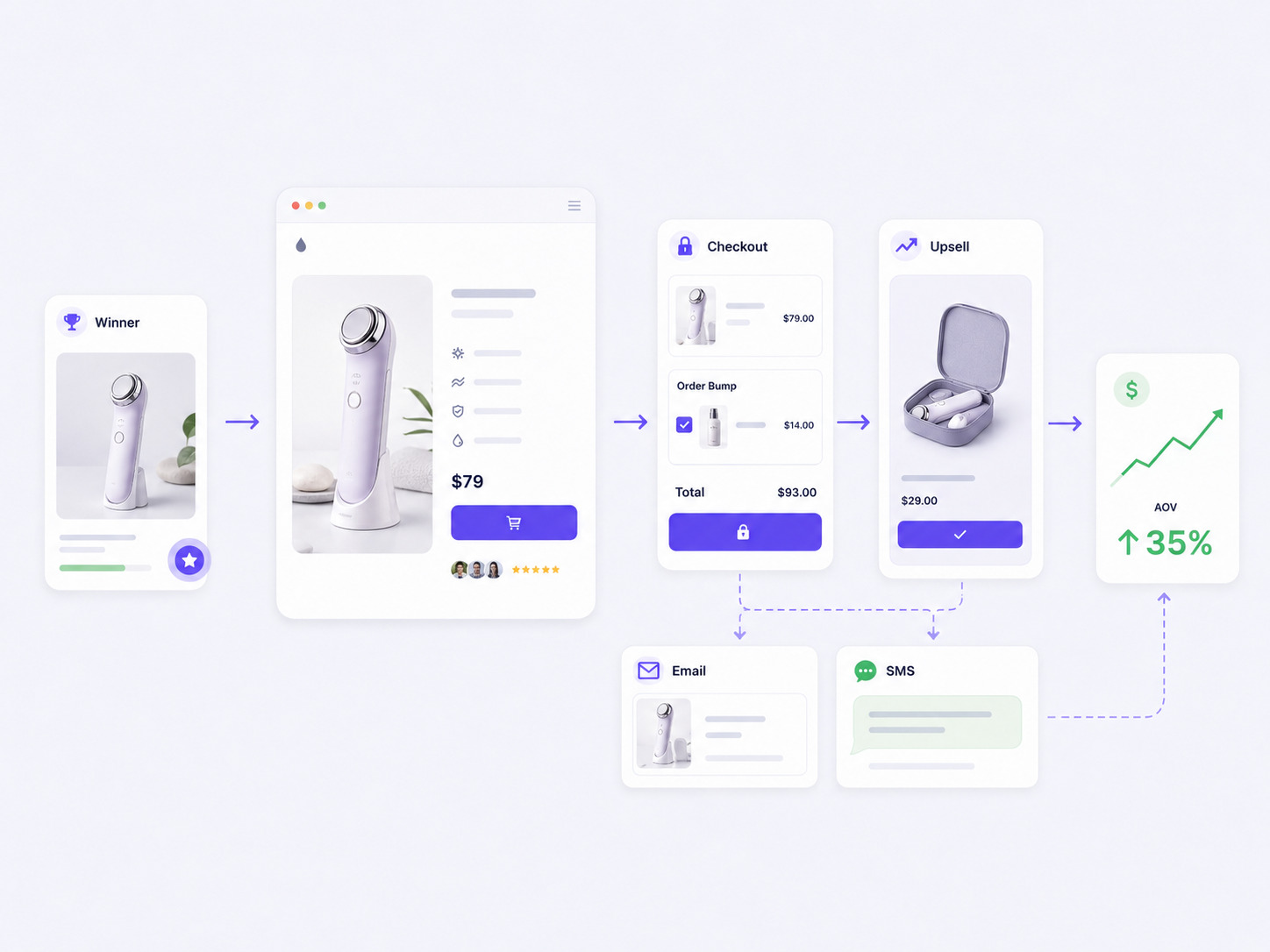
Finding a winning product is the start, not the finish — thin margins mean you have to maximize the value of every buyer you paid to acquire. This is where your post-purchase setup quietly decides profitability. Once a product validates, order bumps and one-click upsells on Funnelish can lift average order value so a $25 product becomes a $40 order, giving you the margin headroom to outbid competitors on ad spend.
For the majority who don't buy on the first visit, automated abandoned-cart emails and SMS recover otherwise-lost sales and help turn one-time buyers into repeat customers — the repeat business and predictable income that separate a real dropshipping business from a one-hit fluke. And with built-in analytics tracking each step of the funnel, you can see which products, pages, and offers convert, so you make informed decisions and double down on winners instead of guessing.
Validate the product, present it well, then let your funnel extract every bit of value from the traffic — that's the 2026 playbook.
Need to figure out reliable dropshipping products?
Learning how to test products dropshipping in 2026 comes down to discipline: validate demand against five signals before spending, order samples to confirm quality and supplier reliability, present the product on a fast, focused page, run a small targeted ad test, and read the data honestly. Kill the losers fast, scale the winners, and treat every test as a cheap lesson rather than an all-in bet on the wrong products.
Do that dynamically on Funnelish, and you sidestep the 80–90% failure rate — turning product testing from a money pit into your single biggest competitive advantage and a path to more money from products that sell.
Frequently asked questions
How much should I spend to test a dropshipping product?
Budget roughly $200–$300 per product, split across 2–3 ad creatives, with daily caps of $20–$50 per ad set. The aim is to gather enough data — cost per add-to-cart, conversion rate, cost per purchase — to make informed decisions, not to profit immediately. If $300 feels too steep, your margins may be too thin for paid ads on that product.
How do I know if a dropshipping product is a winner?
A winning product passes five validation signals before testing — rising Google Trends demand, manageable competition (5–15 advertisers), a 2.5x+ margin, a clear problem-solving or wow-factor hook, and ad viability — then hits performance thresholds in testing: a conversion rate between 1.5% and 3%, a 15–20%+ add-to-cart rate, and a cost per purchase under ~40% of your profit margin. For overseas-sourced products, calculate that 2.5x margin on landed cost including import duty, which now applies to low-value parcels since the end of de minimis.
How many products do I need to test to find a winner?
Expect a 5–10% success rate, so plan to test multiple products before one scales profitably. Validating demand before each test dramatically improves your odds and can save thousands in ad spend, but testing several products is a normal part of dropshipping.
Do I need a full store to test products?
No. A single dedicated product page or high-converting one-product store on Funnelish is more efficient for testing because it removes distractions and focuses the visitor on one offer. You can validate demand and run ad tests without building a full ecommerce store first.
Why order samples before testing?
Ordering samples lets you evaluate product quality and real shipping times, confirm your supplier is reliable, and film your own authentic ad content. Skipping it risks scaling a product with quality issues or a supplier who can't deliver — both of which trigger refunds and kill your brand.
Table of contents
Boost your eCommerce
sales today

24/7 support
No credit card required
Cancel anytime
24/7 support
No credit card required
Cancel anytime
