

TikTok Ecommerce Strategy 2026: Turn Discovery Into Sales
14 July 2026
Anna P.
10 minutes
Many brands approach TikTok the way they approach every other platform: make an ad, run it, measure it. On TikTok, that instinct fails. This is a social media platform where people don't arrive to buy — they arrive to be entertained, and end up buying anyway. Back in 2021, 47% of TikTok users bought something they saw on the app, and the hashtag #TikTokMadeMeBuyIt has since racked up tens of billions of views. Building a real TikTok ecommerce strategy means designing for that behavior.
The stakes are worth the effort. Since its US launch in 2023, TikTok Shop has become a social commerce juggernaut — growing US sales 108% in 2025 to reach $15.82 billion, nearly 20% of all US social commerce. Total US social commerce is projected to surpass $100 billion for the first time in 2026. The brands treating TikTok as a serious commerce strategy — not just another digital marketing channel — are pulling meaningfully ahead of those still dabbling.
This playbook breaks down how TikTok ecommerce works in 2026, and how to build a winning strategy that converts scrolls into sales, with real examples of brands doing it well.
Why TikTok is a commerce platform now, not just a dancing app
The old mental model — TikTok for awareness, your online store for sales — is obsolete. TikTok Shop collapsed the distance between "I saw it" and "I bought it" into a single tap, letting brands sell products directly inside the feed. A shopper watches a creator demo a product and checks out in the same app, never leaving. Its shoppable videos and product links turn passive online shopping into impulse buying.
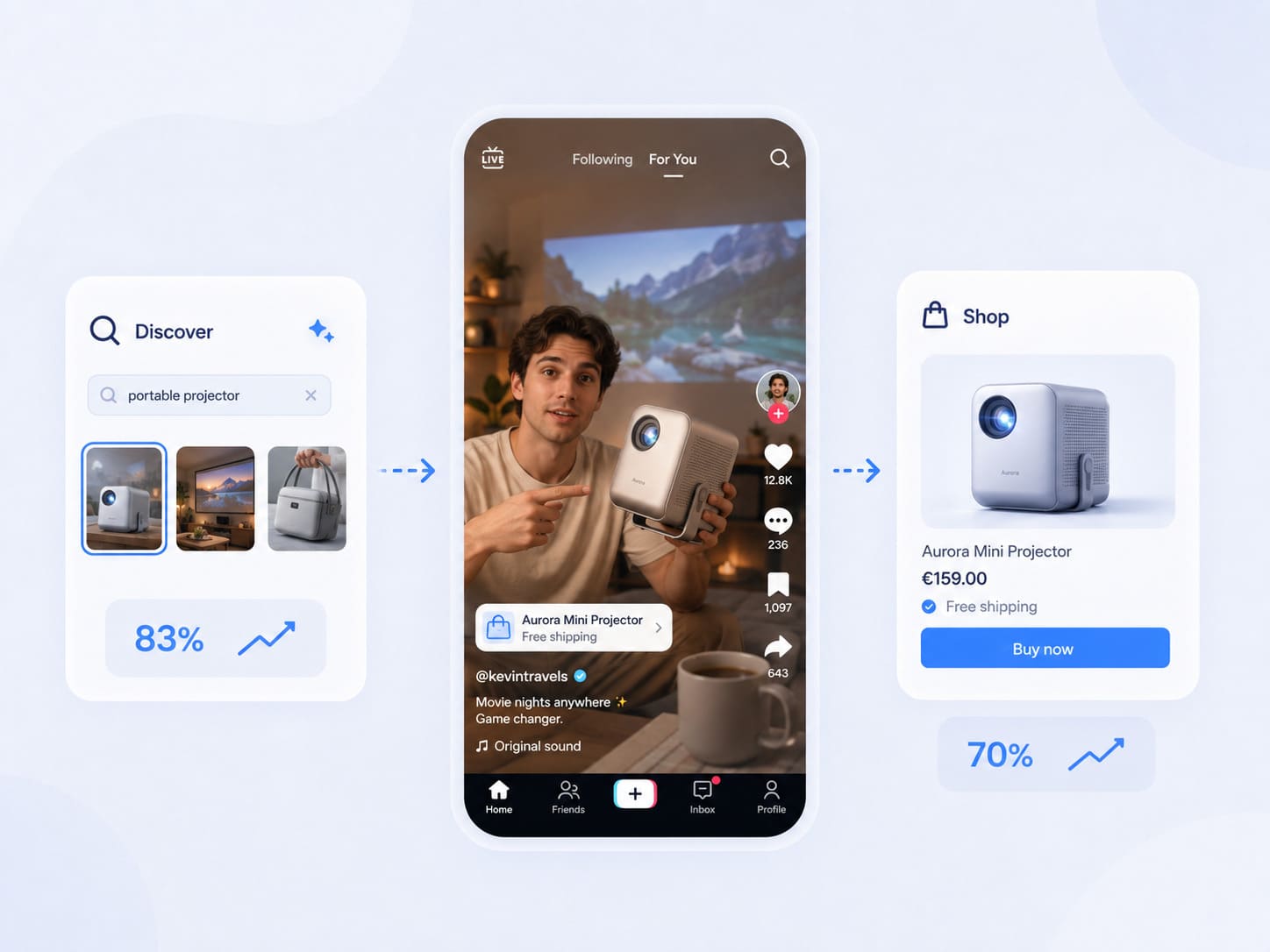
Per research from GlobalData and TikTok Shop cited in TikTok's own newsroom, 83% of shoppers say they've discovered a new product on TikTok Shop and 70% have discovered a new brand they didn't know before. Unlike platforms where buyers arrive with intent, TikTok creates demand that didn't exist — the core distinction from traditional e-commerce.
Increasingly, new shoppers also search TikTok directly for product recommendations and find inspiration in the Shop tab. That dual role is a genuine competitive advantage, and it's why product discovery sits at the heart of any winning strategy. It helps that TikTok's algorithm recommends content based on user interactions and rewards watch time over follower count, so the right content — not the biggest budget — wins distribution and brand visibility.
One demographic myth worth killing early: TikTok is not just a Gen Z playground. Its user base skews young and discovery-driven, but eMarketer notes growth is broadening well beyond that core, meaning the right audience for your e-commerce brand is likely already there — including older shoppers with higher purchasing power.
Read more: TikTok Ecommerce News 2026
Four pillars of a TikTok ecommerce strategy
A full-funnel strategy rests on four platform features working together. Lean on only one and the others underperform. Coordinate all four and the results compound.
Pillar 1: Creator-driven content
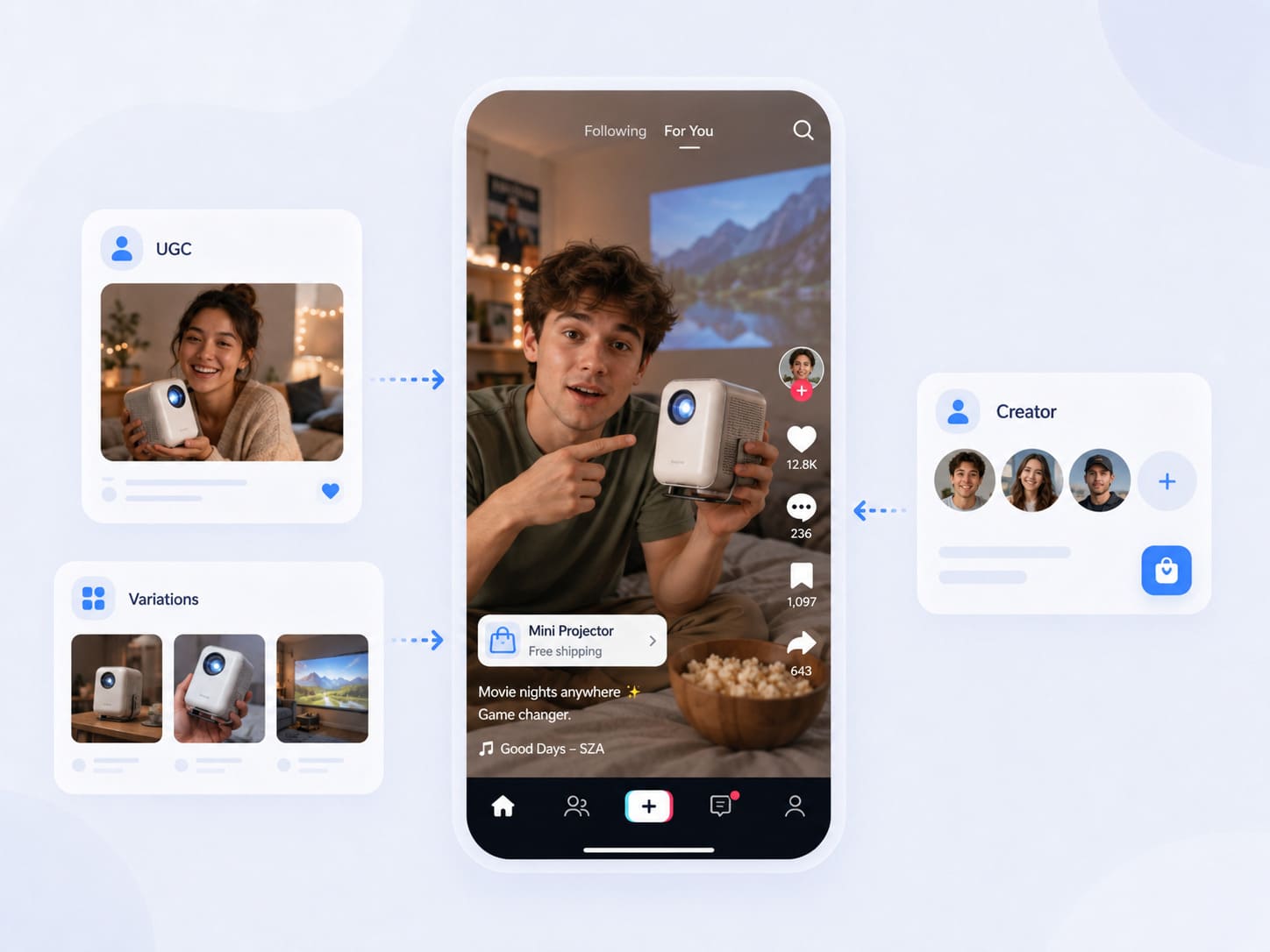
Here's the fastest lesson brands learn — your polished commercial almost always loses to a creator filming on a phone in their bedroom. TikTok users prefer authentic content over scripted sales pitches, so creating native, high-energy content that feels organic to the feed can beats high-production advertisements. A steady stream of fresh content is what keeps you in the algorithm's good graces, and user-generated content is the trust-builder at the center of social commerce.
The mechanism is TikTok's algorithm, which shows a clear preference for lesser-known creators over popular ones. A brand-new creator with a compelling hook can outrank a celebrity — and micro-influencers with engaged niche audiences often convert better than mega-celebrities because their followings trust them. Partner with those creators, or tap TikTok's Creator Marketplace, which connects brands with thousands of influencers.
The proof is everywhere in 2025's results. Maëlys, the D2C body-care brand, became the top-selling brand in its category on TikTok Shop by leaning on real customers sharing before-and-after transformations, driving over $108 million in category sales, as Viral Nation documented. "We've always believed we should be where the shopper is, and more and more shoppers are coming to TikTok Shop," the brand's SVP told Viral Nation.
Strategy in practice
Volume wins — upload many content variations to develop a deeper understanding of what resonates. Focus your content strategy on tutorials, how-to videos, and behind-the-scenes clips that demonstrate product value, participate in trending audio, hashtags, and challenges to boost visibility, and capture attention in the first 3–5 seconds or viewers scroll past. Build for sound-on viewing, not muted feeds. Brief creators on the hook and the benefit, then get out of their way — over-controlling creators is a common, costly mistake, because their editorial freedom is what the algorithm rewards.
Pillar 2: Live shopping
Live selling is where discovery converts fastest. It drives real-time sales conversions through interactive demonstrations — a creator or founder demos products, answers questions live, and stacks urgency with limited-time offers. Per McKinsey research, companies report live commerce conversion rates approaching 30% — up to ten times higher than in conventional e-commerce.
Scale-wise, it's proven at every level. Over its 2025 Black Friday–Cyber Monday campaign, TikTok's newsroom reported live shopping delivered record performance, contributing to more than $500 million in TikTok Shop sales across four days, with nearly 50% more US shoppers buying than the year before. As TikTok's Americas Shop lead put it, "Live Shopping is where brand love starts" — the moment casual viewers turn into loyal customers.
Strategy in practice
Brands can host live shopping events once they gain 1,000 followers. Treat consistency as the growth lever — UK breakout Made by Mitchell built its momentum on relentless cadence, running as many as seven shows a week plus 12-hour megalives, teasing each with days of short-form content to build anticipation and FOMO.
Pillar 3: TikTok Shop affiliate program
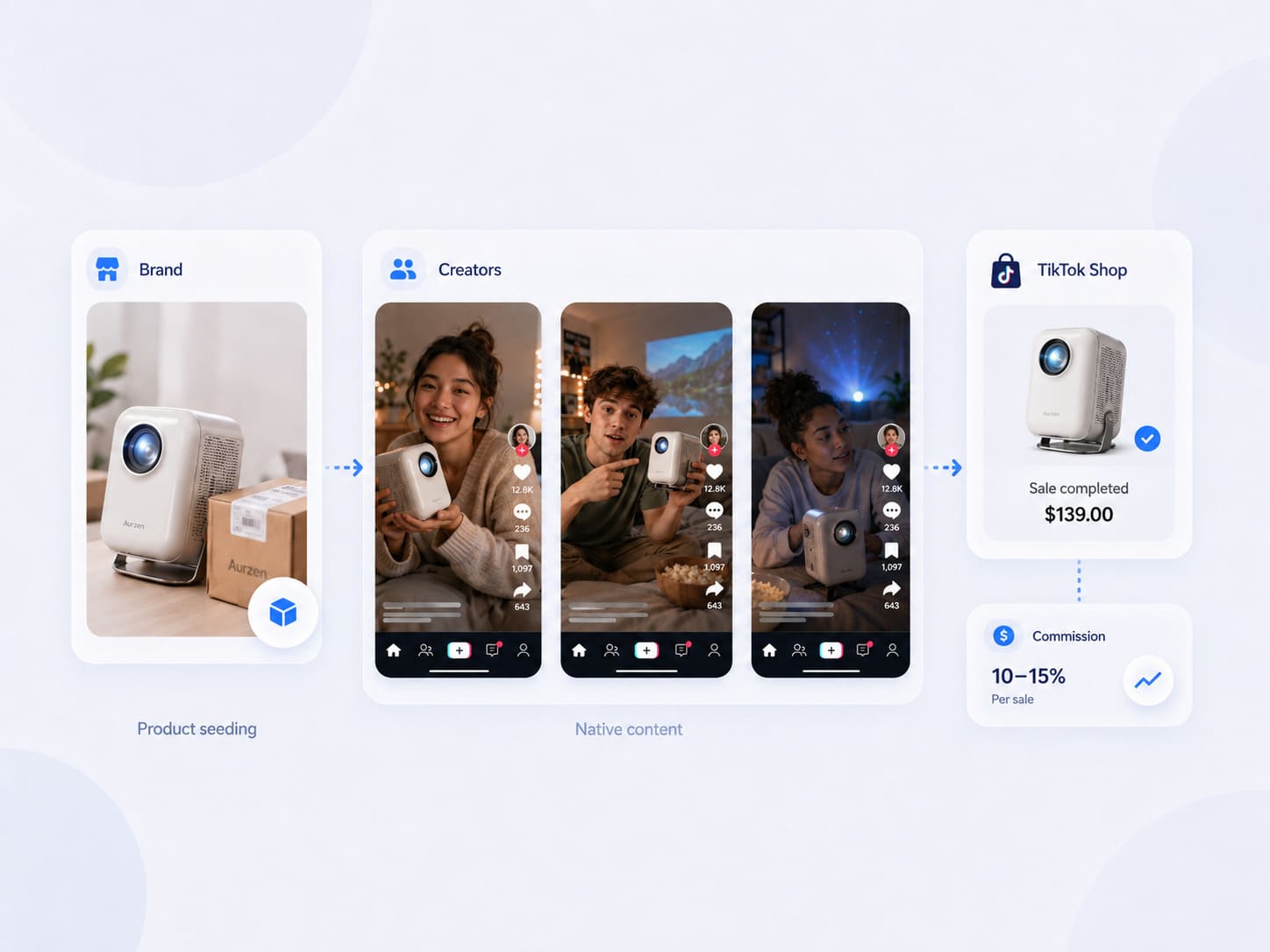
The affiliate marketplace is the scale engine, and creator partnerships are the fuel. It connects your product catalog to a vast pool of TikTok creators who promote for commission, paid only on completed sales — letting even a small ecommerce business tap engaged audiences without a fat upfront budget. The right influencer partnership can spark viral product promotion overnight.
Strategy in practice
Seed products generously to 10–15 micro-creators before spending on ads, and set competitive commissions. Weigh the trade-off honestly: affiliate commissions typically run 10–15%, and while affiliate videos drive transactions, your own branded content builds lasting brand equity and avoids paying commission on every sale. The strongest brands launch affiliate programs to incentivize influencer promotions and run their own native content in parallel.
One ecommerce tip that's easy to overlook: fast shipping and responsive customer service directly improve your seller reputation, which the algorithm and shoppers both reward.
Pillar 4: TikTok Shop ads
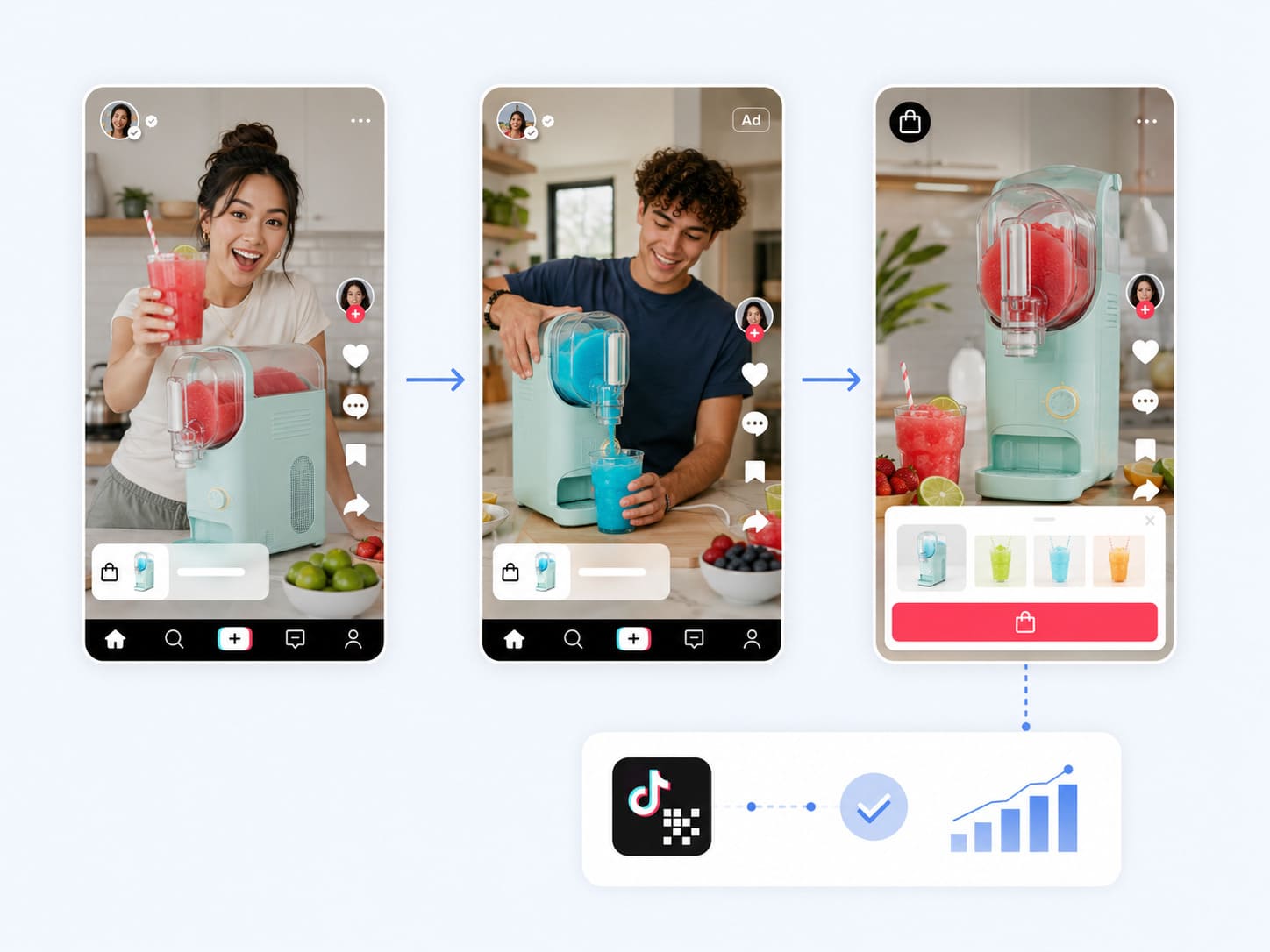
Ads are the amplifier. The winning move isn't inventing polished video ads from scratch — high-performing organic content should be turned into paid ads. In TikTok Ads Manager, use Spark Ads to boost top-performing organic posts for broader reach, extending real creator videos and shoppable videos to new audiences while keeping the native feel that drives conversion. TikTok's paid ad formats offer precise targeting for higher conversion, and in-feed product links make any video a direct path to purchase, so shoppers can shop directly without leaving the feed.
Strategy in practice
Install the TikTok Pixel on your destination pages from day one to measure the full customer journey and feed the ad system real conversion signals. Then analyze engagement metrics to optimize advertising performance — boost the winners, don't waste ad spend.
Read more: TikTok Ads for Ecommerce: Setup, Costs, and What Works
Strategy in action: real brands, real 2025 results
The playbook isn't theoretical. 2025 saw a wave of established names validate it. Per TikTok's newsroom, household brands like Fenty Beauty, Crocs, Liquid I.V., PacSun, and Philips now sell directly on TikTok Shop. PacSun offers a vivid illustration of the discovery-to-halo effect: a single smaller creator's video about its Casey jeans around Black Friday 2023 snowballed into more than 100,000 pairs sold, and an executive told Marketing Dive it "helped our entire denim business."
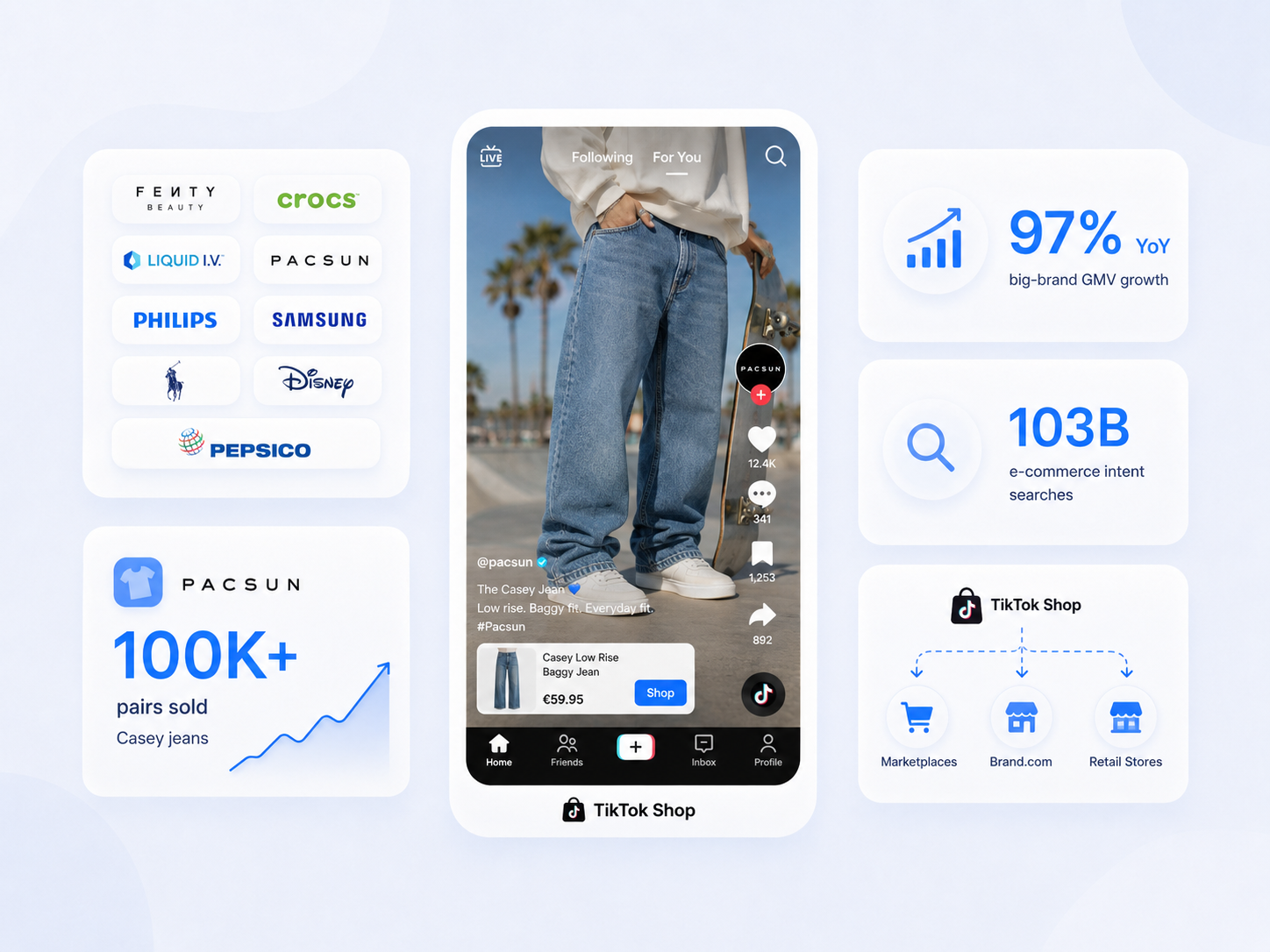
That halo — TikTok driving sales that lift Amazon, Target, and Walmart too — is exactly why the platform makes sense as one part of a broader mix rather than a standalone channel.
The influx accelerated through 2025. As Modern Retail reported, gross merchandise value from big-name brands (those over $30 million in revenue) grew 97% year over year, with Samsung, Ralph Lauren, and Disney all joining in 2025 and PepsiCo launching a creator-led line called Flavor Swaps.
TikTok Shop also logged over 103 billion US searches with e-commerce intent in 2025 — clear proof that shoppers now search the app for product recommendations. That makes optimizing your product titles and descriptions with relevant keywords essential for discoverability, and it's why marketing strategies built for TikTok increasingly treat it like a search engine.
Don't let discovery leak
Here's a gap that quietly costs brands money. TikTok is a discovery and impulse machine, but that impulse is fragile — it cools fast. Whether a shopper buys in-app or clicks through to your own online store, the moment right after the tap is where a strategy succeeds or leaks. And because so many brands run TikTok as one channel among other channels, plenty of that hard-won attention converts off-platform, on pages you control.
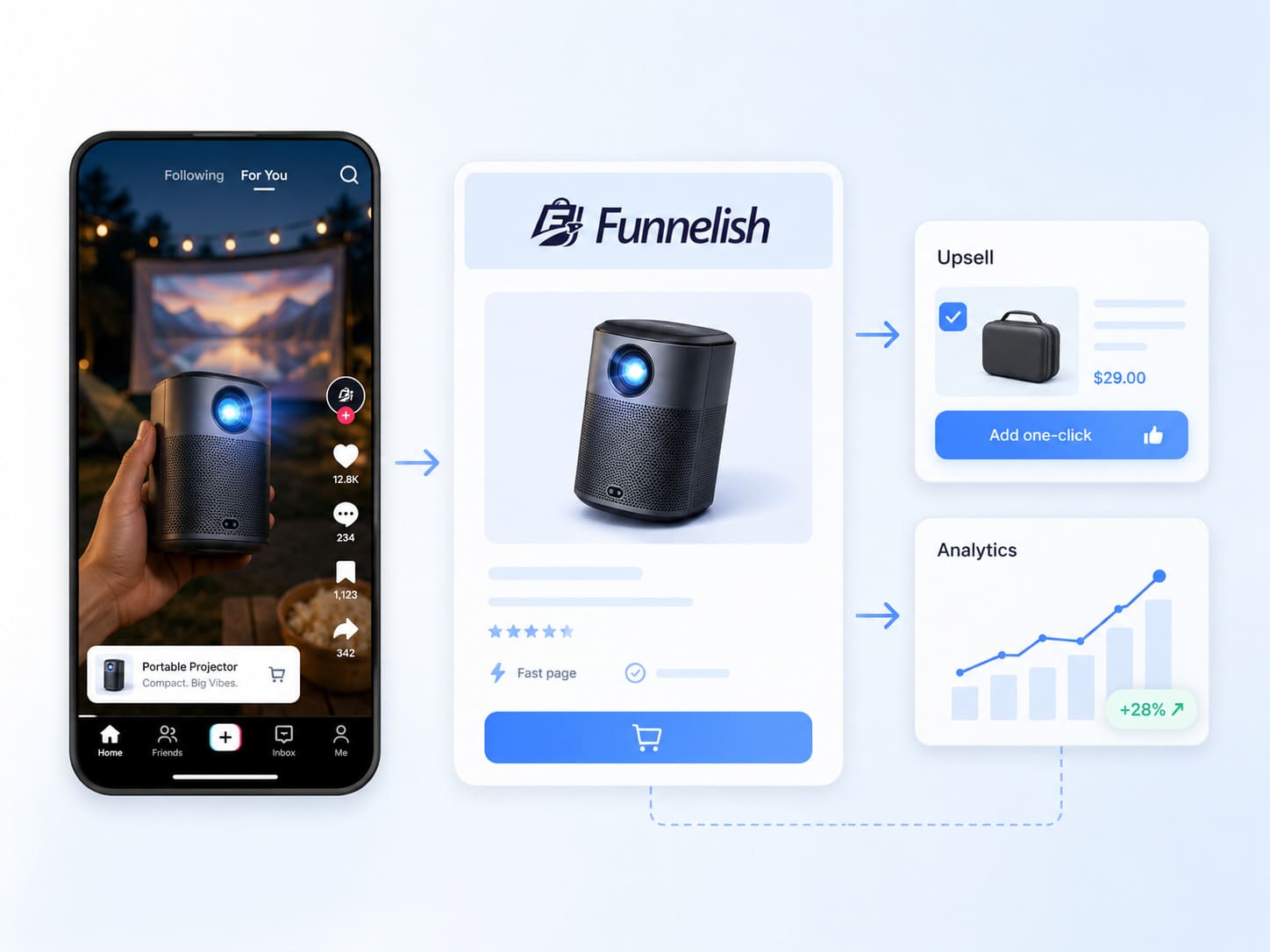
That handoff is where a few specific tactics matter, and where the right tooling supports each one:
Speed protects the impulse. A viral video's momentum dies on a page that stalls. If you're routing TikTok traffic to your own store, fast-loading pages keep an impulse-driven shopper from bouncing before checkout.
Average order value decides your ad math. TikTok products skew impulse-priced and affordable, so thin margins are the norm — and you can't outbid competitors on ads if every order is small. Building order bumps and one-click upsells with Funnelish into the flow lifts average order value, creating the margin room to scale acquisition and boost sales profitably.
Measurement ties it all together. With so many creators, viral videos, and offers firing at once, you need to see what actually converts. Pairing your TikTok Pixel data with funnel-level analytics reveals which content and which offers turned attention into revenue, so you double down on winners instead of guessing.
Tools like Funnelish's page builder make standing up those focused, conversion-built pages straightforward — a natural fit when TikTok is sending a flood of impulse-ready traffic that deserves better than a cluttered product page.
Bottom line
A winning TikTok ecommerce strategy in 2026 comes down to one shift in mindset: treat the platform as a content engine first and a store second. Build creator-led content that earns discovery, convert it with live shopping and shoppable videos, scale it through the affiliate program, amplify the winners with ads, and make sure the experience after the tap captures every bit of the impulse you created. Do that, and TikTok stops being a place you market and becomes a place you reliably sell.
Frequently asked questions
How do I start selling on TikTok?
Set up a TikTok Shop through Seller Center, upload your product catalog, and switch to a business account. Then build the four-pillar strategy: creator content for discovery, live shopping for conversion, the affiliate program for scale, and TikTok Shop ads to amplify what works. Install the TikTok Pixel to measure results from day one.
Do TikTok ads or organic content work better?
They work together. Let organic content prove what resonates, then turn top performers into paid ads through TikTok Ads Manager using Spark Ads. This keeps the native feel that converts while extending reach to new audiences — polished ads built from scratch typically underperform boosted organic videos.
Is TikTok Shop worth it for small ecommerce businesses?
Yes. The affiliate program and TikTok's preference for relevant content let small sellers reach large audiences without big budgets — a micro-influencer with an engaged niche audience often converts better than a celebrity. Success depends on consistent native content, competitive pricing, and reliable fulfillment rather than follower count.
How does live shopping work on TikTok?
Once a brand or creator gains 1,000 followers, they can host live shopping events — demoing products in real time, answering questions, and driving urgency with limited-time offers. Live selling can convert at up to 10x conventional e-commerce rates and, per TikTok, is where brand loyalty often begins.
Table of contents
Boost your eCommerce
sales today

24/7 support
No credit card required
Cancel anytime
24/7 support
No credit card required
Cancel anytime
