

D2C vs B2C: Real Differences, Surprising Similarities, and Conversion Hacks Worth Stealing
16 March 2026
Anna P.
11 minutes
Most breakdowns of D2C vs B2C read like a business school slide deck. Two columns, a list of key differences, and a conclusion that says "It depends on your goals." That's technically accurate and practically useless.
Here's what's more useful: understanding why the line between D2C and B2C is blurrier than the definitions suggest, where each model creates competitive advantage, and what the brands generating real revenue from both are doing differently at the conversion layer — with numbers attached.
What These Business Models Mean in Practice
The textbook definitions are straightforward. A business-to-consumer model is any business that sells products or services directly to end customers, which includes traditional retail, online marketplaces, and brick-and-mortar stores. A direct-to-consumer model is a specific subset of B2C in which companies sell products through their own websites or owned channels, cutting out third-party retailers.
This distinction matters more than it might initially appear. When a brand sells through a retail store or an online marketplace like Amazon, it hands over three things that are genuinely expensive to lose: customer data, margin, and control over the customer experience. The retailer owns the transaction, which means they own the customer relationship. The brand gets a purchase order and a check — and no insight into who bought, why they bought, or how to get them to buy again.
When that same brand sells direct, it keeps the margin the retailer would have taken, it captures customer data at the point of purchase, and it controls the customer journey from the first ad impression to the post-purchase email sequence. That's the actual value proposition of the D2C business model — not a philosophical stance, but a set of operational advantages that compound over time.
B2C and D2C Similarity Nobody Talks About
Here's what the D2C vs B2C framing obscures: both models are ultimately trying to solve the same problem. They need to attract customers who don't know them yet, convert those customers efficiently enough to make the economics work, and retain enough of them to generate customer lifetime value that justifies the acquisition cost.
The tactics diverge. The math is identical.
Whether you're a D2C brand running Facebook ads to your own Funnelish landing page, or a B2C brand selling through a retail chain, you are paying to acquire customers and trying to extract more revenue per customer than you spent to get them. The D2C model gives you more control over both sides of that equation. It doesn't make the equation easier — it makes it more transparent, which is its own form of competitive advantage.
The brands that understand this stop treating D2C and B2C as binary choices and start treating them as different distribution channels in the same sales strategy. Which is exactly what the most successful operators do.
Real Math of B2C vs D2C Margins
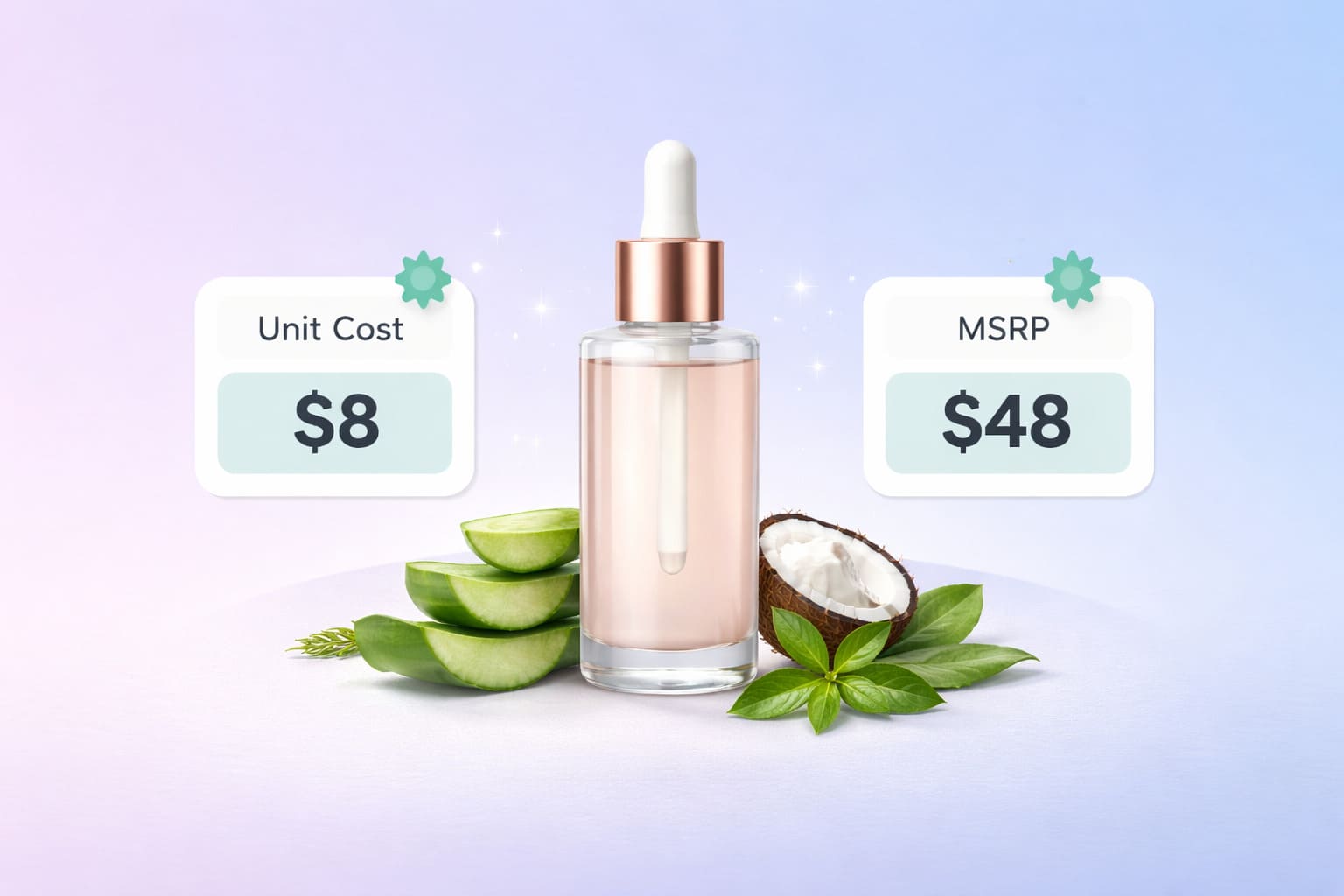
Take a concrete example. A skincare brand manufactures a serum with a unit cost of $8 and an MSRP of $48.
In a traditional B2C model through retail stores, the retail markup is typically 50–60%. The brand sells to the retailer at a wholesale price of roughly $22–24. After manufacturing cost, their gross margin on that unit is around $14–16. No customer data. No direct relationship. No ability to retarget that buyer or enroll them in a subscription.
In a D2C model selling through their own online store, that same unit sells at $48. After a $10 customer acquisition cost via paid social and $8 manufacturing cost, the brand nets $30 — nearly double the margin per unit, plus the customer's email address, purchase history, and the ability to sell to them again.
That second sale has a dramatically lower acquisition cost — potentially near zero if it comes through email or SMS. This is why customer lifetime value calculation is so critical in the D2C business model: the first transaction is rarely where the money is. The margin compounds on the back end.
Now here's where it gets interesting. Brands like Glossier built their early growth on this model — selling direct, capturing customer insights, and using those insights to develop new products their customers were already asking for in comments and DMs. That's a feedback loop that no third-party retailer relationship can replicate, because the retailer owns the data and has no incentive to share it.
How Smart Brands Control Both Models Simultaneously
The clean D2C vs B2C distinction breaks down fast when you look at how established brands operate. Nike is the textbook case. In 2017, roughly 70% of Nike's revenue ran through wholesale channels — third-party retailers, department stores, and the traditional B2C supply chain. (Statista) By 2023, their direct-to-consumer revenue had grown to represent over 40% of total sales, with their own website and physical stores driving the majority of D2C volume.
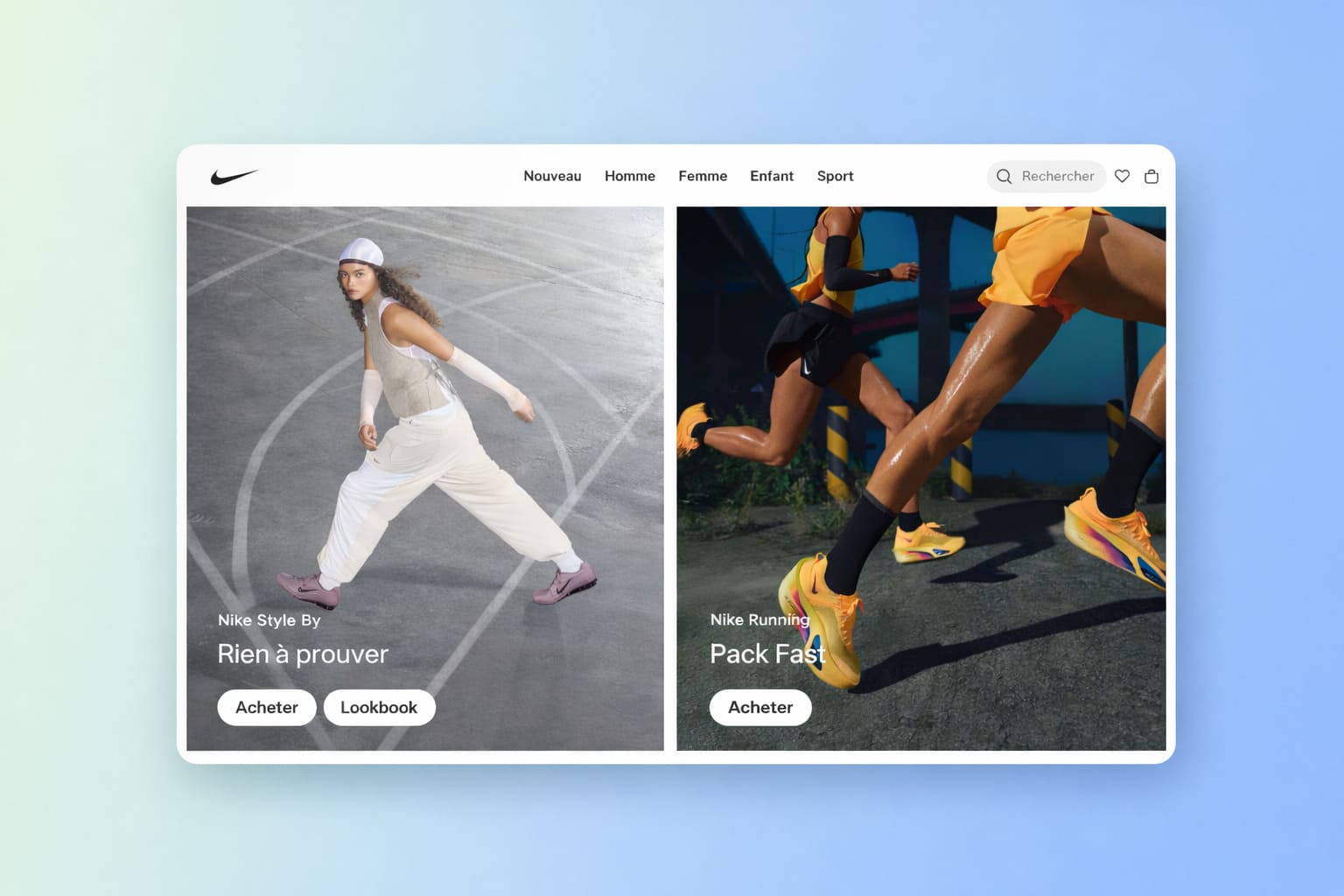
Nike didn't abandon B2C. They restructured the relationship between the two channels, using retail for brand visibility and volume, and D2C for margin, customer data, and deeper customer insights that inform product development. They also started pulling out of lower-performing retail partnerships — dropping around 50% of their wholesale accounts between 2017 and 2022 — which concentrated their retail presence in fewer, higher-quality channels while accelerating the direct relationship.
The lesson isn't "Go D2C and abandon retail." It's that the two models serve different functions, and the brands with a competitive edge understand which function each channel is serving at any given point in their growth.
Read more: 10 D2C Marketing Trends in 2026
Conversion Optimization Hacks That Work in Both Models
This is where the practical value lives. Whether you're operating a D2C business, a B2C brand, or both simultaneously, the conversion layer is where margin is won or lost. Here are the approaches that are working in 2026 — not the generic advice that's been recycled since 2006.
Run a Price Anchoring Test Before You Touch Your Ad Creative
Most brands optimize their ads obsessively and ignore the pricing architecture on the page itself. Price anchoring — presenting a higher-priced option first, then the target product — consistently lifts conversion on the lower-priced item by making it feel like a rational choice rather than an impulse. Dollar Shave Club has used tiered product presentation this way since their early growth phase. Test it before you spend another dollar on creative.
Use Post-purchase Upsells, Not Pre-purchase Popups
The conventional approach to increasing average order value is to interrupt the buying process with bundle offers or discount pop-ups before checkout. The conversion data consistently shows that this creates friction and increases cart abandonment. The more effective approach is a one-click post-purchase upsell that appears after the transaction is confirmed, when the customer is in a peak trust state, and the payment friction has already been resolved.
Conversion rates on post-purchase offers run as high as 30%. (GemPages)
Capture Email, Don't Lose Customer Data
The average ecommerce store converts 3.65% of visitors. (Adobe for Business) The other 96% leave without buying. In a D2C model where you paid to acquire that traffic, letting 97 out of 100 visitors leave without capturing anything is a structural revenue leak. A quiz, a discount offer, or a product recommendation tool that captures an email address gives you the ability to run a recovery sequence on visitors who showed intent but didn't convert.
ILIA Beauty and Beardbrand have used quiz funnels to do this — turning a product discovery interaction into an email capture that feeds a segmented nurture sequence. The economics shift materially when your email list is built from high-intent visitors rather than generic newsletter signups.
Segment by Purchase Behavior, Not by Demographics
Most targeted marketing campaigns are built around demographic assumptions — age, location, and gender. The brands generating stronger customer relationships and higher customer lifetime value are segmenting by behavior:
What someone bought
When they bought it
How many times they've purchased
A customer who bought twice in 90 days is a fundamentally different marketing target than someone who bought once eight months ago. Sending them the same email is leaving money on the table. Behavioral segmentation consistently lifts email's role in revenue by 20–40% compared to broadcast sends, and the data to do it lives in your own transaction records — not in a third-party platform.
Treat Shipping as a Conversion Lever
Fast shipping times directly affect purchase decisions. Over 70% of online shoppers say free shipping is the most important factor at checkout. (ShipBob) For D2C brands without Amazon's logistics infrastructure, the answer isn't to compete on speed — it's to be radically transparent about timelines and then exceed them.
Setting a 5-day expectation and delivering in 3 creates a positive customer experience. Setting a 2-day expectation and delivering in 4 generates a support ticket. The conversion optimization here isn't operational — it's about how you communicate timelines on your product pages and in your checkout.
Read more: Sales Funnel Optimization: 20+ Ways to Boost Conversions + Tools
D2C Model's Structural Advantage in 2026
The reason the D2C model has grown consistently for over a decade — and why direct-to-consumer brands now represent a meaningful share of ecommerce revenue across almost every product category — is that customer data is genuinely more valuable than it was in 2015.
When you own the direct relationship, you can build customer loyalty programs that tie to behavior. You can run targeted marketing campaigns based on what customers bought, not assumptions about what they might want. You can use customer insights from your own transaction data to make better inventory management decisions. You can test your own prices without negotiating with a retailer.
And you can deliver a customer experience that reflects your brand values, rather than whatever environment your product happens to be displayed in at a physical store.
None of that is available through a traditional B2C supply chain relationship. The retailer captures the customer interaction data. The brand gets a SKU report.
For ecommerce businesses making decisions about where to invest in 2026, the question isn't whether D2C or B2C is better in the abstract. It's which channel is currently costing you the most customer data, margin, and brand control — and whether the volume it delivers justifies that cost.
Business-to-Consumer vs Direct-to-Consumer FAQs
Is Amazon a B2C or D2C?
Amazon operates primarily as a B2C marketplace — it sells products and services directly to end customers. Brands selling through Amazon are using a B2C distribution channel where Amazon owns the customer relationship and data. Some brands also maintain their own D2C channels alongside Amazon, using the marketplace for volume and brand visibility while protecting margin and customer data through direct sales.
Is D2C or B2C better for startups?
D2C gives early-stage brands something B2C retail doesn't: direct access to customer behavior data from day one. For a startup trying to iterate on product and messaging, that feedback loop is worth more than retail shelf space. The challenge is customer acquisition cost — you're responsible for driving all your own traffic. Most successful D2C startups start with a narrow niche, validate through direct channels, and add retail distribution once they have proof of demand.
Is McDonald's B2B or B2C?
McDonald's is a B2C business — it sells products directly to end customers at the consumer level. It also operates a franchise model that has B2B characteristics, where the corporation sells systems, supply chain access, and brand licensing to franchisees who then operate consumer-facing locations. Most large consumer brands have some version of this structural complexity.
Is DTC the same as B2C?
D2C (or DTC) is a subset of B2C. All D2C businesses are B2C — they sell to end consumers. Not all B2C businesses are D2C — many sell through intermediaries like retailers or marketplaces. The distinction is whether the brand owns the direct relationship with the customer or routes it through a third party.
Is Apple a D2C brand?
Apple operates a hybrid model. A significant portion of its revenue runs through D2C channels — its own website and Apple Store locations — where it controls the customer experience completely. It also sells through third-party retailers like Best Buy and carrier partnerships. Apple's retail stores are widely studied as a D2C conversion case study because they generate some of the highest revenue per square foot of any retail operation globally.
Is B2B more difficult than B2C?
Different rather than harder. B2B typically involves longer sales cycles, more stakeholders in the buying process, and higher contract values. B2C involves shorter decisions but higher volume and more competitive customer acquisition. D2C brands running paid ads compete in one of the most efficient and unforgiving auction-based markets in commerce — that's its own form of difficulty.
Can a company be both B2C and D2C?
Yes, and most scaled consumer brands are. Nike, Apple, and Glossier all operate both models simultaneously, using each channel to serve different strategic functions — retail for reach and brand visibility, direct for margin and customer data. The key is understanding what each channel is doing for the business rather than treating them as competing approaches.
Which brands are Gen-Z D2C?
Several D2C brands have built substantial Gen Z audiences through social media platforms and values-led positioning. Parade (underwear), Starface (skincare), and Olipop (functional soda) are frequently cited examples — all built through owned digital channels, influencer-driven content, and direct customer interaction rather than traditional retail distribution. What they share is a strong brand identity that reads as authentic to a generation highly attuned to performative marketing.
Read more: Social Commerce Just Hit $100 Billion. Here's Why Many Brands Won't Profit From It.
What are the 7 types of business models?
The common categories are: D2C (direct-to-consumer), B2C (business-to-consumer), B2B (business-to-business), B2B2C (business-to-business-to-consumer), subscription, marketplace, and franchise. Most real businesses are hybrids — a software company selling to enterprises is B2B, but if it also sells individual plans online, it's running a B2C channel simultaneously. The model is less important than the unit economics of each channel.
Table of contents
Boost your eCommerce
sales today

24/7 support
No credit card required
Cancel anytime
24/7 support
No credit card required
Cancel anytime
