

Etsy vs Shopify in 2026: What's Your Best Bet?
01 May 2026
Anna P.
7 minutes
If you are launching or scaling a physical products business this year, you are staring down the most critical infrastructure decision of your ecommerce journey.
Let me guess: You are caught in the classic Etsy vs Shopify debate.
On one side, you have a massive, bustling marketplace that hands you immediate access to millions of buyers actively searching for handmade goods, custom products, and vintage items. On the other side, you have a powerhouse ecommerce platform that gives you the tools to build a highly scalable standalone website.
But choosing between an Etsy shop and a Shopify store is not just about comparing monthly subscription fees. It is about understanding the fundamental mechanics of traffic, customer data, and profit margins in 2026.
We are going to look at the Etsy fees, the hidden Shopify fees, the required setup effort, and how to transition from a successful side hustle to a dominant business.
Etsy Shop: Built-In Traffic Engine

For many new sellers, the thought of building an entire website from scratch is paralyzing. This is exactly where they turn to Etsy. It is an online marketplace, acting like a digital shopping mall where you can set up a booth.
Best for: Sellers offering personalized gifts, home decor, craft supplies, and unique own products who do not want to manage technical infrastructure.
Ultimate Benefit: Built-In Audience
The single hardest part of running an online store is getting people to look at it. Etsy handles this for you.
When you list a product on Etsy, you tap into their built-in audience. You do not need to run Google Ads, master TikTok marketing, or build complex email sequences to get your first sales. If your product solves a problem and your images are good, you will get organic traffic.
Downside: 2026 Etsy Fees Ecosystem
Etsy is not a charity; they charge a premium for handing you that traffic. In 2026, the fee structure for Etsy sellers is notoriously aggressive.
Listing Fees
You pay a $0.20 listing price just to publish an item. This expires every four months. If you sell multiples of an item in one order, you get hit with that $0.20 fee for each item sold.
Transaction Fees
Etsy takes a 6.5% cut of the total order amount, which includes the product price, shipping costs, and any gift-wrapping charges.
Payment Processing Fees
To accept credit cards, you are forced to use Etsy Payments. In the US, this costs an additional 3% + $0.25 per transaction.
Etsy Ads (Offsite Ads & Growth Tools)
This is the killer. If your Etsy store generates under $10,000 in sales volume a year, Etsy takes a 15% cut of any sale generated by their offsite ads (you can opt out). But if you cross $10,000 in annual sales, you are locked into the program permanently, paying a 12% fee on ad-attributed sales.
You Don't Own the Customer
When you operate a specific shop on a marketplace, you are renting space. You do not get to keep the buyer's email address for off-platform email marketing. You cannot build true brand building campaigns. Etsy even pushes competitors' products at the bottom of your listings.
If you try to use Etsy Pattern — their attempt at a basic website builder — you are still fundamentally tied to their ecosystem and rules. Etsy offers unmatched convenience, but caps your long-term independence.
Shopify: Full-Scale Ecommerce Platform
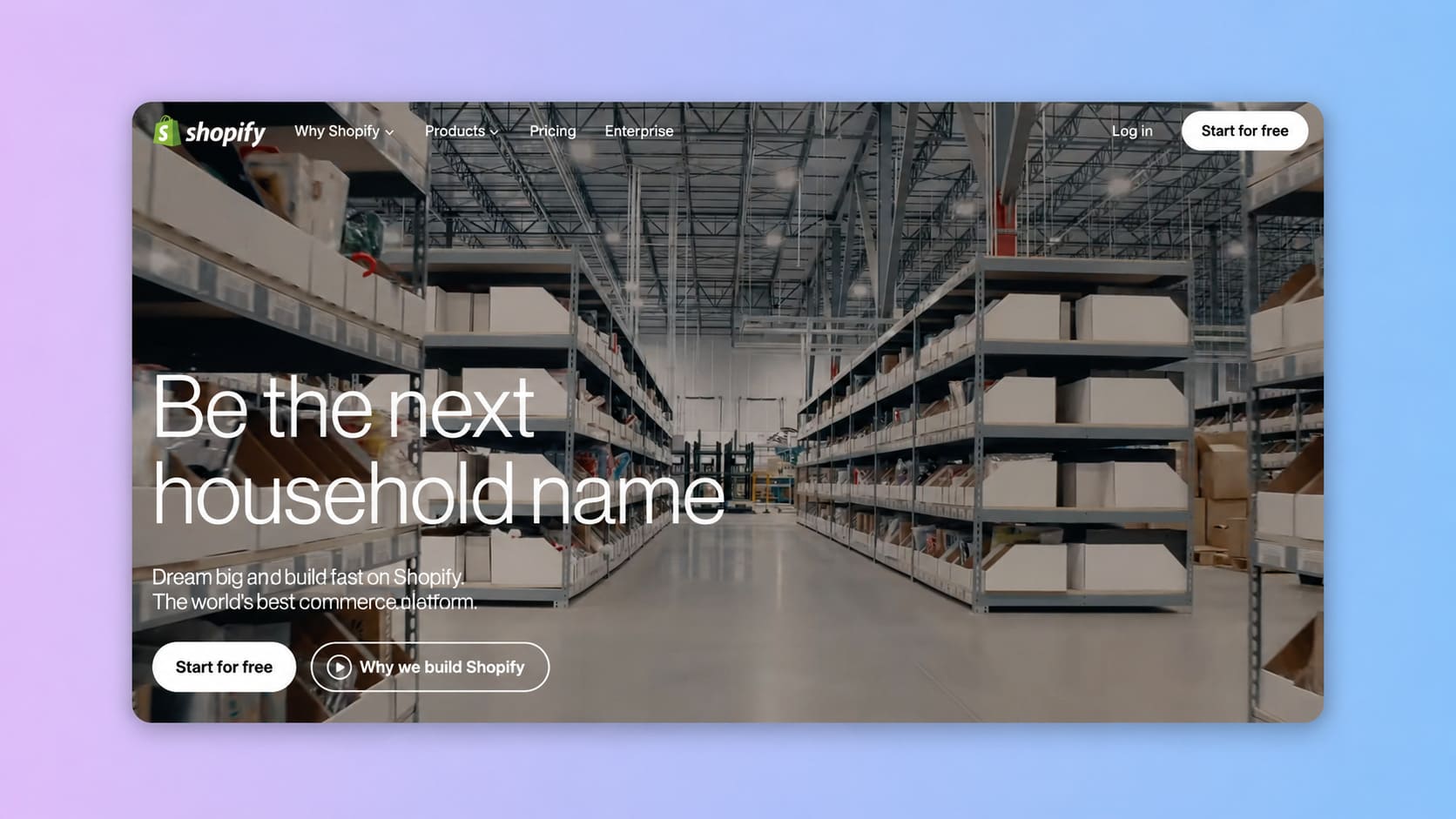
If you want to build a real brand building asset, you eventually have to leave the mall and build your own flagship shop. Shopify is not a marketplace. It is a software engine that lets you build your own online store on your own domain.
Best for: Ambitious brands, dropshippers, and established creators who want to scale their own brand and maintain total control over their business operations.
Ultimate Benefit: Total Control and Customer Data
Unlike Etsy, building a Shopify store means you own everything. You own the customer data, meaning you can run aggressive email marketing and SMS retention campaigns. There are no competitor products distracting buyers on your product pages.
Because you own the own storefront, you can install third-party apps to build subscription models, offer post-purchase upsells, and completely customize the checkout experience.
Pricing: Predictable Subscriptions
Shopify fees are structured differently. Instead of taking a massive percentage of every sale, Shopify relies on a monthly fee.
Monthly subscription: In 2026, the Basic plan costs $39 per month (or $29 if you pay for the year upfront).
Transaction fees: If you use Shopify Payments (their native processor), there are zero extra transaction fees outside of standard credit card processing rates (2.9% + $0.30 online).
Penalty fee: If you choose to use outside payment gateways (like a third-party merchant account), Shopify hits you with a 2% penalty fee on the Basic plan.
Downside: You Are an Island
The key difference between Shopify and Etsy is traffic. When you launch a standalone website on Shopify, your traffic is zero.
Shopify offers incredible growth tools, but you are entirely responsible for bringing your own traffic. This requires more setup effort. You have to learn how to run paid ads, build organic social media channels, and optimize for SEO. If you cannot drive traffic, your beautiful own website will sit completely empty.
Etsy and Shopify: Comparison Table
Feature / Criteria | Etsy | Shopify |
Platform Type | Online Marketplace | Dedicated Website Builder |
Traffic Source | Built-in organic marketplace audience. | 100% your responsibility (Ads, SEO, Social). |
Monthly Subscription | $0 (Standard), $15/mo (Etsy Plus). | Starts at $39/mo ($29/mo billed annually). |
Listing Fees | $0.20 per item (expires every 4 months). | $0 (Unlimited products included in monthly fee). |
Transaction Fees | 6.5% + payment processing + potential 12-15% Offsite Ads. | 0% if using Shopify Payments (only standard card rates apply). |
Customer Data | Owned by Etsy (limited marketing capabilities). | 100% Owned by You (exportable for email/SMS). |
Customization | Very rigid; looks like an Etsy storefront. | Infinite; complete HTML/CSS control and Shopify apps. |
Read more: WooCommerce vs Shopify in 2026: Honest Comparison
Shopify vs. Etsy: Which Should You Choose?
Choose Etsy if you are just starting out. If you have zero marketing budget, no audience, and want to test if people actually want to buy your handmade goods, Etsy is the ultimate testing ground. The extra fees are simply the cost of acquiring your first buyers.
Choose Shopify if you have validated your product and are ready to scale. When you want to stop paying marketplace fees, run your own marketing campaigns, and build an independent asset that you actually own, Shopify is the undisputed king of the online sales world.
Bridging the Gap: Multi-Channel Selling and Funnelish
The modern shop owners do not view this as a strict either/or scenario. They practice multi-channel selling.
Shopify lets you integrate directly with Etsy. You can use your Shopify dashboard as your central hub to track inventory and fulfill orders, while pushing your product listings to Etsy to capture their organic traffic.
But what happens when you decide to run paid ads to scale your own store?
Sending expensive Facebook or TikTok traffic to a standard Shopify product page is a great way to waste money. Standard themes are distracting.
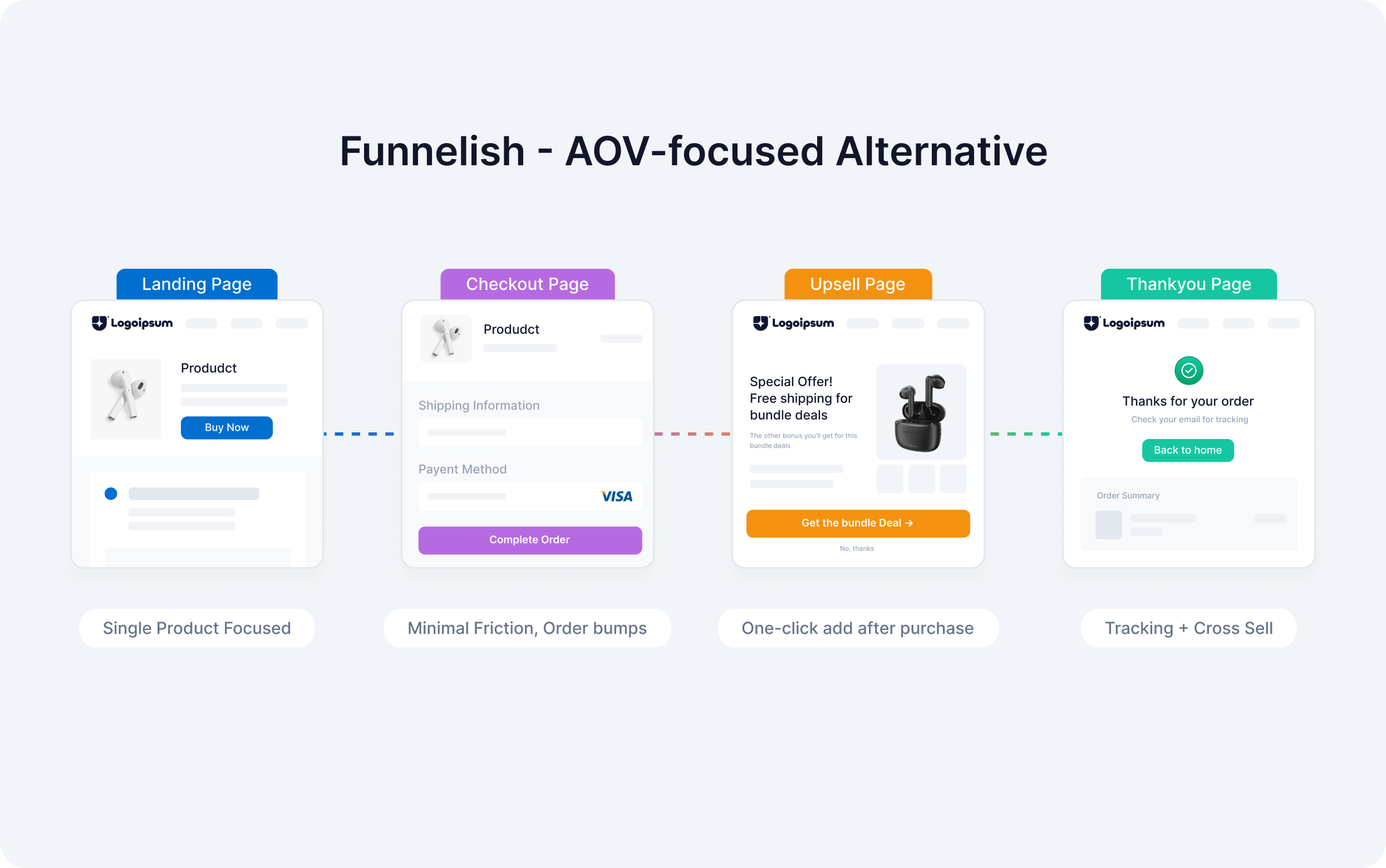
You need to integrate a tool like Funnelish natively into your Shopify ecosystem to change the game. While Shopify handles your backend inventory and fulfillment, Funnelish acts as your high-performance frontend.
When you run ads, you send buyers to a dedicated Funnelish sales funnel instead of your main catalog. You capture their email, offer them a frictionless one-page checkout, and hit them with one-click post-purchase upsells that drastically boost your average order value. It gives you the high-converting frontend of a direct-response funnel with the rock-solid backend of Shopify.
Frequently Asked Questions
Can you make $10,000 a month on Etsy?
Yes. However, once you cross $10,000 in annual sales on the platform, you are permanently opted into Etsy Offsite Ads, meaning Etsy will automatically take a 12% cut of any sale their advertising generates for your shop.
How much does Etsy take from a $100 sale?
Baseline, Etsy takes around $10 to $12 (6.5% transaction fee + ~3% payment processing + $0.20 listing fee). If that $100 sale came from a mandatory offsite ad, they take an additional 12-15%, dropping your net payout to roughly $73.
What are the disadvantages of Etsy?
The main disadvantages are incredibly high fees on high-ticket items, zero ownership of customer email addresses for future marketing, and limited ability to customize your storefront to reflect your brand.
Who is Etsy's biggest competitor?
For built-in marketplace audiences, Amazon Handmade and eBay are direct competitors. For sellers looking to leave marketplaces and build their own brand, Shopify is the dominant alternative.
Are your first 40 listings on Etsy free?
Etsy occasionally runs promotions where new sellers can get their first 40 listings free, but this usually requires opening your shop using a specific referral link from an existing, active seller.
Is it cheaper to sell on Etsy or eBay?
Upfront, Etsy is slightly cheaper. eBay takes around 13.25% as a final value fee in most categories. Etsy takes roughly 10% (transaction + processing). However, if Etsy Offsite Ads trigger, Etsy becomes significantly more expensive. For scaling beyond marketplaces entirely, using Shopify (and routing ad traffic through a high-converting platform like Funnelish) is the most profitable long-term strategy.
Table of contents
Boost your eCommerce
sales today

24/7 support
No credit card required
Cancel anytime
24/7 support
No credit card required
Cancel anytime
