

Ecommerce News 2026: The Mid-Year Recap Every Seller Needs
06 July 2026
Anna P.
7 minutes
The first half of 2026 reshaped the ground rules of online business.
Two of the biggest ecommerce news stories — the end of duty-free imports into the EU and a stricter Amazon shipping rule — both landed at the same moment: the start of July. Meanwhile, AI stopped being a buzzword and became infrastructure, mobile crossed a symbolic tipping point, and the whole e-commerce industry quietly pivoted from chasing growth to protecting revenue and margins.
If you sell online and haven't been tracking every headline, here's the latest recap of the ecommerce news that matters from the first half of the year — what changed, and what it means for your business.
Big one: EU ends duty-free imports (July 1)
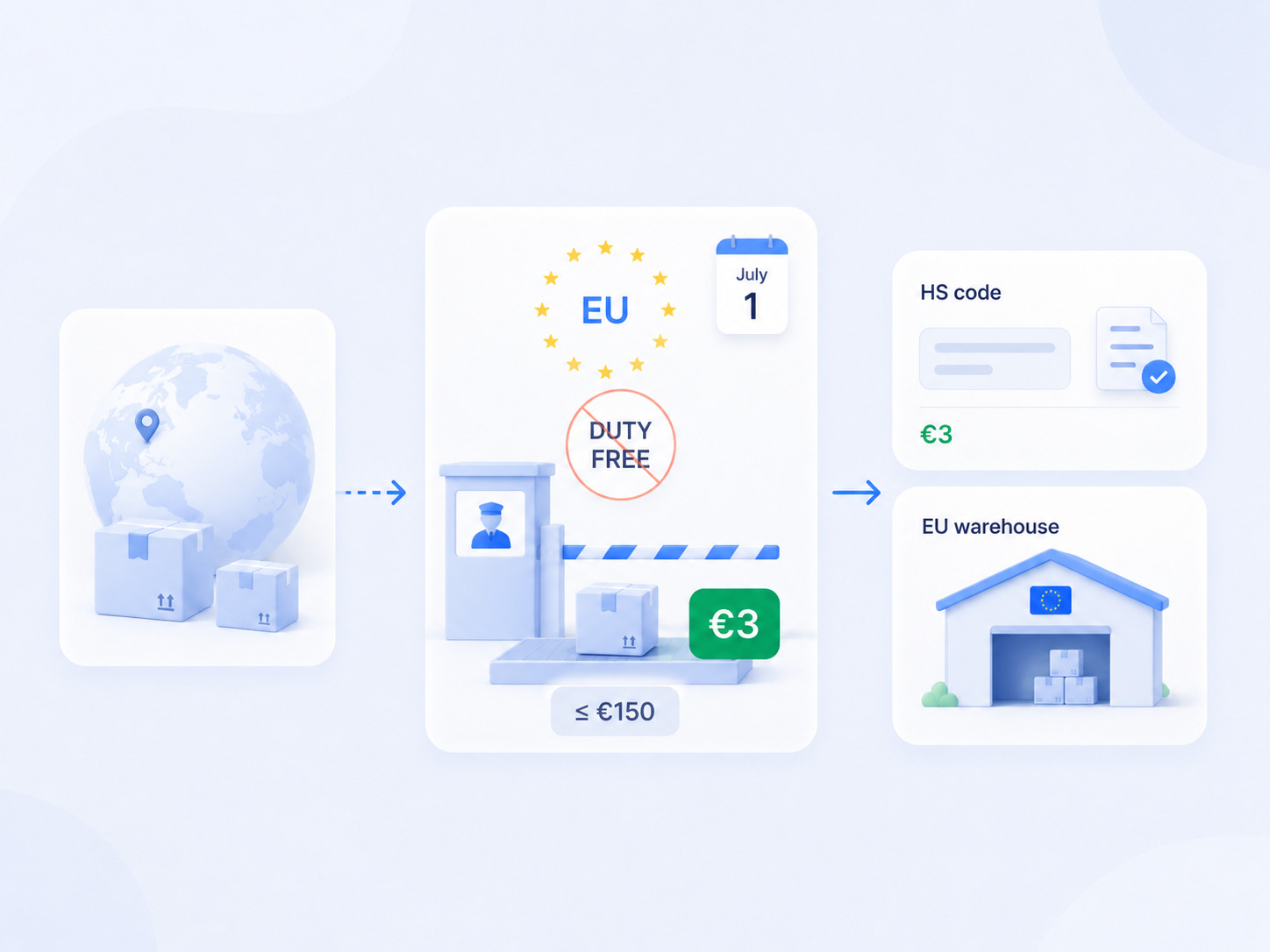
For years, low-value products flowed into the European Union duty-free under the "de minimis" rule. That era is over. As of July 2026, the EU applies a flat €3 customs duty per item on low-value consignments (up to €150) imported from outside the bloc, abolishing the duty exemption that applied until June 30.
Per the European Council, this new duty covers roughly 93% of all e-commerce flows into the EU, and it's charged to the seller or importer — not collected from buyers at the door. It's a transitional measure running until 2028, when the EU Customs Data Hub comes online and full product-specific duties take over. A separate EU-wide handling fee is also proposed for later in the year, and several member states have already layered on their own national charges.
This is part of a global tightening that's putting growing pressure on cross-border commerce. The US ended its own $800 de minimis exemption on packages last year, and the UK has signaled it will phase out its £135 threshold too. The direction is unmistakable: the age of frictionless, duty-free micro-parcels is closing. For sellers, the takeaways are concrete — review your pricing and landed costs, get your HS tariff classifications accurate (vague descriptions like "accessories" are now a liability), and expect regional warehousing inside the EU and smarter inventory placement to become far more attractive than shipping every low-value order across the border.
Brands that prepare now will capitalize while slower competitors scramble.
Amazon's new handling-time rule (June 29)
At almost the same moment, Amazon tightened the screws on its own sellers. As of June 29, 2026 — a Monday that landed right before the July EU deadline — every seller-fulfilled SKU must carry a handling time that accurately reflects its real shipping performance. No more padding delivery estimates as a safety buffer.
Amazon's logic is pure conversion: per its Seller Central notice, every one-day improvement in promised delivery time drives an average 5% sales increase, and over 87% of US seller-fulfilled orders already ship within a day. Sellers now have two ways to comply — enable Automated Handling Time (which Amazon recommends and which offers Late Shipment Rate protection) or maintain accurate SKU-level settings that Amazon monitors. Choose neither, and Amazon takes control, assigning a handling time based on your recent history.
The reaction on seller forums was predictably heated, with some sellers arguing the rule effectively tells them how to run their business — and one noting the perverse incentive to stop shipping products early just to keep handling times "consistent." Either way, the message to every Amazon seller is clear: faster, more accurate delivery promises are now the price of visibility on the platform, and they feed directly into conversions.
Read more: How to Start Dropshipping on Amazon in 2026
AI became the industry's center of gravity
If one theme defined the first half of the year, it's that AI moved from experiment to infrastructure across e-commerce.
The signal moment came earlier in June, on Thursday the 4th, when Pinterest announced a $4 billion commitment to AWS through 2031 — the largest infrastructure deal in the company's history — to power AI-driven visual search, recommendations, and personalized content for its 600 million-plus monthly users. It's the clearest sign yet that platforms see personalization as the battleground for the next decade.

Underneath the headline deals, AI reshaped day-to-day selling for retailers and brands alike:
On Amazon, AI tools increasingly help sellers boost product visibility, automate operations, and optimize listings to improve search rankings.
Launch speed collapsed. AI can now dramatically shorten the time it takes to launch an online business — drafting listings, product descriptions, and store copy in minutes — which is one big reason "done-for-you" business models are growing fast this year.
Customer experience got smarter. AI now handles complex customer queries efficiently and powers the deep personalization that increasingly drives loyalty and repeat revenue.
AR/VR matured. Enhanced try-on and visualization tools improved the customer experience and, crucially, reduced returns — a direct margin win.
The barrier to starting has never been lower, which means differentiation, brand, and customer experience are what separate businesses that win from those that blend into the box of look-alike stores.
Our best takes on AI in ecommerce:
AI Dropshipping: What It Is, and Why You Might Not Want to Build on It in 2026
Klaviyo AI Features: What's New, What Works, and Will They Generate Profit?
Mobile crossed the tipping point
A quieter but structural milestone: over half of all online transactions now happen on mobile devices. Mobile spending is accelerating globally — in the US, UK, India, and Japan especially — and retailers responded by pouring investment into mobile app experiences designed to capitalize on impulse buying among shoppers.
The lesson for any online store is blunt. If your checkout isn't fast, frictionless, and built mobile-first, you're leaking sales and conversions to competitors who have optimized for the screen where most buyers now actually choose to buy.
Strategic shift: profitability over growth
Perhaps the biggest under-the-radar story of the year is a change in mindset. After years of "growth at all costs," retailers and brands are now prioritizing profitability and operational efficiency — treating efficient operations as a competitive advantage rather than a back-office concern.
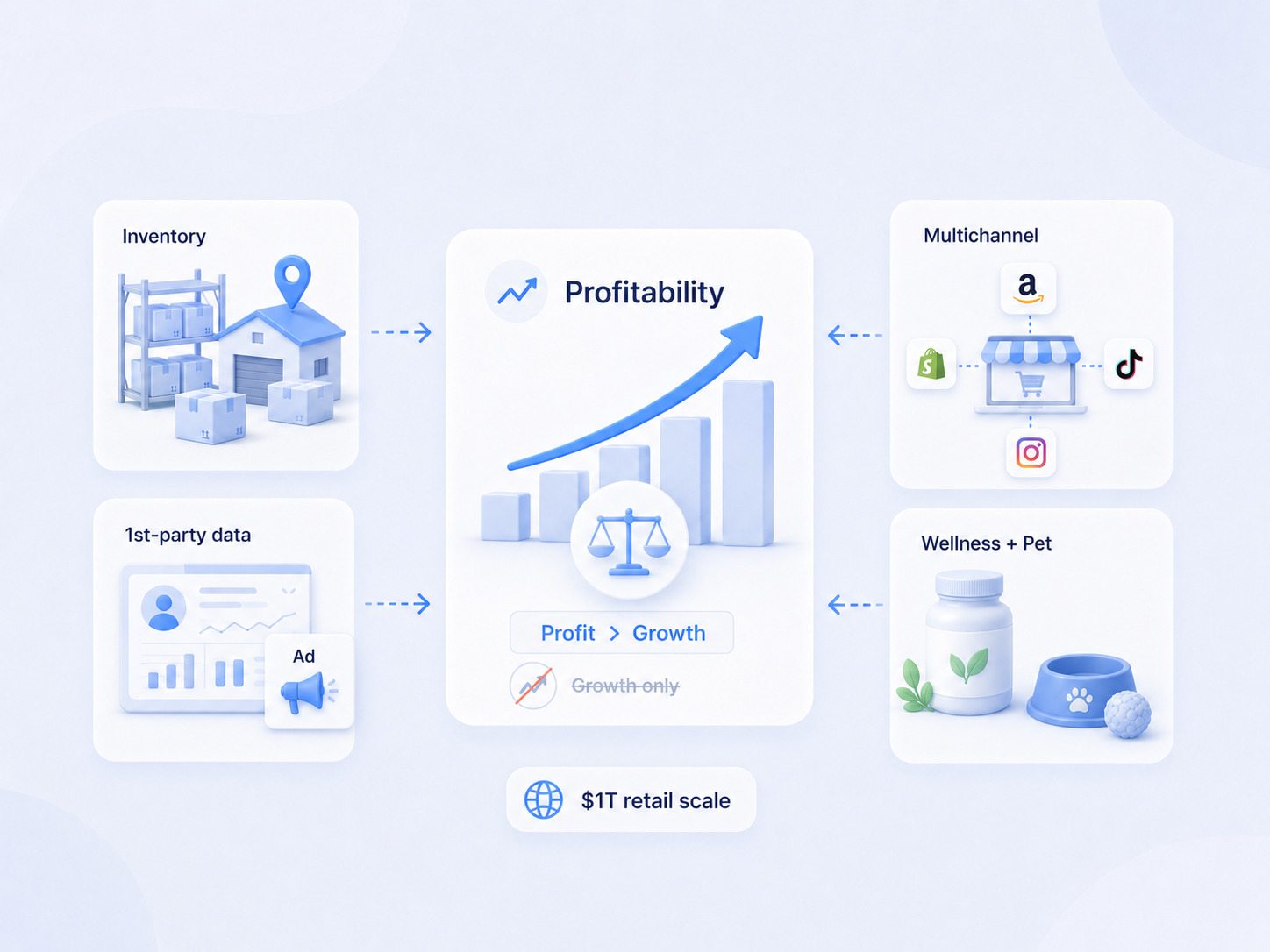
That shift shows up everywhere: companies investing in inventory optimization and regional warehousing to cut shipping costs and speed delivery, logistics investment focused on automation and smarter returns management, and a broad move toward first-party data as privacy regulations tighten and third-party cookies fade. Retailers are increasingly monetizing that first-party data by building their own advertising businesses — selling targeted ad space — and turning ad-supported streaming TV into a measurable commerce channel.
A few more threads from the half:
Walmart hit a milestone, becoming the first retailer to cross into the $1 trillion valuation club — a marker of how much scale now matters.
Multichannel is the default. Selling across multiple sales channels — your own store, marketplaces like Amazon and Etsy, and social platforms — is increasingly the way to grow revenue while reducing dependence on any single platform.
Social commerce kept rising, letting shoppers buy directly inside social apps, while coupons proved especially influential for younger buyers hunting for fair prices.
Profitable niches like wellness and pet products continued to see strong demand and outperform the market.
What it all means for sellers
Step back, and the first half of the year tells a coherent story. The regulatory environment is tightening (EU duties, stricter marketplace rules), the tech is getting radically more powerful (AI everywhere), the buyer has gone mobile-first and expects faster delivery and deeper personalization, and the smart operators have shifted from chasing growth to defending margin. Competition is intensifying from global marketplaces and social platforms alike — so owning your customer relationship and running efficiently are no longer optional.
That last point is where controlling your own store and customer experience becomes a genuine advantage. As sellers lean into first-party data, multichannel selling, and profitability, the ability to convert traffic efficiently on pages you own matters more than ever. A fast, conversion-focused funnel is a practical piece of that: tools like Funnelish for ecommerce, with one-click upsells and order bumps that lift average order value, help turn hard-won — and increasingly expensive — traffic into higher-value orders and more conversions. That's exactly the kind of efficiency the 2026 market rewards.
Because if the first half of the year is any guide, the second half won't slow down. Bookmark this article and check back as we track the latest ecommerce news through the rest of 2026.
Table of contents
Boost your eCommerce
sales today

24/7 support
No credit card required
Cancel anytime
24/7 support
No credit card required
Cancel anytime
