

Top WooCommerce Alternatives to Scale Your Online Store
30 May 2026
Anna P.
6 minutes
Let’s be completely honest about the current state of the WordPress ecosystem.
For over a decade, building an online store meant defaulting to the WooCommerce plugin. It is powerful, infinitely customizable, and powers millions of ecommerce stores globally.
But WordPress users are starting to wake up to a harsh reality.
Managing a high-traffic WooCommerce site requires deep technical knowledge. You are responsible for your own hosting server, site security, PCI compliance, and constantly monitoring conflicting plugin updates. Natively, WooCommerce uses heavy custom post types that can destroy your site speed if not optimized perfectly.
Handling all the technical aspects of an open-source platform drains the time you should be spending on marketing.
If you want an ecommerce solution that lets you focus on your business model rather than server maintenance, it is time to switch. Let's break down the best WooCommerce alternatives available today, starting with the ultimate hybrid platform for 2026.
1. Funnelish: All-in-One Store & Funnel Builder
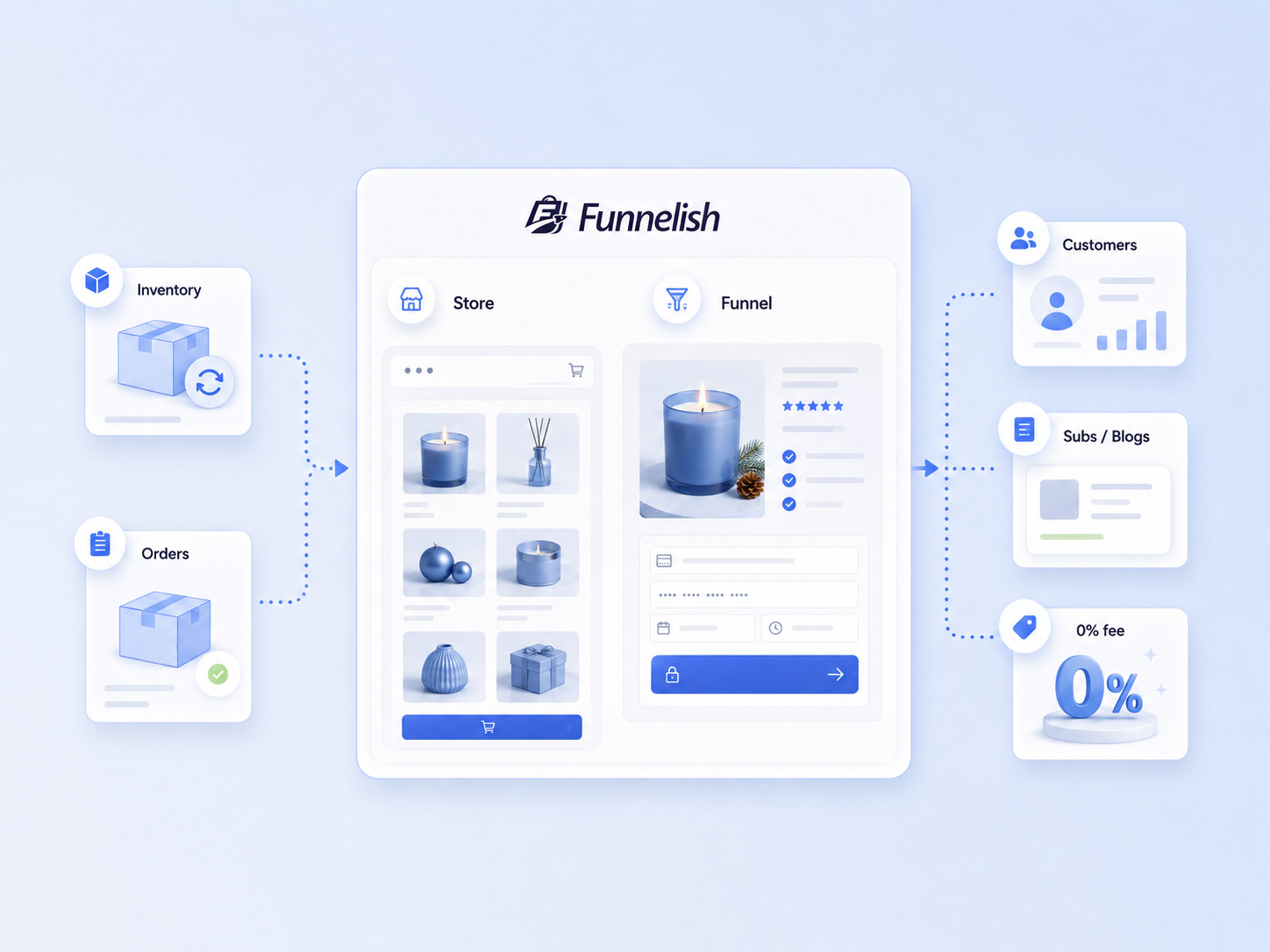
Most ecommerce platforms force you to choose between building a traditional storefront catalog or building high-converting sales funnels.
Funnelish completely shatters this limitation as one of the best WooCommerce alternatives.
While it has long been the best platform for building blazing-fast, standalone sales funnels, Funnelish is now releasing a massive update: Funnelish Stores. You no longer need to juggle multiple platforms or patch together a bulky WordPress site.
Key Features
Build a store in minutes: Launch a beautiful, conversion-optimized storefront right alongside your dedicated funnels using a sleek drag and drop builder.
Unified inventory: Drive paid traffic to a targeted funnel to maximize conversions, while still managing that exact product's inventory tracking within your main Store inventory.
Centralized dashboard: Manage all incoming orders, fulfillment, customer data, subscription management, and blogs from a single, intuitive interface.
Zero transaction fees: Unlike many other ecommerce platforms, Funnelish never takes a cut of your sales.
Best for
Merchants who want to maximize their average order value using funnels, while still maintaining a beautiful central storefront for organic browsing. It handles physical products, digital products, and recurring billing, connecting popular payment gateways like Stripe, PayPal, Apple Pay, and Google Pay.
2. Shopify: Hosted Giant
When people search for what to use instead of WooCommerce, Shopify is usually the first answer. It is a fully hosted solution, meaning they handle the servers, the site security, and the backend code.
Key Features
Massive app store for advanced features and email marketing tools
Rock-solid infrastructure that will not crash during Black Friday spikes
Clean inventory management and built-in point-of-sale systems
Limitations
While it removes technical details from your plate, it comes at a cost. Shopify charges high monthly fees on their paid plans, and if you do not use their native payment processing (Shopify Payments), they penalize you with extra transaction fees.
Best for
Growing businesses that want a hands-off, traditional catalog store and don't mind paying monthly fees for convenience.
Read more: WooCommerce vs Shopify in 2026: Honest Comparison
3. Easy Digital Downloads
If your business model revolves entirely around selling digital, forcing WooCommerce onto your site is massive overkill.
Easy Digital Downloads is a lightweight WordPress plugin built exclusively for digital downloads, online courses, and software.
Key Features
Uncluttered interface tailored for non-physical goods
Free plugin available, with powerful premium extensions for advanced needs
Features like an All Access Pass for membership sites or bulk file downloads
Limitations
It is not built for physical goods. If you plan to sell t-shirts alongside your ebooks in the future, EDD will severely limit you.
Best for
Creators wanting to sell digital files on an existing WordPress site without the bloat of a full physical ecommerce setup.
Read more: Kit Review: Is the Creator Platform Worth the Hype for Ecommerce?
4. Wix: Beginner Friendly Option
For small businesses or local brick-and-mortar shops that just want to sell online quickly, Wix has evolved from what it was in 2010.
Key Features
True drag and drop simplicity
Artificial design intelligence that can practically build the site for you based on a few questions
Built in tools for basic SEO, discount codes, and marketing
Limitations
Wix offers a free plan, but you cannot accept payments on it. You must upgrade to an unlimited plan or business tier to unlock payment gateways. Furthermore, it lacks the complete control and advanced customization that advanced developers crave.
Best for
Beginners who want an easy-to-manage website and don't require complex advanced features.
5. WP Simple Pay
Sometimes, you don't need a full-blown store. You just need to collect money securely on an existing site.
If you are a consultant, run a small membership site, or offer local services, setting up a massive shopping cart is a waste of time. WP Simple Pay is a standalone Stripe plugin for WordPress.
Key Features
Accept one-time payments or set up recurring payments and subscription features
Optimized checkout overlays that keep users on your current page
Built-in support for Google Pay and Apple Pay
Limitations
It is not a shopping cart. Users cannot add three different items to a cart and check out at once. It is strictly for single-item or subscription purchases.
Best for
Service providers and freelancers who want to accept payments on their existing website without a complex setup.
Read more: Ecommerce Subscription Model Is the Last Unfair Advantage
6. Adobe Commerce (Formerly Magento)
If your brand generates massive annual sales and requires deep, enterprise-level architecture, you need to look at Adobe Commerce.
Key Features
Incredible scalability for massive catalogs
B2B functionality and deep multi-store management
Headless commerce capabilities, allowing you to decouple your frontend design from your backend database
Limitations
This is not for the faint of heart. It requires a dedicated development team, massive server resources, and significant financial investment.
Best for
Enterprise brands doing millions in revenue who need a highly customized, robust platform and have the budget to support it.
Bottom Line on Best WooCommerce Alternatives
There is no single perfect platform; there is only the best platform for your needs.
If you want the ultimate freedom and don't mind managing your own servers, stick with WordPress and explore plugins like EDD or WP Simple Pay. If you want a hands-off, hosted catalog, Shopify is the industry standard.
But if you want to aggressively scale your revenue in 2026?
You need a platform that marries the browsing experience of a traditional store with the high-converting power of a dedicated sales funnel. With the launch of Funnelish Stores, you get a unified ecommerce solution that centralizes your inventory, removes hidden fees, and maximizes your profits.
Frequently Asked Questions about WooCommerce Alternatives
What to use instead of WooCommerce?
Use Funnelish for high-converting sales funnels alongside a unified storefront, Shopify for a hands-off hosted catalog, or Easy Digital Downloads for selling digital products.
What are the top 5 eCommerce platforms?
In 2026, the market leaders are Funnelish, Shopify, BigCommerce, Adobe Commerce, and Wix, each serving distinct business models and technical needs.
Is there a free version of WooCommerce?
Yes, the core WooCommerce plugin is 100% free to download and use. However, you must pay for web hosting, SSL certificates, and premium extensions.
Is WooCommerce or Wix better?
Wix is much better for beginners who want drag-and-drop simplicity without managing servers. WooCommerce is better for tech-savvy users who want complete ownership and deep customization.
Which platform is best for e-commerce?
Funnelish is best for maximizing average order value through optimized funnels, while Shopify remains the top choice for massive inventory catalog stores.
Should I use Shopify or WooCommerce?
Use Shopify if you want an all-in-one hosted platform where security and maintenance are handled for you. Use WooCommerce if you want complete control over your code and hosting environment.
Is WordPress still worth it in 2026?
Yes. Its SEO capabilities and ultimate flexibility remain unmatched, but it requires active maintenance, technical knowledge, and premium hosting to run an ecommerce store.
Is WooCommerce 100% free?
The core software is free, but running a profitable store requires paid hosting, security tools, payment gateway fees, and premium add-ons to unlock advanced features.
Table of contents
Boost your eCommerce
sales today

24/7 support
No credit card required
Cancel anytime
24/7 support
No credit card required
Cancel anytime
