

Shopify Dropshipping in 2026: What Works, and What Operators Are Doing Differently
21 March 2026
Anna P.
18 minutes
Shopify dropshipping is one of those topics that generates two completely opposite takes depending on who you ask. Half the internet will tell you it's dead. The other half is quietly running stores that process hundreds of orders a month. Both groups are talking past each other because they're describing different things.
The low-effort version of dropshipping on Shopify — find a product, import products to a generic online store, run some Facebook ads, repeat — is genuinely finished. That playbook relied on information asymmetry that no longer exists and consumer patience that evaporated years ago.
The serious version — a branded Shopify dropshipping store with reliable suppliers, a conversion-optimized funnel, and a post-purchase strategy — is not only alive but operating in a market that's projected to hit $476 billion globally in 2026 (PR Newswire), growing at roughly 24% annually since 2020. Dropshipping stores on Shopify have grown from 5.16% to 12.82% (StatsUp) of all stores on the platform — which means the competition is real, but so is the opportunity.
Here's what's working right now for anyone who wants to start Shopify dropshipping seriously, and what separates the operators making money from the ones burning through ad spend.
Real State of Shopify Dropshipping in 2026
Before the tactics, the context. A few numbers worth internalizing if you're thinking about the dropshipping business model in 2026:
More than 75% of ecommerce businesses now use dropshipping for order fulfillment. (Market Growth Reports)
Dropshipping stores generate 50% more profit than traditional inventory-based stores. (Wix)
That second statistic surprises most people, but the math holds: when you remove the upfront costs of bulk inventory, storage space, and warehouse logistics from your ecommerce business, the profit margins look different even at thinner per-unit rates. You're not managing inventory you might not sell. You're not tying capital to products sitting on shelves.
Most dropshippers earn between $1,000 and $5,000 per month — but only 1.5% break $50,000 monthly. (StatsUp) That gap is the most instructive number in the dropshipping market. The operators in the top percentile aren't selling fundamentally different dropshipping products. They're running better infrastructure, converting traffic more efficiently, and extracting more revenue per customer through post-purchase sequences. They're treating their Shopify dropshipping business as a real ecommerce business, not a passive income experiment.
84% of dropshippers say finding good suppliers is their biggest challenge. That number has remained stubbornly consistent for years, which tells you that most operators are still rushing the dropshipping supplier selection step — and then paying for it later in shipping delays, customer complaints, and margin erosion.
What's shifted most noticeably heading into 2026 is where the pressure is coming from on the customer side. 63% of customers now expect delivery within 3 days — a threshold that was once Amazon-specific and is now the baseline across all ecommerce. (CapitalOne Shopping)
That expectation is reshaping which dropshipping suppliers are viable and which aren't, more than any other single factor. Overseas suppliers with 15–25 day shipping times are effectively disqualified from serving the US and UK markets at any meaningful volume. The shipping costs and shipping times equation has fundamentally shifted in favor of domestic or regional sourcing.
Delivery speed is only half of what shifted, though. The other half is import duty. In 2025 the US ended its $800 de minimis exemption, so the low-value parcels that used to enter duty-free from overseas suppliers now carry import duty — and for Chinese-origin goods those duties can stack. So the move toward domestic and regional sourcing isn't only about hitting a 3-day delivery window anymore. It's also about keeping import duty out of your per-order cost, because a domestic supplier that imported its stock in bulk clears that duty once, while a direct-from-overseas parcel pays it every time. Speed and duty now push in the same direction, which is why the sourcing shift below is more decisive than delivery expectations alone would make it.
Setting Up Your Shopify Dropshipping Store: Decisions That Matter
Most guides to starting Shopify dropshipping spend most of their word count on the basics: create a Shopify account, pick a Shopify store name, choose from the available customizable themes, set up a custom domain, connect a dropshipping app, and start selling. That's all true and necessary — but it's not where your business is won or lost.
The basic Shopify plan gives you enough to get started. Shopify Payments handles transactions cleanly for most markets. The Shopify app store has mature integrations for every major dropshipping platform. A solid store design with clear product pages and essential pages (About, Contact, Store Policies, Shipping Information) is table stakes. None of this is where operators who are serious about dropshipping on Shopify should spend most of their thinking.
The decisions that actually determine whether your Shopify dropshipping store makes money:
How you structure your landing pages versus your general store. A dropshipping store where every ad campaign points to the Shopify homepage is functionally sending paid traffic to a dead end. The homepage has navigation, multiple product categories across your entire product range, and no specific message for the visitor who just clicked an ad for a specific product.
A dedicated product landing page — built around the specific offer being advertised, with a single clear path from arrival to checkout — can consistently convert the same traffic at as much as two to three times the rate of a standard Shopify product page. This is one of the highest-leverage improvements available to any Shopify dropshipping business and one of the least consistently implemented.
Your fulfillment method and shipping zone configuration. Before you start selling, map out exactly which shipping zones you're serving, what your actual shipping rates will be from your suppliers to those zones, and whether offering free shipping is viable given your profit margins.
Many dropshipping stores offer free shipping as a conversion lever — and it is effective — but if your supplier's shipping costs aren't baked into your retail price correctly, free shipping destroys your margin. The math needs to work before your first ad goes live, not after your first hundred orders. For any product you source from overseas, that math now has to include import duty as well as shipping, since duty applies to the low-value parcels that used to clear duty-free.
Your essential pages and store policies. Return policies, shipping information pages, and contact options aren't just legal requirements — they're conversion elements. 70% of buyers say reviews and store design influence trust (Yahoo Finance) when shopping from unfamiliar brands, and a dropshipping store without clear policies reads as untrustworthy to the segment of shoppers who check before buying. This is a quick win that too many stores skip in the rush to launch.
Your product descriptions. Manufacturer-provided product details are generic by definition — the same text appears on every dropshipping store sourcing from the same supplier. Writing original product descriptions optimized for relevant keywords serves two purposes simultaneously:
It differentiates your store from competitors selling the exact same products.
It makes your product pages indexable for organic search traffic.
It's one of the few tasks in running a Shopify dropshipping store where the upfront cost in time pays dividends across both paid and organic channels.
Choosing Reliable Dropshipping Suppliers
The shift in 2026 is that domestic and regional supplier networks have matured enough to be genuinely viable across a wide product range. CJDropshipping had close to 1.7 million products and a 99.9% customer satisfaction rate as of 2025 (Whop), while Spocket was used by over 500,000 dropshippers and offered access to suppliers in the US and Europe with a catalog of over 100 million products.
Working with multiple suppliers across your product catalog — rather than relying on a single source — gives you both redundancy and the ability to optimize shipping times by region.
The economics on per-unit cost from US or EU-based suppliers are slightly worse than overseas sourcing. But the shipping times, customer satisfaction outcomes, and reduced dispute rates more than compensate for the margin difference — particularly once you factor in the cost of handling customer orders that go wrong. A chargeback from a customer who waited 25 days for a product costs you the product value, the processing fee, and the review. The math on domestic sourcing looks very different when you account for the full cost of a poor customer experience.
That per-unit gap has also narrowed on its own since the end of de minimis. The overseas price advantage used to be the full difference in product cost. Now that direct-from-overseas parcels carry import duty the domestic option doesn't, the real gap between the two is smaller than the sticker prices suggest — sometimes much smaller. When you run the domestic-versus-overseas comparison in 2026, put the duty on the overseas side of the ledger, or you'll overstate how much cheaper overseas sourcing actually is.
The practical supplier evaluation framework for 2026:
Can they ship to your primary market within 5 days?
Do they offer real-time inventory sync with your Shopify apps to prevent overselling?
Do they have documented quality control you can verify, not just claimed on their website?
Can they handle the order volume you're planning to reach at peak — or will they become a bottleneck?
Where do they fulfill from, and if it's overseas, what does the landed cost look like once import duty is included?
And critically: what's their actual track record, not their marketing copy?
Rushing past these questions to start selling is how most dropshipping stores generate their first wave of bad reviews. That's an expensive problem to fix in a store where you're simultaneously trying to build customer loyalty and brand identity from zero.
Read more: Graypoplar Dropshipping: Trend Analysis, Logistics & Funnel Strategy
Product Research That Isn't Already Saturated
Google Trends is where every guide tells you to start. It's also where everyone else starts, which means the dropshipping products surfaced at the top of any trend have usually already attracted dozens of competitors by the time you find them.
The operators finding genuinely high-demand niches in 2026 are layering multiple market research sources rather than relying on any single tool. TikTok's Creative Center shows what's generating real engagement in specific categories — actual buying behavior from social traffic, not just search volume from people who are still in research mode.
Reddit communities in niche interest areas surface product frustrations that haven't been packaged into a proper offer yet. Amazon's "Movers and Shakers" list shows what's gaining velocity in the last 24 hours, which is more actionable than what's been trending for a month.
The underused product research signal: look for high-demand products with weak landing pages behind them. If you search a product and the top results are Amazon listings or generic Shopify stores with slow pages and copy-pasted product details from the supplier, that's a conversion infrastructure problem you can solve — not a market that's closed.
Electronics lead the dropshipping market with 34% share, with fashion following with a 23% share. (Market.us) Both categories are full of specific niches where existing dropshipping stores are leaving conversion rate improvement on the table. That's a dropshipping business idea that doesn't require finding a product nobody else sells — it requires building a better store around a product that already has proven demand.
It's also worth considering print-on-demand products alongside standard dropshipping. Print-on-demand lets you offer custom products — apparel, accessories, home goods — without holding inventory, with the supplier producing and shipping each item on order. The margins are thinner, and the product range is more limited, but the ability to build a genuinely unique brand identity around custom products is a meaningful differentiator in a market full of stores selling identical items. Print-on-demand carries one more quiet advantage in 2026: many of these suppliers produce regionally, inside the market they serve, which sidesteps the import duty now attached to goods shipped in from overseas.
Read more: Digital Dropshipping: How to Sell High-Margin Products with Zero Inventory
Marketing Strategy: What's Driving Traffic in 2026
68% of dropshipping stores' traffic comes from a mix of organic and paid channels, like Facebook Ads and Google Ads. (AutoDS) That concentration is both a strength and a vulnerability. The playbook is mature and well-documented, which means the barrier to running competent Meta ads has dropped. It also means ad costs on those platforms are under continuous upward pressure as more stores compete for the same audiences.
Google ads are increasingly part of the mix for dropshipping stores with longer consideration cycles, where purchase intent is higher and the cost per click, while elevated, comes with a buyer who's already decided they want the product category.
The stores building durable ecommerce businesses in 2026 are the ones investing in organic traffic alongside paid channels. Search engine optimization for a dropshipping store doesn't require a full content team — it requires product descriptions written around relevant keywords real shoppers use, not manufacturer copy-pasted from supplier sheets, and a site architecture that makes it easy for search engines to index your product pages and organize products by category logically.
A dropshipping store in a specific niche with genuinely optimized product descriptions, strong marketing content, and well-structured collection pages can generate meaningful organic traffic within 6–9 months. At that point, the economics of the business change substantially because that traffic carries no acquisition cost at all.
Social media marketing has also matured significantly as a sales channel. Dropshipping stores with at least one active social media account generate 32% more revenue, and video ads often generate more clicks than static image ads. (SellersCommerce) The brands getting the most from social aren't running the biggest ad budgets — they're producing marketing content that feels native to each platform and routing that traffic to product pages built for the intent level of visitors arriving from social.
TikTok deserves specific attention. The platform's algorithm surfaces products to users who weren't actively searching for them — which is a genuinely different traffic quality than search intent from Google Ads or Amazon. A 15-second product demonstration video can drive more potential customers in 48 hours than a week of paid search in the same category.
The challenge — and this is where most TikTok-sourced traffic fails to convert — is that social visitors arrive in a high-excitement, low-patience state. Your landing page and checkout need to match that energy: fast load times, immediate product clarity, minimal steps to purchase.
Read more: Social Commerce Just Hit $100 Billion
Post-Purchase Gap Most Shopify Dropshipping Stores Ignore
Here's the economic reality that most operators running a Shopify dropshipping store underestimate: the cost of acquiring a new customer versus the cost of selling to an existing one. Repeat customers cost 5–7x less to generate revenue from than new customer acquisition. Most dropshipping stores direct all operational energy toward the top of the funnel — traffic, creative, product pages — and treat what happens after the first sale as an afterthought.
The practical opportunity in 2026 is a post-purchase upsell offered immediately after checkout confirmation — before the customer has left your environment. The customer just demonstrated trust by completing a transaction. Their payment details are entered. The psychological friction of the buying decision has been resolved. Offering a complementary product in that window, priced below the initial purchase and requiring a single click to accept, can add 15–25% to average order value without any additional ad spend on your end. That extra order value matters more in 2026 than it used to, because it is also the most direct way to offset the import duty now sitting on overseas-sourced goods — margin you recover after the first sale rather than at the border.
Customer loyalty in dropshipping is built in the moments after the first order — in how you communicate shipping information proactively, how you handle the rare case when a supplier causes a problem, and what the unboxing experience communicates about your brand identity. These aren't afterthoughts in a serious dropshipping business; they're the mechanism by which a one-time buyer becomes a repeat customer, and the overall unit economics of the business improve over time.
Shopify Apps Worth Using in 2026
The Shopify app store is mature and somewhat overwhelming — tens of thousands of Shopify apps covering every conceivable function. The ones that actually move the needle for a Shopify dropshipping business fall into a few clear categories.
Dropshipping and Supplier Apps
DSers (for AliExpress sourcing), Spocket (for US and EU suppliers), and CJDropshipping are the most widely used. Each lets you import products, sync inventory, and automate order fulfillment in different ways. DSers works well for volume and speed; Spocket is worth the cost if domestic shipping times are central to your brand promise; CJDropshipping sits in the middle and has improved its quality control significantly. A 2026 note on this choice: an app oriented toward US and EU suppliers, like Spocket, now also helps you avoid the per-parcel import duty that comes with sourcing directly from overseas — a consideration that used to be purely about shipping speed and is now about landed cost too.
These are the foundation — pick one that matches your supplier strategy, not the one with the best affiliate marketing behind it.
Email and SMS
Klaviyo dominates this category for Shopify dropshipping stores and for good reason — its segmentation based on purchase behavior and browsing activity is more sophisticated than most alternatives. An abandoned cart sequence alone can recover 10–15% of orders that would otherwise have been lost. Combined with a post-purchase sequence, it's the highest-ROI marketing automation available to a dropshipping store at any scale.
Analytics
The Shopify dashboard gives you enough to manage basic operations, but funnel-level analytics — seeing where visitors drop out between landing on a product page and completing checkout — requires more granular tracking. Knowing whether you're losing people at the product page, the cart, or the checkout tells you exactly where to invest improvement effort.
Where Shopify's Infrastructure Has Limits
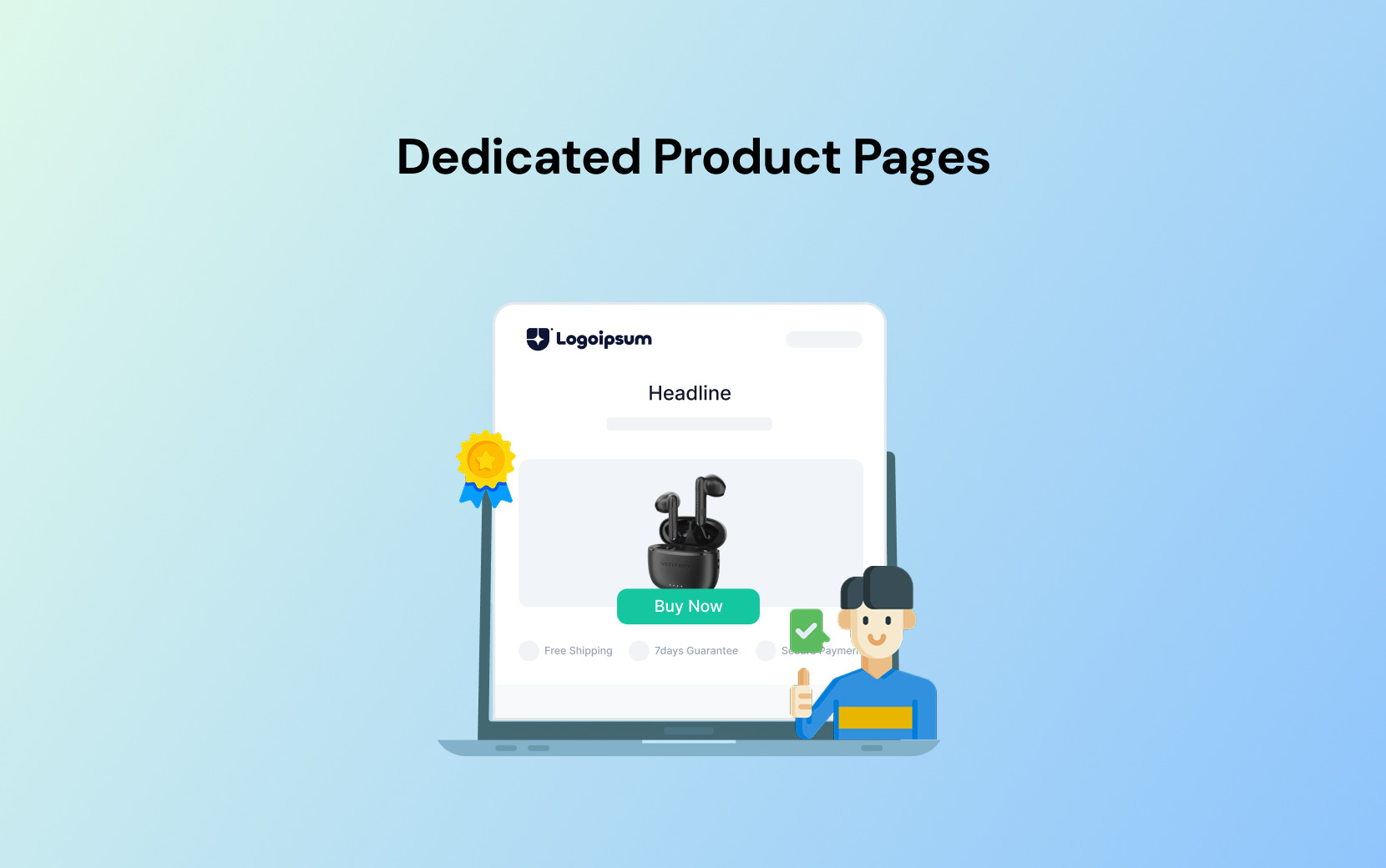
It is an excellent platform for starting a Shopify dropshipping business. The Shopify platform's ecosystem — app integrations, payments, the Shopify dashboard, and the depth of the app store — makes it one of the most capable platforms for managing inventory, automating order fulfillment, and running multiple sales channels from a single Shopify account.
What Shopify wasn't designed to optimize is the conversion layer: specifically, the critical gap between a potential customer arriving from an ad and completing a purchase. The standard Shopify store architecture — with its product pages, cart, and checkout flow — was built for general ecommerce. It works. But it wasn't purpose-built to convert paid social traffic at the highest possible rate, and that distinction matters when your profit margins are thin and your customer acquisition cost is your biggest line item.
This is the problem that operators serious about their Shopify dropshipping business eventually run into — and it's the gap that platforms like Funnelish address directly. Not as a replacement for Shopify, but as the conversion layer that sits in front of it. A Funnelish funnel handles the landing page and checkout experience — with pages that load in under a second, checkout flows stripped of unnecessary friction, and post-purchase upsells built into the flow — while syncing all customer orders back to Shopify for fulfillment.
You keep the operational backend of your Shopify dropshipping store intact: your supplier connections, your inventory management, your order routing. You add a frontend built to convert at the level that actually justifies the ad spend behind it.
For operators who've already validated a product on a standard Shopify store and want to push conversion rates further — or for those who want to start Shopify dropshipping with better infrastructure from day one — it's worth understanding what a purpose-built funnel looks like versus what a standard Shopify store setup delivers.
Only 5–10% of Shopify stores are considered successful (Digital Cornerstone), and the stores that break through have something in common: they make it easy for customers to get answers, get help, and feel confident buying. The conversion layer is exactly where that confidence is built or lost.
Bottom Line on Shopify Dropshipping in 2026
The dropshipping business model isn't broken. The version that required minimal effort and no real business thinking is finished — and that's not a bad development for operators who are willing to do the work properly. It means the competition you're facing has thinned at the serious end of the market.
The Shopify dropshipping stores succeeding right now have solved three problems simultaneously: the supplier problem, with reliable suppliers and domestic or regional fulfillment that meets modern shipping expectations and keeps import duty out of per-order cost; the traffic problem, with a genuine marketing strategy across multiple sales channels including paid ads, social media marketing, and organic traffic; and the conversion problem, with infrastructure built to turn potential customers into buyers at a rate that makes the ad economics work.
Success depends on treating your dropshipping store as a real ecommerce business from day one — with a solid foundation in product sourcing, a store design that builds customer trust, product descriptions that serve both buyers and search engines, and a post-purchase strategy that builds customer loyalty beyond the initial sale.
The opportunity in Shopify dropshipping in 2026 is real. The path to it runs through doing the foundational work properly, not through finding a shortcut that stopped existing years ago.
Shopify Dropshipping FAQs
Is it worth dropshipping on Shopify?
Yes, for operators who treat it as a real online business. Shopify's ecosystem — its app store, Shopify dropshipping apps, Shopify Payments, and order fulfillment infrastructure — makes it one of the most capable platforms to sell online. The caveat is that success depends on solving the supplier, traffic, and conversion problems simultaneously.
The basic Shopify plan gives you everything you need to get started; the upfront costs are low relative to traditional retail. What Shopify doesn't provide is a guarantee — it provides infrastructure. What you do with it determines whether the business model works.
Is dropshipping dead in 2026?
The generic, high-volume, low-differentiation version is effectively finished. The branded, niche-focused, conversion-optimized version is growing. The global dropshipping market is valued at $476 billion in 2026 — this isn't the number of a dying model. This is the number of a model that's filtering out operators who weren't treating it seriously to begin with.
If your Shopify dropshipping store has a real brand identity, reliable suppliers with acceptable shipping times, and a marketing strategy grounded in actual market research, you're competing in the part of the market that's growing.
Read more: Is Dropshipping Worth It in 2026?
Is Shopify dropshipping still profitable?
It is, but profit margins require active management. A typical dropshipping store operates on 20–30% gross margin before ad spend, which means customer acquisition costs determine profitability. Since the end of the $800 de minimis exemption, that gross margin also has to absorb import duty on any goods sourced from overseas, which is one more reason operators are moving toward domestic and regional suppliers. The stores pushing beyond baseline margins in 2026 are doing it through post-purchase revenue — upsells, repeat purchase sequences, and offers to existing customers — that increase what each customer spends without increasing what it cost to acquire them.
Shopify dropshipping is profitable when the full system is working, not just the product sourcing and ad buying pieces.
Table of contents
Boost your eCommerce
sales today

24/7 support
No credit card required
Cancel anytime
24/7 support
No credit card required
Cancel anytime
