

Shopify Website Templates: What's the Right One for Your Business?
29 May 2026
Anna P.
6 minutes
If you are launching a brand this year, your website's foundation is everything.
You can have the greatest physical items in the world, but if your online store loads slowly, breaks on a mobile device, or looks like it was built a decade ago, visitors will bounce. They will hit the back button, reject your brand, and buy from your competitor.
Choosing between thousands of Shopify website templates can feel paralyzing. You want something that balances speed, visual appeal, and hardcore ecommerce functionality. You want a professional setup that drives massive conversions without forcing you to write custom code.
To save you hours of digging through the official theme store, we have analyzed the current market. Let's explore the absolute best Shopify themes available in 2026. We will look at eight themes — four free and four premium — that are dominating the industry right now.
Best Free Themes in 2026
Do not let the price tag fool you. Thanks to Shopify's Online Store 2.0 architecture, modern free themes are incredibly fast and pack enough features to get a serious business off the ground. They are built to be easy to customize, allowing merchants to test the waters before investing.
1. Dawn (Gold Standard)
Dawn is the reference theme that all other templates are measured against. It is radically lightweight and engineered purely for speed.
Vibe: A modern, minimalist layout with clean design.
Best for: Almost any beginner. If you need to validate your product fast, Dawn is the ideal starting point.
Key strengths: It strips out heavy JavaScript, delivering a near-perfect 95+ PageSpeed score on both mobile and desktop. It uses large images and crisp typography to let your items do the talking.
2. Craft (For Creators)
If you sell handmade goods or bespoke items, your site needs an organic, editorial feel of Craft.
Vibe: Earthy, elegant, and focused heavily on visual storytelling.
Best for: Artisans, pottery makers, and independent apparel brands.
Key strengths: Craft comes with built-in layouts designed for rich storytelling. It helps you display your craftsmanship process directly on the product pages, rather than burying that information on an About Us page.
3. Sense (Beauty Standard)
Health, wellness, and beauty brands require a softer, more luxurious aesthetic. Sense delivers this natively.
Vibe: Calming, fresh, with rounded elements and soft color palettes.
Best for: Skincare, cosmetics, and supplement brands.
Key strengths: It includes specific sections tailored for the beauty industry, such as ingredient lists, trust badges, and comprehensive description layouts that help buyers learn exactly what they are putting on their skin.
4. Studio (For Digital & Art)
If your primary goal is to enhance your portfolio while selling, Studio is a masterpiece.
Vibe: Gallery-style, colorful, and highly visual.
Best for: Artists, photographers, and digital creators.
Key strengths: It offers incredible flexibility for framing artwork and framing custom collections. It allows users to navigate through distinct creator profiles easily.
Top Premium Shopify Themes in 2026
When your store crosses the $20,000/month mark, relying on a free theme usually means you are relying on a dozen third-party Shopify apps to add functionality. Those apps slow down your website. Upgrading to a premium template consolidates your tech stack, providing advanced options natively.
5. Impact ($400)
Impact is the heavy hitter for high-volume brands that need massive features without sacrificing speed.
Best for: Stores processing hundreds of orders daily.
Why it wins: It includes over 35 distinct sections you can set up without coding. It features interactive layouts, animated scroll effects, and native cross-selling blocks for powerful product recommendations. It handles large catalogs beautifully.
6. Turbo ($380)
Turbo by Out of the Sandbox lives up to its name. It is the only premium theme that consistently rivals Dawn in raw loading speed.
Best for: Speed-obsessed merchants and large dropshipping operations.
Why it wins: It uses smart preloading techniques. When a user hovers over a link, Turbo starts loading the next page in the background, making navigation feel instantaneous. It includes incredibly robust filters and an advanced predictive search bar.
7. Prestige ($400)
If you are selling high-ticket luxury goods, your website must look expensive. Prestige is the undisputed king of luxury design.
Best for: High-end fashion, luxury watches, and premium cosmetics.
Why it wins: It features stunning lookbook functionality. You can upload a lifestyle photo of a model and place clickable hotspots directly over the jacket, shoes, and sunglasses, allowing shoppers to instantly add those specific items to their cart.
8. Impulse ($400)
Impulse is engineered entirely around running aggressive sales, discounts, and promotions.
Best for: Apparel brands running frequent drops, flash sales, and heavy ad campaigns.
Why it wins: It comes pre-loaded with custom promotion designers, native countdown timers, and highly visible sale badges. It is designed to create urgency and force the user to buy before inventory runs out.
Read more: 20 Best Shopify Themes in 2026
How to Choose the Right Theme for Your Shop
Do not just pick a theme because the demo looks pretty. You must evaluate the architecture based on your specific business needs.
When you browse the Shopify marketplace, use the sidebar filters to find themes tailored to your category and style.
Here is your evaluation checklist:
Mobile Responsiveness First
Check the demo on your phone, not your laptop. Ensure the buttons are thumb-friendly and the menus are easy to tap.
Catalog Size
If you sell 500 items, you need a theme (like Impact) with advanced mega-menus and tag filtering so customers can easily explore your collections.
Native Features
Does it include a sticky add-to-cart button? Does it have native trust badges to protect your conversion rate? If you have to install five apps to make the theme work, choose a different one.
When a Theme Isn't Enough: Funnelish
Even the most expensive, clean themes share one fatal flaw: they are designed to be catalogs.
When you are spending $1,000 a day on Facebook or TikTok ads, sending that paid traffic to a standard product page is a massive risk. A traditional shop gives the user too many options. They can click on the About Us page, read your cookies policy, or get lost browsing your blog content.
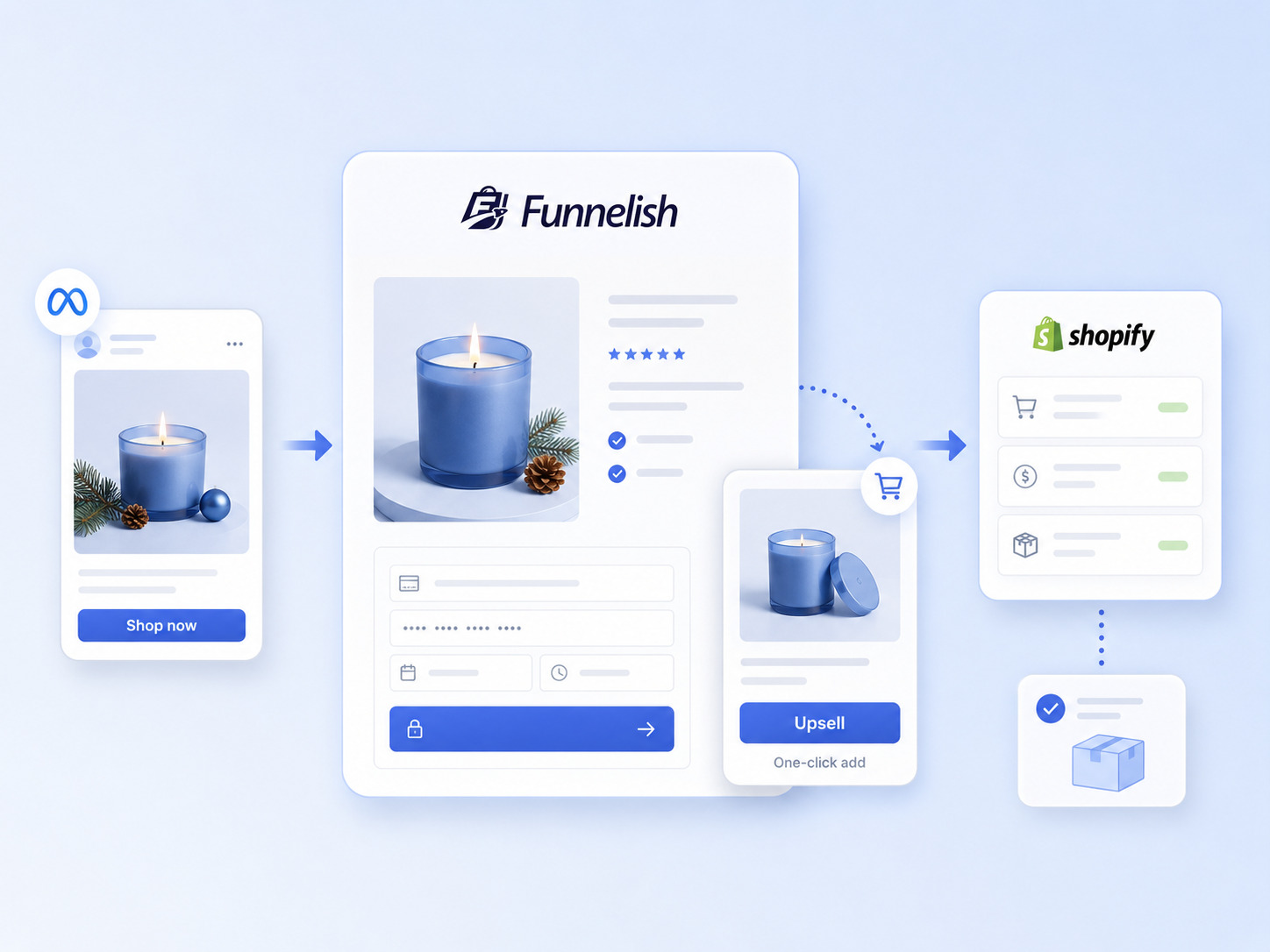
If you want to maximize your ROI on paid traffic, you need to combine your beautiful Shopify backend with the ruthless conversion power of Funnelish.
Why Brands Use Funnelish for Paid Ads
Instead of letting ad traffic wander your site, you route them to a dedicated Funnelish landing page.
Distraction-Free
It removes the bloated header and footer, forcing the user to focus entirely on the single offer you advertised.
Lightning fast
Because it bypasses the heavy native theme code, the pages load instantly anywhere in the world.
One-click upsells
After the buyer completes their initial purchase, Funnelish presents a post-purchase offer. They can add it to their order with a single click, instantly boosting your Average Order Value.
Seamless Syncing
Funnelish captures the payment and syncs all the order data back to your main Shopify dashboard. You fulfill orders exactly as you always have.
Bottom Line
Your choice of theme dictates the baseline health of your brand.
If you are just launching and want to create an asset with zero overhead, install a lightweight option like Dawn or Craft. As you scale, invest in a premium architecture like Turbo or Prestige to unlock deep customization and native marketing tools.
Once your store looks professional and your organic pages are dialed in, stop making arbitrary changes to the design. Shift your focus. Route your paid traffic through dedicated Funnelish sales funnels to effortlessly capture leads, crush cart abandonment, and scale your revenue.
Table of contents
Boost your eCommerce
sales today

24/7 support
No credit card required
Cancel anytime
24/7 support
No credit card required
Cancel anytime
