

What Is Organic Dropshipping? 2026 Guide to Selling Without Ads
24 June 2026
Anna P.
8 minutes
Quick answer: Organic dropshipping is the practice of running a dropshipping business using free, unpaid marketing instead of paid ads. Rather than buying traffic through Google Ads or paid social, you attract customers through organic channels — SEO, TikTok videos, content marketing, and social media posts — that earn attention on their own. It has a low initial cost, builds real brand authenticity, and focuses on sustainable growth rather than instant sales. The trade-off: organic dropshipping takes time and consistent effort to pay off.
If rising ad costs are eating your margins, organic is the answer more and more entrepreneurs are turning to. This guide explains what organic dropshipping is, how it works, and how to start — without spending a dollar on ads.
What is organic dropshipping?
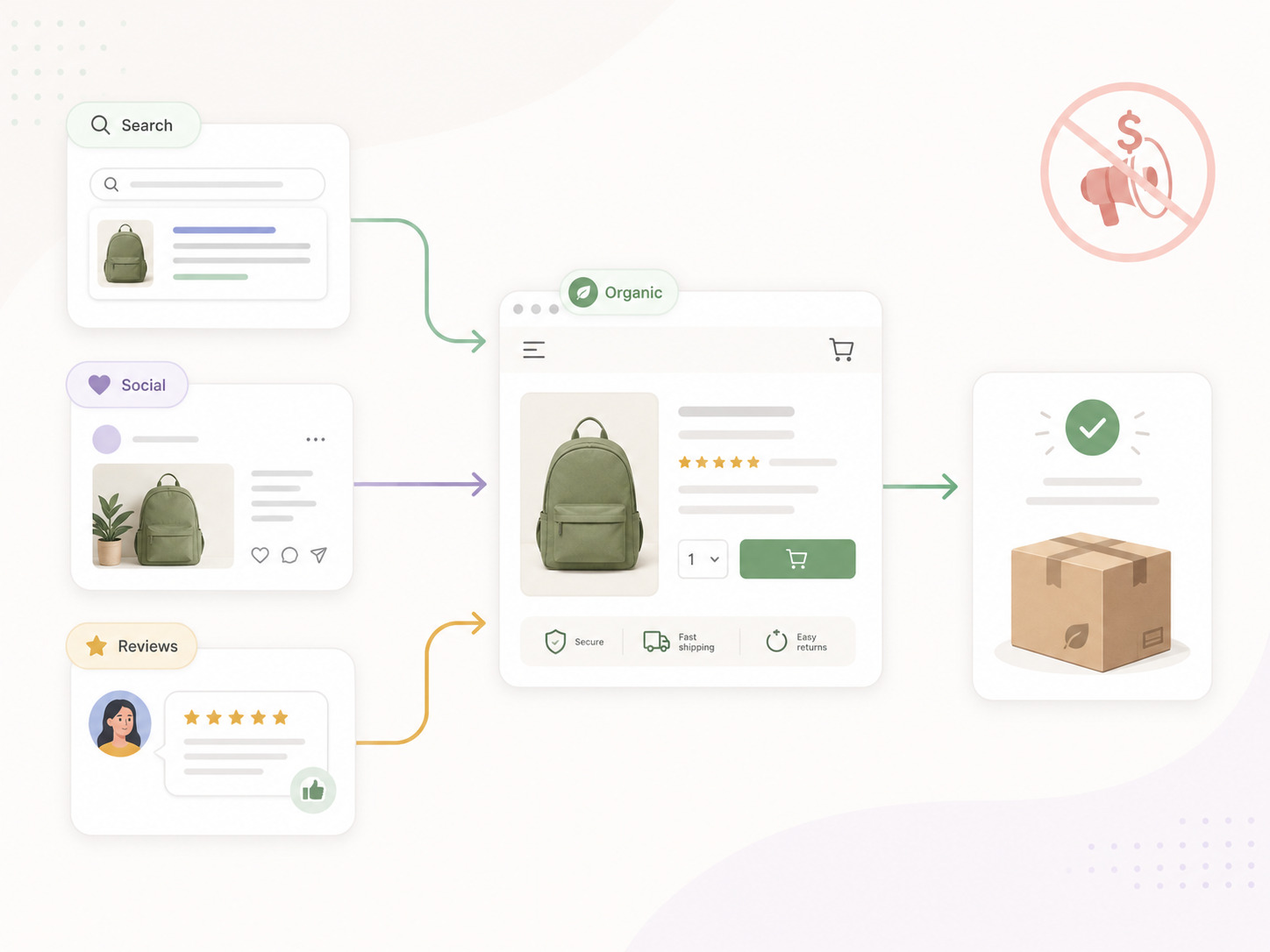
Organic dropshipping relies on unpaid marketing methods to drive traffic to your online store. Instead of paying for visibility, you create content that people discover naturally — through search engines, social feeds, and word of mouth. The "organic" simply means the traffic is earned, not bought.
Compare the two approaches. With paid dropshipping, you pay platforms like Facebook Ads or Google Ads to put your product listings in front of a specific audience instantly. With organic dropshipping, you invest time and creativity into engaging content that earns organic reach over time.
Paid advertising provides quicker visibility and can target specific demographics and locations fast; organic methods are slower to start but build long-term customer relationships and can yield more sustainable results — often at higher profit margins, since there's no ad budget eating into every sale.
Read more: How to Start Dropshipping Business in 2026
How does organic dropshipping work?
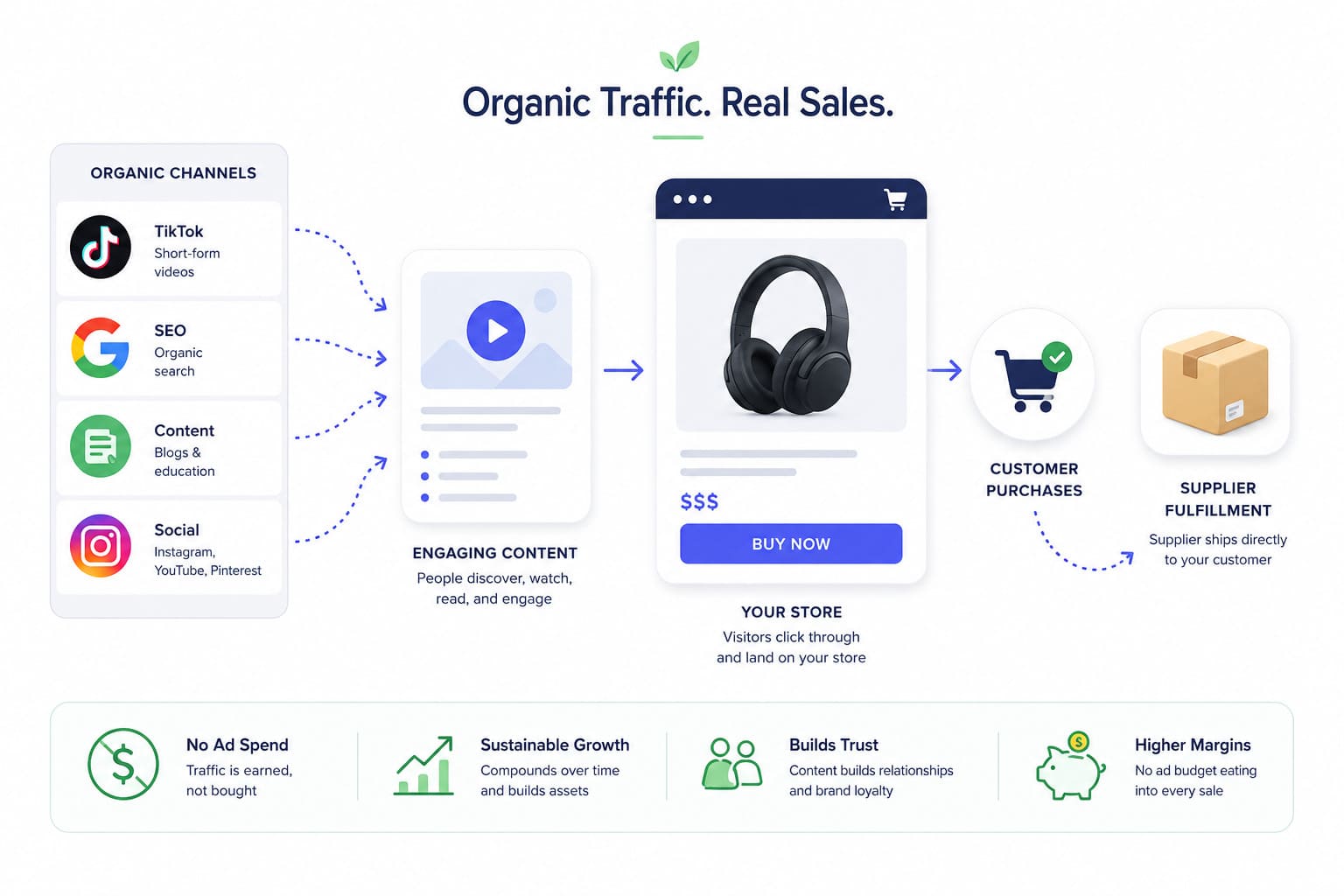
Organic dropshipping works by turning your own channels — your social media accounts, your store's blog, your search rankings — into a steady source of free traffic. You publish engaging content consistently, that content gets discovered by your target audience, and a portion of those viewers click through and buy directly from your dropshipping store.
The model rests on a simple idea: organic traffic relies on genuinely engaging content rather than paid advertising. Make content people actually want to watch, read, or share, and the platforms reward you with reach. The main organic channels that work in 2026:
TikTok organic. Short-form video is the single most powerful organic channel for dropshipping right now.
SEO and organic search. Ranking your product pages and blog posts in Google searches.
Content marketing. Educational content, helpful advice, and blogs that build trust.
Organic social. Instagram, YouTube, and Pinterest posts that drive traffic without spend.
Let's break down the two pillars that matter most.
TikTok organic dropshipping
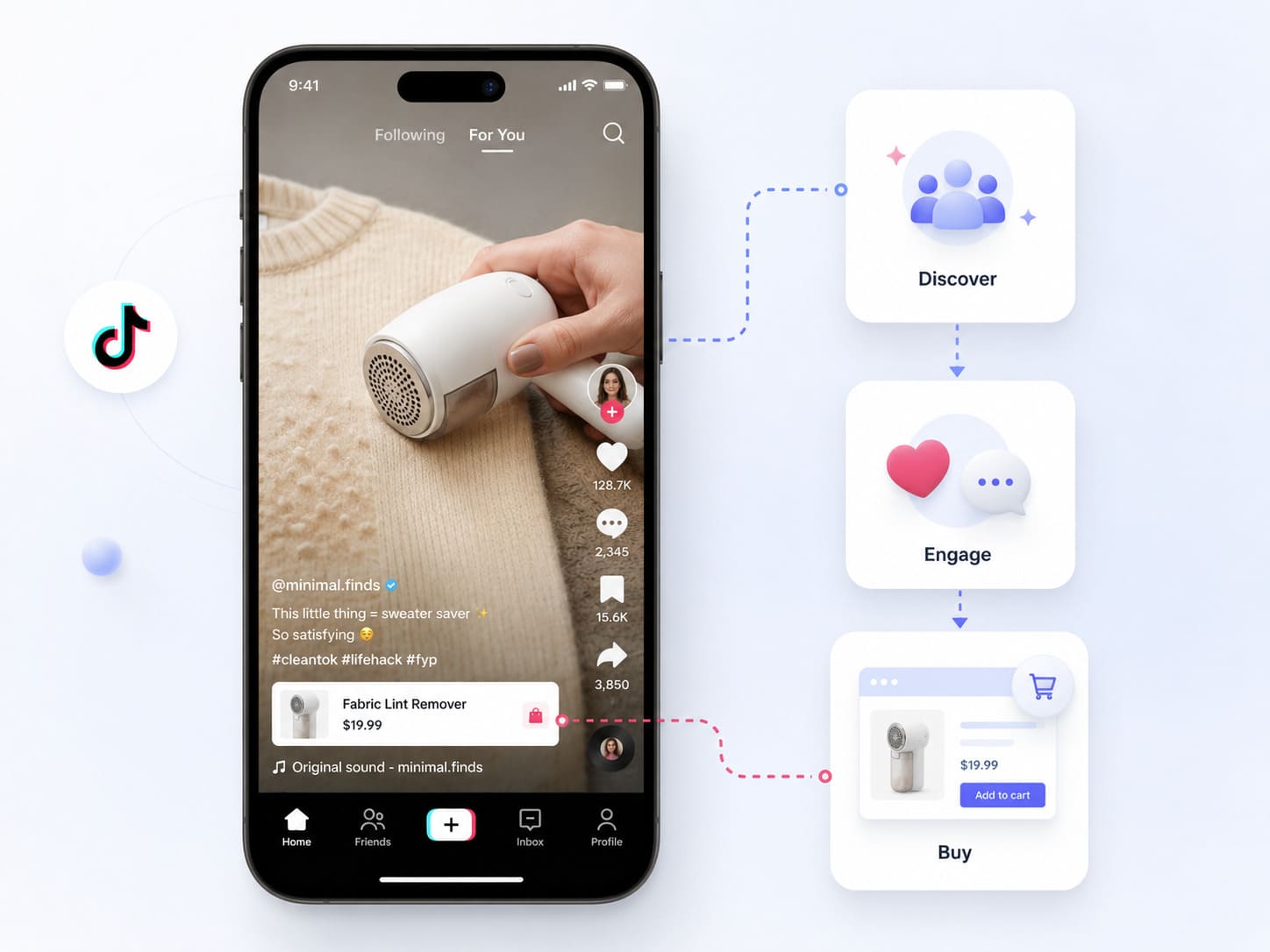
TikTok is where organic dropshipping shines, because its algorithm promotes engaging videos to a wider audience regardless of your follower count — a brand-new account can go viral on its first post. That levels the playing field in a way no paid channel does.
The data backs up why this matters. According to TikTok's own research, 61% of TikTok users discover new brands and products on the platform — 1.5x more than users of other platforms — and 1 in 2 users say they've gone to TikTok specifically to research or learn more about a product or brand. On top of that, TikTok Shop now allows seamless product discovery and purchase in one place, which can drive significant organic sales for dropshippers who post consistently.
The winning approach is straightforward but demanding: post daily. Daily content posting boosts organic visibility and engagement, giving the algorithm more chances to find the video that takes off. Film your own TikTok videos showing the product solving a problem or delivering a wow moment, lean into user-generated content, and engage with every comment — responding promptly builds stronger customer connections and lifts your engagement rate, which the algorithm rewards further.
Read more: #1 Reason Viral TikTok Products Don’t Convert
SEO for organic dropshipping
If TikTok is the fast lane, SEO is the compounding asset. Search engine optimization is crucial for organic dropshipping success because, unlike a video that spikes and fades, a page ranked in organic search can drive traffic for months or years.
A practical SEO approach for a dropshipping store:
Do keyword research and target long-tail keywords — longer, more specific phrases that improve SEO and attract targeted, ready-to-buy traffic with less competition. Tools like Google Trends help you spot rising demand.
Optimize your product pages. Write unique, benefit-led product descriptions, use high-quality images (your own product photos beat generic supplier shots), and structure listings so search engines understand them.
Publish content marketing. Writing blogs that answer your audience's questions — buying guides, how-tos, comparisons — pulls in potential customers at the top of the funnel and builds topical authority.
SEO is slower than social, but it's the closest thing organic dropshipping has to a traffic machine that runs while you sleep.
Read more:
Why social proof and UGC are your top priority
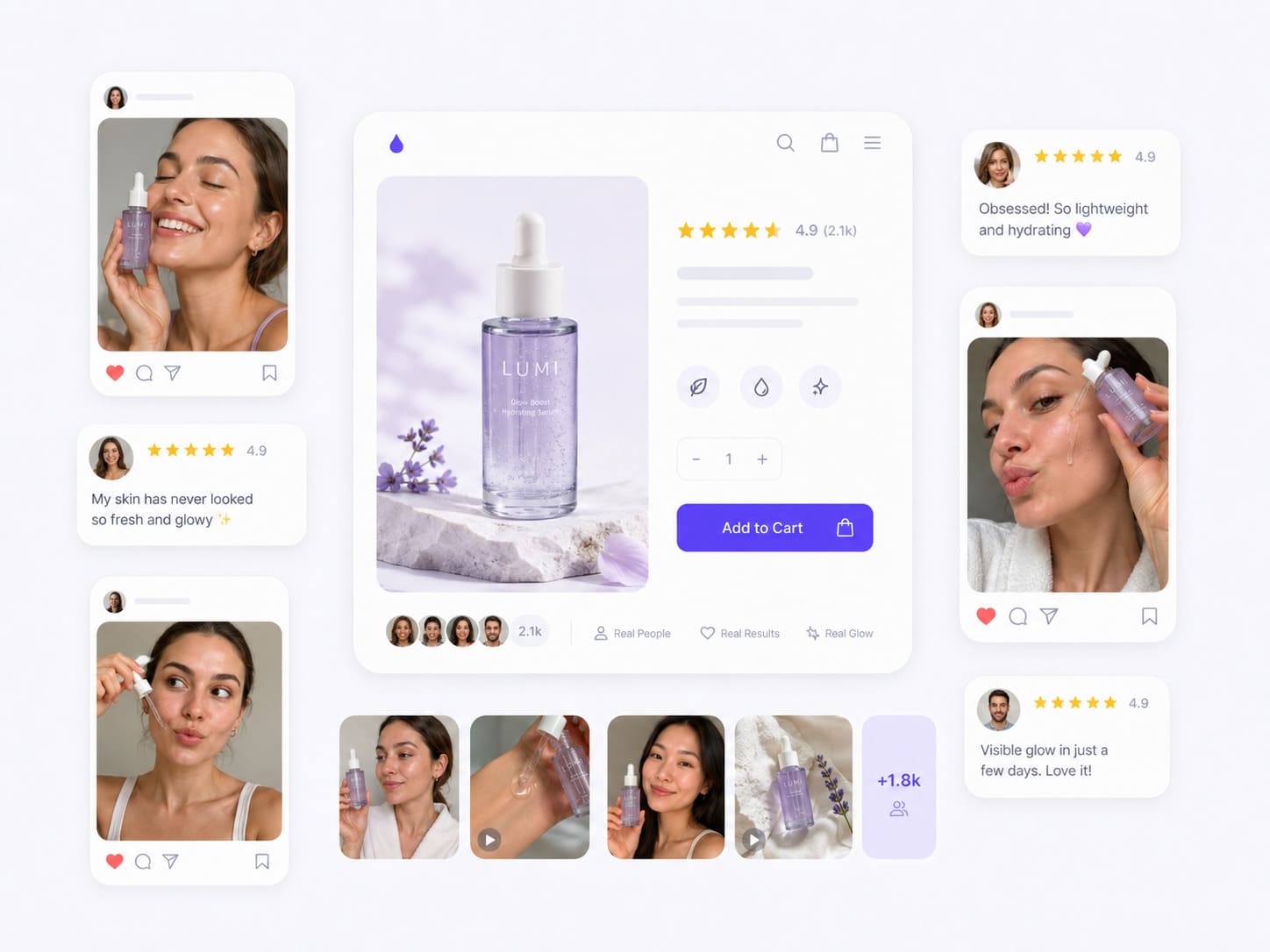
Organic growth lives or dies on trust, and nothing builds trust like other customers. User-generated content — real people using your product — increases brand trust and acts as powerful social proof. This isn't a soft claim: Nielsen's Global Trust in Advertising study, based on input from tens of thousands of consumers across 56 countries, found that 92% of people trust recommendations and organic content from other people more than traditional advertising.
That's why authenticity is organic dropshipping's biggest advantage. Encourage customers to share photos and videos, repost their content, and feature reviews prominently. Each piece of UGC becomes free marketing that converts better than any polished ad — building the loyal and engaged community that sustains organic sales.
Presentation matters: where your organic traffic lands
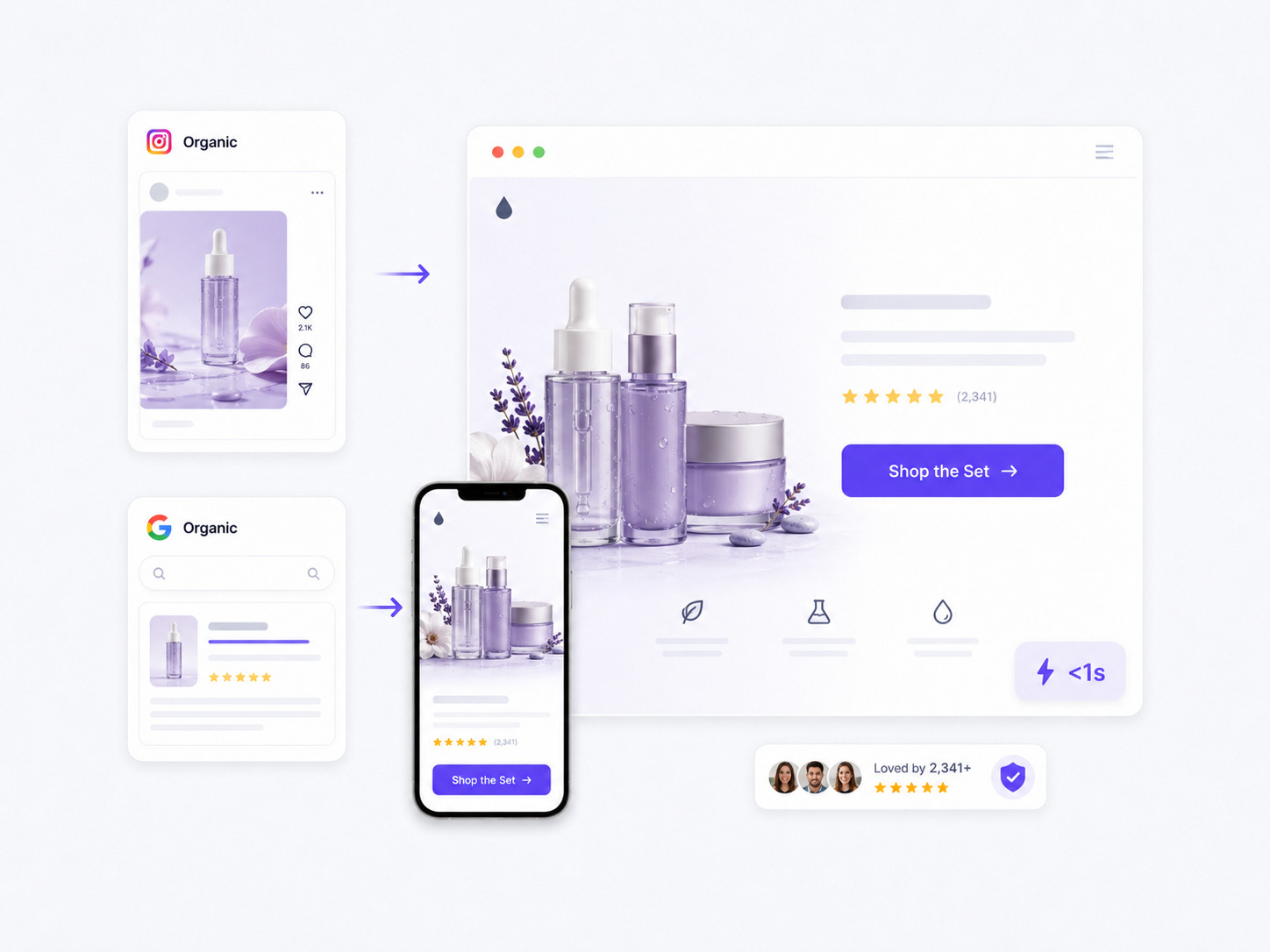
Here's what trips up a lot of organic sellers. You can create a viral TikTok or rank a blog post, but if the page that traffic lands on is slow or cluttered, the sale evaporates — and unlike paid traffic, you can't just buy more. Organic traffic is too hard-won to waste on a leaky page.
This is where presentation does the quiet work of conversion. A dedicated landing page built with a drag-and-drop page builder keeps the visitor on one clear offer, with your own product photos, a strong headline, and customer reviews front and center — no distractions between discovery and purchase.
Speed is just as critical: more than half of visitors abandon a page that takes over three seconds to load, and since most organic traffic comes from mobile, building on pages that load in under a second protects every hard-earned click. The goal is simple — make sure a great piece of organic content meets an equally great page.
Read more: One-Product Funnel: How to Build One That Turns Strangers into Loyal Customers
Turning organic visitors into lasting customers
Because organic dropshipping builds long-term customer relationships rather than chasing one-off sales, what you do after the first purchase matters enormously. Order bumps and one-click upsells raise the value of each organic sale, which is especially valuable when you're not spending on ads to begin with — more profit per customer, straight to your margin.
And for the visitors who don't buy right away, automated email and SMS flows keep the relationship warm and recover sales over time, turning first-time viewers into repeat customers. That repeat business is the whole promise of organic: a loyal community that keeps buying, built on trust instead of ad spend.
Bottom line
So, what is organic dropshipping? It's basically building a dropshipping business on free, earned traffic — SEO, TikTok, and content — instead of paid ads. It's ideal for entrepreneurs with limited budgets, it builds genuine brand authenticity, and it can deliver more sustainable, higher-margin results than paid traffic. The catch is patience: organic dropshipping can take months of daily content and consistent effort before sales become steady.
But for those willing to invest the time, it creates something paid ads never can — an audience that discovers you on its own, trusts you, and keeps coming back.
Frequently asked questions
Is organic dropshipping better than paid ads?
It depends on your goals. Organic dropshipping is cheaper, builds long-term customer relationships, and protects your margins, but it takes months to gain traction. Paid ads deliver faster, more targeted visibility but cost money and stop the moment you stop paying. Many successful stores start organic to validate, then layer in paid ads later.
How long does organic dropshipping take to work?
Expect months, not days. Organic channels like SEO and TikTok reward consistent effort over time, so daily content posting is essential. Some TikTok videos can go viral quickly, but building steady, reliable organic sales is a long-term play that requires patience.
Do I need money to start organic dropshipping?
Very little. Organic dropshipping requires no ad budget — only a time and creativity investment. You'll still need to cover basics like your Funnelish product page, supplier costs, and product samples, but you avoid the biggest expense in traditional dropshipping: advertising.
What's the best platform for organic dropshipping?
TikTok is the strongest organic channel in 2026 because its algorithm shows engaging videos to a wide audience regardless of follower count, and TikTok Shop enables in-app purchases. SEO and content marketing are powerful complements that build traffic that compounds over time.
Why is user-generated content important in organic dropshipping?
UGC builds trust and social proof, which organic growth depends on. Since most consumers trust content from real people far more than traditional advertising, featuring customer photos, videos, and reviews converts better and strengthens the community that drives organic sales.
Table of contents
Boost your eCommerce
sales today

24/7 support
No credit card required
Cancel anytime
24/7 support
No credit card required
Cancel anytime
