

WooCommerce Dropshipping: The Complete Operational Guide for Store Owners
23 April 2026
Anna P.
17 minutes
Dropshipping's appeal hasn't changed: no inventory, no upfront stock purchases, no warehouse. What has changed is how competitive the dropshipping industry has become — and how much the ecommerce platform you build on determines whether you can make money from it.
The global dropshipping market is projected to exceed $476 b illion in 2026, with roughly 27% of all online retailers using dropshipping as their primary fulfillment method. (PR Newswire) That's a crowded market. The WooCommerce dropshipping businesses generating consistent profit aren't winning on product selection alone — they're winning on infrastructure, reliable suppliers, and conversion rate.
WooCommerce stands at the center of that conversation for a specific type of store owner. WooCommerce powers approximately 33% of all ecommerce stores globally — over 4.5 million live stores — making it the most widely used ecommerce platform by store count. (WooCommerce) The flexibility it offers — full control over code, plugins, hosting, and checkout — attracts merchants who want to build something they own rather than rent a storefront on a closed platform.
Let's cover what it looks like in practice: how the dropshipping business model works, which plugins handle the operations, which WooCommerce dropshipping suppliers are worth using, how to structure a store that converts, and what separates profitable stores from the ones that fail in their first year.
How WooCommerce Dropshipping Process Works
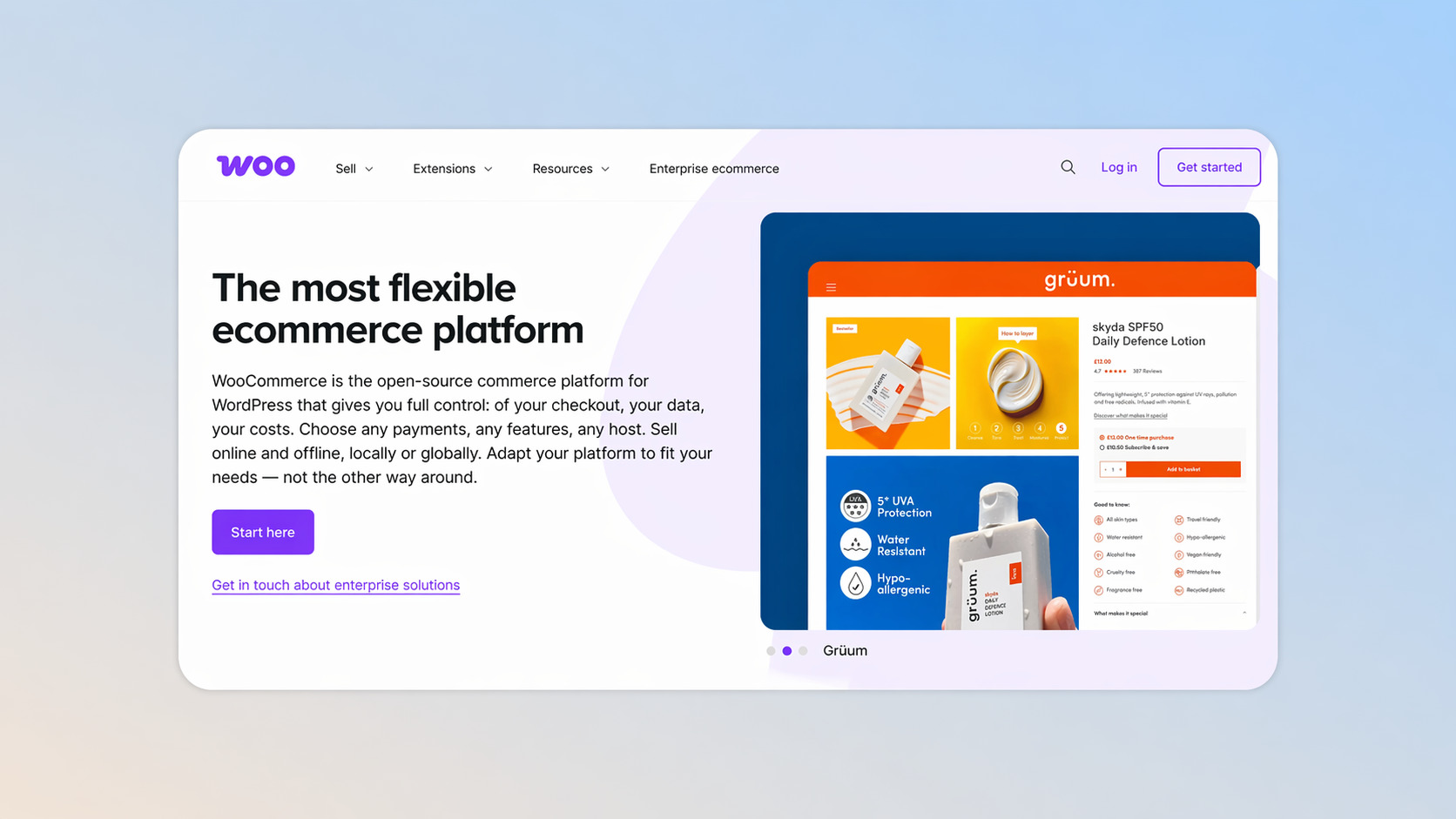
WooCommerce is a free, open-source ecommerce plugin built on WordPress. It handles product listings, cart, checkout, and order management natively. On its own, it doesn't handle dropshipping — that's the job of a dedicated WooCommerce dropshipping plugin that connects your WooCommerce store to a supplier network, automates order forwarding, and keeps your product listings in sync with supplier inventory.
The dropshipping operation follows this sequence:
A customer places an order on your WooCommerce dropshipping store.
The dropshipping plugin automatically forwards the order details to your supplier.
The supplier fulfills the order and ships it to the customer.
Tracking information is pushed back to your store and emailed to the customer.
You never touch the product. Your margin is the spread between what the customer pays and what the supplier charges — minus platform costs, payment processing fees, and marketing spend.
Profit margins in dropshipping typically range from 10% to 30% depending on niche, supplier, and marketing spend. On a $60 product with a 20% margin, that's $12 per order — which means average order value matters enormously. A store generating 200 orders per month at $12 margin earns $2,400 before marketing costs. The same store with a $100 average order value and 25% margin earns $5,000.
The math gets better when you focus on higher-ticket dropshipping products and bundle offers rather than competing on cheap commodity items across multiple sales channels.
WooCommerce vs. Shopify for Dropshipping
The answer depends on what you need from your ecommerce business.
Shopify stores are faster to launch and require no technical knowledge. Hosting is managed, updates are automatic, and the interface is clean. The tradeoffs: monthly fees that scale with revenue ($29–$399/month), additional transaction fees on non-Shopify-Payments gateways, and limited checkout customization without Shopify Plus at $2,300/month. For a dropshipping business that wants to start with minimal complexity, Shopify is the easier entry point.
WooCommerce is free to install. You own the code, data, and infrastructure. Plugin costs run lower than equivalent Shopify apps at scale, there are no transaction fees beyond your payment gateway, and checkout customization options are significantly broader — critical for a dropshipping store optimizing conversion rates on paid traffic. The tradeoffs: you're responsible for hosting, security, and plugin updates. A poorly maintained WooCommerce installation will cost you in conversion rates.
WooCommerce retains approximately 82% year-over-year merchant continuity — store owners rarely switch away once they've built on it. (Marketing LTB) The flexibility and cost control keep established dropshipping businesses on WooCommerce even as their order volume grows and platform savings compound.
Read more: WooCommerce vs Shopify in 2026: Honest Comparison
Best WooCommerce Dropshipping Plugins
The WooCommerce dropshipping plugin you choose determines how much of the dropshipping process you can automate and which supplier networks you can access. Here are the best WooCommerce dropshipping plugins matched to business models.
One 2026 factor cuts across this entire comparison, so it is worth stating before the individual plugins. The US ended its $800 de minimis exemption, which means low-value parcels shipped direct from overseas now carry import duty they previously avoided. That changes how the AliExpress-sourcing plugins below compare against the US/EU-supplier ones. The choice used to be cheaper Chinese product cost against faster domestic shipping. Now there is a third axis. Sourcing that ships direct from China carries per-parcel duty, while US/EU suppliers and US-based warehouses clear that duty in bulk or avoid it entirely. Read each plugin's economics with that in mind.
DSers — Best for High-Volume AliExpress Dropshipping
DSers is the official AliExpress partner for WooCommerce order fulfillment and one of the most widely-used WooCommerce dropshipping plugins available. Over 1.5 million stores use DSers for AliExpress dropshipping — reflecting both its integration depth and the scale of AliExpress as a product source for importing AliExpress products at volume.
Key Capabilities
Bulk order processing (place dozens of orders to aliexpress suppliers simultaneously)
Supplier optimization that lets you map one product to multiple suppliers for redundancy
Real-time inventory management and price sync
Automated order fulfillment with tracking updates pushed to customers
Pricing
Starts around $15.90–$19.90 per month with a free tier available.
Where DSers Works
Stores selling lower-ticket AliExpress products where price is the primary lever.
Where It Struggles
Shipping times. AliExpress standard shipping runs 10–30 days to US and European customers — a supplier inventory and logistics reality that creates customer satisfaction problems if you don't set expectations clearly. In 2026 there is a second issue on this route. AliExpress orders ship direct from China, so US-bound parcels now attract import duty since the end of de minimis, which erodes the low product cost that made this route attractive. Price that duty into your landed cost, and lean toward higher-ticket items where the margin can carry it.
AliDropship — Best for Fixed-Cost AliExpress Operations
AliDropship is a one-time payment WooCommerce dropshipping plugin at $89 with lifetime updates and support. Unlike DSers's monthly fees, it's a permanent license — making the cost calculation simple for store owners committed to AliExpress as their primary sourcing channel. The Chrome extension lets you browse AliExpress and import products without switching between tabs.
Key Capabilities
One-click product imports from AliExpress including images, descriptions, and pricing
Automated order fulfillment — orders are placed with the supplier automatically after customer purchase
Real-time supplier inventory and price sync to keep product listings up to date
Flexible profit margin rules configurable across your entire product catalog
Pricing
$89 one-time fee, lifetime updates included. No monthly fees.
Where AliDropship Works
Store owners who've committed to AliExpress dropshipping long-term and want to eliminate ongoing monthly platform costs. The fixed-cost model pays for itself quickly relative to subscription-based alternatives.
Where It Struggles
Less suited if you want access to US/EU suppliers or a diverse range of global suppliers beyond AliExpress. Multi-platform supplier networks require additional tools. The same duty consideration as DSers applies here, since this is also an AliExpress-sourcing route. For the US market in 2026, the product-cost advantage of China-direct sourcing is smaller than it used to be once import duty is added to the landed cost.
Spocket — Best for US/EU Suppliers and Fast Shipping
Approximately 80% of Spocket's suppliers are located in the US and EU, with shipping times running 2–5 business days — compared to the 10–30 day window that characterizes AliExpress products. Spocket also offers custom packaging and branded invoicing, so order details reach customers under your store's branding rather than the supplier's.
Key Capabilities
Access to vetted US and EU local suppliers with consistently higher product quality than AliExpress
Fast shipping options averaging 2–5 business days to Western markets
Branded invoicing and custom packaging for store's branding consistency
Sample orders so you can verify product quality before adding to your product listings
Pricing
$39.99/month for the Starter plan. Higher tiers unlock more product imports and premium suppliers.
Where Spocket Works
WooCommerce dropshipping stores targeting US or Western European customers where speedy delivery is a genuine competitive differentiator and customer expectations around shipping are high.
Where It Struggles
Profit margins are tighter than AliExpress-based dropshipping — local suppliers charge more, which compresses the spread between product pricing and customer-facing price. Stores need higher average order value to compensate. That margin gap is narrower in 2026 than the sticker prices suggest, though. Spocket's US/EU suppliers avoid the per-parcel import duty that now lands on AliExpress orders into the US, so part of their higher product cost is offset by duty the China-direct routes have to pay. Put the duty on the AliExpress side of the comparison before concluding Spocket is the more expensive option.
CJDropshipping — Best for Global Supplier Access
CJDropshipping maintains warehouses in the US, Germany, and several other markets, enabling 5–10 day shipping to major regions while keeping product costs closer to Chinese manufacturing prices than US/EU local suppliers. It covers the turnkey dropshipping operation from product sourcing to automated order fulfillment in a single plugin.
Key Capabilities
One-click product imports with real-time supplier inventory sync
Overseas warehouse network enabling faster shipping methods without full US/EU supplier pricing
Automated order fulfillment and direct supplier communication through the plugin
Custom packaging and custom products available for stores building their own store's branding
Pricing
Free to use — CJDropshipping charges per order rather than a monthly fee, making it cost-effective for stores with lower order volume starting out.
Where CJDropshipping Works
Dropshipping businesses that need faster shipping than AliExpress products can deliver but don't want to absorb Spocket's higher product costs. A practical middle ground for stores scaling into international markets. Its US and Germany warehouses are worth a closer look in 2026 for exactly this reason. Stock held in a US warehouse and shipped domestically sidesteps the per-parcel import duty that direct-from-China fulfillment now carries, which makes the warehouse route more attractive than shipping speed alone would suggest.
Where It Struggles
Supplier network is smaller than AliExpress, so the diversity of trending products and other product offerings is more limited. For stores that need a very broad catalog across multiple categories, AliExpress-based plugins cover more ground.
Read more: Graypoplar Dropshipping: Trend Analysis, Logistics & Funnel Strategy
Official WooCommerce Dropshipping Extension
WooCommerce's own dropshipping plugin offers a native experience — no third-party dependency, supplier notification emails built into the order workflow, and a built-in dashboard for tracking order details and monitoring profit margins.
Key Capabilities
Native WooCommerce integration with no external platform dependency
Automated supplier email notifications when orders are placed
AliExpress support via Chrome extension for importing AliExpress products
Internal order and profit tracking dashboard
Pricing
Available through the WooCommerce marketplace — check current pricing as it updates periodically.
Where It Works
Store owners who want to keep their tech stack lean, stay within WooCommerce's native ecosystem, and manage the dropshipping process without additional third-party plugins or monthly fees for separate tools.
Where It Struggles
Less automation depth than dedicated dropshipping plugins like DSers or AliDropship. For high-volume WooCommerce dropshipping stores where advanced automation and bulk order processing matter, a dedicated plugin handles the whole operation more efficiently.
How to Add WooCommerce Dropshipping Suppliers and Choose the Right Ones
The dropshipping plugin handles automation. The supplier network you build determines product quality, shipping reliability, and whether your customers are satisfied enough to generate repeat purchases. Many retailers cite finding reliable suppliers as their biggest challenge in the dropshipping industry. Here's how to approach product sourcing properly.
Order Samples Before You List Anything
Before importing products and running marketing efforts toward any product page, order it yourself. Check actual product quality against listing photos, the condition of packaging on arrival, and realistic shipping times — not estimated times from the supplier. A product that arrives in 22 days with damaged packaging generates returns and negative reviews that undermine your store's branding.
Work with Multiple Suppliers for Each Key Product
DSers's supplier optimization feature exists for a reason: supplier inventory runs out, suppliers go on holiday, dropshipping companies disappear. Having backup suppliers mapped to each product means a stock-out doesn't kill conversion rates on high-traffic product pages. Managing inventory effectively requires redundancy, not a single supplier relationship. When you build that backup roster for the US market in 2026, a supplier that fulfills from US stock is worth keeping in the mix — it protects you from per-parcel import duty as well as from stock-outs.
Test Supplier Communication Before Committing
Send a question through the supplier's channel before you start selling their products. How quickly does the support team respond? A supplier who takes three days to answer a pre-sales question will take the same time to resolve a fulfillment problem when an actual customer is waiting for their order details.
Build Direct Relationships with Volume Suppliers
Once you're placing consistent orders with a specific supplier, reach out directly to negotiate — better product pricing, upgraded shipping methods, custom packaging, or priority stock allocation. Many AliExpress suppliers are manufacturers who will work directly with volume buyers. Those direct relationships become a competitive advantage in the dropshipping industry as your store scales.
Read more: Is Dropshipping Worth It in 2026?
Setting Up Your WooCommerce Dropshipping Store
Three elements determine whether your WooCommerce dropshipping store converts paid traffic into paying customers or bleeds ad spend into a poorly optimized storefront:
Hosting infrastructure that determines speed
Product pages that do the selling
Pricing structure that determines whether the unit economics work
Hosting and Speed
Your hosting choice affects page load speed — which then affects conversion rates. A WooCommerce dropshipping store loading in under 2 seconds converts meaningfully better than one loading in 4 seconds. For a dropshipping business running paid ads, that performance gap compounds across every campaign.
Managed WordPress hosting — SiteGround, Kinsta, WP Engine — handles server optimization, caching, and security automatically, reducing technical overhead while ensuring your online store loads fast enough to convert paid traffic. Shared hosting is cheaper but introduces speed and reliability risks that cost more in lost conversions than the hosting savings are worth.
Product Pages That Convert
The default WooCommerce product page layout is functional but not optimized for converting cold traffic. Dropshipping product pages need to solve a specific problem: convincing a customer who has never held the product that it's worth buying from a store they've likely never encountered.
What works:
High-quality product photos from multiple angles
Benefit-focused copy explaining what the product does rather than listing specifications
Clear communication of shipping options and realistic delivery timelines upfront
Genuine photo reviews
The last point matters most — 74% of customers expect delivery within 2 days (Capital One Shopping), and a dropshipping store that sets realistic expectations openly generates far better customer satisfaction than one that obscures shipping times in the FAQ.
Product Pricing Strategy
Standard dropshipping advice recommends 2–3x supplier cost as a markup. That's a starting point, not a rule. The correct product pricing for your WooCommerce dropshipping store is the highest price the market supports while still converting at an acceptable rate — which requires testing, rather than formula.
A more useful framework: your margin must exceed your customer acquisition cost from paid ads before you scale. If your cost per acquisition on Meta is $18 and your margin at a given price is $15, you're losing money on every order regardless of how much traffic you drive. Raising average order value through product bundles, volume discounts, and order bumps at checkout can shift those unit economics significantly — often faster than reducing ad costs through creative optimization alone. When you calculate that margin for overseas-sourced products in 2026, base it on true landed cost — product plus shipping plus import duty — since the duty on sub-$800 parcels is no longer zero. A markup that looked healthy against bare product cost can be thinner than it appears once duty is included.
Conversion Problem WooCommerce Dropshippers Underestimate
Building a WooCommerce store means establishing your operational center. Converting the traffic that arrives is a separate challenge — and the one that typically determines whether a dropshipping business survives its first year.
Only 10-20% of dropshipping businesses succeed in their first year. (Drop Ship Lifestyle) One of the most common conversion failures: driving paid traffic to a standard WooCommerce storefront with default product pages and a checkout that wasn't built for cold traffic conversion. A WooCommerce dropshipping store is a catalog. A sales funnel is a conversion machine.
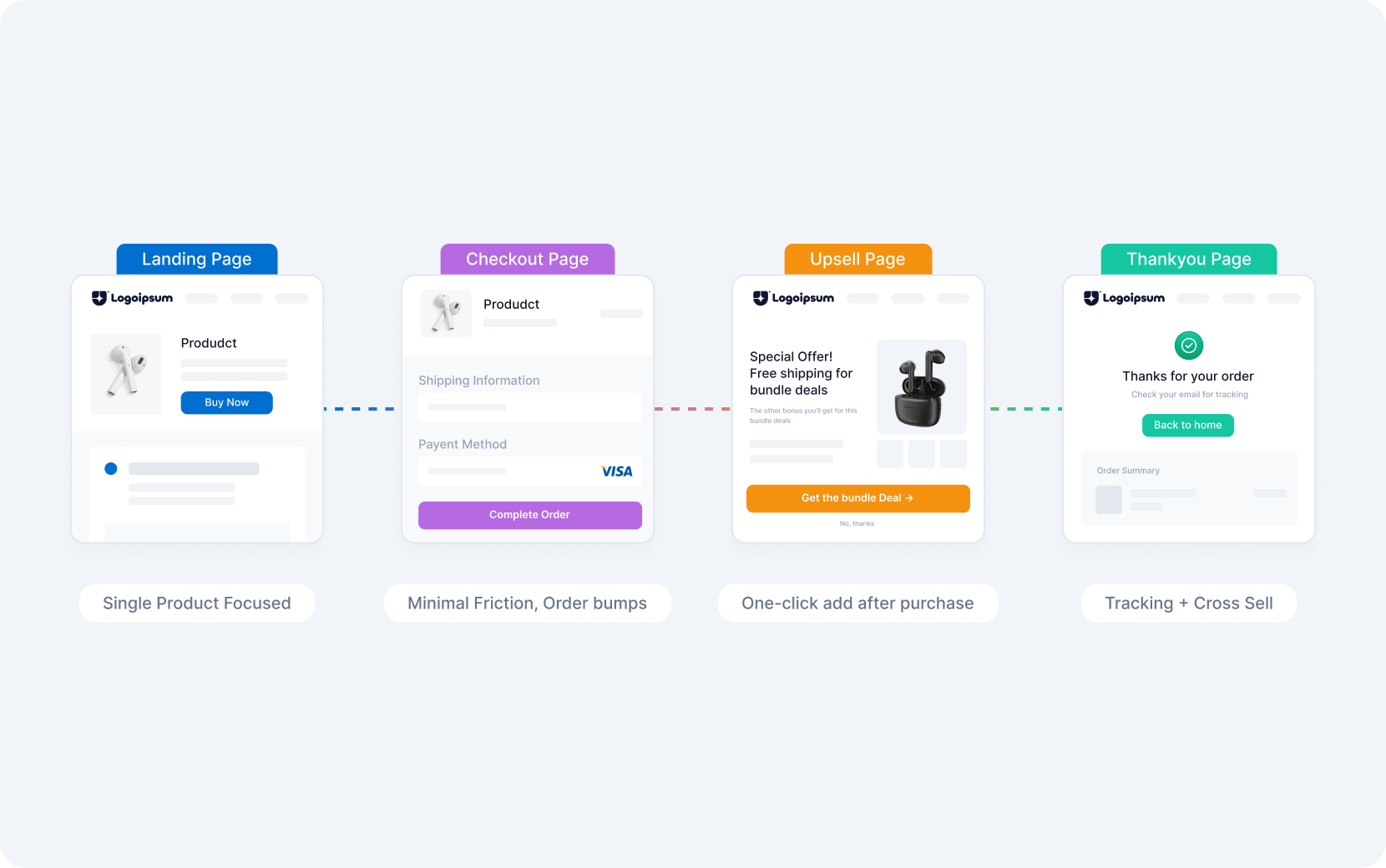
The merchants generating the strongest unit economics from paid ads typically run dedicated one-product landing pages for each campaign — no navigation menu, no competing product listings, one focused offer — that continue the conversation the ad creative started. The customer lands on a page built for that product, reaches a frictionless checkout, and completes the purchase without the distraction of a full storefront.
This is the value that Funnelish adds to WooCommerce dropshipping businesses running serious paid traffic. Rather than sending ad spend to a standard product page, Funnelish lets you build dedicated landing pages with sub-second load times and a customizable checkout supporting Stripe, PayPal, Klarna, and other payment methods.
Post-purchase one-click upsells capture additional revenue from each customer at peak buying intent — boosting average order value without any additional marketing efforts or customer acquisition cost. Every order syncs automatically back to WooCommerce for order processing and fulfillment, keeping your existing operational backend intact while the funnel handles conversion.
For dropshipping businesses where improving conversion rate by even 1–2 percentage points is the difference between profitable and unprofitable paid campaigns, that infrastructure matters more than almost any other optimization.
Read more: Shopify Dropshipping in 2026: What Works, and What Operators Are Doing Differently
Operational Risks Every Store Owner Should Understand
WooCommerce dropshipping has real structural weaknesses that good setup can mitigate but not eliminate.
Shipping Expectations vs. Customer Expectations
64% of dropshippers cite shipping delays as their biggest pain point (The Selling Guys), and 74% of customers expect delivery within 2 days. Those two facts are difficult to reconcile if your supplier network is primarily AliExpress. Building relationships with local suppliers or using overseas warehouses through CJDropshipping costs more in product margin but dramatically reduces the customer service load and chargeback risk that comes with long shipping times.
Supplier Inventory and Reliability Are Outside Your Control
When a supplier ships the wrong product, damages an item, or runs out of stock after you've been running ads to a product page, the customer complaint lands with your store. Your branding, your customer service, your refund. Managing this means maintaining backup suppliers for every key product and having a refund and return policy that handles the inevitable exceptions without destroying margin.
Profit Margins Compress as Advertising Costs Rise
52% of dropshippers report low profit margins as a major hurdle in building a sustainable dropshipping business. Customer acquisition costs on Meta and Google have risen consistently, and a dropshipping model with 15% gross margin has very little room to absorb increasing CPMs. A second squeeze arrived in 2026 for anyone sourcing from overseas. The end of the $800 de minimis exemption added import duty to low-value parcels, so a China-sourced product that used to land duty-free now carries an extra cost against that same thin margin.
The response is moving up-market to higher-ticket products with better absolute margin, or adding recurring revenue through subscription product offerings, or building an email list that reduces dependence on paid advertising for repeat purchases. Sourcing from US or EU suppliers, or from US-based warehouses, is now part of that same response for the US market, since it keeps import duty out of the per-order cost.
What Profitable WooCommerce Dropshippers Have in Common
The online stores generating consistent revenue from dropshipping aren't running generic catalogs with thousands of cheap trending products. They're focused on a specific niche where they've built supplier relationships, customer trust, and content that ranks organically for the search terms their target audience uses.
Fashion and apparel lead the dropshipping revenue breakdown of the market, followed by home and garden — but the profitable stores in those categories have a specific angle (sustainable fashion, Scandinavian home decor, pet-friendly furniture) rather than competing broadly on category terms with no differentiation.
The other consistent characteristic: email marketing treated as infrastructure rather than optional. A customer who placed one order has demonstrated willingness to spend. Capturing their email, building a post-purchase sequence introducing complementary product offerings, and running periodic campaigns to the list reduces the cost of repeat revenue significantly compared to re-acquiring those customers through paid ads. Every WooCommerce dropshipping store should have this running from day one.
The combination — a focused niche, reliable suppliers with appropriate shipping methods for the target market, conversion-optimized product pages and checkout, post-purchase upsells to boost sales, and email automation for repeat purchases — separates the 10-20% of dropshipping businesses that succeed from the 80-90% that don't.
WooCommerce Dropshipping FAQs
Can I do dropshipping with WooCommerce?
Yes. WooCommerce supports dropshipping through its plugin ecosystem — the platform handles the online store front, product listings, checkout, and order management, while a WooCommerce dropshipping plugin like DSers, Spocket, or AliDropship connects your store to dropshipping suppliers, automates order fulfillment, and keeps supplier inventory up to date. You can import products, manage multiple suppliers, and run your dropshipping business without holding any stock.
Is WooCommerce better than Shopify for dropshipping?
For most dropshipping businesses, WooCommerce offers more control and lower long-term platform costs — no transaction fees beyond your payment gateway, full checkout customization, and no monthly fees that scale with revenue. Shopify is simpler to set up and requires less technical knowledge. Shopify stores suit operators who want speed and simplicity; WooCommerce suits store owners who want flexibility and want to avoid the platform costs that compound as order volume grows.
Is WooCommerce 100% free?
The WooCommerce plugin itself is free to install. Running a complete WooCommerce dropshipping store adds costs: WordPress hosting ($10–$50+/month), a domain ($10–$15/year), and any paid dropshipping plugins — DSers runs $15.90/month, Spocket $39.99/month, while AliDropship is a one-time $89 fee. A functional dropshipping store can run under $50/month in platform costs; a well-optimized setup with managed hosting and solid plugins runs $100–$150/month before marketing spend.
Table of contents
Boost your eCommerce
sales today

24/7 support
No credit card required
Cancel anytime
24/7 support
No credit card required
Cancel anytime
